





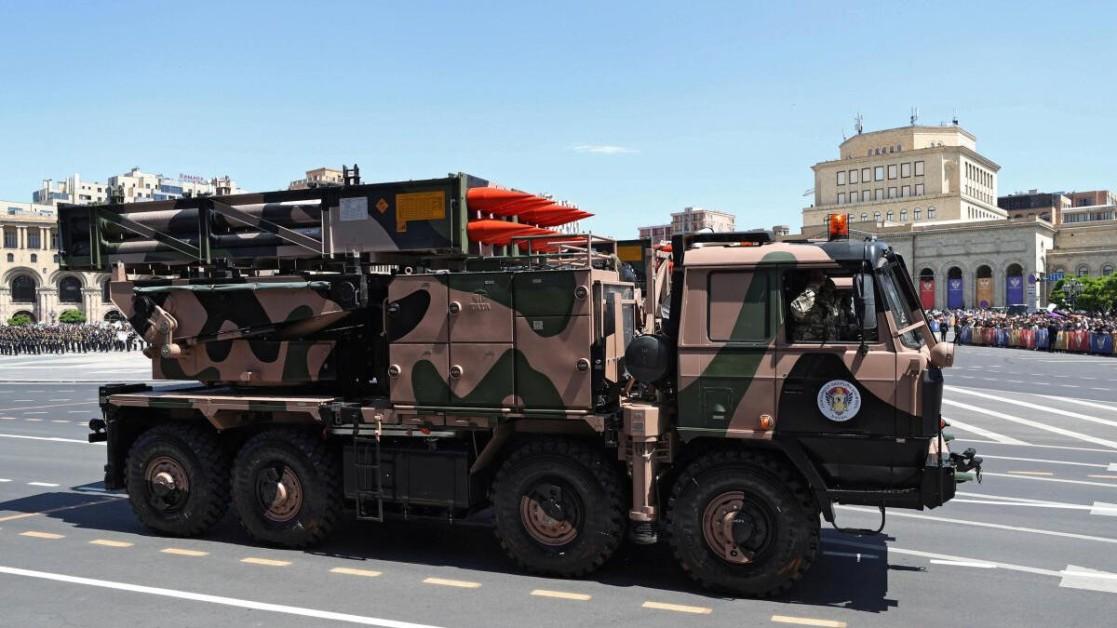
T-Hub Partners With Indian Army Central Command to Deploy Defence-Startup Technologies
India's defence-startup ecosystem is moving closer to direct military deployment, with T-Hub partnering with the Indian Army's Central Command to identify startup-built technologies capable of addressing operational requirements of the armed forces.
The collaboration is designed to create a structured pathway through which defence and deep-tech startups can move from developing prototypes to testing, validating and potentially deploying their technologies in real military environments.
Under the initiative, the Army will identify operational challenges and technology requirements, while T-Hub will help discover and connect relevant startups capable of developing or adapting solutions.
The partnership is significant because one of the biggest challenges facing defence startups is not necessarily creating technology. It is gaining access to military users, testing environments and procurement pathways that can convert promising prototypes into operational systems.
T-Hub and Central Command Formalise Partnership

The collaboration brings together two very different institutions.
T-Hub operates as one of India's major startup innovation platforms.
The Indian Army's Central Command is responsible for important operational areas and military formations.
By connecting them, the initiative aims to bring startup innovation closer to soldiers and operational units that can evaluate whether technologies actually work under field conditions.
Army Will Provide Operational Problem Statements
A key part of the model involves identifying:
real operational challenges.
Instead of startups developing products based only on assumptions about military requirements, Army units can communicate specific problems they need solved.
Startups can then design or modify technologies around those requirements.
This creates a demand-driven innovation model.
T-Hub Will Identify Relevant Startups
T-Hub's role will include scouting its startup ecosystem for companies whose technologies could address Army requirements.
Potential areas could span:
artificial intelligence,
autonomous systems,
drones,
robotics,
communications,
cybersecurity,
surveillance,
logistics,
and other deep-tech applications.
The exact technologies selected will depend on operational requirements and evaluation by the Army.
Focus Is on Deployment, Not Only Incubation
India already has numerous startup accelerators and innovation programmes.
The important distinction in the T-Hub-Central Command partnership is its focus on moving technologies toward:
real-world military deployment.
A defence startup may successfully demonstrate a prototype in a laboratory but still face significant challenges before the system can operate reliably in the field.
The partnership aims to narrow that gap.
Defence Technology Faces a Difficult Commercialisation Problem
Building a consumer product can be relatively straightforward from a customer-access perspective.
A startup can launch a website or app and begin selling directly.
Defence markets work differently.
The principal customers are:
armed forces,
government agencies,
and defence contractors.
Procurement cycles are longer, security requirements are higher and technology must often survive demanding testing.
Military Users Need Proven Reliability
A technology that works 95% of the time may appear impressive in a demonstration.
For critical military operations, that may be insufficient.
Equipment can need to operate reliably in:
extreme temperatures,
dust,
rain,
high altitude,
and communications-constrained environments.
Field validation is therefore essential.
Central Command Can Provide Operational Feedback
Direct interaction with military users can give startups information that is difficult to obtain elsewhere.
Soldiers can identify:
design weaknesses,
usability problems,
maintenance difficulties,
and operational limitations.
Startups can then modify their products based on actual field experience.
This feedback loop can dramatically improve product development.
Technology Can Be Tested Against Real Requirements
Laboratory testing answers one question:
Does the technology work?
Operational testing answers another:
Does it solve the Army's problem?
Those are not necessarily the same thing.
A technically sophisticated system may still be:
too heavy,
too expensive,
too difficult to maintain,
or too complicated for field deployment.
Direct Army evaluation can expose those issues early.
Defence Startups Need Access to Testing Environments
Many defence technologies cannot be validated using ordinary commercial infrastructure.
Drone systems may need large controlled areas.
Electronic systems may require military communications environments.
Surveillance equipment may need testing across difficult terrain.
Army collaboration can potentially provide access to more relevant evaluation environments.
Artificial Intelligence Could Be an Important Area
AI has rapidly become relevant across defence operations.
Potential applications include:
image analysis,
predictive maintenance,
logistics,
decision support,
and autonomous navigation.
Indian startups developing AI systems could therefore find significant defence applications.
But military AI needs much stronger reliability and security than many commercial systems.
Drones Are Already Transforming Warfare
Recent conflicts have demonstrated how rapidly unmanned aerial systems can alter battlefield operations.
Drones can support:
reconnaissance,
mapping,
logistics,
and other missions.
They can often perform tasks at significantly lower cost than conventional aircraft.
India has consequently increased its focus on indigenous drone technology.
Counter-Drone Systems Are Equally Important
As drones become more common, militaries also need technologies capable of detecting and countering them.
This creates opportunities for startups working on:
radar,
radio-frequency detection,
and sensor fusion.
The drone ecosystem therefore extends well beyond manufacturing unmanned aircraft.
Robotics Can Reduce Soldier Exposure
Military personnel often operate in dangerous environments.
Robotic systems can potentially perform tasks involving:
hazardous terrain,
and logistics.
Every task shifted from a soldier to a machine can potentially reduce human exposure to risk.
This makes robotics an important defence-innovation category.
Autonomous Ground Systems Could Support Logistics
Supplying military units can be extremely difficult.
Troops may need:
food,
ammunition,
fuel,
and medical supplies
in remote terrain.
Autonomous ground vehicles could eventually help transport some of those materials.
Startups working on mobility and autonomy may therefore have defence applications beyond conventional weapons systems.
Communications Technology Is Critical
Modern military operations depend heavily on reliable communication.
Units need to exchange:
voice,
data,
imagery,
and positional information.
Commercial communications infrastructure may not always be available.
Military systems therefore need secure and resilient alternatives.
Indian deep-tech startups could contribute to this area.
Cybersecurity Is Becoming a Battlefield Requirement
Modern military systems increasingly depend on software and networks.
That creates new vulnerabilities.
Cybersecurity technologies can help protect:
communications,
command systems,
and data infrastructure.
Startups specialising in cybersecurity may therefore become increasingly relevant to defence procurement.
Surveillance Is Another Major Opportunity
Military units need continuous situational awareness.
Technologies supporting this requirement include:
electro-optical sensors,
thermal imaging,
radar,
satellite imagery,
and AI-based analytics.
Startups combining sensors with intelligent software can potentially reduce the workload required to analyse enormous volumes of surveillance information.
High-Altitude Operations Create Unique Requirements
India's geography presents unusually difficult operating environments.
Equipment may need to function at:
high altitude,
low temperatures,
and reduced atmospheric pressure.
Commercial technology designed for cities may not perform effectively under those conditions.
Military field testing is therefore particularly important.
Desert Conditions Create Different Challenges
India's armed forces also operate in extremely hot and dusty environments.
Dust can damage:
electronics,
motors,
and sensors.
High temperatures can affect:
batteries,
processors,
and mechanical systems.
Defence products must therefore be engineered for environmental resilience.
Startups Can Move Faster Than Traditional Defence Contractors
Large defence companies have significant manufacturing and engineering capabilities.
But startups often have advantages in:
speed,
experimentation,
and specialised software.
They can iterate rapidly around emerging technologies.
This makes them particularly useful in areas where technology changes faster than conventional procurement cycles.
Traditional Defence Procurement Can Take Years
Large defence platforms require extensive evaluation.
Aircraft,
ships,
and missile systems
can take years or decades to develop.
But some technologies evolve much faster.
AI software can change within months.
Drone designs can improve rapidly.
Military procurement systems therefore need mechanisms capable of absorbing faster innovation.
Direct Startup Engagement Can Shorten Feedback Cycles
A startup can modify software or hardware quickly when users identify a problem.
If military units can interact directly with engineers, improvements can be implemented much faster.
That creates an iterative model:
test,
receive feedback,
modify,
test again.
This is increasingly important for modern defence technology.
India Has Been Building Defence Innovation Programmes
The government has created several mechanisms to increase private-sector participation in defence technology.
One of the most important is:
Innovations for Defence Excellence, or iDEX.
The programme connects startups and innovators with defence problem statements and provides financial support for selected projects.
iDEX Has Expanded Startup Participation
Through iDEX, the armed forces can identify specific technology challenges.
Startups then compete to develop solutions.
This creates a pathway for companies that historically might have struggled to enter the defence procurement ecosystem.
The T-Hub-Central Command partnership complements this broader shift.
Technology Development Is Only the First Step
A startup can win an innovation challenge and still struggle to become a large defence supplier.
The next stages involve:
testing,
certification,
manufacturing,
and procurement.
These stages require significantly more capital and organisational capability than prototype development.
This is where deployment-focused partnerships become important.
Startups Need a Path From Prototype to Purchase Order
India's defence innovation ecosystem increasingly recognises a central problem:
prototype success does not automatically create commercial scale.
Companies need actual customers.
For defence startups, that means procurement by:
the Army,
Navy,
Air Force,
or other security organisations.
A partnership that brings operational users into the innovation process can improve the probability of eventual procurement.
Army Feedback Can Improve Export Potential
Technology proven under Indian military conditions could also become more credible in international markets.
India's operating environments include:
mountains,
deserts,
forests,
and coastal regions.
A product validated across such conditions can potentially demonstrate strong environmental resilience.
That may help defence startups pursue export customers.
India Wants to Expand Defence Exports
India has been working to increase domestic defence manufacturing and exports.
Startups can contribute to that objective by developing specialised products capable of competing internationally.
Export markets are particularly important because domestic defence demand alone may not provide sufficient scale for every startup.
Dual-Use Technologies Can Create Larger Markets
Many defence technologies also have civilian applications.
Examples include:
drones,
robotics,
cybersecurity,
and satellite systems.
A startup can potentially sell to both:
government customers
and
commercial customers.
This reduces dependence on long military procurement cycles.
Dual-Use Revenue Can Improve Startup Survival
Defence startups often face a financing challenge.
Development costs can be high while customer decisions take years.
Commercial applications can generate revenue during that period.
For example, a drone platform developed for military reconnaissance might also support:
infrastructure inspection,
mapping,
or disaster management.
Investors Are Increasingly Interested in Defence-Tech
India's defence-tech sector has attracted growing venture-capital interest.
Investors see opportunities created by:
government procurement,
indigenisation,
and export potential.
However, defence startups have different economics from consumer internet companies.
They often require longer development periods and substantial hardware investment.
Patient Capital Is Important
A consumer software company can potentially reach millions of customers rapidly.
A defence hardware startup may spend years developing one system.
Investors therefore need longer time horizons.
Government-backed procurement and testing programmes can reduce some of that commercial uncertainty.
T-Hub Can Help Bridge Startup and Government Cultures
Startups and military organisations operate differently.
Startups prioritise:
speed,
iteration,
and experimentation.
Military organisations prioritise:
security,
reliability,
and operational discipline.
T-Hub can function as an intermediary that helps translate requirements between those two environments.
Hyderabad Has a Strong Defence and Aerospace Ecosystem
T-Hub is based in Hyderabad, a city with an established aerospace and defence industrial base.
The region hosts:
defence laboratories,
aerospace manufacturers,
missile-development facilities,
and private engineering companies.
That creates a natural environment for defence-startup development.
Telangana Has Invested in Deep-Tech Entrepreneurship
Telangana has actively promoted technology entrepreneurship through institutions including T-Hub.
The ecosystem has expanded beyond conventional software startups into:
deep tech,
mobility,
and aerospace.
Defence innovation fits naturally within that broader strategy.
Defence Startups Need Manufacturing Partners
A startup may be capable of designing an advanced sensor or drone.
Producing thousands of units reliably is a different challenge.
Scaling requires:
manufacturing systems,
quality control,
and supply chains.
Partnerships with established manufacturers may therefore become essential after military validation.
Quality Standards Are Extremely High
Defence equipment must meet strict standards.
A component failure in consumer electronics may require a replacement.
A failure during military operations can have much more serious consequences.
Startups therefore need strong processes around:
testing,
traceability,
and quality assurance.
Indigenous Supply Chains Reduce Strategic Dependence
One of India's defence priorities is reducing dependence on imported components.
A platform assembled domestically can still remain vulnerable if critical subsystems come from overseas.
Startup innovation can help localise technologies including:
sensors,
electronics,
and software.
This strengthens supply-chain resilience.
Import Dependence Can Create Wartime Risk
Foreign suppliers may face:
export restrictions,
or geopolitical constraints.
Domestic production provides greater control over:
maintenance,
spares,
and upgrades.
That strategic logic is driving much of India's defence indigenisation programme.
Software Sovereignty Is Increasingly Important
Modern defence systems contain enormous amounts of software.
Dependence on foreign software can create:
security,
maintenance,
and upgrade risks.
Indian startups building indigenous software stacks can therefore contribute to technological sovereignty.
AI Models May Need Local Military Data
Generic commercial AI models may not perform well in military environments.
Defence systems may need models trained on:
specific terrain,
equipment,
or sensor data.
Direct collaboration with military users can help startups understand those requirements while maintaining necessary security controls.
Intellectual Property Can Remain an Important Asset
Startups need clarity around ownership of technology developed through military programmes.
A strong framework can allow companies to retain or appropriately commercialise intellectual property while meeting national-security requirements.
This matters for attracting private investment.
Investors generally prefer companies capable of building reusable technology rather than one-off government projects.
Procurement Scale Determines Commercial Success
A successful pilot is valuable.
But a startup becomes sustainable when a pilot converts into:
repeat orders
and
large-scale deployment.
The T-Hub-Central Command initiative will therefore ultimately be judged not by the number of demonstrations conducted, but by how many technologies become operationally useful.
Soldiers Become Part of Product Development
One of the most valuable aspects of military-startup collaboration is direct user participation.
A soldier using a product can identify problems that engineers may never anticipate.
For example:
controls may be difficult to operate with gloves,
screens may be unreadable in sunlight,
or batteries may drain too quickly in extreme cold.
These details can determine whether a product succeeds.
Field Feedback Can Produce Better Commercial Products
Improvements made for military environments can also strengthen civilian applications.
A drone designed to survive harsh field conditions may become more reliable for:
mining,
construction,
or disaster response.
Defence testing can therefore create technology with broader industrial value.
The Partnership Supports Atmanirbhar Bharat
The collaboration aligns with India's broader objective of increasing domestic defence manufacturing.
Atmanirbhar Bharat in defence does not simply mean assembling imported systems locally.
The deeper objective is developing:
Indian intellectual property,
engineering capability,
and manufacturing capacity.
Startups can play an important role in that transition.
Innovation Is Moving Closer to Operational Units
Historically, defence R&D was concentrated within:
government laboratories,
public-sector companies,
and large contractors.
The emerging model is more distributed.
Universities,
startups,
and private companies
are increasingly contributing technologies.
Direct Army-startup partnerships accelerate that transition.
Military Innovation Is Becoming Continuous
Technology cycles are shortening.
A system that is advanced today may become outdated within a few years.
Militaries therefore need continuous innovation rather than occasional large modernisation programmes.
Startup ecosystems provide a mechanism for continuously discovering new technologies.
Central Command Partnership Could Become a Model
If the initiative successfully converts startup technologies into operational systems, similar models could potentially be replicated with:
other Army commands,
and other defence organisations.
That would create multiple regional pathways for startups to interact with military users.
The Real Test Will Be Deployment
Announcements and memoranda are only the beginning.
The key indicators of success will include:
technologies tested,
systems validated,
procurement orders issued,
and products deployed.
The partnership becomes strategically meaningful only when innovation reaches operational units.
Conclusion
The partnership between T-Hub and the Indian Army's Central Command represents an important evolution in India's defence-startup ecosystem.
Instead of focusing only on incubation or prototype development, the initiative aims to create a pathway from military problem statements to startup discovery, field validation and potential operational deployment.
For startups, that provides something especially valuable: direct access to the users their technologies are designed to serve.
For the Army, it creates a faster route to emerging capabilities across areas such as AI, autonomous systems, drones, robotics, communications, cybersecurity and surveillance, depending on operational requirements.
The broader significance lies in the structure of the collaboration.
India has already built programmes to encourage defence innovation. The next challenge is converting that innovation into reliable equipment that soldiers can actually use.
By bringing startups closer to operational formations, the T-Hub-Central Command partnership could help bridge the difficult gap between a promising defence prototype and a technology proven under real military conditions.
If the model ultimately produces repeat procurement and scaled deployments, it could become another important mechanism for building a deeper indigenous defence-technology ecosystem and reducing India's dependence on imported systems.
 T-Hub Partners With Indian Army Central Command to Deploy Defence Startup Technologies FAQs
POST A COMMENT (0)
All Comments (0)
Replies (0)