





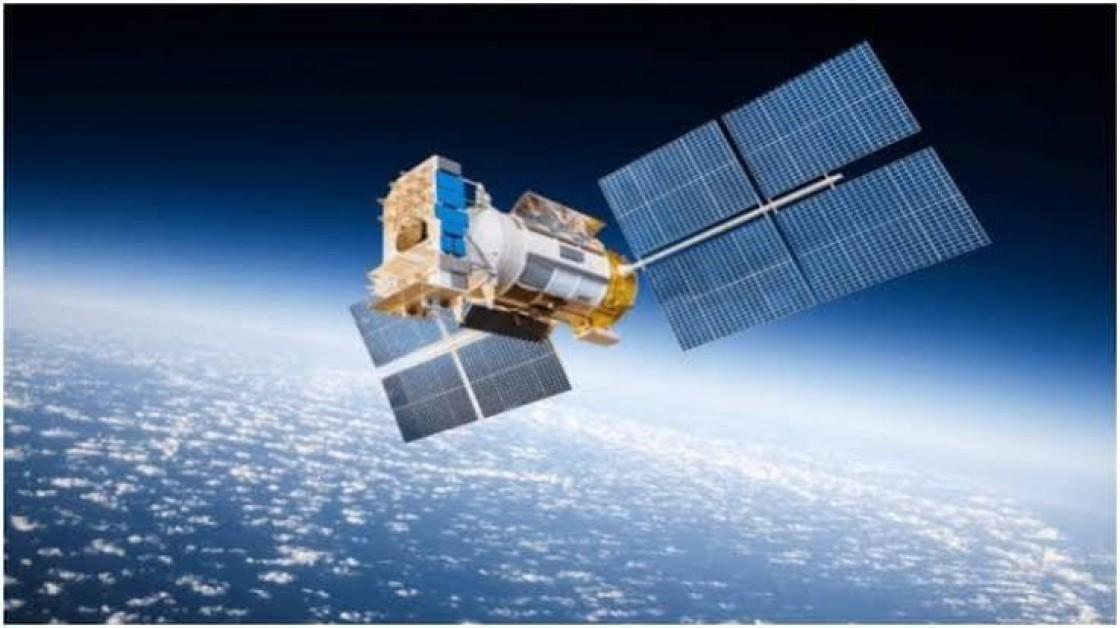
Space-Tech Startup InspeCity Raises ₹100 Crore to Scale Satellite Servicing Technologies
Indian space-tech startup InspeCity has raised ₹100 crore, or about $10.5 million, in a pre-Series A funding round as it prepares to move its satellite-servicing technologies from ground-based development into a series of in-orbit demonstrations.
The round was led by Speciale Invest and investor Ashish Kacholia, with participation from Antler Elevate, Antler India, Manish Gandhi, Shastra VC and other investors. (Moneycontrol)
InspeCity plans to use the capital to develop and flight-qualify technologies across propulsion, sensing, autonomous navigation, robotic manipulation, docking and in-orbit refuelling.
The company expects to conduct approximately four orbital missions over the next 12–18 months, progressively demonstrating increasingly complex capabilities rather than attempting to validate the entire servicing architecture in a single mission. (Moneycontrol)
The fundraising marks an important step for India's emerging in-space services sector.
Most satellites today are effectively treated as disposable machines. O nce they run out of fuel, experience certain failures or reach the end of their mission life, operators generally have limited options to service them.
InspeCity is attempting to change that model by building spacecraft capable of approaching other satellites, inspecting them, extending their operational lives and eventually performing more advanced maintenance and deorbiting tasks in space.
InspeCity Raises ₹100 Crore in Pre-Series A Funding
The latest financing totals:
₹100 crore
or approximately:
$10.5 million.
It represents InspeCity's pre-Series A round and follows earlier funding secured as the company developed its core in-orbit servicing technologies. (Moneycontrol)
The company had previously raised a $5.6 million seed round in 2025.
Speciale Invest and Ashish Kacholia Lead the Round
The latest investment was led by:
Speciale Invest
and:
Ashish Kacholia.
Other participants include:
Antler Elevate,
Antler India,
Manish Gandhi,
Shastra VC,
and additional investors. (Entrepreneur India)
Several of these investors have backed the company during earlier funding rounds, providing continuity as InspeCity moves from research toward commercial deployment.
Startup Plans Four Missions in 12–18 Months
InspeCity's immediate focus is getting its technologies into orbit.
Founder and CEO Arindrajit Chowdhury said the company expects to conduct approximately:
four launches or missions
during the next:
12 to 18 months. (Moneycontrol)
The programme will progressively demonstrate different capabilities.
This staged approach reduces the risk of attempting to validate multiple complex systems simultaneously.
First Missions Will Focus on Flight Qualification
Space hardware needs to perform in conditions impossible to replicate completely on Earth.
Once launched, equipment faces:
vacuum,
radiation,
extreme temperature cycles,
microgravity,
and launch vibration.
A technology may work perfectly in a laboratory but behave differently in orbit.
Flight qualification therefore becomes one of the most important milestones for any space-tech company.
InspeCity Is Building an In-Space Servicing Architecture
The company's larger objective is to become an:
in-orbit service provider.
Instead of launching satellites and abandoning them once problems arise, InspeCity wants spacecraft capable of travelling to another orbital asset and interacting with it.
Potential services include:
inspection,
life extension,
refuelling,
maintenance,
and controlled deorbiting.
This represents an emerging segment of the global space economy.
VEDA Is the Core Servicing Platform
InspeCity's principal architecture is called:
VEDA — Vehicle for Life-Extension and Deorbiting Activities.
VEDA is designed as an autonomous platform capable of approaching and servicing satellites already in orbit. (The Times of India)
The company's long-term goal is to expand VEDA from relatively focused life-extension missions toward more sophisticated orbital servicing.
VEDA Uses Four Core Technology Systems
InspeCity has organised its servicing architecture around four major technology modules.
These are:
GITA for propulsion and mobility,
CHAKSU for sensing and navigation,
RAMA for robotic manipulation,
and:
SPARSH for docking and in-orbit propellant transfer. (Entrepreneur India)
Together, these systems are intended to allow a servicing spacecraft to locate, approach, interact with and potentially support another satellite.
Propulsion Is Fundamental
A servicing spacecraft needs to move accurately between orbital positions.
This requires propulsion systems capable of delivering precise manoeuvres.
Unlike launch vehicles, which provide enormous thrust for a relatively short period, servicing spacecraft often need:
small,
controlled,
repeatable thrust.
Propulsion efficiency also matters because spacecraft carry limited fuel.
GITA Handles Mobility
GITA represents InspeCity's propulsion and mobility capability.
It is intended to support the manoeuvres required to move between orbital positions and approach target satellites.
A servicing spacecraft may need to change:
altitude,
velocity,
or orbital plane.
Those manoeuvres consume fuel and require extremely precise navigation.
Rendezvous Is One of the Hardest Challenges
Two satellites orbit Earth at extremely high speeds.
A servicing spacecraft therefore cannot simply "fly toward" another satellite in the way an aircraft approaches another plane.
It must carefully adjust its orbit until both spacecraft arrive at nearly the same location with extremely small relative velocity.
This process is known as:
rendezvous.
Proximity Operations Come Next
Once the servicing spacecraft reaches the target's vicinity, it enters:
proximity operations.
At this stage, the spacecraft may need to approach within:
kilometres,
metres,
or eventually centimetres
of another object.
Accuracy requirements increase dramatically.
A navigation error could damage both spacecraft.
CHAKSU Supports Sensing and Navigation
InspeCity's CHAKSU technology is intended to provide the perception and navigation capability needed for rendezvous and proximity operations.
The spacecraft needs to determine:
where the target is,
how it is moving,
and how quickly the distance between them is changing.
Sensors and onboard software must make those calculations continuously.
Autonomous Operations Are Important
Ground controllers cannot manually control every small movement in real time.
Communication delays and operational complexity make autonomy essential.
A servicing spacecraft needs software capable of:
interpreting sensor data,
making navigation decisions,
and responding safely
without constant human commands.
This makes onboard computing and autonomy central to the business.
Docking Is Even More Difficult
After rendezvous, a servicing spacecraft may need to physically connect with the target satellite.
This is known as:
docking.
Docking requires the two spacecraft to align precisely and make controlled physical contact.
Even small errors can create damaging forces.
InspeCity is developing SPARSH for this purpose.
SPARSH Supports Docking and Refuelling
SPARSH is designed for:
docking
and eventually:
in-orbit propellant transfer. (Entrepreneur India)
Refuelling represents one of the most commercially attractive possibilities in satellite servicing.
Many satellites stop operating not because their electronics have failed but because they run out of manoeuvring fuel.
Adding more fuel could extend their useful lives.
Satellite Life Extension Can Have Significant Economic Value
Satellites can cost:
millions,
tens of millions,
or hundreds of millions of dollars.
Replacing one also requires a launch.
If a servicing mission extends the life of an expensive satellite by several years, the economic value can be substantial.
Operators gain more revenue from an asset they have already paid to build and launch.
Geostationary Satellites Are Strong Candidates
Life-extension services can be particularly valuable for large geostationary communications satellites.
These spacecraft may operate for 15 years or more.
Their electronics can remain functional after station-keeping propellant becomes depleted.
A servicing spacecraft capable of attaching to such a satellite could potentially provide additional propulsion and extend its operational lifetime.
Refuelling Could Eventually Become More Flexible
A more advanced model involves transferring fuel directly into a satellite.
That would allow the satellite to continue using its own propulsion system.
But this requires:
compatible interfaces,
fluid-transfer systems,
precise docking,
and safe handling of propellants.
The engineering challenge is significantly greater than simply attaching an external propulsion vehicle.
Robotics Enables More Complex Servicing
InspeCity's RAMA technology focuses on:
robotic manipulation. (Entrepreneur India)
Robotic arms could eventually allow spacecraft to:
grasp objects,
move components,
and assist with repairs.
This moves the servicing model beyond propulsion support toward true orbital maintenance.
Repairing Satellites Could Transform Space Economics
Today, spacecraft are largely designed under the assumption that they cannot be repaired after launch.
This forces engineers to build high levels of redundancy.
If repair becomes reliable, future satellites could potentially be designed differently.
Components might eventually become replaceable.
Spacecraft could function more like infrastructure than disposable machines.
InspeCity Also Wants to Support Deorbiting
VEDA's name includes:
Deorbiting Activities.
This refers to moving old or failed spacecraft out of useful orbital regions.
Satellites left in orbit after the end of their mission contribute to the growing space-debris problem.
A servicing vehicle could potentially attach to an inactive spacecraft and help move it toward safe disposal.
Space Debris Is Becoming a Serious Problem
Earth orbit contains:
active satellites,
dead satellites,
spent rocket stages,
and fragments from past collisions.
Even small pieces can travel at enormous speeds.
A collision with operating spacecraft can cause severe damage.
As more satellites are launched, maintaining orbital sustainability becomes increasingly important.
Servicing Can Prevent Some New Debris
Satellite servicing helps sustainability in two ways.
It can:
extend the life of existing spacecraft,
reducing the need for replacement launches.
And it can potentially:
remove or deorbit failed satellites.
Both reduce pressure on orbital environments.
The Market Is Known as In-Orbit Servicing
Globally, this sector is often described as:
In-Orbit Servicing, Assembly and Manufacturing
or related terms such as:
ISAM.
The concept includes:
inspection,
refuelling,
repair,
assembly,
and manufacturing
in space.
Many governments and companies view this as a foundational capability for a future space economy.
InspeCity Wants Critical Technologies In-House
Chowdhury has said InspeCity intends to keep major parts of its architecture internally integrated.
These include:
robotics,
rendezvous and proximity operations,
propulsion,
and satellites. (Moneycontrol)
The reasoning is straightforward.
Integrating complex space systems developed independently by many suppliers can create significant risk.
Building core technologies under one organisation can improve coordination.
Vertical Integration Can Improve System Engineering
Every subsystem affects another.
Propulsion influences:
spacecraft mass.
Sensors influence:
navigation accuracy.
Robotic systems affect:
power consumption.
Docking equipment changes:
spacecraft structure.
Developing those technologies together can make overall system optimisation easier.
Vertical Integration Is Expensive
The disadvantage is cost.
Building propulsion, robotics, spacecraft and autonomous systems in-house requires:
specialised engineers,
testing facilities,
and substantial capital.
Most startups specialise in only one part of the value chain.
InspeCity's strategy is therefore ambitious.
The latest funding round helps finance that integrated model.
Capital Will Support Orbital Missions
One major use of the ₹100 crore will be:
building,
integrating,
launching,
and operating
the company's upcoming demonstrations. (YourStory.com)
Space missions require significant spending before launch.
Companies need to pay for:
hardware,
testing,
launch services,
and mission operations.
Government Grants Will Supplement Private Funding
InspeCity expects government programmes to provide additional capital beyond the new investment round.
The company already has:
three iDEX projects
and is pursuing other government opportunities. (Moneycontrol)
The Innovations for Defence Excellence programme supports Indian startups developing technologies relevant to defence and national security.
Defence Has Natural Need for Satellite Servicing
Military and strategic satellites are expensive and critical.
The ability to:
inspect,
repair,
or extend the life
of such assets can have national-security value.
Countries increasingly view orbital servicing technologies as strategically important.
They can improve resilience when satellites face failures or damage.
Dual-Use Potential Is Significant
Many technologies used for satellite servicing have both civilian and defence applications.
Rendezvous technology can support:
commercial life extension.
It can also support:
inspection of strategic spacecraft.
Robotic systems can repair commercial satellites.
They can also interact with military assets.
This makes the sector strategically sensitive.
InspeCity Has iDEX Support
The company's participation in India's defence innovation programme provides both:
funding
and potentially:
customer validation.
Government projects can help startups develop advanced technologies that may initially be difficult to monetise through purely commercial customers.
This is particularly useful in deep-tech sectors with long development cycles.
Funds Will Also Expand the Team
InspeCity currently employs around:
70 people
and plans to more than double its workforce as it deploys the new capital. (Moneycontrol)
Hiring will support:
engineering,
manufacturing,
mission operations,
and other technical functions.
Space companies require highly specialised talent.
New Facility Is Also Planned
Part of the funding is expected to support a larger work and research facility as InspeCity transitions from a primarily R&D-focused organisation toward commercial execution. (YourStory.com)
Physical infrastructure matters in space technology.
Companies need:
clean areas,
integration facilities,
testing equipment,
and specialised manufacturing environments.
Propulsion Business Could Generate Earlier Revenue
In-orbit servicing is a long-term and technically difficult market.
But individual technologies developed for the servicing architecture can also have separate commercial applications.
InspeCity intends to expand sales of its propulsion systems. (The Times of India)
This could provide revenue while the larger servicing platform remains under development.
Selling Components Can Support Platform Development
A company developing an integrated spacecraft may monetise:
thrusters,
sensors,
or other subsystems
independently.
This creates two advantages.
It produces revenue.
And it allows individual technologies to accumulate operating heritage.
In aerospace, proven flight heritage can significantly increase customer confidence.
Flight Heritage Is Extremely Valuable
Satellite operators are cautious about unproven equipment.
Once hardware successfully operates in orbit, its commercial credibility improves.
A propulsion system with several successful missions becomes easier to sell than one tested only on the ground.
This is another reason InspeCity's upcoming missions are so important.
Commercial Agreements Are Already Being Explored
Chowdhury has said the company has preliminary agreements with various customers and continues to engage with government entities. (The Times of India)
The transition from demonstrations to paying missions will be the key commercial test.
Technology validation alone does not create a sustainable business.
Customers need to believe servicing costs less than replacing the satellite or accepting its loss.
Satellite Servicing Economics Must Be Compelling
Suppose servicing costs nearly as much as launching a replacement satellite.
The operator may simply replace the spacecraft.
A servicing mission creates value when:
service cost
is meaningfully below:
the value of the additional satellite life gained.
This means InspeCity must combine sophisticated engineering with disciplined mission economics.
Standardisation Could Make the Market Larger
One challenge is that many satellites were never designed to be serviced.
They may lack:
docking ports,
refuelling interfaces,
or convenient grapple points.
Future spacecraft could be designed with standard servicing interfaces.
That would make orbital maintenance significantly easier.
The industry may therefore evolve toward serviceable spacecraft standards.
Existing Satellites Still Create an Opportunity
Servicing companies cannot wait until every future satellite is designed for repair.
They need systems capable of interacting with current spacecraft.
That may require:
computer vision,
adaptable docking systems,
and robotic manipulation.
These technologies increase engineering complexity but expand the available market.
Inspection Can Be a Lower-Risk Starting Service
A servicing spacecraft does not necessarily need to dock immediately.
It can first approach another satellite and collect detailed imagery or sensor data.
This can help operators understand:
damage,
deployment failures,
or spacecraft condition.
Inspection therefore provides a potentially simpler entry point into in-orbit services.
Inspection Can Support Insurance Decisions
Spacecraft insurers and operators often have limited information when satellites experience anomalies.
External inspection could help determine:
what failed,
whether recovery is possible,
and how much damage occurred.
That information could improve technical and financial decision-making.
Servicing Could Reduce Insurance Risk
If satellites become repairable, the economics of space insurance could eventually change.
Today, some failures effectively mean total or partial asset loss.
Reliable servicing could provide another recovery option.
Insurers may eventually incorporate serviceability into risk models.
India’s Space Sector Is Opening Rapidly
InspeCity's funding comes during a broader expansion of India's private space industry.
Policy reforms have opened more parts of the sector to private companies.
Startups are developing:
rockets,
satellites,
propulsion,
Earth observation,
and orbital services.
The ecosystem is moving beyond dependence on government missions alone.
IN-SPACe Has an Important Role
India's space reforms created IN-SPACe as the institutional interface supporting private participation in space activity.
Private companies need regulatory pathways for:
launches,
satellite operations,
and access to national space infrastructure.
A clearer commercial framework can encourage larger private investment.
Venture Capital Is Becoming More Comfortable With Space-Tech
Space startups historically struggled to attract capital because:
development cycles were long,
hardware was expensive,
and technical risk was high.
That is gradually changing.
Lower launch costs and expanding satellite markets have improved commercial opportunities.
Investors are now funding specialised infrastructure businesses such as orbital servicing.
Deep-Tech Funding Has Different Economics
Unlike consumer startups, deep-tech companies often spend years developing technology before generating significant revenue.
Investors therefore evaluate:
technical milestones,
intellectual property,
and strategic relevance
alongside traditional revenue metrics.
InspeCity's upcoming orbital demonstrations will therefore be critical valuation milestones.
Four Missions Reduce Technology Concentration Risk
Demonstrating everything on one spacecraft would create enormous programme risk.
If one component failed, the entire servicing architecture might remain unvalidated.
Multiple missions allow the company to test capabilities incrementally.
One mission can validate:
propulsion.
Another:
rendezvous.
Another:
docking.
The programme can become progressively more complex.
Learning Between Missions Is Valuable
Every flight generates real operating data.
Engineers can identify:
unexpected behaviour,
software problems,
or performance limitations.
That information can be incorporated into the next spacecraft.
Iterative development has become increasingly important in commercial space.
SpaceX Popularised Rapid Iteration
Modern commercial space companies increasingly favour:
build,
test,
fly,
learn,
and improve.
This differs from traditional programmes designed to eliminate virtually every possible failure before the first mission.
InspeCity's staged mission approach reflects a similar philosophy at a smaller scale.
Failure Risk Remains High
Space remains unforgiving.
A successful fundraising round does not guarantee successful orbital demonstrations.
Launch problems,
hardware failures,
navigation errors,
or software faults
can delay programmes significantly.
Investors therefore need to evaluate technological progress carefully.
Regulation Will Become More Important With Proximity Operations
A satellite moving close to another operator's spacecraft creates legal and regulatory considerations.
Operators need:
permission,
coordination,
and clear liability arrangements.
International norms around in-orbit servicing are still developing.
As the industry grows, rules governing proximity operations will become increasingly important.
Orbital Servicing Has Geopolitical Sensitivity
A spacecraft capable of approaching and manipulating another satellite can be used for beneficial servicing.
But the same technology could potentially interfere with another spacecraft.
This makes rendezvous and robotic capabilities strategically sensitive.
Transparency and operational norms will therefore matter.
Global Competition Is Growing
Companies in the United States, Europe and Asia are developing related technologies.
Some firms have already demonstrated life-extension missions or close-proximity operations.
InspeCity therefore enters a competitive global market.
Its potential advantages include:
Indian engineering economics,
vertical integration,
and access to a rapidly expanding domestic space ecosystem.
India Could Become a Cost-Competitive Servicing Hub
India developed globally competitive capabilities in:
IT,
pharmaceuticals,
and engineering services
partly through technical talent combined with cost advantages.
Space technology could follow a similar path.
If Indian companies develop reliable orbital systems at competitive costs, they may be able to serve international satellite operators.
Export Market Could Be Larger Than Domestic Demand
India's satellite fleet alone may not support a very large servicing industry.
The global market is much broader.
Thousands of commercial and government spacecraft operate around Earth.
InspeCity therefore needs international customers if it wants to build a large business.
The company's technologies are being developed with global applications in mind.
VEDA Could Eventually Support More Advanced Services
InspeCity's roadmap goes beyond life extension.
Future servicing architecture could include:
refuelling,
repair,
assembly,
and debris removal.
The company has also referred to SAMA, or Space-Based Maintenance Asset, as part of its broader architecture for progressively expanding orbital capabilities. (Moneycontrol)
This suggests a long-term platform strategy rather than a single-purpose spacecraft.
Orbital Infrastructure Could Become a New Industry
If humans build more economic activity in space, supporting infrastructure will become necessary.
Satellites may need:
maintenance,
fuel,
transport,
inspection,
and eventually manufacturing.
The same way terrestrial industries depend on:
service stations,
repair centres,
and logistics,
a larger space economy may require equivalent orbital services.
InspeCity Is Betting on That Future
The company's technology roadmap is effectively based on a simple thesis:
satellites will eventually need servicing rather than replacement.
If that transition happens, early companies with proven:
rendezvous,
robotics,
propulsion,
and docking
capabilities could occupy important positions in the market.
The next 12–18 months will therefore be important in demonstrating whether InspeCity can move from that thesis to operational capability.
Conclusion
InspeCity's ₹100 crore pre-Series A funding round provides the Indian space-tech startup with fresh capital to move its in-space servicing technologies from laboratory development toward orbital demonstrations.
Led by Speciale Invest and Ashish Kacholia, with participation from Antler Elevate, Antler India, Manish Gandhi, Shastra VC and others, the round will support approximately four missions planned over the next 12–18 months. (Moneycontrol)
Those missions are intended to progressively qualify technologies spanning:
propulsion,
autonomous navigation,
robotics,
docking,
and in-orbit refuelling.
At the centre of InspeCity's strategy is VEDA, its Vehicle for Life-Extension and Deorbiting Activities, built around internally developed technology modules for propulsion, sensing, robotics and docking. (Entrepreneur India)
The opportunity is potentially significant.
Satellites are expensive assets, yet most currently have limited options once fuel runs out or problems develop.
If spacecraft can be inspected, refuelled, repositioned or repaired in orbit, operators may be able to extend asset life while reducing replacement costs and space debris.
But the next challenge is substantial.
InspeCity now needs to demonstrate that its technologies can operate reliably together under real orbital conditions and eventually deliver services at economics attractive to satellite operators.
The ₹100 crore round therefore marks more than another space-startup fundraising.
It finances the transition from building the components of orbital servicing on Earth to proving whether India can develop a commercially viable platform capable of maintaining satellites after they are already in space.
 InspeCity Raises ₹100 Crore to Scale In-Orbit Satellite Servicing Technologies FAQs
POST A COMMENT (0)
All Comments (0)
Replies (0)