





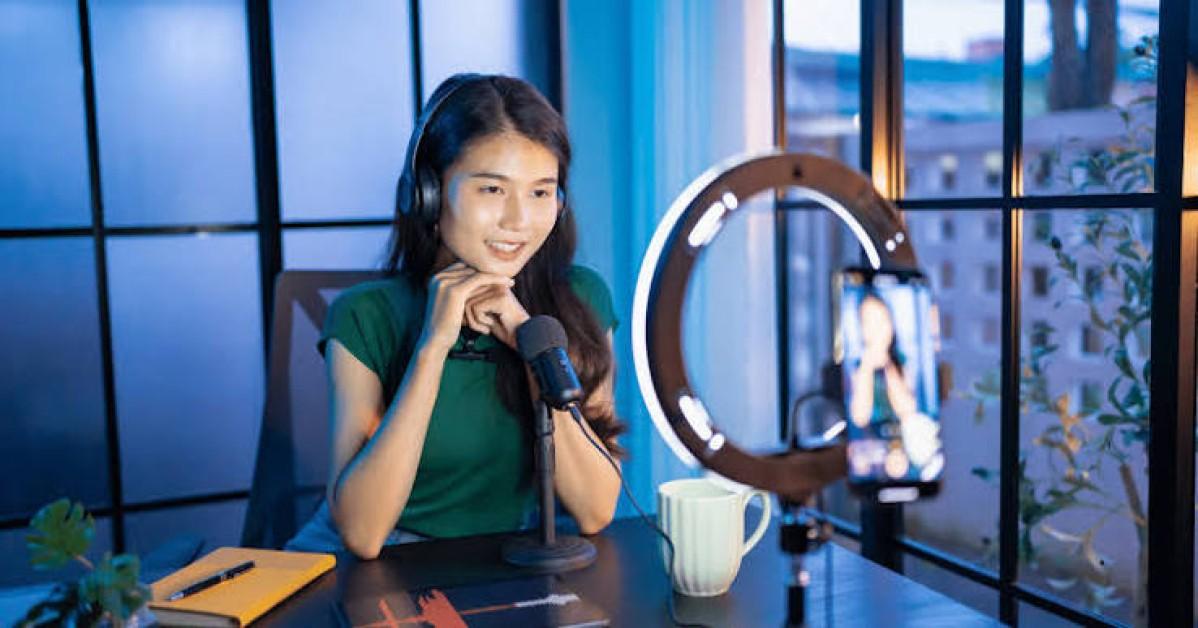
Social-Media Influencers Launch New VC-Backed Consumer Brands as Creator-Led Entrepreneurship Expands
A new generation of Indian social-media creators is moving beyond sponsorships and advertising into company building, launching consumer brands across beauty, fashion, food, kitchen appliances, supplements and wellness while attracting increasing interest from venture-capital investors.
The shift is turning creators with large, engaged communities into:
founders,
product developers,
and:
brand owners.
Recent examples include chef and content creator Sanjyot Keer, whose kitchenware and appliance startup Curaa raised ₹40 crore in a round led by 3one4 Capital, beauty creator Himi Khandelwal, who has raised around ₹8 crore for skincare brand Pruf, and influencer Kusha Kapila, whose shapewear brand Underneat has raised nearly $7 million from investors including Fireside Ventures and Alteria Capital.
The trend is also visible in nutrition and supplements.
Former pilot and creator Gaurav Taneja's Beastlife raised ₹20 crore earlier in 2026 and has been exploring a larger funding round, while health creator Revant Himatsingka, better known as FoodPharmer, has built clean-label protein brand Only What's Needed, or OWN, around the trust created through his ingredient-analysis content.
The underlying investment thesis is straightforward.
Creators already possess something that conventional consumer startups often spend heavily to acquire:
attention.
When that attention is combined with category expertise, community trust and a differentiated product, a creator can potentially reduce early customer-acquisition costs and launch with a built-in audience.
But the model is also entering a more demanding phase.
Investors increasingly recognise that follower counts alone do not create enduring companies.
Creator-led brands must still prove:
product quality,
repeat purchase,
gross margins,
distribution,
and:
operational discipline.
That distinction is becoming increasingly important as India's broader D2C sector matures and venture investors become more selective about which consumer companies receive capital.
Creator-Led Brands Are Moving Into Mainstream Venture Capital

The creator economy was initially built around monetisation models such as:
advertising,
brand sponsorships,
affiliate marketing,
subscriptions,
and platform revenue.
Those models allow creators to monetise their audiences without owning the products being sold.
Creator-led consumer brands change that equation.
Instead of being paid to promote someone else's product, the creator can own:
the brand,
equity,
customer relationship,
and potentially a much larger share of the long-term economics.
This transforms the creator from:
media channel
into:
entrepreneur.
Venture Investors Are Increasingly Willing to Back the Model
The recent fundraising activity shows that creator-founded businesses are becoming investable companies rather than side projects.
The investor list spans:
3one4 Capital,
Fireside Ventures,
DSG Consumer Partners,
Alteria Capital,
All In Capital,
GVFL,
and multiple angel investors.
These investors are not simply buying exposure to influencer popularity.
They are evaluating whether creators can turn:
community,
content expertise,
and distribution
into businesses capable of generating repeatable revenue.
Curaa Raises ₹40 Crore Led by 3one4 Capital
One of the clearest examples is:
Curaa.
The kitchenware and appliance startup was founded in 2024 by chef and content creator Sanjyot Keer and entrepreneur Neeraj Kumawat.
Curaa raised:
₹40 crore
in funding led by:
3one4 Capital.
The company plans to deploy the capital across:
product development,
branding,
supply-chain management,
and:
omnichannel expansion.
Sanjyot Keer Brings a Built-In Food Audience
Keer is the creator behind:
Your Food Lab.
His YouTube audience exceeds:
7 million followers.
That gives Curaa immediate access to a highly relevant consumer community.
The connection between creator and product category is particularly important.
Keer has spent years producing content around:
recipes,
cooking methods,
kitchen techniques,
and equipment.
Kitchen appliances are therefore adjacent to the expertise his audience already associates with him.
Creator Expertise Can Help With Product Development
Keer has said his role at Curaa goes beyond marketing.
He participates in:
research and development
alongside the company's team.
His experience in professional kitchens and interaction with millions of viewers can potentially provide direct consumer insight.
That creates an interesting product-development loop.
Traditional brands may conduct:
surveys,
focus groups,
and consumer research.
A creator with a highly engaged audience can observe customer questions every day.
Comments, messages and content performance can become a continuous source of product intelligence.
Pruf Raises Around ₹8 Crore for Skincare
Beauty creator Himi Khandelwal, known online as:
The Skintellectual Girl,
has also moved into brand ownership.
Her skincare company:
Pruf
has raised approximately:
₹8 crore
at a reported pre-money valuation of around:
₹22 crore.
The funding round was led by:
DSG Consumer Partners
with participation from:
All In Capital
and angel investors including:
Arjun Purkayastha,
Kunal Bahl,
Rohit Bansal,
Anupam Mittal,
and:
Malini Adapureddy.
Pruf Is Beginning With Hyperpigmentation
Khandelwal has said Pruf is beginning with:
hyperpigmentation,
a major skincare concern among Indian consumers.
The company plans to invest heavily in less visible parts of product development including:
formulation,
repeated testing,
clinical validation,
and:
R&D.
That approach illustrates a broader requirement for creator-founded brands.
Audience trust may attract the first buyer.
But scientifically credible products are required to generate:
repeat purchases.
Underneat Has Raised Nearly $7 Million
Influencer Kusha Kapila has built another creator-led consumer brand:
Underneat.
The company focuses on:
shapewear.
Over the past year, Underneat has raised nearly:
$7 million
from investors including:
Fireside Ventures
and:
Alteria Capital.
Shapewear is a category that requires substantial customer education around:
fit,
use cases,
comfort,
and sizing.
That makes creator-led content potentially valuable.
Influencers Can Reduce the Education Cost of Emerging Categories
Fireside Ventures founding partner Vinay Singh has argued that the influencer route can be particularly effective when a category requires consumer education.
The logic is important.
A traditional brand entering an unfamiliar category often needs to spend heavily explaining:
what the product is,
why consumers need it,
and:
how to use it.
A creator can do that through:
content.
The result may be lower customer-acquisition costs during the early stage of growth.
Beastlife Shows the Model Extending Into Supplements
Creator-led entrepreneurship is also expanding into:
health and nutrition.
Gaurav Taneja's supplement brand:
Beastlife
raised approximately:
₹20 crore
from:
GVFL
and:
Equentis
earlier in 2026.
The company has also been in talks for a significantly larger funding round.
This demonstrates that investors are willing to back creator-founded companies even in categories where:
quality,
regulatory compliance,
and consumer trust
are especially important.
FoodPharmer Launches OWN Protein Brand
Health creator Revant Himatsingka, widely known as FoodPharmer, entered consumer products with:
Only What's Needed, or OWN.
The brand focuses on:
clean-label protein.
Himatsingka built his audience around analysing:
ingredient labels,
sugar content,
and nutritional claims.
That made protein supplements a natural adjacent category because consumer mistrust in the segment is high.
Trust Is the Core Asset in Creator Commerce
Himatsingka has said a significant proportion of OWN customers are:
first-time protein consumers.
Some buyers are even purchasing protein for older family members.
This demonstrates an important difference between creators and conventional advertising.
Consumers may view a creator as:
an educator,
reviewer,
or trusted voice.
That trust can lower the psychological barrier to trying an unfamiliar product.
In consumer markets, this can be extremely valuable.
Follower Counts Function Like an Owned Media Network
Consumer startups historically spent heavily on:
Facebook,
Instagram,
Google,
YouTube,
and influencers
to reach customers.
Creator-founders already control one part of that distribution.
Their audience becomes an:
owned media channel.
A product launch can reach hundreds of thousands or millions of potential buyers without requiring the same upfront advertising expenditure.
That can improve early-stage capital efficiency.
Customer-Acquisition Costs Could Be Lower
One of the largest problems facing D2C brands is:
customer-acquisition cost, or CAC.
As digital advertising becomes more competitive, the cost of acquiring each customer can increase.
A creator with a loyal audience can potentially acquire the first cohort of customers at a significantly lower cost.
The economics can be especially powerful when:
the product category matches the creator's existing content.
Category Fit Is More Important Than Fame
Not every creator can launch every type of product successfully.
The strongest examples usually show:
creator-category alignment.
A chef launching cooking equipment makes intuitive sense.
A skincare educator launching a skincare brand does too.
A fitness creator launching supplements can have similar alignment.
This matters because audiences already associate the creator with knowledge in that category.
Trust transfers more naturally.
Poor Category Fit Could Damage Both Brand and Creator
The opposite is also true.
A creator launching a product completely disconnected from their identity may appear opportunistic.
If the product performs poorly, the creator risks damaging:
the brand
and:
their personal reputation.
That creates a stronger feedback mechanism than conventional celebrity endorsements.
A celebrity can end an endorsement contract.
A creator-founder owns the consequences of product failure.
Creators Have More at Stake Than Brand Ambassadors
Traditional influencer marketing is transactional.
A company pays a creator.
The creator posts content.
The campaign ends.
Creator-led brands introduce:
equity ownership.
The creator benefits when the company grows and loses economic value if it fails.
That potentially aligns incentives more closely with:
product quality
and:
long-term customer satisfaction.
Ownership Changes Content Behaviour
A creator promoting their own business may produce:
product demonstrations,
customer education,
behind-the-scenes content,
and founder updates
over long periods.
This creates persistent marketing rather than a one-time campaign.
The audience can follow the journey from:
product development
to:
launch
to:
expansion.
That turns company-building itself into content.
Content and Commerce Are Merging
The creator-brand trend reflects a broader structural change.
Historically:
media created attention,
and retailers converted that attention into sales.
Social platforms allow the same person or organisation to do both.
A creator can:
build attention,
educate audiences,
launch a product,
sell directly,
collect customer feedback,
and promote repeat purchases.
The boundary between:
media
and:
commerce
is therefore becoming less distinct.
Social Platforms Become Distribution Infrastructure
Platforms such as:
Instagram,
YouTube,
and short-form video networks
are no longer merely marketing channels.
They can function as:
product-discovery engines.
Consumers increasingly discover brands through:
creators,
recommendation videos,
reviews,
and social feeds.
This gives creators a strategic advantage because they participate in discovery before a consumer even begins searching for a product.
India’s D2C Market Has Attracted Nearly $6 Billion Since 2021
The creator-brand wave is emerging within a much larger Indian D2C ecosystem.
Indian direct-to-consumer companies raised nearly:
$6 billion
across approximately:
2,000 equity funding rounds
between January 2021 and August 2026, according to Tracxn data cited by Economic Times.
That period created a large ecosystem of:
manufacturers,
performance marketers,
logistics providers,
brand agencies,
and venture investors.
Creator-founders can now access this infrastructure without building everything from scratch.
Building a Consumer Brand Has Become Easier
A founder no longer necessarily needs to own:
a factory,
warehouse,
or national distribution system
before launching.
India has developed a large network of:
contract manufacturers,
third-party logistics providers,
e-commerce platforms,
marketplaces,
payment infrastructure,
and packaging vendors.
This has reduced the upfront barriers to consumer-brand creation.
Creators can focus initially on:
product,
audience,
and brand.
Contract Manufacturing Enables Fast Product Launches
Many consumer categories can now be supported by specialist manufacturers.
These include:
skincare,
supplements,
food,
beauty,
and personal care.
A creator can work with manufacturing partners rather than constructing a factory.
That reduces capital requirements.
It also allows faster testing of:
new products
and:
small initial production runs.
Venture Capital Adds Acceleration Capital
Creator reach may provide the first customers.
Venture capital can fund the next stage.
Capital is required for:
inventory,
R&D,
marketing,
team building,
technology,
distribution,
retail expansion,
and working capital.
This is why creator-founded companies are increasingly seeking institutional investors even when they already possess strong organic reach.
Omnichannel Distribution Is Becoming Essential
Curaa's plans include:
omnichannel expansion.
This highlights another important shift.
A creator audience may provide an excellent D2C launch channel.
But a large consumer brand eventually needs to reach shoppers who do not follow the founder.
That requires:
marketplaces,
physical retail,
quick commerce,
and other distribution networks.
The business must therefore evolve beyond the creator's personal audience.
Creator Audience Is an Advantage, Not the Entire Market
A founder with 5 million followers does not automatically have 5 million customers.
Social audiences contain people from:
different locations,
income groups,
age groups,
and buying intentions.
Only a fraction may purchase the product.
The real test is whether the brand can convert a core audience into customers and then expand far beyond that original community.
Repeat Purchase Matters More Than Launch Hype
Creators can generate exceptional launch-day visibility.
But consumer businesses are built on:
repeat demand.
A skincare customer must buy again.
A supplement customer must reorder.
A kitchen appliance must earn good reviews.
A clothing customer must trust fit and quality.
If customers do not return, influencer reach only delays the underlying problem.
Investors Are Becoming More Selective
India's broader D2C sector is entering a more mature phase.
Investors are increasingly prioritising:
unit economics,
brand durability,
repeat purchase,
and cash efficiency
over rapid growth at any cost.
That shift applies equally to creator brands.
A large social audience can help secure investor attention.
But it no longer excuses weak fundamentals.
The Product Must Eventually Outgrow the Creator
A successful creator-founded company faces an unusual challenge.
The creator is initially the company's biggest advantage.
Over time, the company must become:
bigger than the creator.
Customers should eventually buy because they trust:
the product
and:
the brand,
not merely because they follow the founder.
Otherwise, growth becomes constrained by the size and relevance of the creator's audience.
Founder Dependence Can Become a Risk
Heavy reliance on one personality creates:
key-person risk.
If the creator's popularity declines, customer acquisition may weaken.
Controversies can also affect the company directly.
Traditional brands can replace celebrity ambassadors.
A creator-led company cannot easily replace its founder.
Investors therefore need to assess brand independence.
Personal Reputation Becomes Corporate Risk
When creator and company are tightly linked, personal reputation becomes a business asset.
But it also becomes a liability.
A controversy involving the founder can affect:
sales,
partners,
investors,
employees,
and retail relationships.
This creates a distinctive governance challenge for creator-led companies.
Professional Management Becomes Important at Scale
Creators may be exceptional at:
content,
community building,
or category education.
But a consumer company also requires:
finance,
supply chain,
operations,
legal,
inventory planning,
and distribution.
Successful creator-led brands will therefore need experienced professional teams.
The creator does not need to perform every corporate function.
Co-Founders Can Help Bridge Operational Gaps
Several creator brands already combine:
a public-facing creator
with:
operating co-founders.
Curaa, for example, pairs Sanjyot Keer with entrepreneur Neeraj Kumawat.
This structure can be powerful.
The creator provides:
audience,
category insight,
and brand voice.
The operating founder focuses on:
execution,
finance,
and organisational scale.
Creators Can Become Better Consumer Researchers
One major structural advantage remains underappreciated.
Creators receive continuous feedback.
They see:
comments,
DMs,
search queries,
video retention,
likes,
shares,
and audience questions.
This provides a direct window into consumer behaviour.
A traditional company may spend significant money obtaining comparable insights.
Social Content Can Test Demand Before Manufacturing
Creators can also test product ideas through content before making large inventory commitments.
They can observe audience response to:
ingredients,
features,
designs,
or problem statements.
If engagement is high, they gain an early signal of potential demand.
This reduces some product-development risk.
Creator Brands Can Launch Faster
The combination of:
community insight,
contract manufacturing,
e-commerce infrastructure,
and venture funding
can dramatically shorten the time between idea and product launch.
This helps explain why creator-led entrepreneurship is accelerating now rather than a decade ago.
The surrounding infrastructure is finally mature enough to support it at scale.
Celebrity Brands Provided an Earlier Template
The creator model resembles the earlier rise of:
celebrity-backed consumer brands.
Indian celebrities including:
Shraddha Kapoor,
Kriti Sanon,
and:
Samantha Ruth Prabhu
have participated in consumer businesses across jewellery, beauty and wellness categories.
Creators extend that model into a broader group of internet-native entrepreneurs.
Creators May Have a Different Advantage From Celebrities
Celebrity brands often benefit from:
mass awareness.
Creators may have smaller audiences but deeper engagement.
A creator may communicate with the same audience:
daily.
That can create stronger category trust than conventional celebrity fame.
For niche products, depth of engagement can matter more than absolute reach.
Niche Communities Can Build Valuable Brands
A creator does not need tens of millions of followers.
A specialised audience of:
100,000 highly engaged consumers
can sometimes be more commercially valuable than millions of casual followers.
This is particularly true in categories such as:
beauty,
fitness,
nutrition,
parenting,
finance,
and specialised hobbies.
The audience's relevance matters as much as its size.
Creator Commerce Could Expand Beyond Consumer Products
The current wave is concentrated in physical consumer brands.
But the broader model could extend into:
education,
financial services,
travel,
software,
media,
and memberships.
Creators already control distribution in these categories.
Ownership provides the next logical step.
The Creator Economy Is Becoming an Ownership Economy
The first phase of the creator economy focused on:
monetising attention.
The next phase is increasingly about:
owning assets built from that attention.
Those assets can include:
brands,
intellectual property,
communities,
and companies.
This shifts wealth creation from campaign income toward long-term equity value.
Venture Capital Sees Potential for Large Outcomes
Investors are interested because successful consumer brands can eventually produce:
large revenue,
strong cash flows,
strategic acquisitions,
or public-market exits.
A creator who solves the initial distribution problem may accelerate the early path toward scale.
That does not eliminate risk.
But it can improve the starting position.
Creator Brands Could Also Become Acquisition Targets
Large consumer companies continuously seek:
new brands,
younger customers,
digital distribution,
and fast-growing categories.
Creator-founded brands that establish strong product-market fit could become acquisition candidates.
This has already become an important exit route across India's broader D2C ecosystem.
D2C Consolidation Is Increasing
As India's consumer startup market matures, large companies are becoming more active buyers of digital-first brands.
This creates an additional incentive for venture funds.
They no longer need every brand to become an independent public company.
Strategic acquisition can provide another path to liquidity.
Creator brands may be particularly attractive if they bring:
loyal communities
and:
strong organic distribution.
The Best Creator Brands Will Still Need Brand Equity Beyond Social Media
Social-media reach can decline.
Algorithms change.
Platforms lose relevance.
Audience behaviour shifts.
An enduring consumer company therefore needs brand equity that survives outside the platform where the founder originally became famous.
Retail distribution, customer service and product quality all become essential.
Platform Dependence Is a Hidden Risk
Creators do not actually own Instagram or YouTube distribution.
Platforms can alter:
algorithms,
reach,
monetisation,
and recommendation systems.
A company relying entirely on one platform therefore faces external risk.
Successful creator brands will need to build:
email databases,
customer records,
apps,
retail presence,
and direct relationships.
These become owned distribution assets.
Customer Data Becomes More Valuable Than Followers
A follower is not necessarily a customer.
A brand customer provides much richer information:
purchase history,
frequency,
average order value,
product preference,
and retention.
As creator companies mature, direct customer data should become more important than raw follower counts.
This represents the transition from:
creator metric
to:
business metric.
Investors Will Track Cohort Economics
For venture investors, the important questions increasingly include:
How many customers reorder?
What is contribution margin?
How much does customer acquisition cost outside organic creator traffic?
How quickly does inventory turn?
What happens when paid advertising increases?
Can the company grow without constant founder promotion?
These questions will determine which creator brands become durable businesses.
Creator-Led Entrepreneurship Is Likely to Expand
The conditions supporting the trend remain strong.
India has:
hundreds of millions of social-media users,
a growing D2C infrastructure,
a large base of creators,
improving digital payments,
expanding e-commerce,
and active consumer-focused venture funds.
More creators are therefore likely to test entrepreneurship.
But the market will also become more competitive.
Not Every Influencer Will Become a Successful Founder
The creator-founder model has obvious advantages.
It also creates hype.
Launching a brand has become easier.
Building one remains difficult.
Creators must manage:
inventory,
returns,
cash flow,
product quality,
hiring,
taxation,
compliance,
and customer complaints.
These operational realities can be very different from creating content.
The Next Phase Will Separate Influence From Entrepreneurship
The strongest creators will likely be those who understand that audience is only the beginning.
Real company-building requires:
product discipline,
financial management,
strong teams,
and long-term execution.
Those skills are not guaranteed by social popularity.
The next several years will therefore reveal which influencer brands are actually:
creator-led companies
rather than:
creator-led marketing campaigns.
Conclusion
India's creator economy is entering a new stage as social-media influencers increasingly become founders of venture-backed consumer companies rather than simply promotional partners for established brands.
The emerging portfolio already spans multiple sectors.
Sanjyot Keer's Curaa has raised ₹40 crore, Himi Khandelwal's skincare startup Pruf has raised around ₹8 crore, Kusha Kapila's Underneat has secured nearly $7 million, and Gaurav Taneja's Beastlife has also attracted institutional funding.
The investment thesis is compelling.
Creators begin with:
built-in distribution,
category-specific communities,
continuous customer feedback,
and potentially lower early customer-acquisition costs.
But those advantages only solve the first stage of the consumer-brand journey.
Long-term value will depend on whether these companies can build:
credible products,
repeat purchase,
strong margins,
professional teams,
omnichannel distribution,
and brand equity that extends beyond their founders.
That is particularly important as India's D2C investment market matures. Consumer startups have raised nearly $6 billion across roughly 2,000 funding rounds since 2021, but investors are increasingly demanding stronger business fundamentals rather than growth driven purely by marketing.
The creator economy is therefore moving from an era of:
paid influence
toward an era of:
ownership.
The most successful creators may increasingly build not just audiences, but durable consumer companies around the trust and expertise those audiences represent.
 Social-Media Influencers Launch VC-Backed Consumer Brands as Creator Entrepreneurship Expands FAQs
POST A COMMENT (0)
All Comments (0)
Replies (0)