





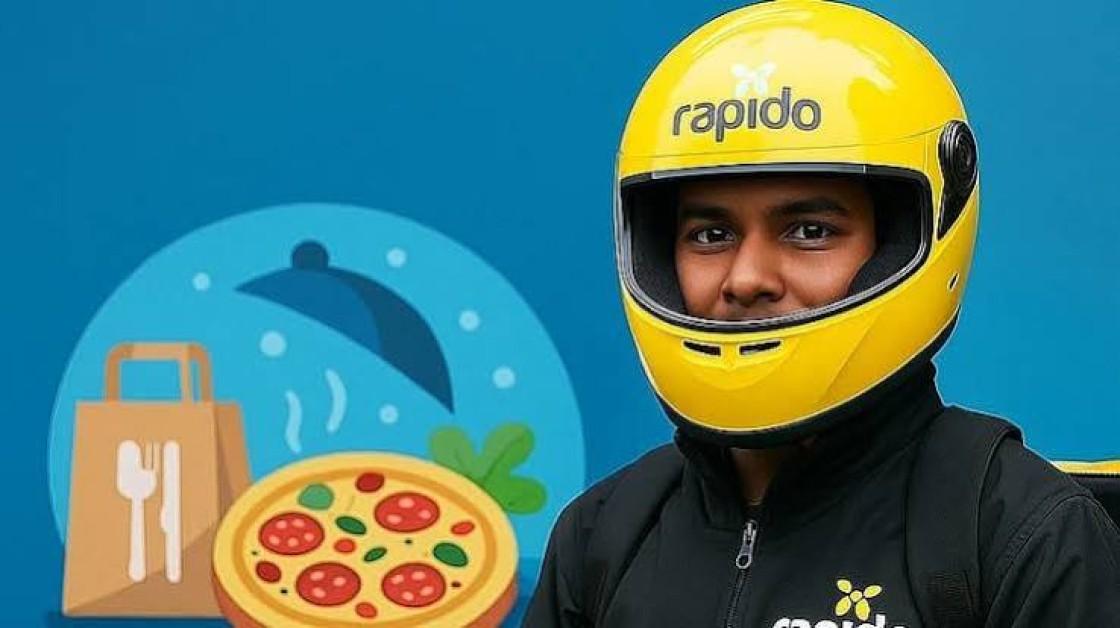
Rapido Expands Zero-Commission Food Delivery Model Across India
Rapido is expanding its zero-commission food delivery model as it seeks to strengthen its position in India's highly competitive online food delivery market. Through its Ownly platform integrated within the main Rapido app, the company aims to provide restaurants with an alternative business model that eliminates traditional commission charges while generating revenue through a fixed subscription-based structure.
The expansion reflects growing competition in India's digital food delivery sector, where platforms are increasingly experimenting with new pricing models to attract restaurant partners, improve customer value and achieve long-term sustainable growth.
Zero-Commission Model Targets Restaurant Economics

Rapido's food delivery strategy is built around eliminating commission fees that restaurants typically pay on each order.
Instead, participating restaurants subscribe to a fixed-fee model, enabling them to retain a larger share of their order value.
The approach is designed to:
-
Improve restaurant profitability
-
Lower operating costs
-
Increase partner participation
-
Encourage menu flexibility
-
Strengthen merchant relationships
-
Expand restaurant choice
-
Improve pricing transparency
-
Support long-term collaboration
The model aims to create a more balanced relationship between the platform and restaurant partners.
Ownly Integrated Into Main Rapido App
Rapido has launched the Ownly food delivery service within its primary consumer application.
The integrated platform allows users to access:
-
Restaurant discovery
-
Food ordering
-
Digital payments
-
Order tracking
-
Customer support
-
Delivery updates
-
Promotional offers
-
Personalised recommendations
Integration within the existing app enables Rapido to leverage its established customer base across mobility and delivery services.
Competition Intensifies in Food Delivery
India's online food delivery market continues to experience intense competition as companies compete for customers and restaurant partners.
Key competitive priorities include:
-
Delivery speed
-
Restaurant partnerships
-
Pricing
-
Customer experience
-
Technology
-
Loyalty programmes
-
Geographic expansion
-
Service reliability
Business model innovation has become an important differentiator across the sector.
Restaurants Seek Better Unit Economics
Restaurant operators increasingly focus on improving profitability while expanding digital sales.
Industry priorities include:
-
Lower platform costs
-
Higher margins
-
Customer acquisition
-
Repeat orders
-
Brand visibility
-
Operational efficiency
-
Delivery reliability
-
Revenue growth
Alternative pricing models may provide restaurants with greater flexibility in managing online operations.
Digital Food Delivery Continues Growing
India's food delivery market continues expanding as consumer preferences shift toward online ordering.
Growth drivers include:
-
Urbanisation
-
Smartphone adoption
-
Digital payments
-
Busy lifestyles
-
Convenience
-
Rising disposable incomes
-
Internet penetration
-
Expanding restaurant networks
Digital ordering has become an increasingly important sales channel for restaurants.
Technology Supports Platform Growth
Technology remains central to Rapido's food delivery operations.
Investment areas include:
-
Order management
-
Route optimisation
-
Delivery tracking
-
AI-powered recommendations
-
Payment systems
-
Customer analytics
-
Merchant dashboards
-
Operational automation
Technology helps improve efficiency while enhancing the customer experience.
Subscription Model Offers Predictability
A subscription-based commercial model provides participating restaurants with greater cost predictability.
Potential benefits include:
-
Fixed operating expenses
-
Simplified pricing
-
Better financial planning
-
Stable platform costs
-
Improved cash flow visibility
-
Transparent billing
-
Long-term partnerships
-
Business scalability
The model differs from traditional commission structures commonly used in online food delivery.
Consumer Experience Remains a Priority
Food delivery platforms continue investing in customer engagement.
Key areas include:
-
Faster deliveries
-
Reliable service
-
Competitive pricing
-
Wide restaurant selection
-
Easy ordering
-
Personalised offers
-
Real-time tracking
-
Customer support
Improving user experience remains critical for increasing order frequency and customer loyalty.
Expansion Strategy Focuses on Scale
Rapido is expected to gradually expand its food delivery operations across additional markets.
Expansion priorities include:
-
New cities
-
Restaurant onboarding
-
Customer acquisition
-
Delivery partner growth
-
Technology upgrades
-
Marketing initiatives
-
Local partnerships
-
Service optimisation
Operational execution will be essential as the platform scales.
Industry Economics Continue Evolving
The food delivery industry continues exploring sustainable business models.
Companies are balancing:
-
Revenue growth
-
Restaurant economics
-
Customer affordability
-
Delivery efficiency
-
Marketing expenditure
-
Technology investment
-
Profitability
-
Market expansion
The evolution of pricing structures is expected to remain a key industry theme.
Risks to Monitor
Several challenges remain as Rapido expands its food delivery business.
These include:
-
Competitive pressure
-
Customer acquisition costs
-
Delivery logistics
-
Restaurant adoption
-
Profitability
-
Technology investment
-
Operational scalability
-
Regulatory developments
-
Labour availability
-
Service quality
Managing these factors will be important for long-term success.
What Investors Should Watch
Market participants should monitor:
-
Restaurant onboarding
-
Customer adoption
-
Order growth
-
Subscription uptake
-
Geographic expansion
-
Delivery efficiency
-
Revenue performance
-
Unit economics
-
Competitive positioning
-
Management strategy
These indicators will help evaluate the commercial performance of Rapido's food delivery initiative.
Outlook
Rapido's expansion of its zero-commission food delivery model reflects a broader shift toward alternative commercial structures within India's online food delivery market.
If the subscription-based approach gains traction among restaurants, it could reshape competitive dynamics while encouraging greater innovation in platform economics.
Future growth will depend on successful execution, merchant adoption and the ability to deliver value for both restaurants and consumers.
Conclusion
Rapido's decision to expand its zero-commission food delivery model through the Ownly platform marks an important development in India's evolving digital commerce landscape.
By replacing traditional commission charges with a subscription-based model, the company aims to improve restaurant economics while strengthening its competitive position in the online food delivery market.
As the sector continues to evolve, investors and industry participants will closely monitor adoption levels, operational performance and the long-term sustainability of this alternative business model.
 Rapido Expands Zero-Commission Food Delivery Model Across India FAQs
POST A COMMENT (0)
All Comments (0)
Replies (0)