





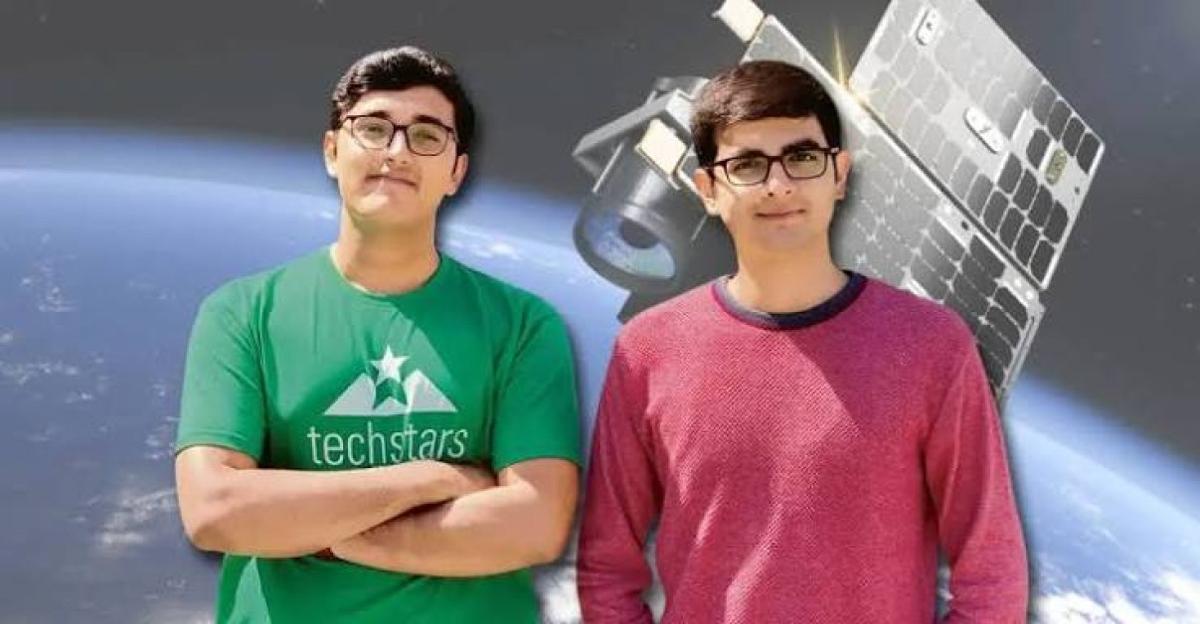
Pixxel Raises $100 Million in India’s Largest Space-Tech Funding Round Led by Temasek and Seraphim
Indian space-technology company Pixxel has raised $100 million in a Series C round co-led by Singapore state investor Temasek and UK-based space investor Seraphim, marking the largest single funding round raised by an Indian space-tech company and giving the Bengaluru- and Los Angeles-based startup fresh capital to expand beyond hyperspectral imaging into a broader space-infrastructure platform.
The round also included new investors:
360 ONE Asset
and:
IMM Investment,
while existing backers including:
Radical Ventures
and:
growX ventures
participated again.
The latest transaction takes Pixxel's total funding to approximately:
$195 million.
Pixxel plans to use the capital to scale four major areas:
next-generation Earth-observation satellites,
Earth intelligence software,
sovereign space systems for governments,
and:
satellite manufacturing capacity in India and the United States.
The company is also broadening its sensor portfolio beyond hyperspectral imaging.
Its next-generation Honeybee constellation will extend hyperspectral observations into shortwave infrared, while Pixxel also plans to develop:
synthetic aperture radar
and:
ultra-high-resolution optical imaging capabilities.
The first Honeybee satellite is expected to launch in:
2027.
Pixxel Raises $100 Million in Series C

Pixxel formally announced the close of its:
$100 million Series C funding round
on:
September 7, 2026.
The financing was co-led by:
Temasek
and:
Seraphim.
The transaction represents an important milestone not only for Pixxel but also for India's emerging commercial-space ecosystem.
It is the:
largest individual funding round raised by an Indian space-technology company.
That scale signals increasing investor willingness to back capital-intensive Indian space businesses as they move beyond experimental missions into larger commercial and government programmes.
Total Funding Reaches $195 Million
Following the Series C, Pixxel has raised approximately:
$195 million
in total funding.
That makes it one of the most heavily funded private space-technology companies to emerge from India.
The larger capital base is important because building a space-infrastructure business requires sustained spending across:
satellite development,
manufacturing,
launches,
software,
data processing,
engineering,
and customer acquisition.
Unlike many software startups, space companies must finance significant physical infrastructure before achieving large-scale commercial deployment.
Temasek and Seraphim Co-Lead Round
The participation of Temasek and Seraphim brings two different forms of institutional backing.
Temasek is one of the world's most prominent long-term institutional investors.
Seraphim specialises in:
space technology
and:
space-related investment.
The combination gives Pixxel both significant institutional capital and specialist sector expertise.
Seraphim has described Pixxel as being well positioned across major emerging themes including:
AI-powered Earth observation,
sovereign space capability,
and India's growing role in the global space economy.
360 ONE Asset and IMM Join as New Investors
The funding round also brought in:
360 ONE Asset
and South Korea-based:
IMM Investment
as new investors.
Their participation further diversifies Pixxel's capital base.
International and domestic institutional backing can become increasingly important as the company enters a capital-intensive scale-up phase.
Future requirements could include:
new satellite constellations,
manufacturing infrastructure,
launch services,
and international expansion.
Existing Investors Increase Support
Existing investors including:
Radical Ventures
and:
growX ventures
also participated in the Series C.
Continued investment from existing shareholders can be an important signal during later-stage funding rounds.
It suggests that early investors remain willing to provide additional capital as the company moves from technology development into:
commercial scaling
and:
infrastructure deployment.
Pixxel Expands Beyond Hyperspectral Imaging
Pixxel began primarily as a:
hyperspectral Earth-observation company.
Its satellites were designed to capture information across many narrow wavelengths of light.
Conventional satellite cameras typically collect data across a relatively small number of broad colour bands.
Hyperspectral sensors can divide reflected light into:
many more spectral bands.
That can reveal characteristics of materials that may appear visually similar in conventional imagery.
Hyperspectral Imaging Can Identify Material Differences
Different materials interact with light in distinctive ways.
Vegetation,
minerals,
water,
soil,
industrial materials,
and atmospheric phenomena
can each produce different spectral signatures.
Hyperspectral imagery can therefore be used to analyse what is present on Earth's surface rather than simply:
where something is located.
This creates applications across industries including:
agriculture,
mining,
energy,
forestry,
environmental monitoring,
and government intelligence.
Firefly Constellation Is Already in Orbit
Pixxel has deployed:
six Firefly satellites
over the past two years.
The company describes Firefly as forming the world's:
highest-resolution commercial hyperspectral satellite constellation.
That deployment moved Pixxel from development into a much more operational stage.
A satellite constellation allows a company to observe more locations and revisit areas more frequently than a single spacecraft can.
This improves the commercial usefulness of Earth-observation data.
Honeybee Will Be the Next Generation
The Series C capital will help fund Pixxel's next major satellite platform:
Honeybee.
Honeybee will expand the company's sensing capabilities and extend observations into:
shortwave infrared, or SWIR.
The first Honeybee satellite is scheduled for launch in:
2027.
Shortwave infrared provides additional information about materials that cannot always be distinguished using visible or near-infrared wavelengths.
That can improve applications involving:
minerals,
vegetation,
moisture,
industrial monitoring,
and environmental analysis.
Pixxel Is Adding Synthetic Aperture Radar
One of the most strategically important aspects of the expansion is Pixxel's move into:
synthetic aperture radar, or SAR.
Radar satellites operate differently from optical imaging systems.
They actively transmit radio signals toward Earth and measure the reflections.
This means they can operate:
at night
and:
through many cloud conditions.
Combining radar and optical or hyperspectral information can significantly improve Earth-observation intelligence.
Radar Can Complement Optical Satellites
Optical imagery provides visually intuitive information.
Hyperspectral data provides detailed spectral characteristics.
Radar adds another layer by measuring characteristics related to:
surface structure,
roughness,
moisture,
and movement.
Using these datasets together could allow Pixxel to provide more comprehensive monitoring.
Applications could include:
disaster response,
agriculture,
maritime surveillance,
infrastructure monitoring,
and defence.
Ultra-High-Resolution Optical Imaging Is Also Planned
Pixxel also intends to develop:
ultra-high-resolution optical imaging.
This means the company's future satellite portfolio will no longer depend on one sensor type.
Instead, it aims to combine:
hyperspectral,
SWIR,
radar,
and high-resolution optical imaging.
That transition is important because customers increasingly want:
integrated intelligence
rather than individual satellite images.
Pixxel Is Building a Multi-Sensor Platform
The company's broader strategy can therefore be understood as:
sensor diversification.
A single sensor provides one perspective.
Multiple sensors can provide complementary information.
For example, a customer monitoring a mine could potentially use:
high-resolution imagery to identify structural changes,
hyperspectral imagery to analyse minerals,
and radar to monitor terrain regardless of cloud cover.
Combining these capabilities can create a more valuable intelligence product.
Aurora Is Becoming the Intelligence Layer
Pixxel is not focusing only on spacecraft.
The company is also expanding:
Aurora,
its Earth-intelligence software platform.
Aurora is intended to bring together satellite datasets and convert them into:
decision-ready insights.
This represents a move up the value chain.
Instead of simply selling raw satellite imagery, Pixxel wants to help customers interpret what the imagery means.
Earth Observation Is Moving From Images to Intelligence
Historically, satellite companies often focused on delivering:
pictures
or:
raw datasets.
Customers then needed specialist teams to analyse that information.
The market is increasingly moving toward:
analytics,
automation,
and AI-assisted interpretation.
Customers may not want an image of an agricultural region.
They may instead want to know:
where crop stress is increasing,
which fields require attention,
or where water availability is changing.
Aurora is designed around that shift.
AI Can Increase Value of Satellite Data
Satellite constellations generate enormous quantities of data.
Manually analysing every image is impractical.
Artificial intelligence can help identify:
changes,
patterns,
anomalies,
and risks
across large geographic areas.
This can make Earth-observation products much more scalable.
Instead of providing analysis for one location manually, software can potentially monitor:
thousands
or:
millions of square kilometres
continuously.
Government Market Is Becoming More Important
Pixxel is also increasing its focus on:
sovereign Earth-observation systems.
Governments increasingly want independent access to:
satellite imagery,
geospatial intelligence,
and secure space infrastructure.
These capabilities can support:
civil agencies,
disaster management,
environmental monitoring,
defence,
and intelligence operations.
Pixxel plans to deepen its work with governments around the world in these areas.
Sovereign Space Capability Is Becoming Strategic
Space infrastructure is increasingly treated as:
strategic national infrastructure.
Governments do not necessarily want to depend entirely on:
foreign satellite operators
for sensitive information.
A sovereign system can provide greater control over:
tasking,
data ownership,
security,
and availability.
This creates a growing commercial opportunity for companies capable of designing and manufacturing satellites for government customers.
Pixxel Has Won Indian Defence Projects
Pixxel has already won multiple challenges under:
iDEX
from India's Ministry of Defence.
iDEX is designed to connect defence requirements with:
startups,
technology companies,
and innovators.
Participation gives Pixxel exposure to India's growing demand for indigenous:
space
and:
defence technology.
Government programmes can also provide valuable validation for technologies intended for sovereign customers abroad.
Pixxel Has Secured NASA Contract
The company has also secured a contract with:
NASA.
International institutional customers are important because they validate both:
technical capabilities
and:
commercial credibility.
Earth-observation companies operate in a highly competitive global market.
Customers often require demonstrated performance before committing to long-term data procurement.
Government contracts can therefore help establish a supplier's reputation.
NRO Relationship Expands Government Credentials
Pixxel has also secured work with the:
US National Reconnaissance Office.
The NRO develops and operates reconnaissance capabilities for the United States.
Working with such organisations can strengthen Pixxel's position in the global government Earth-observation market.
It also demonstrates how an Indian-founded space company is increasingly competing in markets historically dominated by:
large aerospace groups
and:
established Western satellite operators.
Pixxel Will Lead 12-Satellite Indian Constellation
Another major milestone is Pixxel's selection to lead the development of India's first:
public-private Earth-observation constellation
under:
IN-SPACe.
The planned constellation will contain:
12 satellites.
This programme is strategically significant because it represents a new model for India's space sector.
Instead of government agencies developing all infrastructure themselves, private companies can play a larger role in:
building,
operating,
and commercialising
space assets.
IN-SPACe Has Expanded Role of Private Industry
India's space reforms have opened more of the sector to private participation.
IN-SPACe acts as an important interface between:
private companies
and:
India's national space ecosystem.
These reforms have enabled startups to pursue opportunities across:
launch vehicles,
satellites,
Earth observation,
communications,
components,
and software.
Pixxel is one of the most prominent companies to emerge from this policy shift.
Orbital Data-Centre Demonstration Is Another Ambition
Pixxel has also announced plans for an:
orbital data-centre demonstration satellite.
The concept reflects another emerging direction in the space industry.
Rather than transmitting every piece of raw data back to Earth before processing it, future satellites could potentially process more information:
in orbit.
This could reduce:
latency,
bandwidth requirements,
and unnecessary data transmission.
On-Orbit Computing Could Change Satellite Economics
Earth-observation satellites can collect enormous quantities of information.
Much of that raw information may not ultimately be valuable.
If AI or other computing systems can process images aboard a spacecraft, the satellite could potentially transmit only:
relevant results
or:
important detections.
That could make space-based sensing more efficient.
Pixxel's orbital data-centre demonstration shows that the company is exploring infrastructure beyond conventional imaging.
Satellite Manufacturing Will Expand in India
Part of the new funding will be directed toward increasing:
satellite manufacturing capacity in India.
A larger manufacturing operation can help Pixxel move from relatively small production runs toward:
high-rate satellite production.
This becomes necessary if the company intends to deploy multiple constellations while also building spacecraft for:
commercial
and:
government customers.
Manufacturing scale could eventually become a business line in its own right.
US Manufacturing Capacity Will Also Grow
Pixxel plans to increase manufacturing capabilities in:
the United States
as well.
A dual-country manufacturing footprint can provide strategic benefits.
US production may improve access to:
American government programmes,
customers,
suppliers,
and defence-related opportunities.
India can remain an important engineering and manufacturing base while the US operation supports local-market requirements.
Company Is Becoming More Than a Satellite Operator
The funding round signals a broader repositioning.
Pixxel increasingly describes itself as a:
planetary infrastructure company.
That language reflects the company's ambition to combine:
satellites,
sensors,
software,
analytics,
manufacturing,
and sovereign systems.
The objective is to become more deeply embedded across the Earth-observation value chain.
Vertical Integration Could Strengthen Economics
A vertically integrated model can offer several advantages.
Owning satellites provides control over:
data collection.
Owning software provides control over:
analysis.
Manufacturing satellites provides control over:
hardware development
and:
production.
Selling sovereign systems creates another source of:
high-value government revenue.
If these businesses reinforce one another, Pixxel could potentially capture more economic value than a company focused only on satellite imagery.
Expansion Also Increases Capital Requirements
The strategy is ambitious and capital intensive.
Developing multiple sensor families means funding:
engineering,
prototypes,
manufacturing,
testing,
launches,
and ground infrastructure.
Software also requires ongoing:
AI development,
cloud computing,
and data-processing investment.
The $100 million Series C gives Pixxel substantial new resources, but successful execution will require disciplined capital allocation.
Space-Tech Companies Face Long Development Cycles
Space businesses can require several years between:
technology development
and:
meaningful commercial revenue.
Satellites need to be:
designed,
built,
tested,
launched,
commissioned,
and validated
before customers can use them at scale.
Launch failures or technical problems can create significant delays.
This makes space technology fundamentally different from many conventional startup sectors.
Hardware Failure Risk Is Significant
Once a satellite reaches orbit, repairing it is usually impossible.
Reliability therefore needs to be built into:
design,
testing,
manufacturing,
and operations.
A single failure can represent the loss of years of development and substantial capital.
Building constellations reduces dependence on one satellite, but it also requires:
consistent production quality
across many spacecraft.
Launch Availability Remains Critical
Satellite operators also depend on:
launch providers.
A spacecraft can be ready for orbit but still face delays if launch schedules change.
Pixxel has previously used international launch providers to deploy its satellites.
As India's private launch industry expands, domestic launch options could eventually give Indian satellite companies additional flexibility.
The growth of both launch and satellite startups can therefore reinforce India's broader space ecosystem.
India’s Private Space Sector Is Attracting Larger Capital Pools
Pixxel's $100 million round reflects a broader increase in investor interest in Indian space technology.
The sector once struggled to attract large venture investments because of:
long development periods,
regulatory uncertainty,
and high hardware costs.
That environment has changed.
Government reforms, successful missions and growing commercial demand have made the sector more investable.
Skyroot Has Also Raised Major Capital
Other Indian space companies are also attracting substantial funding.
Private launch company:
Skyroot Aerospace
has raised large rounds as it builds reusable and commercial-launch capabilities.
The emergence of multiple well-funded companies suggests India's commercial space ecosystem is broadening beyond a handful of early-stage startups.
Pixxel's $100 million transaction nevertheless sets a new benchmark for:
a single Indian space-tech funding round.
Large Round Can Encourage Later-Stage Capital
Venture investors often hesitate to enter industries where companies cannot raise follow-on capital at scale.
Pixxel's Series C may help demonstrate that Indian space companies can attract:
large institutional investors
at later stages.
That could have broader consequences for the ecosystem.
Founders may find it easier to plan:
multi-year engineering programmes
if they believe larger growth rounds are achievable after early technical milestones.
Institutional Investors Bring Different Expectations
Larger institutional investors also bring greater expectations around:
commercial scale,
governance,
capital efficiency,
and eventual returns.
Pixxel will increasingly need to demonstrate that its technology can generate:
repeatable revenue
and:
sustainable economics.
The next phase will therefore be as much about commercial execution as technology development.
Earth Observation Has Multiple Commercial Markets
The addressable market for Earth-observation intelligence spans many sectors.
Agricultural customers can use satellite data for:
crop monitoring
and:
soil analysis.
Mining companies can use it for:
mineral mapping
and:
environmental monitoring.
Energy companies can monitor:
pipelines,
infrastructure,
and methane-related activity.
Governments can use it for:
land management,
security,
disaster response,
and environmental enforcement.
Climate Monitoring Could Become Major Use Case
Earth-observation data is also increasingly important for understanding:
climate change.
Satellites can repeatedly observe areas that are difficult or expensive to monitor from the ground.
They can track:
forest changes,
water conditions,
coastal environments,
pollution,
and ecosystem stress.
Hyperspectral data can add information that conventional imagery may not reveal.
This supports Pixxel's original idea of creating a:
health-monitoring system for the planet.
Agriculture Can Benefit From Spectral Analysis
Agriculture is one of the clearest commercial uses for hyperspectral imaging.
Plant stress can sometimes change spectral characteristics before symptoms become obvious to:
the human eye.
Satellite data can potentially help identify changes related to:
water,
disease,
nutrient stress,
or crop condition.
At scale, such analysis can help:
farm operators,
insurers,
governments,
and agricultural companies.
Mining Is Another Natural Application
Minerals have distinctive spectral characteristics.
Hyperspectral imaging can therefore support:
mineral exploration
and:
mine monitoring.
Satellite-based analysis cannot replace all ground exploration.
But it can help companies narrow the areas requiring:
field surveys
or:
more expensive investigation.
This can reduce cost and improve the efficiency of exploration programmes.
Energy Companies Can Monitor Large Assets
Energy infrastructure can stretch across enormous geographic areas.
Pipelines,
solar farms,
power networks,
and industrial sites
can be difficult to monitor continuously from the ground.
Satellite intelligence can help detect:
land changes,
vegetation encroachment,
environmental risks,
and potentially other anomalies.
Repeated observations can turn Earth observation into a monitoring service rather than a one-time image purchase.
Software Could Increase Recurring Revenue
This is why Aurora is strategically important.
Hardware and imagery businesses can sometimes have:
project-based revenue.
Software can create more:
recurring,
subscription-like
relationships.
Customers can access analytics continuously rather than commissioning individual imagery projects.
A stronger software layer could therefore improve the long-term economics of Pixxel's business.
Government Contracts Can Provide Long-Term Revenue
Sovereign satellite systems may also provide larger and longer-duration contracts.
Governments can procure:
complete satellite systems,
data services,
ground infrastructure,
and analytical platforms.
These contracts can be considerably larger than individual commercial-data subscriptions.
However, government procurement can also involve:
long sales cycles,
security requirements,
and regulatory complexity.
Manufacturing Business Could Diversify Revenue Further
If Pixxel develops high-rate satellite-production capability, it may increasingly generate revenue by supplying spacecraft or subsystems to:
other organisations.
That could diversify the company away from relying entirely on:
its own constellation.
Manufacturing expertise can also improve internal economics by reducing dependence on external satellite suppliers.
India Can Become Export Base for Space Hardware
India has long-standing strengths in:
engineering
and:
cost-efficient technology development.
If private companies can combine those advantages with reliable commercial manufacturing, the country could become a larger exporter of:
satellites,
space components,
and space services.
Pixxel's decision to expand production capacity in India fits this broader opportunity.
Global Space Economy Is Becoming More Commercial
The space industry has changed substantially over the past two decades.
Historically, most activity was dominated by:
national governments
and:
large aerospace contractors.
Lower launch costs, smaller satellites and private investment have opened the sector to:
startups
and:
commercial operators.
Earth observation has been one of the most active areas because satellite data can be sold repeatedly to many customers.
Competition Will Remain Intense
Pixxel is entering markets that already contain:
well-funded international competitors.
Earth observation includes companies specialising in:
optical imagery,
radar,
hyperspectral sensing,
weather,
and geospatial analytics.
Large governments also operate their own satellite fleets.
Pixxel therefore needs to differentiate through:
data quality,
sensor capability,
pricing,
software,
and customer service.
Multi-Sensor Strategy Could Improve Differentiation
The company's decision to add:
SAR,
ultra-high-resolution optical,
and next-generation hyperspectral sensors
could strengthen differentiation.
Customers increasingly want a unified picture rather than separate data products from multiple providers.
If Aurora can combine these sources effectively, Pixxel could become a more comprehensive provider of:
Earth intelligence.
Series C Marks Shift From Startup to Infrastructure Platform
The significance of the $100 million round is therefore broader than the headline funding figure.
Pixxel is moving from the phase of proving that:
Indian-built hyperspectral satellites can work commercially
toward a phase where it must build:
large-scale infrastructure.
That means:
more satellites,
more sensors,
more manufacturing,
more government systems,
and more software.
Execution complexity will rise substantially.
Conclusion
Pixxel's $100 million Series C represents a landmark transaction for India's private space industry, becoming the largest single funding round raised by an Indian space-technology company and taking the startup's total funding to approximately $195 million.
The round, co-led by Temasek and Seraphim, with participation from 360 ONE Asset, IMM Investment, Radical Ventures, growX ventures and other investors, gives Pixxel the capital to move beyond its original hyperspectral-imaging focus.
The company now plans to build a broader planetary-infrastructure platform combining next-generation Honeybee hyperspectral satellites, synthetic aperture radar, ultra-high-resolution optical imaging, Aurora Earth-intelligence software, sovereign government space systems and expanded satellite manufacturing in India and the United States.
Pixxel has already placed six Firefly satellites in orbit, secured contracts with NASA and the US National Reconnaissance Office, won Indian defence innovation projects and been selected to lead a 12-satellite public-private Earth-observation constellation under IN-SPACe.
The first Honeybee satellite is expected to launch in 2027, marking the next stage of the company's sensing capabilities.
For India's space-tech ecosystem, the funding round provides another indication that commercial space companies are moving into a new phase where institutional capital can support projects measured not only in software teams but in satellite constellations, manufacturing plants and sovereign infrastructure.
Pixxel's challenge now is to convert that capital and technological ambition into scalable commercial intelligence for governments, businesses and institutions worldwide.
 Related News
POST A COMMENT (0)
All Comments (0)
Replies (0)