





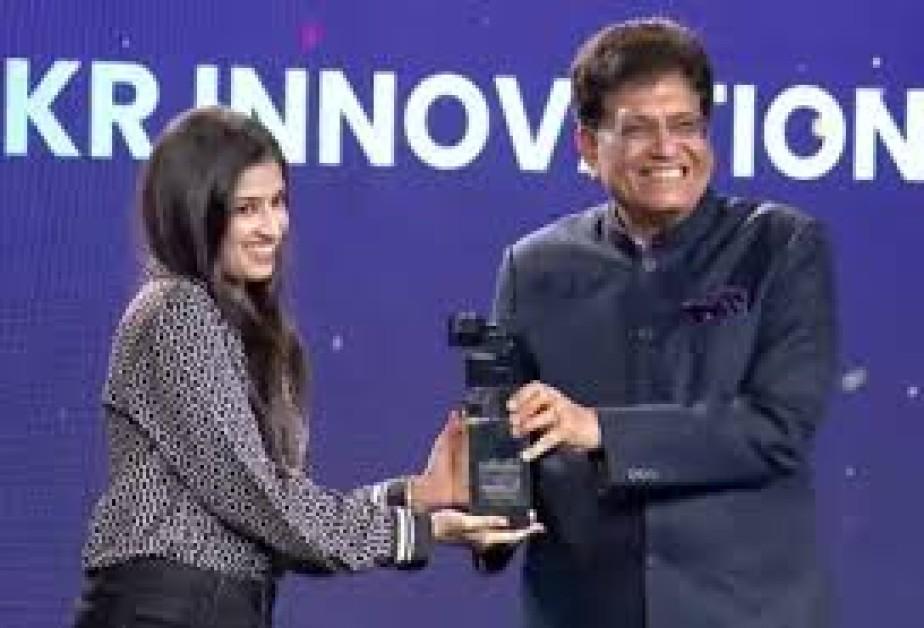
ET Startup Awards 2026 Jury Meets to Select Winners Across India’s Startup Ecosystem
A high-powered jury chaired by Wipro Executive Chairman Rishad Premji is meeting in Bengaluru on August 25 to select the winners of the 12th edition of The Economic Times Startup Awards, bringing together prominent entrepreneurs, investors and business leaders to assess some of the most notable companies and founders across India's startup ecosystem. (The Economic Times)
The 2026 awards span eight categories, covering areas ranging from startup growth and innovation to entrepreneurship, investing and social impact.
The most closely watched honour is Startup of the Year, where this year's nominees include Porter, Skyroot Aerospace, Rapido, Meesho, Groww and Sarvam. (The Economic Times)
The jury's deliberations arrive at an important point for India's startup industry.
After years dominated by rapid capital deployment, aggressive expansion and valuation growth, the ecosystem has increasingly shifted toward a broader assessment of companies based on execution, financial discipline, technological differentiation and the ability to build durable businesses.
The companies and entrepreneurs selected by the ETSA 2026 jury will therefore offer a snapshot of what India's startup ecosystem currently considers outstanding entrepreneurial performance.
ET Startup Awards Enter 12th Edition

The Economic Times Startup Awards were launched in 2015.
Over more than a decade, the awards have developed alongside India's startup ecosystem, recognising companies and entrepreneurs across different stages of the country's technology and venture-capital cycle. (The Economic Times)
The 2026 edition marks the programme's:
12th edition.
The awards have previously recognised businesses that later became major companies in India's public and private markets.
Former Winners Include Major Listed Technology Companies
Several companies recognised during previous editions have subsequently completed stock-market listings.
Past winners cited by ET include:
Lenskart,
Zomato,
Delhivery,
and Swiggy. (The Economic Times)
Their transition from venture-backed startups to publicly traded companies illustrates how much India's startup ecosystem has matured since the awards were established.
Rishad Premji Chairs 2026 Jury
The 2026 jury is chaired by Rishad Premji, Executive Chairman of Wipro.
Premji brings experience from one of India's largest technology-services companies while also having significant exposure to the country's broader technology and entrepreneurial ecosystem.
His role as jury chair places an established corporate technology leader at the centre of the awards' evaluation process. (The Economic Times)
Jury Brings Together Founders and Business Leaders
The wider jury includes accomplished founders, business leaders and veteran entrepreneurs.
Many have experience building and scaling companies across sectors such as:
e-commerce,
fintech,
and software products.
Some have also navigated multiple business cycles and successfully exited companies. (The Economic Times)
That operating experience is significant because evaluating startups requires more than simply examining revenue growth or valuations.
Winners Are Being Selected in Bengaluru
The jury is convening in Bengaluru on August 25, 2026.
Bengaluru is a natural setting for the deliberations.
The city remains India's largest technology and startup hub, housing thousands of companies across:
software,
fintech,
deeptech,
consumer internet,
and enterprise technology.
It is also home to a large concentration of venture-capital firms and technology talent.
Eight Categories Cover Different Forms of Excellence
The ET Startup Awards 2026 recognise companies, founders and investors across eight categories. (The Economic Times)
These include awards such as:
-
Startup of the Year;
-
Midas Touch;
-
Top Innovator;
-
Bootstrap Champ;
-
Best on Campus;
-
Comeback Kid;
-
Woman Ahead;
-
Social Enterprise.
The categories are designed to capture different dimensions of entrepreneurial achievement rather than focusing solely on company size.
Startup of the Year Is Flagship Award
The most prominent category is Startup of the Year.
The award is intended to recognise businesses demonstrating a combination of:
breakthrough innovation,
high-quality execution,
and rapid growth. (The Economic Times)
This makes the award broader than a simple ranking based on fundraising or valuation.
The jury needs to assess whether a company has created a significant and durable business.
Six Companies Compete for Startup of the Year
The 2026 Startup of the Year nominees are:
Porter
Skyroot Aerospace
Rapido
Meesho
Groww
Sarvam
The list reflects the diversity of India's current startup economy. (The Economic Times)
The nominees operate across fundamentally different markets.
Porter Represents Technology-Enabled Logistics
Porter operates in intra-city logistics.
Its technology connects businesses and consumers with transportation capacity for moving goods.
The company's growth reflects the increasing digitisation of India's fragmented logistics industry.
Logistics remains a particularly large opportunity because millions of small businesses require efficient movement of goods across cities.
Skyroot Represents India's Emerging Space Economy
Skyroot Aerospace represents a completely different category of entrepreneurship.
The company operates within India's private space sector.
The emergence of private launch and satellite companies demonstrates how India's startup ecosystem is moving beyond conventional consumer-internet businesses into technically demanding industries.
Space technology requires:
specialised engineering,
long development cycles,
and significant capital.
Its presence among Startup of the Year nominees illustrates the growing importance of deeptech.
Rapido Represents Urban Mobility
Rapido has built its business around urban transportation.
Mobility remains one of India's largest technology-enabled consumer markets because millions of people require affordable transportation every day.
Platforms operating in this category need to manage:
drivers,
consumer demand,
pricing,
and local regulations.
The operational complexity makes mobility one of the most challenging startup sectors.
Meesho Represents E-Commerce at Scale
Meesho has become one of India's largest e-commerce platforms.
Its business has focused heavily on value-conscious consumers and smaller sellers.
The company's growth demonstrates how Indian e-commerce continues expanding beyond metropolitan and affluent consumer segments.
Its inclusion among the nominees reflects the continuing importance of large-scale digital commerce.
Groww Represents Digital Investing
Groww has played an important role in expanding retail participation in financial markets.
Digital investment platforms have made products such as:
stocks,
and mutual funds
more accessible to younger and first-time investors.
The broader fintech sector has become one of the defining components of India's startup ecosystem.
Sarvam Represents India's AI Wave
Sarvam represents one of the newest major themes in Indian technology entrepreneurship:
artificial intelligence.
Indian startups are increasingly building AI models, infrastructure and applications designed for domestic and global markets.
The inclusion of an AI company among the flagship nominees illustrates how quickly generative AI has moved into the centre of venture investment and technology strategy.
Nominee Mix Shows Startup Ecosystem Has Diversified
The Startup of the Year shortlist includes companies spanning:
logistics,
space technology,
mobility,
e-commerce,
financial technology,
and artificial intelligence.
That diversity is important.
A decade ago, India's startup conversation was dominated heavily by:
e-commerce,
food delivery,
and consumer internet.
The ecosystem now includes significantly more specialised technology businesses.
Deeptech Is Becoming More Important
Deeptech startups generally differ from conventional software businesses.
They may require:
years of research,
specialised laboratories,
hardware development,
and regulatory approvals.
This can make them slower and more capital intensive.
But successful deeptech companies can create significant technological barriers to competition.
AI Has Become Central Investment Theme
Artificial intelligence is now influencing nearly every major segment of the technology industry.
Indian founders are developing companies around:
foundation models,
enterprise AI,
AI infrastructure,
and automation.
Investors are simultaneously reassessing existing companies according to how effectively they can integrate AI into products and operations.
Midas Touch Recognises Investment Performance
The ET Startup Awards do not recognise only founders.
The Midas Touch category focuses on investors.
The award is designed to recognise particularly successful investment outcomes and lucrative exits. (The Economic Times)
This category highlights an essential part of startup economics.
A venture ecosystem needs both successful companies and successful capital allocation.
Venture Capital Depends on Successful Exits
Venture funds raise capital from investors and deploy it into private companies.
Those investments can remain illiquid for years.
Eventually, venture firms need exits through:
IPOs,
secondary transactions,
or acquisitions.
Successful exits allow capital to return to fund investors.
Without exits, the venture-capital model cannot function sustainably.
India's Exit Environment Has Improved
India's startup ecosystem has increasingly produced companies capable of reaching public markets.
That development is important for venture capital.
Public listings create liquidity for:
founders,
employees,
and early investors.
They also establish transparent market valuations.
The growing number of listed new-economy companies therefore represents an important stage in the ecosystem's maturation.
Top Innovator Rewards Technological Differentiation
Another major category is Top Innovator.
This category places greater emphasis on technological or product innovation.
Innovation awards are particularly important as India's startup ecosystem moves toward businesses developing proprietary technology rather than simply adapting established internet business models.
Innovation Can Create Durable Competitive Advantage
A startup can grow rapidly through aggressive spending.
But growth alone does not necessarily create defensibility.
Proprietary technology can make a business harder to replicate.
This can create:
intellectual property,
technical expertise,
and product differentiation.
These characteristics become increasingly valuable as startup markets mature.
Bootstrap Champ Highlights Capital Efficiency
The Bootstrap Champ category recognises another entrepreneurial path.
Not every successful startup depends on large amounts of venture capital.
Bootstrapped businesses grow primarily through:
customer revenue,
founder capital,
and internal cash generation.
These companies often operate with a very different financial discipline.
Bootstrapping Can Preserve Founder Ownership
Venture funding accelerates growth but requires founders to sell equity.
Bootstrapped founders can retain greater ownership.
The trade-off is that growth may be slower because the company has less external capital available.
Neither model is automatically superior.
The appropriate approach depends on the business.
Best on Campus Recognises Student Entrepreneurship
The Best on Campus award focuses on companies founded while their entrepreneurs were students.
ET describes the category as recognising startups whose impact can be assessed through both the idea and its execution, with founders who began building commercial enterprises while still studying. (The Economic Times)
Universities are increasingly important sources of entrepreneurship.
Universities Can Become Startup Incubators
Some of the world's largest technology companies originated from university environments.
Campuses provide access to:
research,
technical talent,
and potential co-founders.
India has increasingly strengthened incubation programmes across universities and engineering institutions.
Student entrepreneurship can therefore become an important source of future companies.
Comeback Kid Recognises Resilience
The Comeback Kid category highlights a characteristic that receives less attention than rapid growth:
recovery.
Startup companies frequently experience:
failed products,
funding difficulties,
competitive pressure,
or strategic mistakes.
The ability to recover from such challenges can be as important as early success.
Startup Failure Rates Make Resilience Important
Entrepreneurship is inherently uncertain.
Companies may discover that their original product does not work.
Markets can change.
Funding can disappear.
Competitors can emerge unexpectedly.
Successful founders frequently need to adapt rather than follow their original plans rigidly.
Woman Ahead Highlights Women Entrepreneurs
The Woman Ahead category recognises outstanding women entrepreneurs.
The category is one of the eight awards highlighted in ETSA 2026 and is intended to recognise women building significant businesses within India's startup ecosystem. (The Economic Times)
Its importance extends beyond individual recognition.
Women remain underrepresented among startup founders and venture-backed entrepreneurs globally.
Greater Founder Diversity Expands Entrepreneurial Pipeline
Startup ecosystems benefit when entrepreneurship is accessible to a broader population.
Different founders may identify different:
consumer problems,
market opportunities,
and business models.
Expanding participation can therefore increase the overall pool of entrepreneurial ideas.
Social Enterprise Recognises Double-Bottom-Line Companies
The Social Enterprise category focuses on businesses combining commercial sustainability with public benefit.
ET describes the category as recognising startups following a double-bottom-line model, combining profits with public good. (The Economic Times)
This distinguishes social enterprises from conventional charities.
They attempt to solve social problems using sustainable business models.
Social Enterprises Need Both Impact and Economics
A social enterprise cannot rely solely on good intentions.
To survive as a business, it needs:
customers,
revenue,
and sustainable economics.
At the same time, financial success alone is insufficient.
The company also needs measurable social impact.
Balancing both objectives can be particularly challenging.
Awards Reflect Changing Definition of Startup Success
The eight categories collectively reveal something important about India's startup ecosystem.
Success is no longer defined only by:
funding rounds,
unicorn status,
or valuation.
The awards also recognise:
innovation,
capital efficiency,
resilience,
leadership,
investment outcomes,
and social impact.
This reflects a broader evolution in how startups are evaluated.
Funding Alone Is No Longer Enough
During periods of abundant venture capital, fundraising itself sometimes became a proxy for success.
Large rounds generated headlines.
Higher valuations attracted attention.
But capital raised is ultimately an input.
The real test is what a company builds with that capital.
Investors increasingly focus on operating performance.
Profitability Has Become More Important
The startup funding correction of recent years changed investor expectations.
Companies have been pushed to improve:
gross margins,
operating leverage,
and cash efficiency.
Growth remains important.
But growth achieved through unlimited spending is less attractive than it once appeared.
Public Markets Have Changed Startup Expectations
As more technology companies list on Indian exchanges, founders can see how public investors evaluate businesses.
Listed companies face continuous scrutiny of:
quarterly earnings,
cash flow,
and governance.
That discipline can influence private startups preparing for eventual IPOs.
Governance Matters More as Companies Scale
A startup with 50 employees can operate relatively informally.
A company with thousands of employees and billions of rupees in revenue cannot.
Scaling requires stronger:
boards,
financial controls,
and compliance systems.
Governance therefore becomes increasingly important as startups approach public markets.
Founders Are Building for Longer Time Horizons
The strongest companies increasingly need to demonstrate that they can survive multiple economic cycles.
That means building organisations capable of operating through:
funding booms,
market corrections,
and technological shifts.
Durability has become an important measure of entrepreneurial quality.
Bengaluru Remains Centre of Indian Startup Economy
The location of the ETSA jury meeting reinforces Bengaluru's central role.
The city has built a powerful startup ecosystem around:
technology talent,
venture capital,
research institutions,
and experienced founders.
Success creates a reinforcing cycle.
Employees from one startup leave to build another.
Successful founders become investors.
Early employees become executives at younger companies.
Founder Networks Create Ecosystem Advantages
A startup ecosystem cannot be created simply by constructing office buildings.
It requires networks of people with experience building companies.
These networks provide:
capital,
mentorship,
talent,
and customer connections.
Bengaluru's decades-long technology history gives it a significant advantage.
Other Indian Startup Hubs Continue Expanding
India's entrepreneurial activity is not limited to Bengaluru.
Delhi-NCR, Mumbai, Hyderabad, Chennai and Pune have developed substantial startup communities.
Smaller cities are also producing increasingly ambitious companies.
This geographic diversification expands the country's entrepreneurial base.
Startup Ecosystem Is Entering New Phase
India's startup sector has already moved through several stages.
The early period focused heavily on proving that large internet companies could be built for Indian consumers.
The next phase produced unicorns at unprecedented speed.
The current phase is increasingly about building durable businesses.
That requires a different kind of execution.
AI Could Define Next Startup Cycle
Artificial intelligence may become one of the defining forces of the next phase.
AI can influence companies across:
software,
financial services,
healthcare,
manufacturing,
and logistics.
Startups able to build differentiated AI capabilities may create entirely new categories.
Others may use AI primarily to reduce operating costs.
Deeptech Could Broaden India's Global Technology Role
Space technology, robotics, semiconductors and advanced manufacturing create another opportunity.
These sectors require longer investment horizons than consumer applications.
But they can produce globally differentiated intellectual property.
Skyroot's presence among the Startup of the Year nominees illustrates this shift toward technologically intensive entrepreneurship.
Awards Can Influence Startup Visibility
Winning a major industry award does not guarantee commercial success.
But recognition can increase visibility among:
customers,
investors,
employees,
and potential partners.
For younger companies, credibility can be particularly valuable.
A respected award can help establish reputation in competitive markets.
Jury Decisions Will Offer Ecosystem Signal
The ETSA winners will also provide insight into what experienced business leaders currently value.
If the jury prioritises:
profitability,
deeptech,
or capital efficiency,
those decisions can reflect broader changes in startup thinking.
Awards therefore function partly as a snapshot of the ecosystem's priorities.
Startup of the Year Result Will Be Closely Watched
The flagship category is particularly difficult to assess this year because the nominees represent very different businesses.
Comparing:
an AI company,
a space startup,
a logistics platform,
an e-commerce company,
an investment platform,
and a mobility business
requires the jury to evaluate performance across fundamentally different markets.
There is no single financial metric capable of making that comparison automatically.
Execution Will Be Central to Selection
The strongest startups generally combine multiple qualities.
They identify a significant problem.
They build a differentiated product.
They acquire customers.
They scale operations.
And eventually, they demonstrate sustainable economics.
Awards such as ETSA attempt to evaluate that complete entrepreneurial journey rather than one isolated metric.
Winners Will Join More Than a Decade of ETSA History
Since launching in 2015, the ET Startup Awards have documented a period of extraordinary change in Indian entrepreneurship. (The Economic Times)
During that period, India's ecosystem has produced:
large consumer platforms,
major fintech companies,
software exporters,
and increasingly sophisticated deeptech businesses.
The 2026 winners will represent the latest stage of that evolution.
Conclusion
The ET Startup Awards 2026 jury meeting in Bengaluru on August 25 brings together prominent entrepreneurs and business leaders to select winners across eight categories representing different dimensions of India's startup ecosystem.
Chaired by Wipro Executive Chairman Rishad Premji, the jury is evaluating companies, founders and investors for the 12th edition of the Economic Times Startup Awards. (The Economic Times)
The flagship Startup of the Year category features an unusually diverse shortlist: Porter, Skyroot Aerospace, Rapido, Meesho, Groww and Sarvam. (The Economic Times)
Together, those companies span logistics, space technology, mobility, e-commerce, fintech and artificial intelligence.
That diversity captures the larger transformation underway within Indian entrepreneurship.
India's startup ecosystem is no longer defined primarily by consumer internet companies or the race to achieve unicorn valuations. It increasingly includes deeptech, AI, space, financial infrastructure and businesses demonstrating greater capital discipline.
The broader ETSA categories reinforce that transition by recognising innovation, bootstrapping, student entrepreneurship, resilience, women entrepreneurs, social enterprises and successful investors.
As the jury selects the 2026 winners, the awards provide more than recognition for individual companies.
They offer a snapshot of how India's definition of startup success is evolving from fundraising and valuation toward innovation, execution, resilience and the ability to build enduring businesses.
 ET Startup Awards 2026 Jury Meets to Select India’s Top Startup Winners FAQs
POST A COMMENT (0)
All Comments (0)
Replies (0)