





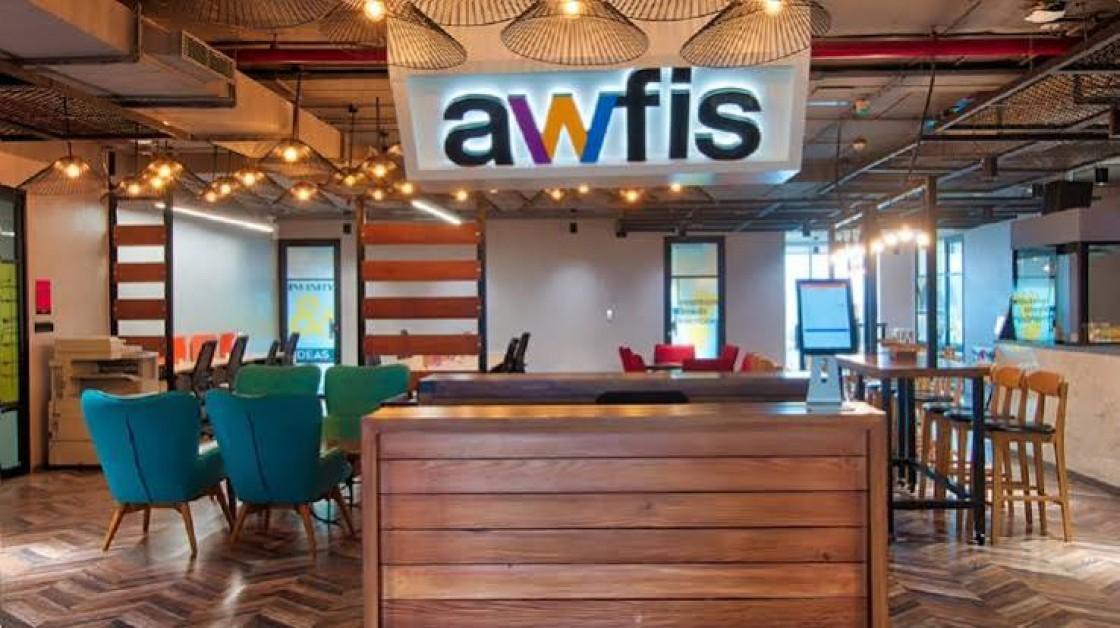
Awfis Space Solutions Reports Q1 Profit of ₹24 Crore as Flexible Workspace Revenue Reaches ₹425 Crore
Awfis Space Solutions reported strong growth in the first quarter of FY27, with revenue from operations increasing 27% year-on-year to ₹425 crore and profit after tax rising 140% to approximately ₹24 crore, supported by sustained demand for flexible office space from enterprises and Global Capability Centres.
The flexible workspace operator's EBITDA increased 28% year-on-year to ₹162 crore, while the EBITDA margin stood at 38.2%. The company also continued expanding its physical network during the quarter, adding seven centres and increasing its footprint to 251 centres. (Fortune India)
The results highlight the continuing transformation of India's flexible-workspace industry from a coworking proposition aimed primarily at startups into a broader commercial real-estate service increasingly used by large corporations.
Revenue From Operations Rises 27% to ₹425 Crore

Awfis reported revenue from operations of ₹425 crore for the quarter ended June 30, 2026, compared with approximately ₹335 crore in the corresponding period a year earlier.
That represents year-on-year growth of roughly 27%. (Fortune India)
The increase was supported by both the company's core coworking operations and its construction and fit-out business.
Profit After Tax Jumps 140%
Profitability improved considerably faster than revenue.
Awfis reported consolidated profit after tax of approximately ₹23.96 crore, compared with ₹9.97 crore in Q1 FY26.
That translates into year-on-year growth of approximately 140%. (ETRealty.com)
The sharp increase suggests that operating leverage is beginning to become increasingly visible as Awfis expands revenue across its existing infrastructure.
Total Income Reaches Nearly ₹449 Crore
While revenue from operations stood at ₹425 crore, consolidated total income reached approximately ₹448.87 crore during Q1 FY27.
That compares with ₹353.04 crore in the corresponding quarter of the previous financial year, representing growth of about 27%. (ETRealty.com)
The distinction between revenue from operations and total income is important when evaluating the company's reported financial performance.
EBITDA Climbs to ₹162 Crore
Awfis reported EBITDA of approximately ₹162 crore, an increase of 28% from the year-ago period.
The corresponding EBITDA margin was approximately 38.2%. (SME Street)
For a flexible workspace operator, EBITDA growth is particularly relevant because the business requires substantial investment in leasing, fitting out and operating physical office locations.
Higher utilisation across those locations can create meaningful operating leverage.
Coworking Revenue Reaches ₹352 Crore
The company's core coworking business remained the largest contributor.
Coworking revenue increased approximately 27% year-on-year to ₹352 crore during the quarter. (InvestyWise)
This reflects continued demand for flexible office arrangements as companies seek alternatives to traditional long-duration commercial leases.
The customer base increasingly includes large enterprises rather than only startups and freelancers.
Construction and Fit-Out Revenue Reaches ₹73 Crore
Awfis also generates revenue from construction and fit-out projects.
This segment reported approximately ₹73 crore of revenue, representing year-on-year growth of around 25%. (InvestyWise)
Fit-out services can deepen customer relationships because companies often require customised office interiors before occupying managed workspace.
The business therefore complements Awfis' core workspace offering.
Network Expands to 251 Centres
Awfis added seven new centres during Q1 FY27, taking its network to approximately 251 centres.
The company serves more than 3,600 clients, demonstrating the increasing scale of its platform. (InvestyWise)
Physical expansion remains an important growth driver because workspace operators need additional inventory to accommodate new enterprise customers.
However, adding centres also creates upfront costs before occupancy reaches mature levels.
Flexible Workspace Demand Remains Strong
India's commercial office market has changed considerably since the early coworking era.
Flexible workspaces initially attracted attention because freelancers and startups wanted smaller offices without signing conventional long-term leases.
The customer mix has broadened substantially.
Today, demand increasingly comes from:
-
Large enterprises
-
Global Capability Centres
-
Technology companies
-
Professional-services firms
-
Startups
-
Project teams
This has significantly increased the addressable market for operators such as Awfis.
Enterprise Customers Are Changing the Industry
Large corporations can require hundreds or even thousands of desks.
That creates very different economics from selling individual coworking seats.
Enterprise contracts can provide:
-
Larger deal sizes
-
More predictable occupancy
-
Longer customer relationships
-
Greater revenue visibility
They can also require customised spaces and higher service standards.
This is pushing flexible workspace companies toward more sophisticated managed-office models.
GCC Growth Creates Major Opportunity
Global Capability Centres have become an increasingly important source of Indian office demand.
Multinational corporations establish GCCs in India to handle functions including:
-
Technology
-
Finance
-
Analytics
-
Engineering
-
Research
-
Operations
Setting up a conventional office can take months.
Flexible workspace providers can offer faster entry into a city while the company builds a longer-term real-estate strategy.
This makes managed offices particularly relevant to new or rapidly expanding GCCs.
India Is Becoming a Major GCC Hub
India's large technology workforce and comparatively competitive operating costs have made it one of the world's most important locations for corporate capability centres.
Cities including Bengaluru, Hyderabad, Pune, Chennai, Mumbai, Delhi-NCR and increasingly Tier-II markets are attracting these operations.
Every new GCC creates potential demand for commercial office space.
Flexible workspace companies are positioned to capture part of that demand.
Flexibility Is Becoming a Corporate Requirement
Traditional office leasing can require companies to make long commitments.
A company may sign a lease for several years and invest substantially in:
-
Interiors
-
Furniture
-
IT infrastructure
-
Maintenance
If headcount changes unexpectedly, that office can become too large or too small.
Flexible workspace reduces some of that risk.
Companies can add or reduce capacity more quickly.
Hybrid Work Has Not Eliminated Office Demand
The growth of remote work initially raised questions about the long-term future of commercial offices.
The market has evolved differently.
Many organisations now operate hybrid models where employees divide time between home and office.
That can actually strengthen demand for flexible workspace because companies want adaptable real-estate portfolios rather than permanently assigned desks for every employee.
The office remains important, but its economics are changing.
Managed Offices Differ From Traditional Coworking
Modern flexible workspace encompasses several formats.
Coworking typically involves shared infrastructure.
Managed offices provide more customised, dedicated spaces for individual corporate customers.
A company can receive:
-
Dedicated workspace
-
Custom branding
-
Meeting rooms
-
IT infrastructure
-
Facility management
without independently managing the entire office.
This model is particularly attractive to enterprise clients.
Awfis Uses Multiple Workspace Models
An important part of Awfis' strategy is its use of different operating structures for individual centres.
The company can operate locations through conventional leasing arrangements as well as asset-light managed aggregation structures.
The objective is to expand the network without requiring the same level of capital commitment at every location.
This flexibility can improve returns if centre economics remain disciplined.
Asset-Light Expansion Can Reduce Capital Requirements
Traditional commercial real estate can be highly capital intensive.
Flexible workspace companies can reduce some of this burden through arrangements where property owners participate economically in the centre.
Instead of one party carrying the entire fixed-cost risk, revenue or economics can be shared.
This can allow the operator to expand faster while limiting balance-sheet exposure.
Property Owners Also Benefit From Flexible Workspace Operators
The model can be attractive to landlords.
A flexible workspace operator can take a large office floor and convert it into a professionally managed product for multiple corporate users.
Landlords potentially gain:
-
Occupancy
-
Professional management
-
Access to enterprise demand
-
Potential revenue participation
This creates an ecosystem where workspace operators act partly as intermediaries between building owners and corporate occupiers.
Occupancy Is Critical to Profitability
Flexible workspace economics depend heavily on occupancy.
A centre incurs many expenses whether desks are occupied or not.
These include:
-
Lease costs
-
Electricity
-
Staff
-
Maintenance
-
Internet
-
Security
As occupancy rises, incremental customers can contribute disproportionately to profit because much of the centre's fixed cost is already being paid.
This explains why revenue growth can sometimes produce much faster profit growth.
Q1 Results Show Operating Leverage
Awfis' Q1 numbers illustrate this dynamic.
Revenue from operations increased 27%, while profit after tax increased approximately 140%. (Fortune India)
The comparison suggests improved operating leverage, although investors should avoid assuming that profit will consistently grow several times faster than revenue.
New centre additions, fit-out spending and changes in occupancy can create quarter-to-quarter volatility.
New Centres Initially Dilute Profitability
Expansion carries a timing mismatch.
A new centre incurs costs before reaching mature occupancy.
The operator must:
Acquire space → Fit out centre → Hire staff → Open location → Acquire customers → Increase occupancy
During the early months, revenue may remain below the centre's potential.
As occupancy improves, profitability can increase substantially.
A rapidly expanding operator therefore needs to balance growth with centre-level economics.
Scale Can Improve Procurement Economics
A larger workspace network can generate purchasing advantages.
Awfis needs products and services including:
-
Furniture
-
Internet connectivity
-
Office equipment
-
Security
-
Facility management
-
Consumables
Greater scale can improve negotiating power with vendors.
Standardisation can also lower fit-out costs and shorten centre-opening timelines.
Technology Helps Manage Hundreds of Locations
Operating more than 250 centres creates substantial complexity.
Technology can help manage:
-
Bookings
-
Access
-
Billing
-
Meeting rooms
-
Customer support
-
Occupancy
-
Facility operations
A central technology platform allows a workspace operator to manage a distributed real-estate network more efficiently than purely manual systems.
Tier-II Cities Could Become a Larger Opportunity
Flexible workspace demand is no longer limited entirely to India's largest metropolitan areas.
Companies are increasingly evaluating smaller cities because they can offer:
-
Lower operating costs
-
Skilled workers
-
Lower employee attrition
-
Proximity to regional talent
Flexible workspace providers can enter these markets without corporate customers having to establish full standalone offices.
This creates another potential avenue for long-term expansion.
Competition Is Increasing
The attractive growth of flexible offices has drawn multiple operators into the market.
Awfis competes with companies including:
-
Smartworks
-
WeWork India
-
IndiQube
-
Table Space
-
Other regional operators
Competition occurs across property acquisition, enterprise clients, pricing and service quality.
Scale alone therefore does not guarantee superior returns.
Premiumisation Could Influence Revenue Per Seat
Workspace providers are increasingly differentiating their offerings by quality.
Premium centres can include:
-
Higher-end interiors
-
Advanced meeting facilities
-
Better locations
-
Hospitality-style services
-
Technology-enabled amenities
Awfis has been developing its premium workspace strategy as it targets enterprise customers with higher expectations.
Premiumisation could increase revenue per occupied seat if customers are willing to pay for the additional quality.
Commercial Real Estate Cycles Remain a Risk
Flexible workspace companies are exposed to commercial property markets.
If office rents rise rapidly, acquiring attractive new locations becomes more expensive.
If corporate demand weakens, occupancy can decline.
Operators therefore need to manage the difference between their commitments to landlords and revenue received from customers.
That spread is central to profitability.
Long Lease Commitments Require Discipline
One of the biggest structural risks in flexible workspace is duration mismatch.
An operator might commit to a property for several years while customers sign much shorter agreements.
If customer demand weakens, the operator may still owe rent to the landlord.
Asset-light arrangements can reduce some of this risk but do not eliminate it.
Customer Diversification Matters
A broad customer base can improve resilience.
If one large enterprise accounts for too much occupancy, losing that customer can materially affect a centre.
Serving more than 3,600 clients provides Awfis with meaningful customer diversification at the platform level. (InvestyWise)
Investors should nevertheless monitor concentration within individual large centres and enterprise contracts.
Fit-Out Business Creates Additional Revenue
Awfis' construction and fit-out business provides another revenue stream beyond workspace subscriptions.
Corporate customers often require customised offices.
By providing design and construction services, Awfis can capture spending that might otherwise go to external contractors.
The segment's ₹73 crore Q1 revenue demonstrates that it is already a meaningful part of the business. (InvestyWise)
Fit-Out Revenue Has Different Economics
Construction revenue should not necessarily be valued in the same way as recurring workspace revenue.
Fit-out projects can be more transactional.
Workspace revenue can recur over the duration of customer agreements.
Investors therefore need to consider both revenue composition and total growth.
The quality of revenue matters alongside the headline figure.
Public Listing Increased Investor Scrutiny
Awfis entered India's public markets in 2024.
As a listed company, it now faces regular scrutiny of:
-
Revenue growth
-
Profitability
-
Occupancy
-
Centre additions
-
Capital expenditure
-
Cash flow
That transparency provides investors with a clearer view of how India's flexible workspace economics are developing.
Awfis Space Solutions investor relations
Profitability Is Becoming More Important Than Footprint Alone
During the early growth phase of coworking, companies frequently emphasised the number of centres and desks.
Public-market investors generally demand more.
They want evidence that expansion produces sustainable:
-
Cash flow
-
Earnings
-
Return on capital
Awfis' 140% year-on-year PAT increase therefore matters because it demonstrates that revenue expansion is translating into stronger bottom-line performance. (ETRealty.com)
Cash Generation Will Remain an Important Test
Accounting profit is only one measure of performance.
Workspace operators also spend money on:
-
New centre deposits
-
Fit-outs
-
Furniture
-
Technology
-
Expansion
Investors should therefore monitor operating cash flow and free cash flow alongside reported PAT.
A rapidly expanding company can report profits while still consuming substantial cash.
India’s Flexible Workspace Market Has Structural Tailwinds
Several long-term trends support the industry.
These include:
Enterprise flexibility: Companies want adaptable office portfolios.
GCC expansion: Multinationals continue building Indian operations.
Hybrid work: Businesses need more flexible space configurations.
Startup ecosystem: Young companies prefer avoiding large upfront office investment.
Tier-II expansion: Companies are hiring across a broader geographic footprint.
Together, these factors have expanded flexible workspace beyond its original coworking niche.
What Investors Should Watch Next
The most important indicators for Awfis include:
-
Revenue growth
-
Profit after tax
-
EBITDA margins
-
Centre additions
-
Occupancy levels
-
Enterprise and GCC demand
-
Revenue per seat
-
Fit-out revenue
-
Cash generation
-
Expansion economics
The pace at which newly opened centres reach mature occupancy will be particularly important.
Outlook
Awfis enters FY27 with strong operating momentum.
Revenue from operations increased 27% to ₹425 crore, EBITDA rose 28% to ₹162 crore, and PAT increased approximately 140% to ₹24 crore in the first quarter. (Fortune India)
The company also expanded its network to 251 centres while serving more than 3,600 clients. (InvestyWise)
The longer-term opportunity remains tied to India's evolving office market, particularly demand from enterprises and GCCs seeking flexible alternatives to traditional leases.
Conclusion
Awfis Space Solutions' Q1 FY27 performance demonstrates how rapidly India's flexible workspace industry is maturing.
The company generated ₹425 crore in operating revenue and approximately ₹24 crore in profit after tax, with revenue growing 27% and PAT rising 140% from the previous year. (Fortune India)
Its core coworking business contributed approximately ₹352 crore, while construction and fit-out services generated around ₹73 crore. (InvestyWise)
The strategic opportunity is increasingly driven by large enterprises and Global Capability Centres rather than coworking demand alone.
For Awfis, the next challenge is to maintain rapid network expansion without sacrificing occupancy, cash generation or returns on capital.
If the company can continue filling new centres while maintaining disciplined expansion economics, the structural growth of flexible offices could support a significantly larger business over the coming years.
Frequently Asked Questions (FAQs)
1. What was Awfis Space Solutions’ profit in Q1 FY27?
Awfis reported consolidated profit after tax of approximately ₹23.96 crore, up around 140% from ₹9.97 crore in Q1 FY26. (ETRealty.com)
2. How much revenue did Awfis report in Q1 FY27?
Revenue from operations increased approximately 27% year-on-year to ₹425 crore, compared with about ₹335 crore in the corresponding quarter. (Fortune India)
3. How many centres does Awfis operate?
Awfis added seven centres during Q1 FY27, taking its network to approximately 251 centres, while serving more than 3,600 clients. (InvestyWise)
4. What is driving growth in India’s flexible workspace market?
Demand is increasingly supported by large enterprises, Global Capability Centres, hybrid-work strategies and companies seeking flexible office capacity without making long-duration conventional lease commitments.
 Awfis Space Solutions Q1 Profit Jumps 140% as Revenue Reaches ₹425 Crore FAQs
POST A COMMENT (0)
All Comments (0)
Replies (0)