




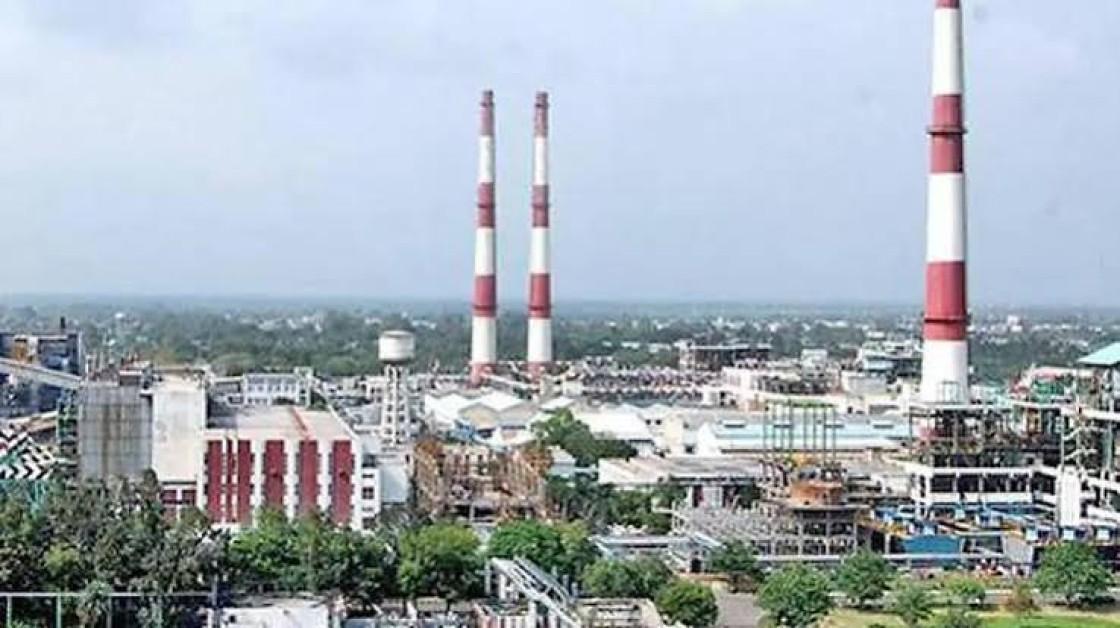
Grasim Industries Schedules Q2 FY27 Financial Results as Investors Assess Cement, Paints and Chemicals Business Performance
Mumbai, November 13, 2026: Grasim Industries Limited, the Aditya Birla Group's diversified manufacturing flagship, is scheduled to announce its financial results for the second quarter of fiscal year 2026–27 on Friday, November 13, placing its cement, paints, chemicals and other businesses under investor scrutiny.
The company's board of directors is scheduled to consider and approve its unaudited standalone and consolidated financial results for the quarter and six months ended September 30, 2026.
Grasim has also scheduled an earnings conference call for 4:00 p.m. IST on November 13, during which management is expected to discuss financial performance and business developments.
The announcement comes as investors assess the performance of UltraTech Cement, the expansion of Birla Opus paints and profitability trends in the chemicals business.
The results will also provide insight into Grasim's broader capital allocation strategy, including investment in new manufacturing capacity and the development of its paints operations.
While cement remains an important contributor to consolidated performance, the company's standalone operations and emerging businesses provide a different perspective on profitability and cash requirements.
The September-quarter results will therefore be evaluated across both consolidated and standalone financial measures.
Grasim Industries Confirms November 13 Board Meeting

Grasim Industries informed stock exchanges on October 30 that its board would meet on November 13 to consider the financial statements for the September quarter.
The filing covers both standalone and consolidated results for the quarter and half year ended September 30, 2026.
The company also confirmed that its trading window would remain closed through November 15, in accordance with its insider trading compliance arrangements.
The announcement establishes the reporting schedule but does not itself disclose the second-quarter financial results.
Investors will need to assess the approved financial statements and accompanying management commentary to determine actual quarterly performance.
The distinction is important because expectations about business growth or margins are not substitutes for reported financial results.
Grasim Industries Q2 FY27 Results: Key Details
| Indicator | Details |
|---|---|
| Company | Grasim Industries Limited |
| Parent business group | Aditya Birla Group |
| Reporting period | July–September 2026 |
| Financial year | FY2026–27 |
| Board meeting | November 13, 2026 |
| Results under consideration | Unaudited standalone and consolidated results |
| Earnings conference call | November 13, 2026 |
| Conference call time | 4:00 p.m. IST |
| NSE symbol | GRASIM |
| BSE code | 500300 |
| Principal areas of investor interest | Cement, paints, chemicals, margins and capital expenditure |
Cement Business Remains Central to Consolidated Performance
Grasim's exposure to the cement industry comes primarily through its controlling interest in UltraTech Cement.
UltraTech is one of India's largest cement manufacturers and operates an extensive manufacturing and distribution network.
Its performance is influenced by construction activity, infrastructure investment, housing demand and regional cement prices.
Because UltraTech is consolidated within Grasim's financial statements, changes in cement revenue and profitability can have a substantial effect on Grasim's reported group performance.
Investors will examine cement volumes, realisations and operating margins.
They will also assess the effect of production costs, including fuel, electricity and transportation expenses.
The September quarter is particularly important because monsoon conditions can affect construction activity across parts of India.
However, demand patterns vary by region and customer category.
UltraTech Cement Volumes and Pricing Under Scrutiny
Cement manufacturers generate revenue through the volume of cement sold and the average selling price achieved.
Higher volumes can support revenue growth, but profitability also depends on pricing and production costs.
Investors will examine whether UltraTech maintained demand across its operating markets during the September quarter.
Regional pricing trends will be important because cement prices can vary significantly across India.
The company's product mix and distribution strategy may also influence average realisations.
Management commentary on demand from housing, infrastructure and commercial construction could provide additional context.
However, strong shipment volumes do not automatically translate into higher margins if selling prices weaken or costs rise.
Monsoon Conditions Influence Cement Demand
The July–September quarter overlaps with India's southwest monsoon season.
Heavy rainfall can slow construction activity and reduce demand for building materials.
This effect can be particularly visible in infrastructure projects and construction work requiring extensive outdoor activity.
However, the impact differs across regions.
Urban housing demand, institutional projects and infrastructure spending may follow different patterns.
Investors will therefore evaluate UltraTech's performance against seasonal conditions rather than interpreting quarterly volume movements in isolation.
Management's outlook for the post-monsoon construction period will also be relevant.
A recovery in project activity could support cement demand during the second half of FY27.
Cement Capacity Expansion Remains a Strategic Priority
UltraTech has pursued a long-term strategy of expanding manufacturing capacity and strengthening its geographic presence.
Additional capacity can help the company serve new markets and improve distribution efficiency.
However, cement manufacturing requires substantial capital investment.
New plants and grinding units involve construction expenses, equipment procurement and supporting infrastructure.
Capacity expansion can also affect depreciation and financing costs.
Investors will assess whether the company is generating sufficient demand to support its growing production network.
The pace of investment and the timing of new capacity commissioning will remain important to the outlook.
Birla Opus Paints Becomes a Major Earnings Focus
Grasim's Birla Opus paints business is among the most closely watched parts of its diversification strategy.
The company entered India's decorative paints market with substantial investment in manufacturing facilities, distribution and brand development.
Birla Opus competes with established paint manufacturers that have extensive dealer networks and strong consumer recognition.
The business is still developing its market position.
Investors will examine revenue growth, distribution expansion and operating losses.
The central question is whether rising sales are beginning to improve operating efficiency.
However, building a national paint business requires spending on advertising, dealer relationships and product availability.
These expenses can weigh on profitability during the expansion phase.
Paints Revenue Growth Must Translate Into Better Economics
Rapid sales growth can indicate improving customer adoption.
However, revenue alone does not establish that a new business is approaching profitability.
For Birla Opus, investors will assess operating costs relative to revenue.
Important factors include manufacturing utilisation, advertising expenses, distribution costs and product mix.
Higher production volumes may improve fixed-cost absorption.
A broader dealer network can also support sales growth.
However, expansion may require additional working capital and promotional expenditure.
The September-quarter results will provide further information about how the paints business is progressing.
Management commentary on margins and investment requirements will be particularly important.
Competition in India's Decorative Paints Market Intensifies
India's decorative paints market includes several established manufacturers.
Asian Paints, Berger Paints, Kansai Nerolac and Akzo Nobel India have historically been important participants.
Birla Opus is attempting to establish itself through manufacturing capacity, product availability and distribution.
Competition can influence pricing, dealer incentives and marketing expenditure.
New entrants may need to invest heavily before achieving meaningful market share.
For consumers, competition can increase product choice.
For manufacturers, however, aggressive expansion may put pressure on industry profitability.
Investors will examine whether Birla Opus can grow without relying excessively on promotional spending.
The company's progress will also be relevant to the broader competitive outlook for India's paints industry.
Manufacturing Utilisation Will Be Important for Birla Opus
Paint manufacturing facilities involve significant fixed investment.
Once plants become operational, higher utilisation can help distribute fixed costs across a larger production volume.
This may improve unit economics.
However, utilisation depends on demand, product mix and distribution capacity.
Birla Opus has invested in a large manufacturing network to support national expansion.
The business must now build sufficient sales volumes to use that capacity efficiently.
Investors will assess whether revenue growth is helping reduce operating losses.
Management may also provide information on dealer expansion, production and future investment plans.
Chemicals Business Faces Pricing and Cost Pressures
Grasim's chemicals operations are another important contributor to its standalone business.
The company manufactures products used across several industrial sectors.
Its chemicals portfolio includes chlor-alkali products such as caustic soda.
Demand is influenced by industrial activity and downstream manufacturing requirements.
Profitability can fluctuate because of changes in product prices and energy costs.
Electricity is a particularly important input for chlor-alkali production.
Investors will therefore assess whether the company experienced changes in chemical realisations, production volumes and operating margins.
The results may also provide insight into demand from industrial customers.
Caustic Soda Prices Remain a Key Indicator
Caustic soda is used in industries including textiles, paper, aluminium and chemicals manufacturing.
Its selling price can change depending on domestic demand, imports, exports and global supply conditions.
Higher realisations can improve revenue and profitability.
However, the effect depends on production volumes and operating costs.
Grasim's chemicals business is exposed to these market conditions.
Investors will examine whether pricing supported or constrained September-quarter earnings.
Management commentary on industry capacity and demand could provide additional insight.
The outlook for caustic soda will also depend on conditions across downstream manufacturing industries.
Energy Costs Influence Chemical Profitability
Chlor-alkali production is electricity-intensive.
Power costs therefore have a significant influence on manufacturing economics.
Changes in electricity tariffs, fuel prices and energy sourcing can affect profitability.
Manufacturers may invest in energy efficiency and alternative power arrangements to manage these costs.
However, such initiatives often require capital expenditure.
Grasim's September-quarter performance will be assessed partly through the relationship between chemical selling prices and energy expenses.
A favourable movement in this relationship can support margins.
Conversely, higher power costs may reduce profitability even when sales volumes remain stable.
Cellulosic Fibres Add Another Dimension to Earnings
Grasim is also a major producer of cellulosic fibres used in textile applications.
Its portfolio includes viscose staple fibre and related products.
Demand is influenced by textile manufacturing, apparel consumption and global trade conditions.
The business competes with other fibre categories and is exposed to fluctuations in raw material costs.
Investors will examine production volumes, selling prices and profitability.
Export demand and international market conditions can also influence performance.
The cellulosic fibres business provides diversification beyond cement, paints and chemicals.
However, it introduces exposure to a different set of industry cycles.
Standalone and Consolidated Results Tell Different Stories
Grasim's standalone financial statements reflect the performance of businesses operated directly by the company.
These include activities such as cellulosic fibres, chemicals and paints.
Consolidated results include eligible subsidiaries and other group entities, notably UltraTech Cement.
This distinction is important when evaluating revenue growth and profitability.
A strong performance from UltraTech may support consolidated earnings even if a newer standalone business continues reporting losses.
Similarly, changes in the paints business may be more visible in standalone results.
Investors should therefore examine both reporting formats.
The comparison helps identify which businesses are contributing to earnings and which require additional investment.
Paints Expansion Could Affect Standalone Profitability
Birla Opus remains in a business-building phase.
Manufacturing facilities, advertising and distribution expansion create substantial operating expenses.
These costs may affect Grasim's standalone profitability.
However, early losses are not necessarily unexpected for a new business operating at national scale.
The key consideration is whether revenue growth is accompanied by improving operating efficiency.
Investors will assess whether the company is moving toward its longer-term profitability objectives.
They will also evaluate the pace at which additional investment is required.
The September-quarter results could provide evidence of progress, although a single quarter may not establish a sustained trend.
Capital Expenditure and Cash Flow Under Investor Scrutiny
Grasim operates across capital-intensive manufacturing industries.
Cement, chemicals, fibres and paints all require investment in production facilities and supporting infrastructure.
Capital expenditure can support future growth.
However, it also creates financing and cash-flow requirements.
Investors will examine whether operating cash generation is sufficient to support planned investment.
They will also monitor debt levels and capital allocation decisions.
The balance between expanding new businesses and maintaining financial flexibility will remain important.
Management commentary on future spending could influence market expectations.
Aditya Birla Capital Adds Financial Services Exposure
Grasim also has exposure to financial services through its investment in Aditya Birla Capital.
The financial services business operates across areas including lending, asset management and insurance-related activities.
Its performance is influenced by credit demand, asset quality, financial market conditions and regulatory developments.
Although the immediate focus is on cement, paints and chemicals, investors assessing Grasim's consolidated financial position may also consider financial services performance.
However, the contribution of each business must be evaluated using the company's reported segment disclosures.
Different industries have different profitability and capital requirements.
India's Infrastructure Spending Supports Long-Term Cement Demand
Infrastructure investment remains an important demand driver for cement manufacturers.
Roads, railways, housing and urban development projects require substantial construction materials.
India's long-term infrastructure needs provide opportunities for cement producers.
However, the timing of project execution can influence quarterly demand.
Government spending, financing conditions and construction schedules also matter.
UltraTech's scale positions it to participate in infrastructure-related demand.
Nevertheless, industry growth does not guarantee that every producer will achieve stronger margins.
Competition, capacity additions and operating costs remain important considerations.
Consumer Demand Shapes the Paints Market Outlook
Decorative paints demand is linked to housing construction, renovation and household spending.
New residential developments create demand for initial painting.
Existing homes generate repainting demand.
Consumer preferences and brand recognition influence purchasing decisions.
Birla Opus is attempting to establish itself in this market.
However, growth can be affected by housing activity, inflation and competition.
The company must also build relationships with dealers, contractors and painters.
Investors will assess whether its distribution strategy is translating into sustainable sales growth.
What Investors Will Watch in the Q2 FY27 Results
The November 13 announcement will be assessed through several financial and operating measures.
Consolidated revenue and profit will provide an overview of group performance.
Standalone results will help explain trends in Grasim's directly operated businesses.
UltraTech's cement volumes, pricing and margins will remain important.
Birla Opus revenue growth and operating losses will provide insight into the paints expansion.
Chemical realisations and energy costs will influence expectations for industrial profitability.
Investors will also monitor capital expenditure, cash flow and management's outlook for the second half of FY27.
Management Commentary Could Influence Market Expectations
The earnings conference call is scheduled for 4:00 p.m. IST.
Management is expected to discuss the quarterly results and respond to questions from analysts and institutional investors.
The call may provide further information about operating trends, capital allocation and business priorities.
Investors will be particularly interested in the paints business and its path toward improved profitability.
Commentary on cement demand and chemicals pricing may also influence expectations.
However, forward-looking statements should be distinguished from reported results.
Actual future performance will depend on market conditions and business execution.
Grasim Shares May React to Earnings and Guidance
Grasim Industries shares trade on the National Stock Exchange and Bombay Stock Exchange.
Quarterly earnings announcements can influence share prices as investors compare reported performance with expectations.
The market response may depend on consolidated profit, standalone margins and management commentary.
A stronger-than-expected result could support investor sentiment.
However, positive earnings do not necessarily lead to share-price gains if expectations are already reflected in valuations.
Similarly, concerns about investment spending or operating losses could weigh on sentiment.
Broader equity market conditions may also influence trading.
Outlook for Grasim Industries in FY27
Grasim's outlook for the remainder of FY27 will depend on performance across several industries.
Cement demand may benefit from construction activity after the monsoon season.
The paints business will continue focusing on market development and operating efficiency.
Chemicals profitability will remain sensitive to product prices and energy costs.
Cellulosic fibres will be influenced by textile demand and international market conditions.
The company must also manage capital expenditure across its businesses.
Investors will assess whether management can balance long-term expansion with near-term profitability.
The September-quarter results will provide an important update on that balance.
Conclusion
Grasim Industries' November 13 earnings announcement will provide investors with an opportunity to assess the performance of its diversified businesses during the second quarter of FY27.
UltraTech Cement's volumes, pricing and profitability will remain central to consolidated results.
Birla Opus paints will attract attention because of its continuing expansion and the investment required to establish a competitive position.
The chemicals and cellulosic fibres businesses will provide further insight into industrial demand and operating margins.
Investors will also examine cash flow, capital expenditure and management's outlook for the remainder of the financial year.
The results will be particularly important for understanding whether Grasim's investment-led diversification strategy is beginning to deliver stronger operating performance alongside its established manufacturing businesses.
 Grasim Industries Q2 FY27 Results: Cement, Paints and Chemicals in Focus FAQs

POST A COMMENT (0)
All Comments (0)
Replies (0)