





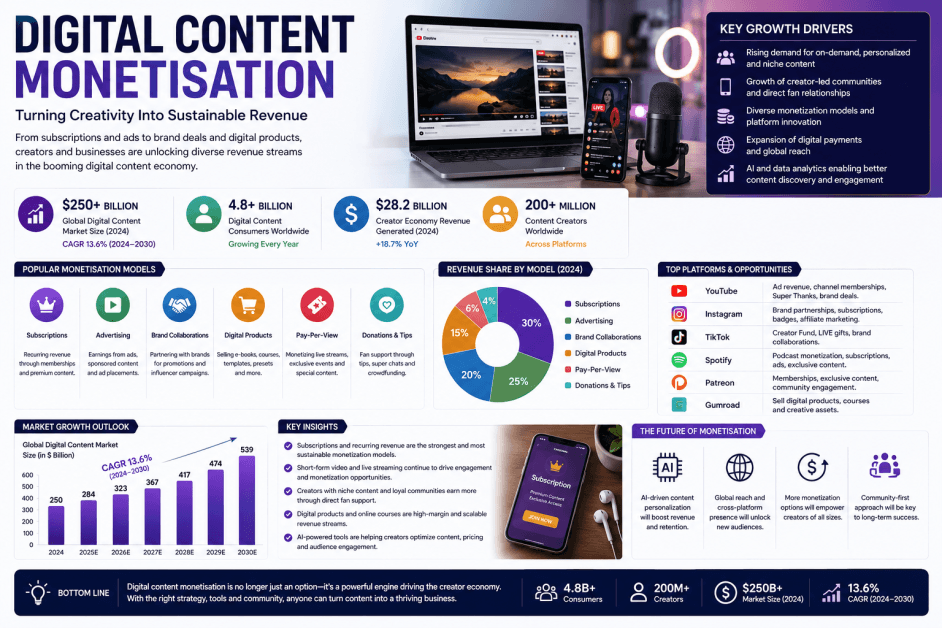
Digital Content Monetisation: Revenue Models, Creator Economy Growth, and Business Opportunities
Digital content monetisation has become one of the fastest-growing segments of the global digital economy as creators, publishers, media companies, educators, and businesses seek sustainable ways to generate revenue from online audiences. Advances in digital technology, artificial intelligence (AI), mobile connectivity, and social media have transformed content into a scalable business asset across multiple platforms.
Today, successful content businesses rely on diversified revenue streams rather than a single income source. From subscriptions and advertising to digital products and brand partnerships, organisations are building long-term monetisation strategies that support continuous audience engagement and business growth.
Digital Content Economy Continues to Expand
The digital content ecosystem spans numerous formats, including:
-
Articles and blogs
-
Videos
-
Podcasts
-
Newsletters
-
Online courses
-
E-books
-
Live streaming
-
Social media content
-
Digital communities
-
Educational resources
Businesses and independent creators increasingly distribute content across websites, mobile apps, streaming platforms, and social media channels to maximise reach and revenue potential.
Key Revenue Models
Subscription-Based Content
Subscription models provide recurring revenue through monthly or annual memberships. Premium subscribers often receive exclusive articles, videos, podcasts, courses, and ad-free experiences.
Advertising Revenue
Display advertising, video advertising, sponsored content, affiliate marketing, and programmatic advertising remain major monetisation channels for publishers and digital media companies.
Brand Partnerships
Content creators and publishers collaborate with brands through sponsorships, product placements, influencer campaigns, and long-term commercial partnerships to generate additional income.
Digital Products
Many creators monetise their expertise by selling:
-
Online courses
-
E-books
-
Templates
-
Premium reports
-
Software tools
-
Design assets
-
Digital memberships
-
Educational materials
Digital products provide scalable revenue with relatively low distribution costs.
Creator Memberships and Communities
Exclusive communities offering premium discussions, networking opportunities, live sessions, and member-only resources continue to grow as audiences seek deeper engagement with trusted creators.
Technology Driving Monetisation
Technology plays a central role in helping businesses generate and optimise digital revenue.
Key technologies include:
-
Artificial intelligence
-
Machine learning
-
Customer relationship management (CRM)
-
Marketing automation
-
Data analytics
-
Content management systems (CMS)
-
Payment gateways
-
Recommendation engines
-
Cloud computing
-
Customer engagement platforms
These solutions help publishers understand audience behaviour, personalise experiences, optimise pricing, and improve conversion rates.
Emerging Market Trends
AI-Powered Content Personalisation
AI enables personalised recommendations, automated content delivery, audience segmentation, and predictive engagement strategies that improve user retention and subscription growth.
Short-Form Video Growth
Short-form video continues to attract significant consumer engagement, encouraging creators and businesses to diversify content formats and advertising opportunities.
Multi-Platform Distribution
Content is increasingly published across websites, social media platforms, streaming services, newsletters, and mobile applications to reach broader audiences and reduce platform dependence.
Direct-to-Consumer Business Models
Creators and publishers are strengthening direct relationships with audiences through owned websites, subscription platforms, email newsletters, and membership programs.
Regional Language Content
Growing demand for local-language content is creating new monetisation opportunities in emerging digital markets.
Opportunities for Businesses
Digital content monetisation creates opportunities for:
-
Media organisations
-
Independent creators
-
Educational institutions
-
Marketing agencies
-
Technology startups
-
E-commerce businesses
-
Software companies
-
Professional consultants
-
Publishers
-
Corporate brands
As digital audiences expand, businesses can develop diversified revenue models tailored to specific customer segments and industries.
Challenges Facing Digital Content Businesses
Despite strong growth, content monetisation presents several challenges.
Platform Dependency
Businesses relying heavily on third-party platforms remain exposed to algorithm updates and policy changes that can affect audience reach and revenue.
Content Saturation
Growing competition makes it increasingly important to produce distinctive, high-quality, and valuable content.
Audience Retention
Maintaining long-term subscriber engagement requires consistent content quality, innovation, and personalised experiences.
Copyright Protection
Protecting original digital assets from unauthorised use remains a key concern for creators and publishers.
Data Privacy
Businesses must comply with evolving regulations governing consumer data, digital advertising, and online privacy.
Future Outlook
Digital content monetisation is expected to continue evolving as technology and consumer behaviour reshape online business models.
Key trends likely to influence future growth include:
-
AI-driven audience personalisation
-
Expansion of subscription businesses
-
Growth of digital learning platforms
-
Increased creator commerce
-
Interactive content experiences
-
First-party data strategies
-
Community-led business models
-
Premium newsletters
-
Global expansion of digital publishing
-
Integrated commerce within content platforms
Companies that combine valuable content, diversified revenue streams, advanced analytics, and strong audience relationships are expected to remain competitive in the evolving digital economy.
Conclusion
Digital content monetisation has become a strategic priority for creators, publishers, and businesses seeking sustainable revenue in an increasingly digital world. Subscription services, advertising, digital products, brand partnerships, and AI-powered personalisation are creating new opportunities to build profitable online businesses.
While challenges such as platform dependency, audience acquisition, and regulatory compliance remain, continued innovation and expanding digital consumption are expected to support long-term growth. Organisations that focus on high-quality content, direct audience engagement, and diversified monetisation strategies are well positioned to succeed in the evolving creator and digital media economy.
 Digital Content Monetisation: Market Trends, Revenue Models, and Future Outlook FAQs
POST A COMMENT (0)
All Comments (0)
Replies (0)