





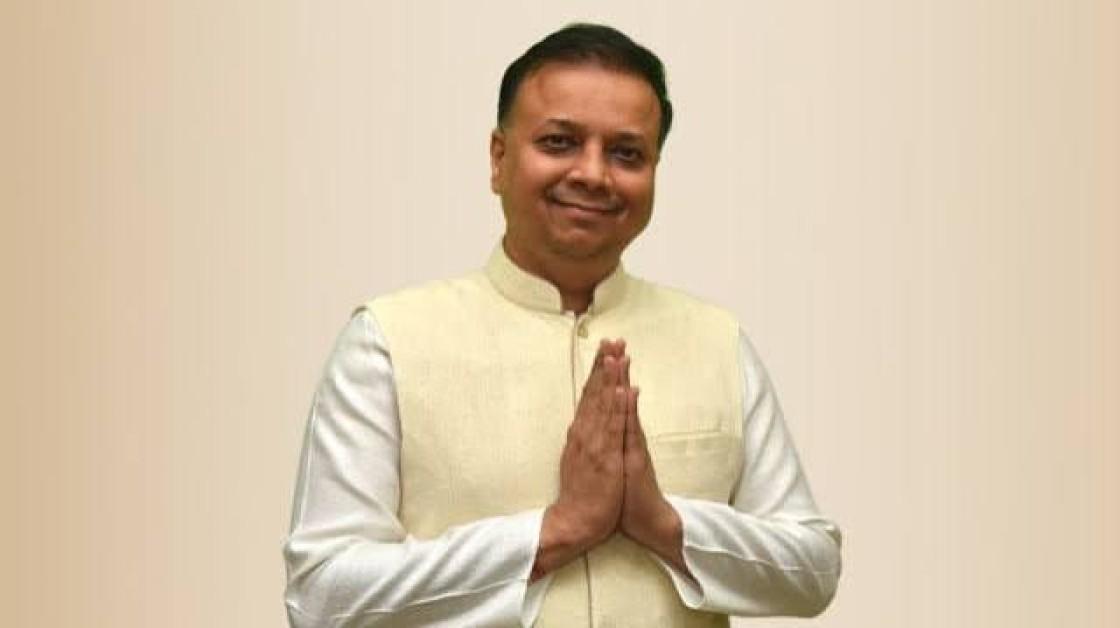
Karan Darda Set to Become Indian Newspaper Society President, Succeeding Vivek Gupta
Karan Rajendra Darda, Executive Director and Editorial Director of Lokmat Media Group, is set to become President of the Indian Newspaper Society for the 2026–27 term, succeeding Sanmarg Group Chairman and Managing Director Vivek Gupta as the leadership of one of India’s most influential newspaper-industry bodies prepares for transition.
Darda currently serves as:
Deputy President of the Indian Newspaper Society, or INS.
His elevation to the presidency is expected to be formalised following the Society’s:
87th Annual General Meeting.
The transition continues a steady progression through the organisation’s leadership structure.
Darda served as:
Vice President during 2024–25
before becoming:
Deputy President for 2025–26.
He is now set to take over from Vivek Gupta, who headed the Society during:
2025–26.
The leadership change comes at a particularly important moment for India’s newspaper industry as publishers navigate:
digital transformation,
changing advertising models,
rising input costs,
audience measurement,
AI-generated content,
copyright,
news aggregation,
and the long-term economics of print journalism.
Karan Darda Set to Lead INS for 2026–27

Karan Rajendra Darda is expected to assume the position of:
President of the Indian Newspaper Society for 2026–27.
The appointment would place him at the head of an organisation representing publishers of:
newspapers,
magazines,
and periodicals
across India.
The INS plays an important industry role in engaging with:
government,
advertisers,
advertising agencies,
technology platforms,
regulators,
and other stakeholders
on issues affecting publishers.
Darda’s presidency is therefore likely to carry significance beyond Lokmat itself.
Darda Will Succeed Vivek Gupta
The outgoing president is:
Vivek Gupta of Sanmarg.
Gupta was elected INS President for:
2025–26
at the Society’s 86th Annual General Meeting.
He succeeded:
M.V. Shreyams Kumar of Mathrubhumi.
During Gupta’s term, Darda served as:
Deputy President.
The transition therefore follows the Society’s established leadership progression, with a senior office-bearer moving into the presidency after serving in other executive positions.
INS Presidency Expected to Be Formalised at 87th AGM
Darda is presently:
set to become president
rather than having already formally begun the term.
The transition is expected to be confirmed through the:
87th Annual General Meeting of the Indian Newspaper Society.
Until that formal process is completed, Vivek Gupta remains associated with the 2025–26 presidency.
That distinction is important because the Society elects its leadership for defined annual terms.
Darda Has Progressed Through INS Leadership Ranks
Karan Darda has moved steadily through the senior hierarchy of the INS.
For:
2024–25,
he served as:
Vice President.
During that year:
M.V. Shreyams Kumar
was President,
while:
Vivek Gupta
served as Deputy President.
For:
2025–26,
Gupta moved into the presidency.
Darda then advanced to:
Deputy President.
His expected elevation for 2026–27 therefore represents the next stage in a clearly established leadership sequence.
Tanmay Maheshwari Served as Vice President in 2025–26
The Society’s 2025–26 leadership team included:
Vivek Gupta as President,
Karan Rajendra Darda as Deputy President,
Tanmay Maheshwari of Amar Ujala as Vice President,
and:
Anant Nath of Grihshobhika as Honorary Treasurer.
Mary Paul served as:
Secretary General.
The structure reflects representation from major publishing groups operating across different:
languages,
regions,
and reader markets.
Karan Darda Holds Senior Role at Lokmat
At Lokmat Media Group, Darda serves as:
Executive Director
and:
Editorial Director.
His responsibilities extend across:
editorial strategy,
operations,
circulation,
and marketing initiatives.
That combination gives him exposure to both the:
journalistic
and:
commercial
sides of the newspaper business.
This is increasingly important because modern publishing leadership requires understanding both:
editorial credibility
and:
business sustainability.
Lokmat Is Major Regional-Language Media Group
Lokmat is one of India’s best-known:
regional-language newspaper groups.
Its core strength lies in:
Marathi-language publishing,
particularly across:
Maharashtra.
Regional-language newspapers continue to play a major role in India’s media landscape because large audiences consume news in:
local languages.
These markets are also important to advertisers seeking:
deep geographic reach
and:
high local engagement.
Regional Media Experience Could Shape INS Agenda
Darda’s background in regional publishing may influence the way the Society approaches several industry issues.
Regional publishers face challenges that can differ from those of:
national English-language newspapers.
These include:
local advertising dependence,
distribution economics,
regional audience measurement,
language technology,
and monetisation of digital readers.
As president, Darda would represent a much broader publisher constituency than any single media group.
Darda Has Advocated for Stronger Print Readership Measurement
One of the issues associated with Darda’s industry work is:
audience measurement.
Advertisers increasingly demand accurate information about:
who reads newspapers,
how often they read,
and how print audiences compare with digital audiences.
For publishers, credible readership data directly affects:
advertising pricing
and:
media planning.
Darda has previously emphasised the importance of strengthening confidence in:
print measurement.
Advertising Confidence Remains Critical for Newspapers
Advertising remains a central revenue source for many Indian newspapers.
Publishers therefore need advertisers to believe that print continues to deliver:
reach,
engagement,
trust,
and response.
This becomes more difficult when digital platforms provide advertisers with:
real-time analytics,
click-through data,
and granular targeting.
Print cannot always offer the same type of measurement.
Its value proposition instead relies on a combination of:
credible readership data,
brand trust,
and high attention.
INS Plays Important Role in Publisher-Advertiser Relations
The Indian Newspaper Society historically acts as an industry interface with:
advertising agencies
and:
advertisers.
It helps address matters relating to:
commercial practices,
accreditation,
payment standards,
and publisher interests.
As the advertising market becomes increasingly digital, the Society’s role is evolving.
Publishers must negotiate not only with traditional advertising intermediaries but also with:
technology platforms
and:
digital ecosystems.
Print Industry Is Facing Structural Digital Shift
Darda’s expected presidency comes as newspaper companies are adjusting to a long-term change in:
news consumption.
Audiences increasingly discover stories through:
search engines,
social media,
news aggregators,
video platforms,
and messaging apps.
Traditional newspapers therefore compete for attention in an environment where readers may encounter individual stories without visiting the publication’s:
homepage
or:
print edition.
This has changed the economics of distribution.
Digital Audiences Can Be Large but Hard to Monetise
Many traditional newspaper brands now attract substantial:
digital audiences.
But digital scale does not automatically generate equivalent revenue.
Online advertising economics differ sharply from:
print advertising.
A large share of digital advertising spending flows through:
major technology platforms.
Publishers therefore need to experiment with:
subscriptions,
memberships,
events,
premium content,
video,
and branded solutions
to diversify their revenue.
AI Has Become a Major Newspaper-Industry Issue
Artificial intelligence is likely to be one of the defining issues during the next INS leadership term.
Generative AI systems can:
summarise articles,
answer questions using published reporting,
generate text,
translate stories,
and create synthetic images.
These capabilities offer publishers:
productivity opportunities.
But they also create difficult questions around:
copyright,
attribution,
licensing,
and compensation.
Publishers Are Concerned About AI Copyright
News organisations invest heavily in:
reporters,
editors,
photographers,
research,
and verification.
If AI companies use that material to train models or generate answers without adequate compensation, publishers may argue that value is being transferred away from:
newsrooms.
This has already become a major global media-policy debate.
The INS leadership will likely need to engage increasingly with:
technology companies
and:
policymakers
on this issue.
AI Can Also Help Publishers
The technology is not exclusively a threat.
AI can help newspaper companies improve:
translation,
archive search,
personalisation,
transcription,
workflow automation,
and production.
Regional publishers may particularly benefit from:
machine translation
and:
language technology.
The challenge is to use AI without compromising:
editorial standards
or:
intellectual-property rights.
Newsprint Costs Remain Another Core Concern
Traditional publishers still face a major physical input cost:
newsprint.
Changes in:
global pulp prices,
freight,
currency movements,
and import conditions
can significantly affect newspaper economics.
For publishers with large circulation volumes, even relatively small changes in newsprint costs can materially affect:
margins.
INS has historically advocated on issues related to:
newsprint supply
and:
industry cost pressures.
Print Distribution Is Expensive
Newspapers also maintain a complex physical distribution network.
Copies must be:
printed,
bundled,
transported,
and delivered
before readers begin their day.
This infrastructure involves:
printing plants,
transporters,
agents,
vendors,
and delivery workers.
Digital media avoids many of these physical costs.
That creates a structural disadvantage for print publishers even when newspapers retain strong audience loyalty.
Print Still Has High Trust Value
Despite these pressures, newspapers continue to benefit from:
institutional trust.
Established newspaper brands often have:
editorial processes,
legal accountability,
professional newsrooms,
and longstanding reader relationships.
In an environment increasingly affected by:
misinformation,
synthetic content,
and manipulated media,
credible editorial brands may become even more important.
The challenge is converting that trust into sustainable commercial value.
Gupta’s 2025–26 Tenure Included Major Industry Issues
Vivek Gupta’s tenure came during a period of substantial change for newspaper publishers.
Among the key issues during the year were:
government advertising,
AI and copyright,
newsprint costs,
and the broader repositioning of print.
One notable development during the period was an increase in:
government advertising rates.
Industry representatives had long argued that official advertising rates needed to better reflect:
higher production
and:
distribution costs.
Government Advertising Rates Rose During Gupta’s Term
During the 2025–26 period, government advertising rates were increased by approximately:
26%.
The move was significant for publishers because government advertising remains an important revenue source, particularly for:
regional
and:
smaller newspapers.
Higher official rates can help partially offset:
inflation,
newsprint expenses,
and distribution costs.
For INS, securing better economics for member publications remains a central advocacy function.
“Ink Doesn’t Lie” Campaign Highlighted Print Trust
The industry also used the:
“Ink Doesn’t Lie”
campaign to reinforce the credibility of:
print journalism.
The concept emphasised the accountability associated with published newspapers in a media environment increasingly shaped by:
viral posts,
AI-generated material,
and anonymous online content.
Such campaigns reflect the industry's attempt to reposition print not merely as an older distribution format but as:
a premium trust medium.
Darda Inherits a More Complex Media Landscape
The incoming INS president will operate in a media environment more complicated than the one newspaper trade bodies faced a decade ago.
The Society must now engage with issues spanning:
traditional print regulation,
digital advertising,
platform economics,
copyright,
AI,
audience measurement,
government policy,
and news monetisation.
This requires balancing the interests of publishers of vastly different sizes.
Large and Small Publishers Face Different Pressures
India’s newspaper market includes:
national groups,
regional chains,
single-state publishers,
specialist magazines,
and smaller local publications.
Their economics are not identical.
A large publisher may have the resources to invest in:
apps,
video studios,
subscriptions,
and AI.
A smaller newspaper may remain heavily dependent on:
print circulation
and:
local advertising.
INS therefore has to develop policy positions that accommodate a highly diverse membership.
Local Newspapers Remain Important to Indian Democracy
Small and regional newspapers also perform an important civic function.
They often cover:
local governments,
district administration,
businesses,
schools,
courts,
and community issues
that receive limited attention from national media.
If local newspaper economics weaken significantly, the result can be:
less professional reporting
at the community level.
Industry sustainability is therefore not merely a commercial question.
It can also affect the broader:
information ecosystem.
Darda Is Also Associated With Audit Bureau of Circulations
Karan Darda is also part of the:
Audit Bureau of Circulations Council of Management for 2026–27.
The Audit Bureau of Circulations plays an important role in verifying:
newspaper
and:
magazine circulation.
Verified circulation numbers help:
advertisers
and:
agencies
compare media vehicles.
His participation in both INS and ABC places him at the intersection of:
publisher representation
and:
audience accountability.
Circulation Data Still Matters
Digital media has not eliminated the importance of:
print circulation data.
Large advertisers continue to allocate substantial budgets across:
newspapers,
magazines,
television,
outdoor,
and digital.
When evaluating newspapers, brands want reliable evidence of:
distribution
and:
audience.
Independent verification supports:
pricing credibility.
This is particularly important when publishers are competing against platforms capable of presenting extremely detailed digital metrics.
Readership and Circulation Are Different
The industry must also distinguish between:
circulation
and:
readership.
Circulation measures copies distributed.
Readership estimates the number of:
people consuming those copies.
One newspaper can be read by:
multiple people.
For advertisers, both measures provide different kinds of insight.
Improving the credibility and regularity of measurement remains important to print’s commercial future.
Digital Measurement Has Changed Advertiser Expectations
Digital platforms have conditioned advertisers to expect:
constant data.
Campaigns can be tracked using:
impressions,
views,
clicks,
conversions,
and audience segments.
Print measurement is typically less immediate.
This does not necessarily mean print is less effective.
But it means publishers need stronger evidence to explain:
how print contributes to brand impact
and:
purchase behaviour.
INS Leadership Could Focus on Cross-Media Measurement
One increasingly important industry challenge is:
cross-media measurement.
Consumers may see the same newspaper brand across:
print,
website,
app,
YouTube,
social media,
and newsletters.
Traditional measurement often counts each platform separately.
Publishers increasingly want systems that reflect their:
total audience.
This can improve their ability to monetise the full value of their brands.
Publisher-Platform Relations Will Remain Critical
Another major challenge is the relationship between publishers and:
technology platforms.
Search engines and social networks can send substantial traffic to news websites.
At the same time, they control important elements of:
discovery,
advertising,
and distribution.
This creates a complicated relationship in which platforms can simultaneously be:
partners
and:
competitors.
Trade organisations such as INS are increasingly important when publishers negotiate these issues collectively.
News Licensing Could Become Bigger Issue
Around the world, publishers are seeking payment from:
technology companies
for the use of professional journalism.
This can involve:
news snippets,
search results,
AI training,
or direct content licensing.
India’s large news market means similar questions are likely to become more important.
The next INS leadership will have to consider what forms of:
commercial licensing
or:
regulatory intervention
best protect publisher economics.
Print Must Also Attract Younger Readers
One long-term issue is:
generational change.
Younger audiences often encounter news first through:
mobile devices
rather than printed newspapers.
Publishers therefore need to develop relationships with younger readers without losing their:
core print audience.
This may require:
new storytelling formats,
short-form video,
podcasts,
explainers,
interactive graphics,
and social distribution.
The challenge is adapting the format without weakening:
editorial credibility.
Language Publishers Have Digital Opportunity
Regional-language publishers may have particularly significant digital growth potential.
As more Indian consumers use smartphones in:
their preferred languages,
demand for:
vernacular digital content
continues to expand.
AI-powered translation and voice tools can further increase accessibility.
For groups such as Lokmat, this creates an opportunity to extend established print brands into:
larger digital ecosystems.
Strong Newspaper Brands Can Become Multi-Platform Brands
The future of newspapers may increasingly involve separating:
the brand
from:
the physical format.
A newspaper company can publish journalism through:
print,
web,
video,
audio,
events,
social media,
and subscription products.
The newspaper remains an important product.
But the broader business becomes:
news and information.
Industry leadership therefore increasingly requires managing this transition.
Darda’s Editorial and Commercial Roles Are Relevant
Karan Darda’s combination of:
editorial
and:
executive
responsibilities is particularly relevant to this transition.
Publishers cannot solve digital disruption exclusively through:
cost cutting.
They also need to invest in:
products,
journalism,
technology,
and audience development.
At the same time, those investments need sustainable:
business models.
An industry leader who understands both sides is well positioned to engage with these trade-offs.
Press Freedom Remains Fundamental
Commercial sustainability is only one part of the INS mandate.
The newspaper industry also has a direct interest in:
press freedom.
Publishers need the ability to:
report,
investigate,
criticise,
and express opinions
within the framework of law.
Previous INS leaderships have repeatedly emphasised the importance of protecting:
editorial independence.
That issue is likely to remain central regardless of changes in technology or business models.
Industry Unity Can Increase Negotiating Power
Individual publishers may have limited leverage when dealing with:
large advertisers,
technology platforms,
or government agencies.
An industry body can provide:
collective representation.
This is one of the main reasons organisations such as INS remain relevant.
Common issues can be addressed through:
industry consultation
rather than each publisher negotiating separately.
2026–27 Could Be Important Transition Year
The 2026–27 period is likely to be unusually important for newspaper publishers.
AI is developing rapidly.
Digital advertising continues to expand.
Print input costs remain a concern.
Audience behaviour is changing.
At the same time, established newspapers continue to command significant:
reach
and:
trust.
The strategic challenge is therefore not whether print disappears overnight.
It is how publishers redesign their businesses around a:
multi-platform future.
Conclusion
Karan Rajendra Darda is set to become President of the Indian Newspaper Society for the 2026–27 term, succeeding Vivek Gupta of Sanmarg as one of India’s most important publisher organisations prepares for its next leadership transition.
Darda currently serves as Deputy President of INS and previously held the position of Vice President during 2024–25, marking a steady progression through the Society’s senior leadership ranks.
His elevation is expected to be formalised following the 87th Annual General Meeting of the Indian Newspaper Society.
At Lokmat Media Group, Darda serves as Executive Director and Editorial Director, with responsibilities spanning editorial strategy, operations, circulation and marketing. He is also associated with the Audit Bureau of Circulations Council of Management for 2026–27.
Darda will take over at a time when newspaper publishers are confronting some of the most consequential changes in the industry's history, including AI and copyright, digital advertising, platform economics, readership measurement, newsprint costs and the challenge of monetising professional journalism online.
Vivek Gupta's 2025–26 presidency coincided with significant publisher advocacy, including a roughly 26% increase in government advertising rates and industry initiatives around print credibility and AI-related concerns.
The next INS presidency will inherit those issues while facing an even faster shift toward digital and AI-driven news consumption.
For Karan Darda, the central challenge will be to help India's diverse newspaper industry preserve the strengths that built its influence—trust, editorial accountability and deep local reach—while creating a commercially sustainable role for professional publishing in an increasingly digital media economy.
 Related News
POST A COMMENT (0)
All Comments (0)
Replies (0)