





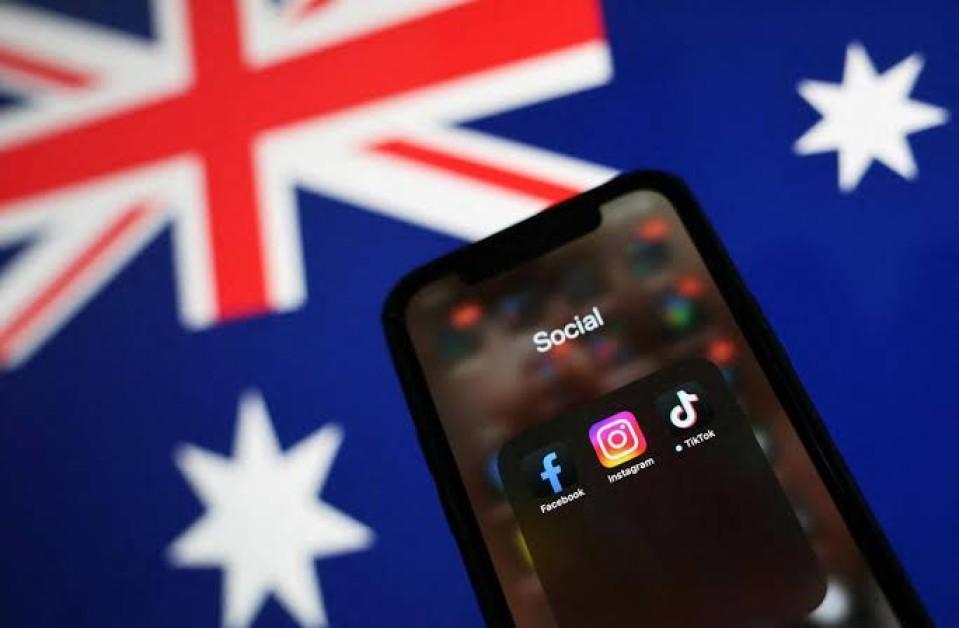
Australia Questions Google, Meta, Snap and TikTok Executives Over Early Impact of Under-16 Social-Media Ban
Australian lawmakers have questioned executives from some of the world's largest technology platforms as the government examines whether its landmark restrictions on social-media accounts for children under 16 are working as intended.
Representatives of Google's YouTube, Meta's Facebook and Instagram, Snap's Snapchat and TikTok appeared before a Senate inquiry on August 14, 2026, amid evidence that substantial numbers of younger Australians have continued accessing social-media services despite the restrictions.
The companies urged policymakers not to draw definitive conclusions from the early data, arguing that implementation and age-assurance technologies are continuing to evolve. Australia's eSafety Commissioner has acknowledged some early reduction in underage usage while also identifying weaknesses in platforms' ability to prevent children from creating or maintaining accounts. (Reuters)
The hearing has become an important test not only for Australia but for governments internationally considering similar restrictions on children's access to social media.
Australia Introduced a World-First National Age Restriction

Australia's social-media minimum-age regime took effect on December 10, 2025.
Under the rules, designated social-media platforms must take reasonable steps to prevent Australians under 16 from creating or maintaining accounts. (eSafety Commissioner)
The responsibility rests primarily with technology platforms rather than children or parents.
Children are not penalised for accessing restricted services.
Instead, regulators assess whether platforms have taken sufficient measures to prevent underage account ownership. (Infrastructure & Transport Department)
Major Social Platforms Fall Under the Rules
Australia's eSafety Commissioner currently considers services including Facebook, Instagram, Snapchat, Threads, TikTok, Twitch, X and YouTube to be age-restricted platforms.
Reddit, Kick and several other services are also covered. (eSafety Commissioner)
Some services are excluded because they do not currently meet the regulatory definition or qualify under specific exemptions.
That distinction reflects Australia's attempt to regulate social-media environments rather than impose a general prohibition on internet access for children.
Early Research Shows Under-16 Usage Remains High
The most significant challenge emerging from early implementation is continued usage.
A study involving 408 Australian adolescents aged 12 to 17 examined social-media behaviour before and three months after implementation of the restrictions.
Researchers found relatively limited early change, with many younger participants continuing to access covered platforms through their own, alternative or shared accounts. (Hunter Medical Research Institute)
Reuters reported at the August 14 Senate hearing that early evidence indicated roughly 80% of minors surveyed were still using social media, although technology companies emphasised that the data was preliminary. (Reuters)
Platforms Say Early Data Should Be Treated Carefully
Technology-company representatives cautioned lawmakers against treating the first months of implementation as definitive evidence that the policy has failed.
Age-assurance systems are still developing.
Platforms are also continuously removing accounts, refining detection systems and attempting to prevent users from returning after removal.
The companies argued that longer-term evidence will provide a more meaningful assessment of the policy's effectiveness. (Reuters)
Meta Says It Removed 756,000 Suspected Under-16 Accounts
Meta has disclosed one of the largest account-removal figures.
Between December 2025 and June 2026, the company removed or deactivated approximately 756,000 Australian accounts suspected of belonging to people younger than 16.
That included around:
-
462,000 Instagram accounts
-
294,000 Facebook accounts
Meta uses technology including AI-based age estimation and behavioural signals to identify potentially underage users. (Reuters)
YouTube Has Blocked Hundreds of Thousands of Accounts
Google's YouTube has also taken significant enforcement action.
Reuters reported that YouTube had blocked approximately 740,000 accounts as part of its response to Australia's age restrictions. (Reuters)
The scale demonstrates how difficult age enforcement can become when applied to large consumer platforms.
Even after mass account removals, users may attempt to return with different credentials.
TikTok Reports Large-Scale Account Removal
TikTok has similarly removed substantial numbers of accounts.
The company reported removing approximately 550,000 accounts, while continuing to identify and remove additional suspected underage users each month. (Reuters)
The figures demonstrate active enforcement.
They also illustrate the continuing challenge: account removal does not necessarily prevent the same person from attempting to register again.
More Than Five Million Accounts Have Been Affected Overall
The Australian government said in June that more than five million under-16 accounts had been removed, deactivated or restricted since the regime began. (Prime Minister of Australia)
Earlier eSafety figures showed that platforms had already removed access to approximately 4.7 million accounts by mid-December 2025. (eSafety Commissioner)
These figures suggest the law has produced substantial platform action.
The policy debate now concerns whether those removals translate into sustained reductions in children's social-media use.
Account Removal and Behaviour Change Are Different Measures
This distinction is critical.
A platform can remove millions of accounts while children continue using social media through:
-
New accounts
-
Incorrect ages
-
Shared accounts
-
Parents' accounts
-
Alternative platforms
-
Public content without logging in
The effectiveness of the regulation therefore cannot be judged solely by the number of accounts deleted.
The more important question is whether children's actual exposure to restricted social-media environments declines over time.
Age Verification Remains the Central Technical Problem
Technology companies face a fundamental challenge:
How does a platform reliably determine that someone is 15 rather than 16?
A user's self-declared birthday is insufficient because it can easily be changed.
Platforms therefore need stronger forms of age assurance.
Possible approaches include:
-
Government identification
-
Facial age estimation
-
Behavioural analysis
-
Device information
-
Account-history signals
-
Third-party age-assurance services
Every method involves trade-offs between accuracy, privacy and convenience.
Age Estimation Is Particularly Difficult Around 16
The threshold creates a difficult technical problem.
Distinguishing a 14-year-old from a 25-year-old may sometimes be relatively straightforward.
Distinguishing a 15-year-old from a 16-year-old can be much harder.
Platform representatives told the Senate inquiry that many existing age-assurance technologies are better suited to determining whether someone is around 18 than precisely enforcing a 16-year threshold. (Reuters)
That makes Australia's policy a significant real-world test of age-assurance technology.
False Positives Create Another Problem
An age-verification system cannot simply become extremely aggressive.
If it incorrectly identifies adults as children, legitimate users may lose access.
Platforms therefore need to balance two types of error:
Under-enforcement: Children remain on the service.
Over-enforcement: Adults are incorrectly removed.
Reducing one problem can increase the other.
Privacy Creates an Additional Trade-Off
Stronger age verification may require platforms to collect more information about users.
That creates an apparent contradiction.
A law designed partly to protect children online could unintentionally encourage greater collection of sensitive identity information.
Australia has consequently included specific privacy safeguards within the regulatory regime, with the Office of the Australian Information Commissioner responsible for oversight of relevant privacy provisions. (OAIC)
Government ID Is Not the Only Possible Solution
Australia's framework does not simply require every social-media user to upload government identification.
Platforms can use combinations of age-assurance technologies.
The regulatory emphasis is on whether companies are taking reasonable steps.
This gives platforms flexibility to develop methods that balance:
Accuracy + Privacy + User experience
The challenge is demonstrating that those methods actually work.
Children Can Still View Some Public Content
Australia's restrictions do not create a complete internet blockade for people under 16.
Young people may still view publicly available social-media content that does not require an account.
They can also continue using various messaging, educational and other services that are not classified as age-restricted social-media platforms. (eSafety Commissioner)
The policy therefore targets account-based social-media participation rather than general internet access.
Messaging Services Are Treated Differently
Services such as WhatsApp and Messenger are not currently classified by eSafety as age-restricted social-media platforms under the regime.
Discord, Roblox, Pinterest, Steam and several other services are also presently outside the designated category. (eSafety Commissioner)
The distinctions are based on the characteristics and regulatory definition of the service.
However, eSafety can reassess platforms as their functionality evolves.
Algorithmic Design Is Central to the Regulation
Australia's framework pays particular attention to features associated with modern social platforms.
The regulatory definition considers characteristics such as:
-
Account-based recommendation algorithms
-
Infinite scrolling
-
Likes and other feedback mechanisms
-
Disappearing stories
These features matter because the government is attempting to address potentially harmful or compulsive engagement patterns rather than simply online communication itself. (Infrastructure & Transport Department)
Australia Is Considering Stronger Enforcement Powers
The government has already concluded that the regulator may need additional tools.
In June, Prime Minister Anthony Albanese's government announced legislation intended to strengthen the eSafety Commissioner's information-gathering powers and double the maximum penalty for breaches to A$99 million. (Prime Minister of Australia)
The proposal reflects concern that large technology companies need sufficiently strong financial incentives to comply.
Senate Inquiry Is Examining the Stronger Enforcement Bill
The August 14 hearing forms part of the Senate Environment and Communications Legislation Committee's examination of the Online Safety Amendment (Strengthening Enforcement for the Social Media Minimum Age) Bill 2026.
The bill was referred to the committee on July 1, with its report scheduled for August 25. (Parliament of Australia)
The inquiry therefore concerns not merely whether the existing policy works, but whether Australia's regulator needs greater powers to enforce it.
eSafety Commissioner Acknowledges Enforcement Gaps
Australia's eSafety Commissioner Julie Inman Grant has acknowledged that platforms have not yet completely prevented younger users from maintaining or creating accounts.
At the same time, regulators have pointed to signs of declining underage use and argue that enforcement can improve as technology and compliance systems mature. (Reuters)
This places the regulator between two competing interpretations.
The restrictions have clearly produced substantial account removals.
But they have not yet eliminated underage social-media access.
The Policy Was Never Expected to Create Perfect Enforcement Overnight
Digital age restrictions differ from physical age restrictions.
A retailer can ask a customer standing at a counter for identification.
A social-media service may interact with millions of users remotely.
The platform therefore needs to establish age without necessarily meeting the user physically.
That makes enforcement inherently more complex.
AI Is Becoming Central to Age Assurance
Artificial intelligence may become increasingly important.
Platforms can analyse signals such as:
-
Account behaviour
-
Content interactions
-
Language patterns
-
Social connections
-
Facial estimates
to determine whether a declared age appears credible.
Meta has already said it uses AI-driven age-estimation tools as part of its Australian compliance efforts. (Reuters)
AI-Based Detection Raises Its Own Questions
Automated age estimation introduces additional regulatory issues.
Authorities need to consider:
-
Accuracy
-
Bias
-
Privacy
-
Transparency
-
Appeals
If an algorithm determines that a user is under 16, that decision can remove access to an account.
Users therefore need mechanisms to challenge incorrect decisions.
Platforms Need to Prevent Re-Registration
Removing an underage account is only the first stage.
If the same user can create another account five minutes later, enforcement becomes ineffective.
Platforms therefore need mechanisms to detect repeat registrations.
Meta has said its Australian compliance measures include efforts to prevent users from simply returning after their accounts are removed. (Reuters)
Shared Accounts Are Harder to Regulate
Shared family accounts present another challenge.
A legitimate adult account may sometimes be accessed by a child.
Age verification at registration cannot necessarily prevent this.
That demonstrates why technical enforcement alone may not completely eliminate underage access.
Family behaviour and digital literacy remain relevant.
Behaviour Could Shift to Unregulated Services
Another important question is displacement.
If children leave major social-media platforms, they may move to other online environments.
Researchers examining Australia's early experience specifically considered behavioural substitution and displacement as part of their study. (BMJ)
This matters because the objective is reducing harmful exposure, not simply moving the same behaviour elsewhere.
Smaller Platforms Could Gain Younger Users
Large companies such as Meta, Google and TikTok have substantial resources to develop age-assurance technology.
Smaller platforms may have fewer resources.
If younger users migrate toward less regulated or less sophisticated services, the policy could create unintended consequences.
Australia's framework therefore allows regulators to reassess emerging platforms as they evolve. (eSafety Commissioner)
Advertising Economics Could Also Be Affected
Removing under-16 users has commercial consequences.
Social-media companies monetise audiences through advertising.
Younger audiences can be valuable for categories including:
-
Gaming
-
Entertainment
-
Fashion
-
Consumer technology
Age restrictions therefore reduce some advertising inventory and potentially change audience composition.
For global technology companies, Australia's market alone may not materially transform overall economics, but widespread international adoption could have a larger effect.
Compliance Costs Are Increasing
Platforms need to invest in:
-
Age-assurance technology
-
Moderation
-
Appeals systems
-
Account monitoring
-
Regulatory reporting
-
Privacy safeguards
These costs are manageable for the largest technology companies.
They may be proportionately more significant for smaller social platforms.
Regulation can therefore indirectly influence competitive dynamics.
Meta Has Criticised Elements of the Policy
Meta has previously argued that broad age restrictions may not be the most effective method of protecting younger users and has advocated approaches that involve app stores and parental controls.
The company has nevertheless implemented large-scale account removals to comply with Australia's law. (Reuters)
This reflects a common technology-industry position:
Companies may oppose aspects of regulation while simultaneously building systems required to comply with it.
Australia Is Becoming a Global Regulatory Experiment
The importance of Australia's policy extends well beyond its domestic market.
Governments worldwide are debating children's use of social media.
Policymakers are watching Australia for evidence about several questions:
Can age verification work?
Do children actually reduce social-media use?
Do they migrate elsewhere?
Does wellbeing improve?
What are the privacy costs?
Australia is generating some of the first large-scale evidence capable of informing those debates.
Early Evidence Does Not Yet Answer the Wellbeing Question
The ultimate objective of the restrictions is not simply reducing account numbers.
It is improving outcomes for children.
That means researchers eventually need to examine areas such as:
-
Sleep
-
Social interaction
-
School engagement
-
Online harassment
-
Exposure to harmful material
-
Overall wellbeing
The early Australian research primarily provides an initial picture of usage and enforcement rather than definitive evidence about long-term social outcomes. (BMJ)
Long-Term Academic Evaluation Is Underway
Australia has commissioned independent academic assessment of the policy's effects.
The eSafety Commissioner appointed a Stanford University-led academic advisory group in September 2025 to help assess the impact of the social-media age restrictions. (eSafety Commissioner)
This is important because political success and policy effectiveness are not necessarily the same thing.
Independent evidence will be needed to determine whether the restrictions produce their intended outcomes.
Enforcement Will Likely Become More Sophisticated
The first generation of compliance tools is unlikely to be the final version.
Platforms have strong incentives to improve age estimation because they face:
-
Regulatory penalties
-
Political scrutiny
-
Reputation risk
Technology developed for Australia could eventually be deployed in other jurisdictions.
This could create a broader age-assurance infrastructure across the internet.
Global Platforms Prefer Consistent Standards
Technology companies generally operate globally.
Different age-verification rules in dozens of countries create significant complexity.
One country may set the threshold at 16.
Another may use 15.
Another may require parental consent.
Another may mandate specific identification.
The proliferation of different regulatory regimes could eventually increase pressure for more standardised age-assurance systems.
The Debate Is Moving From Whether to Regulate to How
Australia's experience illustrates an important change in technology regulation.
The debate is increasingly not simply:
Should children be protected online?
There is broad agreement that they should.
The harder question is:
Which regulatory mechanism produces the greatest protection with the fewest unintended consequences?
Australia has chosen a relatively strong age-based restriction.
The current Senate inquiry is testing how effectively that approach can be implemented.
What Technology Investors Should Watch
The Australian experiment has implications for global technology companies.
Important developments include:
-
Account-removal rates
-
Regulatory penalties
-
Age-assurance costs
-
User-growth effects
-
Advertising impact
-
Privacy requirements
-
International adoption
-
AI age-estimation accuracy
If similar rules spread internationally, age assurance could become a significant permanent operating requirement for consumer internet platforms.
What Policymakers Should Watch
For governments considering similar restrictions, the most important Australian indicators will be:
-
Actual under-16 usage
-
Re-registration rates
-
Platform migration
-
Privacy complaints
-
Enforcement effectiveness
-
Youth wellbeing
-
Compliance costs
Account-removal totals alone will not provide enough evidence.
The broader behavioural consequences will determine whether the policy is considered successful.
Outlook
Australia's under-16 social-media restrictions have already forced major technology companies to undertake enforcement at substantial scale.
Meta says it removed around 756,000 suspected underage Facebook and Instagram accounts, while YouTube has blocked approximately 740,000 accounts and TikTok has removed roughly 550,000. (Reuters)
Across the industry, the government says more than five million under-16 accounts have been removed, deactivated or restricted since the regime began. (Prime Minister of Australia)
Yet early research indicates many younger Australians continue using social media.
The next phase will therefore focus less on initial account removals and more on whether platforms can prevent re-entry and produce sustained behavioural change.
Conclusion
Australia's questioning of Google, Meta, Snap and TikTok executives highlights the central challenge facing its world-first under-16 social-media regime.
The law has clearly changed platform behaviour.
Millions of accounts have been removed or restricted, and major technology companies have invested in new age-assurance and enforcement systems.
But early evidence also indicates that a substantial proportion of younger Australians continue accessing social media, demonstrating that deleting accounts is considerably easier than preventing determined users from returning. (Reuters)
The government is responding by seeking stronger regulatory powers and potentially increasing maximum penalties to A$99 million. (Prime Minister of Australia)
The long-term significance extends beyond Australia.
If the country demonstrates that age restrictions materially reduce harmful social-media exposure without creating excessive privacy risks or simply shifting children to other platforms, its model could become influential internationally.
If circumvention remains widespread, policymakers elsewhere may instead conclude that different forms of child-safety regulation are required.
Australia has therefore become a global test case for one of technology policy's most difficult questions: whether governments can meaningfully enforce an age boundary in an online environment where identity is often difficult to verify.
 Australia Questions Google, Meta, Snap and TikTok Over Under-16 Social-Media Ban Enforcement FAQs
POST A COMMENT (0)
All Comments (0)
Replies (0)