




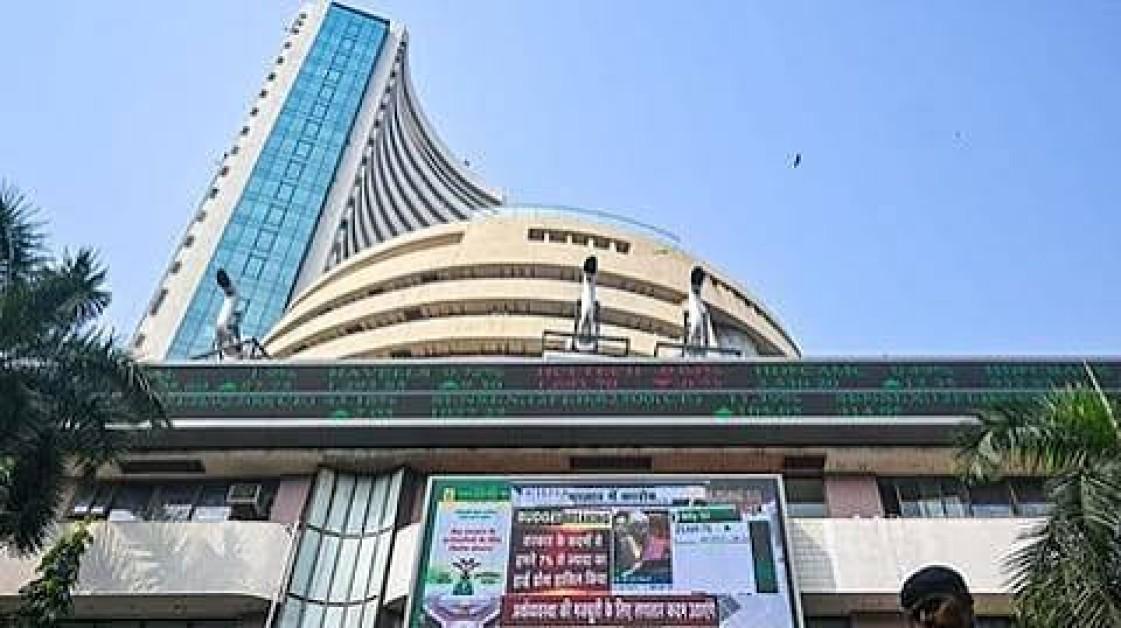
Sensex and Nifty Open With Marginal Changes as Global Monetary Policy Concerns Weigh on Sentiment
Indian equity markets opened nearly unchanged on Thursday, November 19, 2026, as concerns over the US Federal Reserve's interest-rate outlook offset support from strong foreign portfolio investment inflows and declining crude oil prices.
The benchmark Nifty 50 declined 0.16% to 25,186.80 at 9:15 a.m. IST, while the BSE Sensex edged 0.05% higher to 82,074.16.
The subdued opening reflected competing influences on investor sentiment. Continued foreign institutional buying and lower international oil prices provided support, while hawkish signals from the Federal Reserve raised concerns about higher US interest rates and their implications for emerging markets.
The latest minutes from the Federal Reserve's October policy meeting indicated that policymakers remained concerned about persistent inflation and saw a need to strengthen efforts to contain price pressures.
The development has prompted investors to reassess expectations for US monetary policy, particularly the possibility that interest rates could remain elevated or increase further.
Indian equities consequently began the trading session cautiously, with selling pressure visible across several major sectors.
Indian Stock Market Opening: Key Sensex and Nifty Levels

The two benchmark indices showed limited movement during the opening minutes of Thursday's session.
|
Market Indicator |
Opening Session |
|---|---|
|
BSE Sensex |
82,074.16 |
|
Sensex change |
+0.05% |
|
NSE Nifty 50 |
25,186.80 |
|
Nifty 50 change |
-0.16% |
|
Nifty Metal index |
-1.0% |
|
Nifty IT index |
-0.7% |
|
Small-cap index |
-0.1% |
|
Mid-cap index |
-0.3% |
Market snapshot as of 9:15 a.m. IST, November 19, 2026. Figures are subject to change during trading.
The marginal difference between the Sensex and Nifty reflected variations in their constituent stocks and sector weightings.
Although the Sensex remained slightly positive, the broader market displayed weakness.
Ten of the 16 major sectoral indices declined during early trading, indicating that selling pressure extended beyond a few individual stocks.
Small-cap and mid-cap indices also registered modest losses, suggesting cautious participation across the wider equity market.
Hawkish Federal Reserve Minutes Create Pressure on Indian Equities
The principal global factor influencing Thursday's market opening was the release of minutes from the US Federal Reserve's October monetary policy meeting.
The minutes indicated that policymakers were increasingly concerned about inflation remaining above their desired level.
Although the Federal Reserve maintained interest rates at its October meeting, the discussions suggested that additional monetary tightening could be considered if inflationary pressures persisted.
A hawkish monetary policy stance generally refers to a central bank's willingness to maintain higher interest rates or increase borrowing costs to control inflation.
For emerging markets such as India, changes in US interest-rate expectations can influence international investment flows.
Higher US interest rates can make dollar-denominated assets, including US government bonds, more attractive to global investors.
This can encourage investors to shift capital away from emerging-market equities, potentially affecting stock valuations and currency markets.
The possibility of further tightening therefore weighed on Indian investor sentiment despite supportive domestic factors.
Foreign Portfolio Investors Continue Strong Buying in Indian Equities
Foreign portfolio investment remained one of the major positive influences supporting Indian equities.
Foreign institutional investors purchased approximately ₹5,866.78 crore worth of Indian shares on Wednesday, November 18, according to provisional market data.
The purchases extended a seven-session buying streak, indicating sustained overseas investor interest in Indian equities.
Foreign portfolio investors have also increased their exposure to Indian stocks substantially during November.
Their net purchases during the month reached approximately $11.28 billion, representing a significant reversal from the selling pressure experienced during earlier periods.
The return of foreign investment is important because overseas institutions account for a substantial share of trading activity in India's equity markets.
Consistent foreign buying can support market liquidity, strengthen demand for large-cap shares and improve investor confidence.
However, the sustainability of these inflows remains sensitive to global interest rates, currency movements and relative equity valuations.
A more restrictive Federal Reserve policy could challenge the continuation of strong foreign investment flows.
Falling Crude Oil Prices Provide Support to Indian Markets
Lower international crude oil prices offered another positive factor for Indian equities.
Brent crude futures were trading around $92 per barrel on Thursday morning after declining during the previous session.
The international oil benchmark has fallen substantially during November, providing some relief to economies that depend heavily on imported energy.
India imports a large proportion of its crude oil requirements, making international petroleum prices an important influence on its economic outlook.
A sustained decline in crude prices can benefit India through several channels.
First, lower oil import costs can reduce pressure on the country's merchandise trade balance.
Second, cheaper crude oil can ease input-cost pressures for businesses that depend on petroleum products and energy-intensive production.
Third, lower energy prices can help contain inflation, although the extent of the benefit depends on domestic fuel pricing and taxation.
Finally, reduced demand for foreign currency to finance oil imports can provide support to the Indian rupee.
These potential benefits helped offset some of the negative sentiment created by the Federal Reserve's policy signals.
However, crude prices remain sensitive to geopolitical developments, supply disruptions and global economic conditions.
Metal and IT Stocks Lead Early Sectoral Declines
Sectoral performance during the opening session indicated that global economic concerns were influencing specific industries.
The Nifty Metal index declined approximately 1%, making it one of the weakest major sectors in early trading.
Metal companies are particularly sensitive to international commodity prices, industrial demand and movements in the US dollar.
A stronger dollar can make dollar-priced commodities more expensive for buyers using other currencies, potentially reducing demand.
Expectations of tighter US monetary policy can also affect global industrial activity and commodity-market sentiment.
The Nifty IT index declined approximately 0.7%.
Indian information technology companies generate a substantial proportion of their revenue from overseas markets, particularly the United States.
Higher interest rates can influence technology spending by American businesses, potentially affecting demand for software development, consulting and digital transformation services.
Investors therefore monitored the implications of the Federal Reserve's policy outlook for future IT spending.
The weakness in metal and technology shares contributed to the subdued performance of the broader Indian market.
Mid-Cap and Small-Cap Stocks Also Face Selling Pressure
The cautious opening extended to the broader equity market.
Small-cap stocks declined approximately 0.1%, while mid-cap stocks fell around 0.3% during early trading.
These segments often experience greater volatility than large-cap benchmarks because their valuations and liquidity can be more sensitive to changes in investor risk appetite.
When global monetary policy uncertainty increases, investors may reduce exposure to comparatively riskier assets.
Higher borrowing costs can also affect smaller businesses that depend on external financing for expansion.
However, the relatively modest early declines indicated that selling pressure had not developed into a broad market sell-off.
Investors continued to evaluate company-specific fundamentals alongside global economic developments.
Indian Rupee Faces Competing Influences From Foreign Inflows and US Dollar Strength
Currency movements were another important consideration for equity investors.
The Indian rupee closed around ₹93.44 against the US dollar on Wednesday after briefly strengthening to approximately ₹93.2450.
Foreign investment inflows and reduced speculative demand for dollars supported the domestic currency.
However, the Federal Reserve's hawkish stance created a countervailing influence.
Higher US interest-rate expectations can strengthen the dollar by increasing demand for dollar-denominated financial assets.
A stronger dollar can place pressure on emerging-market currencies, including the rupee.
Currency fluctuations can affect Indian companies differently depending on their business models.
Export-oriented businesses may benefit from a weaker rupee when foreign-currency earnings are converted into domestic currency.
Import-dependent companies, meanwhile, can face higher costs when the rupee depreciates.
For the broader economy, currency stability remains important because it influences imported inflation, international trade and foreign investment decisions.
Previous Session's Decline Adds to Cautious Market Sentiment
Indian equities entered Thursday's session after registering losses on Wednesday, November 18.
The Sensex declined 500.38 points, or approximately 0.61%, to close at 82,031.81.
The Nifty 50 fell 159.45 points, or around 0.63%, to settle at 25,227.95.
The decline ended a two-session winning streak for the benchmark indices.
Selling pressure was visible across several sectors, including automobiles, metals and consumer durables.
The previous session's weakness contributed to cautious positioning ahead of Thursday's opening.
Investors were also monitoring developments in international markets, where concerns about inflation, interest rates and technology-sector valuations continued to influence trading activity.
Global Market Developments Influence Domestic Trading
Indian equity markets remain closely connected to developments in major international financial centres.
The Federal Reserve's monetary policy outlook is particularly influential because changes in US interest rates affect global liquidity and capital allocation.
Investors also monitor US Treasury yields, dollar movements and international equity-market performance.
Higher bond yields can make fixed-income investments more competitive relative to equities.
This can influence valuation expectations, particularly for companies whose share prices reflect substantial anticipated future earnings growth.
Asian markets also provided mixed signals during Thursday's early session.
The combination of global uncertainty and domestic institutional activity created an environment in which investors appeared reluctant to make aggressive directional commitments.
The market's near-flat opening reflected this balance between supportive economic developments and external financial risks.
What Investors Will Watch During the November 19 Trading Session
Several factors could determine the direction of Indian equities during the remainder of Thursday's session.
Federal Reserve expectations: Investors will continue assessing whether the October meeting minutes indicate a meaningful increase in the likelihood of further US monetary tightening.
Foreign institutional investment: Sustained overseas buying could provide support to benchmark indices, particularly if global risk sentiment stabilises.
Crude oil prices: Further declines in international oil benchmarks could improve sentiment toward oil-importing sectors and the broader Indian economy.
US dollar and rupee movements: Currency stability will remain important for foreign investors and companies with significant international exposure.
Sectoral performance: Banking, information technology, metals, energy and other heavyweight sectors could influence the direction of the Sensex and Nifty.
Global equity markets: Movements in Asian, European and US financial markets may affect trading sentiment as the session progresses.
These factors will be important in determining whether Indian equities recover from the subdued opening or experience additional selling pressure.
Outlook for Indian Stock Markets Amid Global Interest-Rate Uncertainty
The near-flat opening demonstrates how domestic and international factors are currently pulling Indian equities in different directions.
On one side, strong foreign investment inflows and declining crude oil prices provide a supportive backdrop.
On the other, uncertainty surrounding US monetary policy creates risks for emerging-market capital flows and equity valuations.
The strength of foreign buying during November suggests that international investors continue to see opportunities in Indian equities.
However, future investment decisions may depend on how global interest-rate expectations evolve.
Corporate earnings, domestic economic growth and sector-specific developments will also remain important determinants of market performance.
A sustained improvement in global financial conditions could strengthen investor confidence, while renewed concerns about inflation and higher interest rates could increase volatility.
For now, the market appears to be balancing improving domestic financial flows against uncertainty in the international monetary environment.
Conclusion
Indian stock markets opened nearly unchanged on November 19, 2026, as hawkish signals from the US Federal Reserve offset the positive impact of strong foreign portfolio investment and lower crude oil prices.
The Nifty 50 declined 0.16% to 25,186.80, while the Sensex edged 0.05% higher to 82,074.16 during the opening minutes.
Metal and IT stocks experienced selling pressure, while broader mid-cap and small-cap indices also registered modest declines.
Foreign investors continued their buying streak, with purchases of approximately ₹5,866.78 crore during the previous session, providing an important source of market support.
Lower crude oil prices offered additional relief for India's import-dependent economy.
Nevertheless, uncertainty surrounding US interest rates remains a significant influence on investor sentiment.
The direction of Indian equities will depend on how global monetary policy expectations, foreign investment flows, commodity prices and domestic corporate fundamentals evolve in the coming sessions.
 Indian Stock Markets Open Flat as Hawkish Fed Minutes Offset FPI Inflows and Lower Oil Prices FAQs

POST A COMMENT (0)
All Comments (0)
Replies (0)