




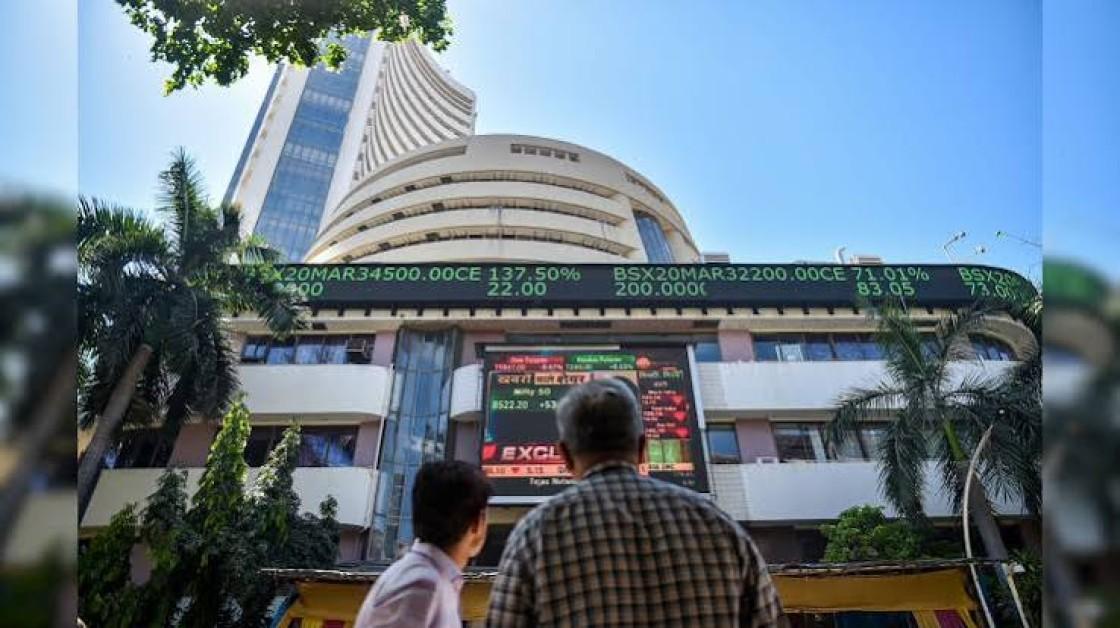
Sensex and Nifty Remain Near Nine-Month Highs Despite Sharp Asian Market Declines
Mumbai, November 20, 2026: Indian equity benchmarks traded near nine-month highs on Friday, demonstrating relative resilience against a sharp selloff across Asian financial markets as recovering information technology stocks helped offset weakness in metals and other sectors.
At approximately 10:00 a.m. IST, the NSE Nifty 50 was trading 0.09% higher at 25,537.15, while the BSE Sensex gained 0.07% to 83,074.37.
The modest gains followed a volatile opening session, when both benchmarks declined amid widespread selling across Asian equities.
The recovery highlighted the relative strength of Indian markets, which have benefited from sustained foreign portfolio investment, improved corporate earnings and a decline in crude oil prices.
However, underlying market breadth remained weak, with nine of the 16 major sectoral indices trading lower.
Information technology stocks rebounded approximately 2%, while the metal index declined 1.8%, reflecting contrasting sectoral trends.
The broader Asian market selloff was driven partly by renewed concerns about artificial intelligence-related investments, technology valuations and the outlook for US monetary policy.
Key Indian Stock Market Highlights — November 20, 2026

|
Market Indicator |
Reported Performance |
|---|---|
|
Nifty 50 |
25,537.15 |
|
Nifty 50 change |
+0.09% |
|
BSE Sensex |
83,074.37 |
|
Sensex change |
+0.07% |
|
Nifty IT |
Approximately +2% |
|
Nifty Metal |
Approximately −1.8% |
|
Nifty Smallcap |
Approximately −0.4% |
|
Nifty Midcap |
Broadly unchanged |
|
Major sectors declining |
9 of 16 |
|
Nifty weekly gain |
Approximately 1.5% |
|
Sensex weekly gain |
Approximately 1.8% |
|
Reported November foreign inflows |
$12.21 billion |
|
MSCI Asia-Pacific index |
Approximately −2.5% |
Market figures are intraday observations and may change before the closing session.
Indian Markets Recover From Weak Opening as IT Stocks Provide Support
Indian equities began Friday's session under pressure after overnight declines on Wall Street and substantial losses across Asian stock exchanges.
The Sensex opened at 82,558.25, down 463.50 points or 0.56%.
The Nifty 50 opened at 25,368.00, declining 146.30 points or 0.57%.
The initial weakness reflected concerns about global technology stocks, elevated valuations and the possibility of tighter US monetary policy.
However, the benchmarks recovered during morning trading as buying interest returned to selected large-cap companies.
The recovery was particularly visible in the information technology sector, which had faced selling pressure during the previous session.
The divergence between India's relatively stable benchmarks and the broader Asian decline suggests that domestic market-specific factors continued to influence investor positioning.
IT Stocks Rebound 2% After Previous Session's Decline
The Nifty IT index gained approximately 2% during morning trading, becoming one of the strongest-performing sectors.
The rebound followed a 1.1% decline in the index on Thursday, November 19.
Technology shares had previously weakened after minutes from the US Federal Reserve's October meeting indicated concerns about inflation and the possible need for tighter monetary conditions.
Higher US interest rates can affect technology spending by businesses, particularly when borrowing costs remain elevated.
Indian IT services companies are sensitive to these developments because a substantial share of their revenue comes from customers in the United States.
The recovery on Friday helped offset losses elsewhere in the market.
However, the broader outlook for IT stocks remains connected to enterprise technology spending, corporate earnings, currency movements and US economic conditions.
Metal Stocks Decline as Stronger Dollar and Global Demand Concerns Weigh
Metal shares moved in the opposite direction, with the Nifty Metal index declining approximately 1.8%.
The weakness reflected concerns about industrial commodity demand and the impact of a stronger US dollar.
Metals such as copper, aluminium and steel are sensitive to changes in global industrial activity.
A stronger dollar can increase the effective cost of dollar-denominated commodities for buyers using other currencies.
Concerns about the sustainability of artificial intelligence infrastructure investment have also affected sentiment toward industrial materials associated with data centres and technology infrastructure.
The decline in metal shares followed broader volatility in international commodity markets.
For Indian metal producers, lower commodity prices can influence revenue realisations and operating margins, although the impact varies according to production costs, product mix and domestic demand.
Asian Markets Experience Sharp Selloff
Indian markets remained comparatively stable even as several major Asian equity indices experienced substantial declines.
Reported Asian market movements — November 20, 2026

Intraday percentage changes; figures are approximate.
Japan's Nikkei declined approximately 4.1%, while South Korea's KOSPI fell around 4.7%.
The broader MSCI Asia-Pacific index dropped approximately 2.5%, reflecting widespread risk aversion.
Technology-related companies were among the businesses affected by the selling.
The weakness followed a decline in US equities as investors reassessed the valuations of companies linked to artificial intelligence development.
The market reaction occurred despite enthusiasm surrounding Anthropic's stock market debut.
Investors remained concerned about whether large technology investments would generate sufficient financial returns to justify elevated valuations.
Artificial Intelligence Investment Concerns Affect Global Equities
Artificial intelligence has become an important investment theme across global financial markets.
Technology companies have committed substantial capital toward data centres, computing infrastructure, semiconductors and related services.
These investments have supported demand across several industries, including chip manufacturing, industrial equipment, energy infrastructure and construction.
However, investors have increasingly focused on the relationship between capital expenditure and expected returns.
Concerns about the pace of revenue generation, profitability and financing requirements have contributed to volatility in technology-related shares.
The resulting market weakness has extended beyond technology companies to businesses associated with the wider AI infrastructure supply chain.
Asian markets with significant exposure to semiconductor manufacturing and technology exports have been particularly sensitive to changes in investor sentiment.
India's equity market has a different sectoral composition, which may partly explain its relative resilience during the session.
Foreign Portfolio Inflows Support Indian Equity Markets
One of the most important factors supporting Indian equities has been the return of foreign portfolio investment.
Foreign investors have reportedly purchased approximately $12.21 billion worth of Indian equities during November 2026.
The inflows represent a substantial reversal from earlier periods of foreign selling.
Improved corporate earnings, changes in global investment allocations and relative market opportunities have contributed to renewed interest in Indian equities.
Foreign investment can support market liquidity and provide buying demand for large-cap stocks.
However, foreign flows can change quickly in response to international interest rates, currency movements and shifts in global risk appetite.
Sustained inflows therefore remain an important factor for market participants to monitor.
Sensex and Nifty Head Toward Fourth Consecutive Weekly Gain
Despite Friday's volatility, Indian equity benchmarks remained on course for a fourth consecutive weekly advance.
The Nifty 50 had gained approximately 1.5% during the week, while the Sensex had risen around 1.8%.
The gains followed a strong rebound on Thursday, November 19.
During that session, the Sensex advanced 989.94 points, or 1.21%, to close at 83,021.75.
The Nifty 50 gained 286.35 points, or 1.14%, to settle at 25,514.30.
The rally was supported by automobile, banking and consumer-oriented stocks.
Lower commodity prices also improved sentiment toward companies that use metals and other raw materials in manufacturing.
The latest market performance indicates that domestic buying interest has remained relatively strong despite volatility in international equities.
Lower Crude Oil Prices Provide Support to Indian Equities
Crude oil prices have been another important factor influencing Indian market sentiment.
India imports a substantial share of its crude oil requirements, making domestic economic conditions sensitive to international energy prices.
Lower crude prices can reduce the country's import bill and ease cost pressures for businesses that depend on petroleum products.
They can also influence inflation expectations, corporate margins and currency demand.
During November, a decline in crude oil prices contributed to improving sentiment toward Indian equities.
However, oil prices remain vulnerable to geopolitical developments, supply disruptions and changes in global demand.
Reports of tanker disruptions in the Strait of Hormuz have highlighted the continuing potential for volatility.
Consequently, the sustainability of lower energy costs remains uncertain.
Healthcare Stocks Advance Following Analyst Upgrades
Healthcare stocks were among the notable gainers during Friday's trading.
Shares of Max Healthcare Institute and Apollo Hospitals Enterprise rose approximately 4% following analyst upgrades.
The gains demonstrated selective investor interest in companies with favourable earnings expectations and business outlooks.
Healthcare businesses can attract investor attention because of their exposure to domestic demand and relatively different revenue drivers from export-oriented technology or commodity companies.
However, stock-specific gains do not necessarily indicate a uniform improvement across the entire healthcare sector.
Individual company performance remains dependent on operating margins, capacity utilisation, expansion plans and financial results.
Infrastructure Stocks React to Corporate Announcements
Infrastructure companies also experienced stock-specific movements during the session.
Dilip Buildcon attracted attention after receiving a letter of acceptance for a Gurugram Metro Rail project valued at approximately ₹419 crore.
The development added to the company's infrastructure project pipeline.
In contrast, Ashoka Buildcon shares declined after the company disclosed the cancellation of a Saudi Arabian construction project worth approximately ₹846.38 crore.
The contract had been awarded through a joint venture for a development associated with Diriyah Company.
The contrasting movements demonstrate how company-specific announcements can influence share prices independently of broader benchmark performance.
Market Breadth Remains Weak Despite Benchmark Stability
Although the Sensex and Nifty recovered during morning trading, broader market participation remained uneven.
Nine of the 16 major sectoral indices declined.
The small-cap index fell approximately 0.4%, while the mid-cap index was broadly unchanged.
This divergence suggests that gains in selected large-cap stocks were sufficient to support the benchmarks even as many other shares faced selling pressure.
Market breadth is an important indicator because it reflects how widely gains or losses are distributed across listed companies.
A market advance supported by a limited number of heavyweight stocks can differ from a rally involving broad participation across sectors.
The latest session therefore reflected selective buying rather than a uniform market recovery.
US Federal Reserve Outlook Remains a Key Global Risk
Investors continued to monitor developments surrounding US monetary policy.
Recent Federal Reserve commentary and meeting minutes indicated concerns about inflation and the possibility of maintaining restrictive financial conditions.
Higher US interest rates can influence global equity markets through several channels.
They can increase bond yields, strengthen the dollar and affect the relative attractiveness of risk assets.
For emerging markets, changes in US monetary policy can also influence foreign portfolio flows and currency movements.
Indian equities have remained comparatively resilient, but they are not insulated from these global developments.
Future inflation data, employment indicators and Federal Reserve decisions will remain important considerations for international investors.
What Investors Will Monitor in the Coming Sessions
Several developments could influence Indian equity markets following Friday's trading session.
The first is whether foreign portfolio investment continues at the pace observed during November.
The second is the performance of global technology stocks and whether concerns about artificial intelligence valuations lead to further selling.
Commodity prices, particularly crude oil and industrial metals, will also remain important for Indian companies.
Investors will monitor the sustainability of the IT sector's recovery and whether buying interest broadens beyond selected large-cap stocks.
Domestic corporate earnings and economic indicators could provide additional direction.
The interaction between these factors will determine whether Indian benchmarks can maintain their recent gains amid global volatility.
Conclusion
Indian equity markets demonstrated relative resilience on November 20, 2026, as the Sensex and Nifty traded near nine-month highs despite substantial declines across major Asian stock exchanges.
A recovery in information technology shares helped offset selling pressure in metal stocks, while sustained foreign portfolio inflows and improved corporate earnings continued to support domestic sentiment.
However, the session also revealed underlying weakness, with most major sectors declining and broader market participation remaining uneven.
Global concerns about artificial intelligence investments, US interest rates and commodity demand continue to create uncertainty.
The sustainability of India's recent equity market rally will depend on foreign investment flows, corporate earnings, sectoral participation and developments in international financial markets.
 Indian Stock Market Holds Near Nine-Month Highs as IT Stocks Rebound and Metal Shares Fall FAQs

POST A COMMENT (0)
All Comments (0)
Replies (0)