




Asian Markets Retreat as Technology Shares Face Renewed Selling Pressure
Asian equity markets declined on Tuesday, October 20, 2026, as renewed selling in semiconductor and artificial intelligence-related companies weakened investor sentiment across the region.
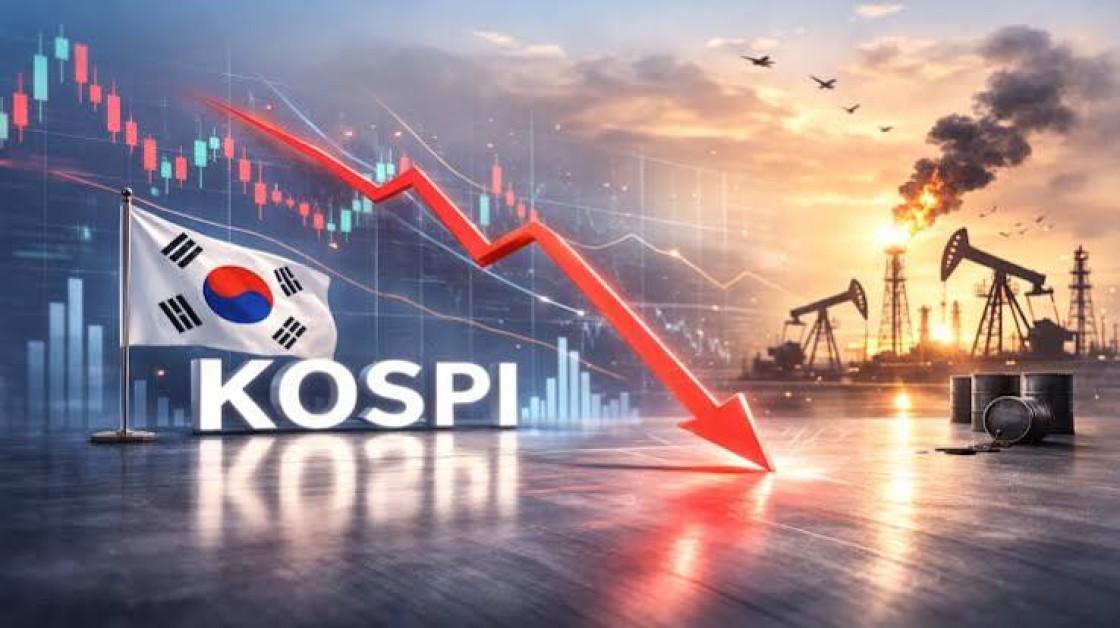
South Korea's benchmark KOSPI index fell as much as 3.61% during the session, leading regional losses as investors reduced exposure to technology companies that had benefited from the artificial intelligence investment boom.
Japan's Nikkei 225 declined approximately 1.28%, while the MSCI Asia ex-Japan index fell 0.93% in the reported market snapshot.
The decline reflected growing uncertainty over technology-sector valuations, the profitability of large-scale AI infrastructure investments and the sustainability of demand for advanced semiconductor products.
South Korean semiconductor manufacturers were particularly vulnerable because of their substantial weighting in the country's benchmark index.
The regional weakness contrasted with a technology-led recovery on Wall Street during the previous trading session.
Investors also remained cautious ahead of earnings announcements from major American technology companies, which could provide further evidence about AI infrastructure spending and corporate profitability.
Geopolitical developments and elevated crude oil prices added to broader financial market uncertainty.
The market movements highlight the increasing influence of AI-related investment expectations on Asian equity valuations.
Asian Stock Market Performance on October 20
|
Market Indicator |
Reported Movement |
Market Significance |
|---|---|---|
|
South Korea KOSPI |
-3.61% |
Led regional declines |
|
Japan Nikkei 225 |
-1.28% |
Semiconductor and technology weakness |
|
MSCI Asia ex-Japan |
-0.93% |
Broad regional selling |
|
MSCI Asia Pacific |
Approximately -0.6% |
Weakness across multiple sectors |
|
South Korea KOSDAQ |
More than -4% during trading |
Pressure on growth-oriented stocks |
|
Hong Kong Hang Seng |
Approximately -0.8% in early trading |
Regional risk aversion |
|
China Shanghai Composite |
Approximately -0.3% in early trading |
Modest market decline |
The figures represent reported intraday market snapshots rather than final closing values. Market movements may change as trading continues.
South Korea's KOSPI Leads Regional Declines

South Korea's KOSPI experienced one of the sharpest declines among major Asian equity benchmarks.
The index fell as much as 3.61%, reflecting significant selling pressure in semiconductor manufacturers and other technology-related businesses.
South Korea occupies an important position in the global semiconductor supply chain.
Its major technology companies manufacture memory chips and other electronic components used in smartphones, data centres, computing systems and artificial intelligence infrastructure.
The country's stock market is therefore particularly sensitive to changes in expectations for semiconductor demand.
When investors reduce exposure to technology shares, the selling can have a substantial effect on the KOSPI because of the weighting of major chip manufacturers.
The October 20 decline reflected broader concerns about whether the financial benefits of AI investment will justify elevated technology-sector valuations.
SK Hynix Faces Pressure Amid Semiconductor Selloff
SK Hynix was among the major South Korean technology companies affected by the decline.
The memory chip manufacturer is an important supplier of high-bandwidth memory used in advanced AI computing systems.
Demand for these products has increased as technology companies expand data-centre infrastructure and develop more powerful artificial intelligence models.
However, strong demand expectations have also contributed to substantial investor interest and higher valuations across the semiconductor industry.
During Tuesday's trading, SK Hynix shares came under renewed pressure as investors reassessed the outlook for AI infrastructure spending.
The company also faced investor concerns surrounding reports of a potential US listing of its NAND flash memory subsidiary, Solidigm.
A separate listing could influence perceptions of the subsidiary's valuation and the relationship between the business and its parent company.
However, any financial impact would depend on the final transaction structure and whether a listing proceeds.
The share-price weakness demonstrates how company-specific developments can amplify broader sector selling.
Samsung Electronics Also Declines
Samsung Electronics, another major constituent of the KOSPI, also traded lower.
The company has extensive operations in semiconductors, consumer electronics and other technology products.
Its semiconductor business is closely linked to global memory chip demand.
Artificial intelligence infrastructure investment has created opportunities for advanced memory products.
However, the semiconductor industry remains cyclical.
Prices and profitability can change in response to production capacity, customer demand and inventory conditions.
Samsung's share-price decline contributed to the broader weakness in South Korea's stock market.
The simultaneous pressure on Samsung Electronics and SK Hynix highlights the influence of semiconductor companies on regional equity performance.
KOSDAQ Records Sharp Losses
South Korea's technology-oriented KOSDAQ index also experienced substantial selling.
The index fell more than 4% during parts of Tuesday's session.
The KOSDAQ includes smaller and growth-oriented companies operating across technology, biotechnology and other sectors.
Such companies can be sensitive to changes in investor risk appetite.
Higher financing costs and uncertainty over future earnings can influence their valuations.
The decline suggests that selling pressure extended beyond the largest semiconductor manufacturers.
However, individual company performance varied, with some electronic component manufacturers recording gains despite the broader market weakness.
The mixed performance indicates that investors were becoming more selective rather than selling every technology-related business equally.
Japan's Nikkei Falls as Chip Stocks Weaken
Japan's Nikkei 225 declined approximately 1.28% during the reported trading period.
Technology and semiconductor-related shares contributed to the weakness.
Japanese companies play important roles in semiconductor manufacturing equipment, materials and electronic components.
Their financial performance is influenced by investment decisions made by global chip manufacturers.
Companies exposed to AI infrastructure spending can benefit when semiconductor manufacturers expand production capacity.
However, uncertainty over future capital expenditure can create pressure on valuations.
Shares of semiconductor-related businesses, including Kioxia Holdings, weakened during Tuesday's trading.
The decline in Japanese equities demonstrates how concerns about AI investment can spread across different parts of the technology supply chain.
Asian Stocks Diverge From Wall Street's Technology Rebound
The regional decline followed a recovery in US technology shares during the previous trading session.
The Nasdaq Composite rose approximately 1.11%, while the S&P 500 gained 0.41%.
The rebound followed earlier weakness in technology and semiconductor stocks.
However, Asian markets did not sustain the positive momentum.
Investors continued reducing exposure to selected AI infrastructure companies.
The divergence suggests that market participants remained uncertain about the durability of the US technology recovery.
A short-term rebound in share prices does not necessarily indicate that concerns about valuations or earnings have been resolved.
Asian investors appeared to place greater emphasis on the risks surrounding semiconductor demand and AI-related capital expenditure.
AI Valuations Become a Central Market Concern
Artificial intelligence has been one of the major drivers of global technology investment.
Companies have committed substantial resources to data centres, computing infrastructure and advanced semiconductor products.
The investment cycle has supported revenue growth for several technology hardware manufacturers.
However, it has also raised questions about the financial returns generated by these investments.
Investors are increasingly evaluating whether spending on AI infrastructure will translate into sustainable profits.
The distinction between revenue growth and investment returns is becoming more important.
Companies may generate substantial sales from AI-related products while still facing uncertainty over future demand.
At the same time, customers purchasing expensive computing infrastructure must demonstrate that the technology creates commercial value.
These concerns have contributed to greater volatility in technology-sector shares.
Global AI Capital Expenditure Expectations Remain Elevated
Major technology companies are expected to continue investing heavily in artificial intelligence infrastructure.
Combined capital expenditure among leading AI hyperscalers has been projected to approach $1.2 trillion in 2027.
Hyperscalers operate large-scale computing infrastructure and cloud platforms.
Their investment decisions influence demand for semiconductors, servers, networking equipment and data-centre power systems.
The scale of projected spending demonstrates the importance of AI to the global technology industry.
However, higher capital expenditure does not automatically guarantee stronger earnings.
Companies must generate sufficient revenue and cash flow to justify their investments.
Investors are therefore paying closer attention to spending efficiency and the timing of commercial returns.
The October 20 selloff reflects these concerns.
Semiconductor Stocks Face Greater Earnings Expectations
Semiconductor companies have benefited from rising demand for AI computing infrastructure.
High-performance processors and advanced memory products are essential components of modern AI systems.
The resulting investment cycle has supported expectations of substantial earnings growth.
However, elevated expectations can increase the risk of share-price corrections.
When valuations assume rapid growth, even modest changes in demand forecasts can influence stock prices.
Investors may also respond negatively if companies report higher expenditure without a corresponding improvement in profitability.
The semiconductor industry's cyclical characteristics add another layer of uncertainty.
Manufacturers must balance capacity expansion with future customer requirements.
Excess capacity can create pricing pressure if demand grows more slowly than expected.
AI Infrastructure Companies Face Investor Scrutiny
The selloff also affected companies involved in the wider AI infrastructure ecosystem.
These include businesses supplying power equipment, networking systems, data-centre components and related industrial products.
AI data centres require substantial electricity infrastructure and specialised cooling systems.
The investment boom has created opportunities for companies supplying these technologies.
However, investors are increasingly examining whether project announcements will translate into completed orders and recognised revenue.
Delays in data-centre construction or changes in customer spending plans could affect suppliers.
Some South Korean power equipment companies experienced significant share-price declines during Tuesday's trading.
The weakness indicates that concerns about AI spending extended beyond semiconductor manufacturers.
Elice Group Debut Highlights Investor Caution
South Korean AI infrastructure company Elice Group experienced a weak stock market debut.
The company's shares opened approximately 16% below their initial public offering price.
Elice had raised about 201.1 billion won, equivalent to approximately $151 million, through its IPO.
The disappointing debut reflected cautious investor sentiment toward technology companies.
Newly listed businesses can be particularly sensitive to changes in market conditions because investors are still assessing their valuations and growth prospects.
The performance also illustrates that interest in artificial intelligence does not guarantee strong demand for every AI-related stock.
Investors are increasingly differentiating between companies based on profitability, business models and expected returns.
Foreign Investor Selling Adds to Korean Market Pressure
Foreign investors contributed to selling pressure in South Korean equities.
During the morning session, foreign investors recorded net sales of approximately 605.8 billion won.
Domestic institutions also sold shares, while retail investors provided some buying support.
Institutional investment flows can have a substantial effect on markets dominated by large technology companies.
Changes in global risk appetite may prompt investors to reduce exposure to sectors with elevated valuations.
However, foreign selling does not necessarily indicate a permanent change in investment strategy.
Portfolio adjustments can reflect short-term risk management, currency considerations and changing expectations.
The direction of future investment flows will depend on market conditions and corporate earnings.
Oil Prices Rise Amid Geopolitical Uncertainty
Crude oil prices moved higher while Asian equity markets declined.
Brent crude increased approximately 0.21%, while US West Texas Intermediate rose around 0.15% in the reported market snapshot.
Oil prices were influenced by geopolitical developments and changes in expectations surrounding Russian energy supplies.
Higher crude prices can create additional economic uncertainty for energy-importing countries.
They may increase transportation and production costs while influencing inflation expectations.
However, the effect varies across industries.
Energy producers can benefit from higher oil prices, while fuel-intensive businesses may face cost pressure.
The simultaneous rise in crude oil and decline in equities reflected a cautious global market environment.
Geopolitical Risks Influence Market Sentiment
Geopolitical developments contributed to investor uncertainty during Tuesday's trading.
Financial markets were monitoring international energy policy, developments involving Russia and political instability in parts of Europe.
Such events can influence commodity prices, currencies and investor risk appetite.
Periods of heightened uncertainty can increase demand for assets perceived as relatively defensive.
However, market reactions depend on the scale and duration of individual developments.
The October 20 decline in Asian equities was driven primarily by technology-sector selling, but geopolitical concerns added to the broader cautious sentiment.
Investors will continue assessing how international developments affect corporate earnings and economic conditions.
Dollar Remains Firm Against Major Currencies
Currency markets reflected a relatively cautious investment environment.
The US dollar index traded near 101.92 during the reported period.
The euro was around $1.12, while the British pound traded near $1.33.
The Japanese yen remained relatively weak at approximately 158.57 per US dollar.
Currency movements can influence equity markets through changes in export competitiveness, import costs and international investment flows.
Technology companies with substantial overseas revenue can also experience changes in reported earnings because of exchange rate movements.
However, currency movements do not affect all companies in the same way.
The impact depends on geographic exposure, pricing arrangements and financial hedging.
Upcoming US Technology Earnings Become Key Market Events
Investors are awaiting quarterly earnings announcements from several major American technology companies.
Meta Platforms is expected to report results on October 21.
Tesla, Lam Research and Texas Instruments are also scheduled to announce earnings during the week.
These results could provide important information about technology demand and corporate investment plans.
For AI-related companies, investors will focus on capital expenditure, revenue growth and profitability.
Semiconductor equipment manufacturers may provide additional insight into chip production investment.
Corporate guidance could influence expectations for the wider technology supply chain.
However, the market impact will depend on whether reported results meet or differ from investor expectations.
Strong earnings may support sentiment, while disappointing forecasts could intensify selling pressure.
Implications for India's Stock Market
The decline in Asian equities is relevant to Indian investors because global market sentiment can influence domestic trading.
Indian equity markets remain closed on October 20 for Dussehra.
Regular trading on the NSE and BSE is scheduled to resume on Wednesday, October 21.
Investors will assess developments in Asian and US markets when domestic trading resumes.
Technology-sector weakness could influence sentiment toward Indian IT services and other technology-related companies.
However, India's technology sector has a different business composition from South Korea's semiconductor-heavy market.
Indian IT services companies are more directly exposed to enterprise technology spending, outsourcing demand and digital transformation.
Consequently, the effect of semiconductor selling on Indian equities may be indirect.
Domestic corporate earnings, institutional investment flows and economic conditions will also influence market direction.
Indian IT Stocks Could Face Indirect Pressure
Indian IT services companies depend significantly on technology spending by overseas customers.
Changes in global business confidence can affect outsourcing budgets and project decisions.
If concerns about AI investment lead companies to reassess technology expenditure, Indian IT services providers could experience changes in customer demand.
However, AI adoption can also create opportunities for consulting, software development and enterprise transformation.
The financial impact therefore depends on the nature of customer spending.
A correction in semiconductor stocks does not automatically imply weaker demand for Indian IT services.
Investors will need to assess company-specific earnings and management guidance.
Global Risk Appetite Remains Important for Emerging Markets
Asian equity markets are sensitive to international capital flows.
Foreign investors allocate funds across countries and sectors based on expected returns, valuations and risk conditions.
When global risk appetite weakens, investors may reduce exposure to emerging markets.
Technology-heavy markets can experience particularly sharp movements because of their concentration in growth-oriented companies.
However, the effect differs across countries.
Domestic institutional investment, economic conditions and sector composition can influence market resilience.
India's market performance after the holiday will depend on these factors as well as international developments.
Market Volatility Highlights Concentration Risks
The KOSPI's sharp decline illustrates the risks associated with substantial index exposure to a small number of large companies.
Major semiconductor manufacturers account for a significant proportion of South Korea's benchmark market capitalisation.
When these companies experience selling pressure, the broader index can decline sharply.
This does not necessarily mean that every listed company is experiencing equivalent financial deterioration.
Index performance reflects the weighted movements of constituent stocks.
Investors assessing diversified portfolios should therefore consider sector and company concentration.
The same principle applies to other markets where a limited number of large technology companies have a substantial influence on benchmark indices.
Investors Reassess AI Investment Returns
The broader market correction reflects a shift in investor attention.
Earlier enthusiasm focused heavily on the scale of AI investment and potential revenue growth.
Investors are now placing greater emphasis on profitability, cash generation and the commercial returns generated by AI infrastructure.
This does not necessarily indicate a collapse in demand for artificial intelligence.
Instead, it reflects more selective assessment of individual companies.
Businesses with strong earnings, sustainable competitive advantages and disciplined capital allocation may be evaluated differently from those dependent on uncertain future demand.
The distinction is becoming increasingly important as the AI investment cycle develops.
Outlook for Asian Markets
Asian equity markets are likely to remain sensitive to technology-sector developments and upcoming corporate earnings.
South Korea's semiconductor manufacturers will remain important indicators of investor sentiment.
The performance of major US technology companies could influence expectations for AI infrastructure spending.
Oil prices and geopolitical developments will also remain relevant.
Currency movements and institutional investment flows may contribute to short-term volatility.
However, the direction of markets cannot be determined from a single trading session.
Investors will assess whether the technology-sector correction stabilises or extends into a broader reassessment of equity valuations.
Conclusion
Asian equity markets declined on October 20, 2026, as renewed selling in semiconductor and artificial intelligence-related companies weakened regional investor sentiment.
South Korea's KOSPI fell as much as 3.61%, leading losses across major Asian benchmarks.
Japan's Nikkei 225 declined approximately 1.28%, while the MSCI Asia ex-Japan index fell 0.93% in the reported market snapshot.
The selling reflected concerns about elevated AI valuations, the sustainability of infrastructure investment and the financial returns generated by technology spending.
Major South Korean semiconductor companies faced pressure, while weakness also extended to other technology and infrastructure-related businesses.
The decline contrasted with the previous session's technology-led recovery on Wall Street.
Investors are now awaiting earnings announcements from major US technology companies for further evidence about demand and profitability.
For Indian markets, the developments will be relevant when NSE and BSE trading resumes on October 21 following the Dussehra holiday.
The broader outlook will depend on corporate earnings, AI investment trends, commodity prices and global risk appetite.
 Asian Stock Markets Fall as South Korea's KOSPI Drops 3.61% Amid AI Selloff FAQs

POST A COMMENT (0)
All Comments (0)
Replies (0)