





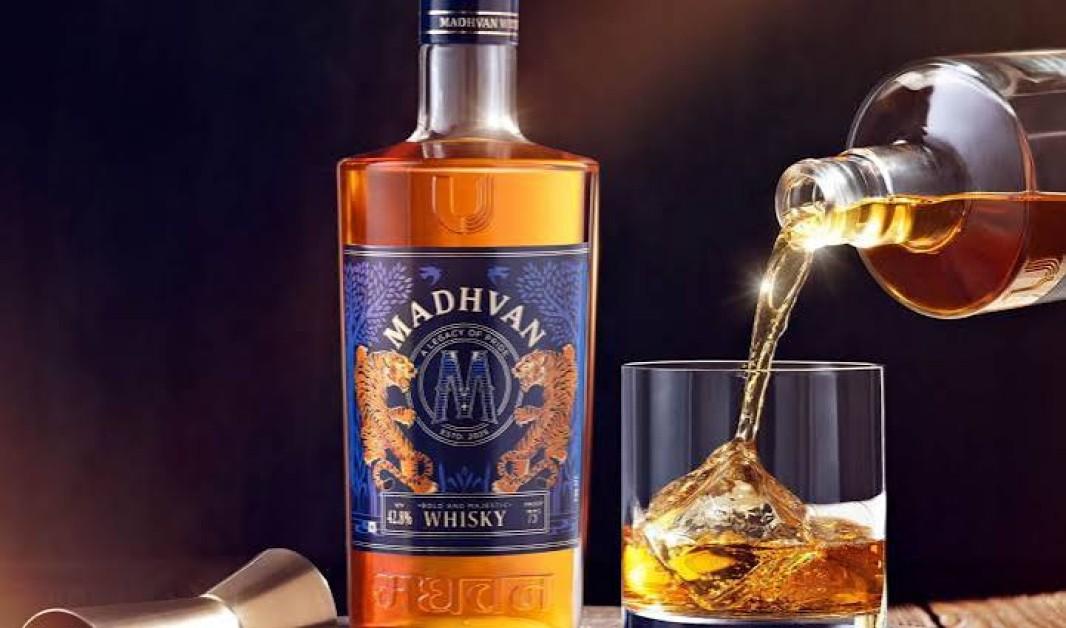
Premium Spirits Companies Increase India-Focused Portfolio Investments as High-End Whisky Demand Expands
Global spirits companies are increasing their strategic focus on India as premium and high-end whisky consumption becomes an increasingly important source of industry growth. International producers are expanding locally developed brands, strengthening premium portfolios and preparing to capitalise on improving market access for imported products. Suntory Global Spirits is targeting India as its third-largest market by revenue by 2030, while Diageo India continues to report stronger growth in its Prestige & Above portfolio. The investments underline a structural shift in India's alcoholic-beverage market as companies compete for consumers increasingly willing to trade up to higher-priced products.
India Becomes Strategic Market for Global Spirits Companies

India's scale, economic growth and strong whisky culture make the country increasingly difficult for international drinks companies to treat as a secondary market.
Suntory Targets India as Third-Largest Market by 2030
Suntory Global Spirits has outlined an ambitious expansion strategy centred on India becoming its third-largest market by revenue by 2030.
The company is pursuing growth through a combination of locally produced whisky and international brands.
Oaksmith, developed specifically for the Indian market, is central to the local portfolio, while Jim Beam gives Suntory exposure to growing interest in American bourbon.
This dual strategy illustrates how international spirits companies are approaching India.
Instead of relying exclusively on expensive imported bottles, they can develop locally produced products suited to Indian preferences while gradually expanding their international premium portfolio.
The approach allows companies to address a much wider consumer base.
India Offers Long-Term Consumption Opportunity
India already represents one of the world's largest whisky markets by volume.
The next commercial opportunity is increasingly about value.
As disposable incomes increase, a portion of consumers is moving from lower-priced spirits toward premium categories.
That does not require every consumer to purchase luxury whisky.
Even relatively modest movement from one price tier to the next can create substantial additional industry revenue because of India's enormous consumer base.
For global spirits groups, this makes premiumisation one of the most important long-term themes in the Indian market.
Premiumisation Changes Economics of Whisky Industry
Selling more expensive products can transform the financial characteristics of a spirits business.
Consumers Trade Up to Better Brands
Premiumisation occurs when customers shift toward products positioned at higher price points.
A consumer may move from an entry-level whisky to a premium Indian blend.
Another may graduate from premium domestic whisky to Scotch.
More affluent customers may move toward single malts, aged expressions or limited releases.
Each step increases the value generated from the same underlying consumption occasion.
This allows spirits companies to expand revenue without relying exclusively on higher alcohol volumes.
Premiumisation can therefore be particularly attractive in markets where regulations or consumer behaviour limit volume growth.
Higher-End Products Can Support Better Margins
Premium spirits generally command higher gross profit per bottle.
Consumers are paying not only for the liquid but also for brand heritage, ageing, packaging and perceived exclusivity.
The economics can consequently be stronger than mass-market products.
This helps explain why major spirits companies invest heavily in brand-building.
Marketing expenditure may be substantial, but a successful premium brand can generate attractive long-term economics.
India's transition toward higher-priced products therefore has important implications for industry profitability.
Diageo India Reports Strong Premium Portfolio Growth
One of the clearest indicators of premiumisation comes from the performance of Diageo-controlled United Spirits.
Prestige & Above Portfolio Outpaces Popular Segment
Diageo India reported that its Prestige & Above portfolio grew 8.6% in FY26.
Excluding Maharashtra and Andhra Pradesh, the rest of India delivered 10.9% growth, with Prestige & Above products expanding 11.3%.
By comparison, the company's Popular segment was almost flat, declining 0.3%.
The difference illustrates the direction of consumer spending.
Growth is increasingly concentrated toward higher-value products rather than the lowest-priced categories.
This mix shift can benefit profitability because premium products generally generate stronger economics.
Top-End Growth Encourages Brand Investment
Diageo India continued investing heavily in advertising and promotion during FY26, with its A&P reinvestment rate reaching 10.4% of sales.
The company specifically linked sustained brand investment to stronger mix at the upper end of its portfolio.
This demonstrates the competitive intensity developing around premium Indian consumers.
Companies cannot simply introduce expensive products and expect customers to adopt them.
They need to build brand awareness, create distinctive positioning and develop appropriate retail and hospitality distribution.
Premium spirits are therefore becoming increasingly marketing-intensive businesses.
Suntory Uses Local and Global Brands Together
Suntory's India strategy demonstrates how international groups can build portfolios across different price points.
Oaksmith Was Developed for Indian Consumers
Oaksmith represents an important part of Suntory's localisation strategy.
Rather than simply importing Japanese whisky, the company developed a product specifically for India.
The brand combines international whisky-making expertise with a proposition designed around local consumer preferences and pricing conditions.
Local manufacturing can also reduce some of the cost disadvantages associated with imported spirits.
This allows a multinational company to compete in premium categories without restricting itself to the relatively small luxury-import segment.
Jim Beam Expands Bourbon Opportunity
Suntory also owns Jim Beam, one of the world's best-known bourbon brands.
India has historically been dominated by whisky styles associated with domestic blends and Scotch.
Growing consumer experimentation creates an opportunity for bourbon.
Cocktail culture can support this expansion because bourbon is frequently used in mixed drinks.
Bars and restaurants can introduce consumers to unfamiliar categories before they purchase bottles for home consumption.
This makes India's expanding hospitality industry an important distribution channel for global spirits companies.
Indian Single Malts Transform Premium Market
The premium whisky opportunity is no longer controlled exclusively by foreign brands.
Domestic Producers Gain International Recognition
Indian single malt producers have developed increasingly strong reputations both domestically and internationally.
Brands such as Amrut, Paul John and Indri have demonstrated that Indian whisky can compete in premium categories traditionally associated with Scotland, Ireland, Japan and the United States.
This changes consumer perceptions.
Indian whisky is no longer necessarily viewed only as a lower-cost alternative to imported Scotch.
Premium domestic producers can now position products around craftsmanship, ageing and provenance.
That gives Indian companies greater ability to capture value from premiumisation.
Global Companies Face Stronger Local Competition
International groups entering India's high-end whisky market cannot assume foreign heritage guarantees leadership.
Indian brands understand local distribution and consumer preferences.
They can also avoid some import-related costs.
Global companies therefore need differentiated portfolios.
Some will compete through internationally recognised labels.
Others will invest in Indian brands or create locally produced products.
The result is likely to be a more competitive premium whisky market with greater consumer choice.
India-Produced Premium Whisky Gains Importance
Local production is becoming strategically important even for multinational companies.
Imported Spirits Face Cost Disadvantages
Imported whisky historically faced high customs duties in India.
State-level taxation and distribution rules can add additional costs.
These factors make imported products significantly more expensive than comparable locally produced spirits.
Manufacturing or blending products domestically can therefore expand the addressable market.
A premium whisky produced in India can reach consumers who may not be willing to pay imported Scotch prices.
This creates an important middle ground between mass-market spirits and luxury imports.
Localisation Supports Scale
A company targeting millions of Indian consumers needs a product portfolio capable of reaching multiple income segments.
Imported premium bottles alone cannot provide that scale.
Local manufacturing allows companies to develop products at more accessible price points while retaining premium brand positioning.
Suntory's Oaksmith strategy reflects this logic.
Other multinational producers are also likely to continue developing India-specific offerings as competition increases.
India-UK Trade Changes Could Reshape Scotch Market
Trade policy represents another important factor influencing portfolio investment.
Lower Tariffs Can Improve Imported Whisky Economics
The India-UK trade framework creates the prospect of lower tariffs on Scotch whisky over time.
Scotland is one of the world's most important premium whisky-producing regions.
Historically high Indian import duties have restricted the addressable market for many Scotch brands.
Lower tariffs can reduce landed costs.
Companies can respond through lower consumer prices, higher margins or a combination of both.
This could make premium imported Scotch accessible to a broader group of Indian consumers.
Domestic Premium Brands Will Face More Competition
Lower import barriers create opportunities for global companies but also intensify competition for Indian producers.
Consumers may gain access to a larger range of Scotch whiskies at more competitive prices.
Indian single malts will therefore need to continue differentiating through quality, storytelling and local identity.
The competition could ultimately strengthen the overall premium category by encouraging greater product innovation and consumer interest.
Younger Consumers Reshape Spirits Consumption
Demographic change is another important force behind portfolio investment.
Consumers Are More Experimental
Younger legal-age consumers often demonstrate greater willingness to explore different categories and brands.
Whisky may compete with gin, tequila, rum, wine and cocktails for the same drinking occasion.
This encourages companies to build broader premium portfolios rather than depending on a single category.
Digital culture also exposes consumers to international trends.
Travel and global entertainment can introduce new brands and drinking styles.
The result is a market in which brand discovery can happen much faster than in previous generations.
Drinking Occasions Are Changing
Premium spirits consumption is increasingly associated with restaurants, bars, hotels and social occasions rather than only traditional at-home drinking.
Cocktail culture supports experimentation.
A consumer can try a premium whisky in a bar before purchasing a full bottle.
Luxury hotels and fine-dining restaurants also provide important environments for high-end brands to establish credibility.
Distribution strategies therefore increasingly extend beyond conventional liquor retail.
Luxury Hospitality Supports Premium Spirits Growth
India's expanding premium hospitality sector creates another channel for high-end whisky brands.
Hotels Provide Showcase for Global Labels
Luxury hotels maintain extensive beverage programmes.
Premium whisky, wine, champagne and other spirits contribute to both guest experience and food-and-beverage revenue.
As more high-end hotels open across Indian cities, spirits companies gain additional premium distribution points.
Hotel bars can also introduce affluent consumers to unfamiliar brands.
This makes hospitality partnerships strategically important for companies launching premium products.
Premium Restaurants Drive Cocktail Culture
India's restaurant sector has become increasingly sophisticated.
Major cities now contain bars and restaurants offering extensive international spirits selections.
Bartenders can influence consumer preferences through cocktails and recommendations.
Brands therefore invest in bartender education, tastings and hospitality partnerships.
The objective is to build demand at the point where consumers discover new products.
Affluent Consumers Expand Addressable Market
Premium spirits demand is closely connected with growth in discretionary spending.
Rising Incomes Support Trading Up
As household incomes rise, consumers allocate more spending toward experiences and premium products.
This trend is visible across automobiles, smartphones, travel, fashion and jewellery.
Alcoholic beverages can follow similar patterns.
A consumer who previously purchased a standard whisky may choose a premium bottle for special occasions.
Another may begin collecting single malts.
These behavioural shifts increase average revenue per consumer.
Premiumisation Extends Beyond Ultra-Rich Buyers
The largest opportunity does not necessarily come from billionaires or ultra-high-net-worth consumers.
A much broader affluent and upper-middle-income population can support premium categories.
Occasional premium purchases can create enormous aggregate demand when multiplied across millions of consumers.
This is one reason international spirits companies increasingly view India as a long-term strategic market rather than a niche opportunity.
E-Commerce and Digital Discovery Influence Brands
Alcohol distribution remains highly regulated, but digital platforms still influence purchasing decisions.
Consumers Research Brands Online
Customers increasingly research whisky before entering a store.
They compare tasting notes.
They watch reviews.
They follow bartenders and beverage creators.
Social media can create awareness of international brands even when direct alcohol advertising is restricted.
This changes how companies build brand equity.
Educational and lifestyle content can become important tools for communicating heritage and craftsmanship.
Digital Communities Encourage Whisky Exploration
Whisky clubs and enthusiast communities have expanded in major cities.
Members organise tastings and discuss new releases.
These communities can accelerate discovery of premium products.
Enthusiasts also influence wider consumer behaviour through recommendations.
For premium brands, winning credibility among knowledgeable consumers can therefore generate broader commercial benefits.
Regulation Remains Major Industry Complexity
India's alcoholic-beverage market operates under a complicated regulatory structure.
States Control Significant Parts of Alcohol Policy
Alcohol taxation and distribution differ significantly between Indian states.
Companies therefore cannot always use one national pricing and distribution strategy.
A product may be economically attractive in one state but significantly more expensive in another.
Licensing systems also vary.
This creates substantial operational complexity for national spirits companies.
Large businesses need dedicated regulatory and distribution capabilities across multiple jurisdictions.
Product Compliance Is Under Greater Scrutiny
Recent regulatory developments have also demonstrated the importance of product composition and labelling compliance.
Diageo has agreed to reformulate several whisky and rum products in India after regulatory concerns over added flavouring substances.
The development highlights how premiumisation must occur within increasingly formal compliance frameworks.
Large companies need strong quality-control systems capable of meeting both national and state requirements.
Regulatory execution can therefore become an important competitive capability.
Brand Portfolios Become Strategic Assets
Premium spirits companies increasingly compete through portfolios rather than individual products.
Different Brands Serve Different Consumers
A large spirits group can operate across several price points.
Entry premium products attract consumers beginning to trade up.
Higher-end brands serve affluent buyers.
Rare and aged whiskies target collectors and luxury consumers.
This creates a progression pathway.
As consumer incomes and preferences develop, they can move upward within the same company's portfolio.
Owning brands across multiple tiers allows companies to capture more of that lifetime value.
Acquisitions Can Fill Portfolio Gaps
Building a premium spirits brand organically can take many years.
Acquiring an established brand can provide faster access to a category or consumer segment.
This creates opportunities for mergers and acquisitions.
Global companies may evaluate Indian craft spirits businesses with strong local brands.
Indian companies could also acquire international labels or distribution rights.
As premiumisation continues, brand portfolios themselves become increasingly valuable strategic assets.
Investors Watch Premium Mix Closely
Listed spirits companies are increasingly evaluated according to the quality of their revenue growth.
Premium Growth Can Improve Profitability
Selling a larger proportion of premium products can improve gross margins.
This can support higher marketing investment while still increasing operating profitability.
Diageo India's FY26 performance demonstrated this dynamic, with stronger top-end portfolio growth contributing to favourable mix.
The company reported FY26 EBITDA growth of 11.6% and profit after tax growth of 17.5%.
Premiumisation therefore has measurable financial implications beyond brand positioning.
Volume Growth Alone Is Less Important
A company selling more low-margin products can generate strong volume growth without producing comparable earnings growth.
Investors therefore examine price mix alongside physical case volumes.
A business capable of increasing both premium share and volumes can potentially generate particularly attractive growth.
This makes premium portfolio performance an increasingly important metric for the Indian spirits industry.
Competition for India’s Premium Consumer Will Intensify
The market opportunity is attracting both international and domestic companies.
Global Groups Bring Powerful Brands
Large international spirits companies possess portfolios developed over decades.
Their brands carry heritage and global recognition.
They also have substantial marketing budgets.
As trade barriers decline and Indian incomes rise, these advantages become more relevant.
Companies can introduce a broader selection of their global products.
Indian Producers Bring Local Understanding
Domestic producers possess different strengths.
They understand regional preferences and distribution structures.
Local production can provide cost advantages.
Indian brands can also build powerful narratives around domestic ingredients, climate and craftsmanship.
The competition between global heritage and Indian identity could become one of the defining features of the premium whisky market.
India Could Become Global Premium Spirits Growth Engine
The long-term opportunity extends beyond selling more whisky within India.
India Can Become Production Base
Premium spirits manufactured in India can eventually target international consumers.
Indian single malts have already demonstrated export potential.
Multinational companies can also use Indian facilities to develop products for regional markets.
This creates an opportunity for India to become both a major consumption market and an important production centre.
Global Importance Could Rise Rapidly
Suntory's ambition to make India its third-largest revenue market by 2030 illustrates how dramatically the country's importance could increase.
Other multinational spirits companies are likely to make similar strategic calculations.
A market combining enormous scale, rising incomes and strong existing whisky consumption provides unusual growth potential.
The companies that establish premium brands early could benefit disproportionately as consumers continue trading up.
Conclusion
Premium spirits companies are increasing India-focused portfolio investments as high-end whisky demand becomes an increasingly important growth engine for the global alcoholic-beverage industry.
Suntory Global Spirits' ambition to make India its third-largest revenue market by 2030 demonstrates the scale of the opportunity, while Diageo India's strong Prestige & Above performance provides evidence that premiumisation is already influencing industry economics.
The next phase will involve competition across locally produced premium whisky, Indian single malts, imported Scotch, bourbon and other high-end spirits. Lower trade barriers, expanding luxury hospitality, rising disposable incomes and increasingly experimental consumers could accelerate that transition.
Regulatory complexity and intense competition remain significant challenges. Yet India's combination of market scale and growing premium demand means global and domestic spirits companies are likely to keep directing capital, brand investment and product innovation toward the country as they compete for its next generation of high-value consumers.
 Premium Spirits Companies Expand India Whisky Investments FAQs
POST A COMMENT (0)
All Comments (0)
Replies (0)