





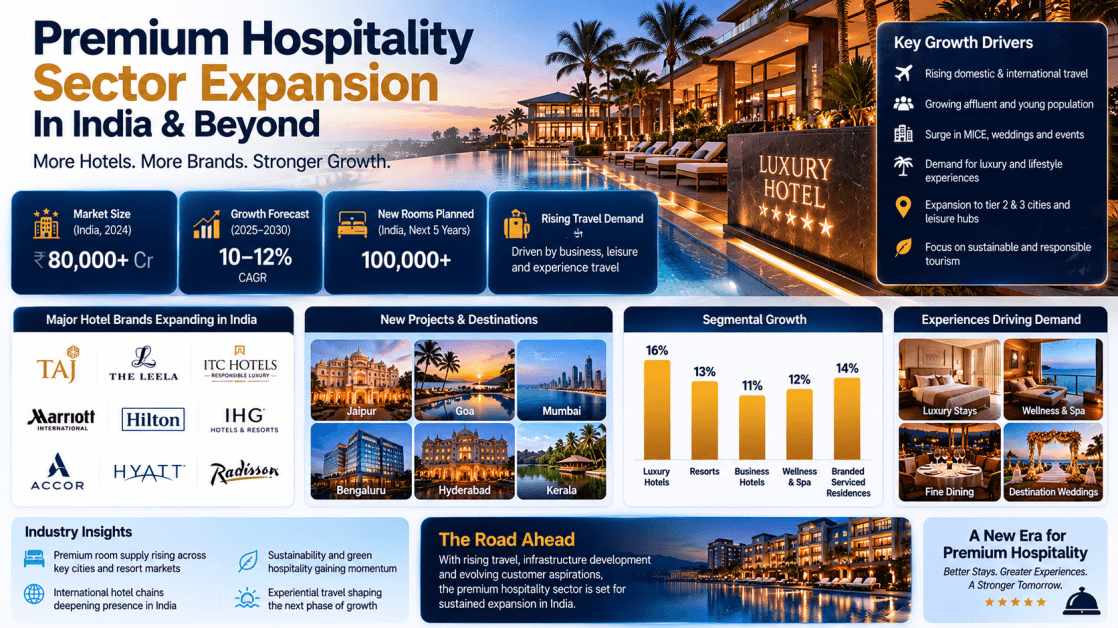
Premium Hospitality Sector Expansion: Luxury Hotels, Resorts, and High-End Travel Drive Growth
The premium hospitality sector is witnessing strong expansion as rising incomes, increased business travel, international tourism, and demand for luxury experiences continue to reshape the global travel industry. Hotel operators, resort developers, and hospitality brands are investing in new properties, upgraded guest experiences, and technology-driven services to capture growing demand across domestic and international markets.
In India, the luxury hospitality segment has gained significant momentum, supported by infrastructure development, expanding aviation connectivity, and increasing interest in experiential travel.
Premium Hospitality Market Continues to Grow
Luxury hotels and premium resorts are expanding their presence in metropolitan cities, leisure destinations, pilgrimage centers, and emerging tourism hubs.
Growth is being driven by demand for:
-
Luxury leisure travel
-
Business travel
-
Wellness tourism
-
Destination weddings
-
Meetings, Incentives, Conferences, and Exhibitions (MICE)
-
Premium staycations
-
Heritage tourism
-
Eco-luxury experiences
Developers are also investing in branded residences and mixed-use hospitality projects to diversify revenue streams.
Key Growth Drivers
Rising Disposable Incomes
Growing purchasing power among affluent consumers and an expanding upper-middle-income population are supporting demand for premium accommodation.
Domestic Tourism Boom
Improved connectivity and a growing preference for local travel have increased visits to hill stations, beaches, wildlife destinations, and cultural heritage sites.
International Tourism Recovery
As global travel continues to strengthen, luxury hotels are seeing renewed demand from international visitors seeking premium experiences.
Business Travel and MICE
Corporate travel, conferences, exhibitions, and large-scale events remain important contributors to occupancy and revenue growth.
Digital Transformation
Hotels are adopting advanced technologies to improve reservations, guest services, and operational efficiency.
Leading Trends Shaping Premium Hospitality
Luxury Resorts
Travelers increasingly seek immersive experiences featuring wellness, nature, and personalized services.
Branded Residences
Developers are integrating premium residential projects with luxury hotel services, offering hospitality-inspired living.
Wellness Tourism
Spa retreats, holistic wellness programs, medical wellness, and fitness-focused travel continue to attract high-value travelers.
Sustainable Hospitality
Hotels are investing in renewable energy, water conservation, waste reduction, and environmentally responsible operations.
Personalized Guest Experiences
Artificial intelligence, data analytics, and customer relationship platforms help hotels tailor recommendations and services to individual guest preferences.
Technology Transforming Hospitality
Modern hospitality companies are investing in:
-
AI-powered guest services
-
Digital check-in and check-out
-
Mobile room access
-
Smart room controls
-
Contactless payments
-
Automated concierge services
-
Revenue management systems
-
Predictive demand forecasting
-
Customer relationship management (CRM)
-
Data analytics
These technologies help improve operational efficiency while enhancing the guest experience.
Investment Opportunities
The premium hospitality sector continues to attract investment from:
-
Hotel operators
-
Real estate developers
-
Private equity firms
-
Sovereign wealth funds
-
Institutional investors
-
Hospitality-focused investment platforms
Investment activity includes new hotel developments, resort expansions, asset acquisitions, renovations, and management agreements.
Challenges Facing the Sector
Despite positive growth, the industry faces several challenges.
High Development Costs
Land acquisition, construction, and premium interior design require substantial capital investment.
Talent Availability
Recruiting and retaining skilled hospitality professionals remains a key priority.
Operating Expenses
Rising labor, energy, and maintenance costs can affect profitability.
Seasonal Demand
Many leisure destinations experience fluctuations in occupancy throughout the year.
Sustainability Expectations
Guests increasingly expect environmentally responsible operations while maintaining luxury standards.
Future Outlook
The premium hospitality sector is expected to maintain long-term growth, supported by expanding tourism, higher consumer spending, and continued investment in luxury travel infrastructure.
Future growth is likely to be driven by:
-
Expansion into Tier-2 and Tier-3 cities
-
Luxury wellness destinations
-
Smart hotel technologies
-
AI-powered guest personalization
-
Sustainable hotel development
-
Branded residences
-
Mixed-use hospitality projects
-
Growth in international tourism
-
Premium lifestyle experiences
As travelers increasingly prioritize unique, personalized, and high-quality experiences, hospitality companies are expected to continue investing in innovation, service excellence, and premium destinations.
Conclusion
The premium hospitality sector is entering a new phase of expansion, driven by rising travel demand, growing affluence, technological innovation, and evolving consumer expectations. Luxury hotels, resorts, branded residences, and wellness destinations are well positioned to benefit from these long-term trends.
While challenges such as development costs, workforce availability, and sustainability requirements remain, ongoing investment and digital transformation are expected to strengthen the industry's outlook. As tourism continues to grow, premium hospitality will remain a key contributor to economic development, employment, and the broader travel ecosystem.
 Premium Hospitality Sector Expansion: Luxury Travel and Hotel Industry Outlook FAQs
POST A COMMENT (0)
All Comments (0)
Replies (0)