





Mumbai Luxury Restaurant Mercii Draws Attention to India’s Expanding Ultra-Premium Dining Market
Mumbai's Mercii is drawing renewed attention to the upper end of India's restaurant market as its elaborate interiors, premium menu and unusually expensive signature offerings highlight how some hospitality businesses are targeting consumers willing to pay substantially more for exclusive dining experiences.
Located in Santacruz West, Mercii was launched in 2025 by Arpita Khan Sharma with hospitality partners and operates as an upscale European-inspired dining destination. The restaurant combines contemporary European cuisine with Nikkei influences, premium beverages, private dining and highly designed interiors.
Recent attention has centred on the restaurant's premium pricing. Its Salt Crusted Red Snapper is listed at ₹10,000, while its tableside Truffle Pasta from Wheel is priced at ₹8,500. Its beverage collection extends considerably higher, with premium champagne reaching ₹1,88,550 per bottle.
The prices place the restaurant's most exclusive offerings far above conventional premium dining and illustrate an emerging segment of India's hospitality market in which consumers increasingly pay not simply for food, but for scarcity, ambience, service, social experience and luxury positioning.
Mercii Positions Dining as a Luxury Experience

Mercii opened with a concept designed around experiential fine dining rather than a conventional restaurant proposition.
Its official positioning emphasises contemporary European cuisine, hospitality and an immersive environment.
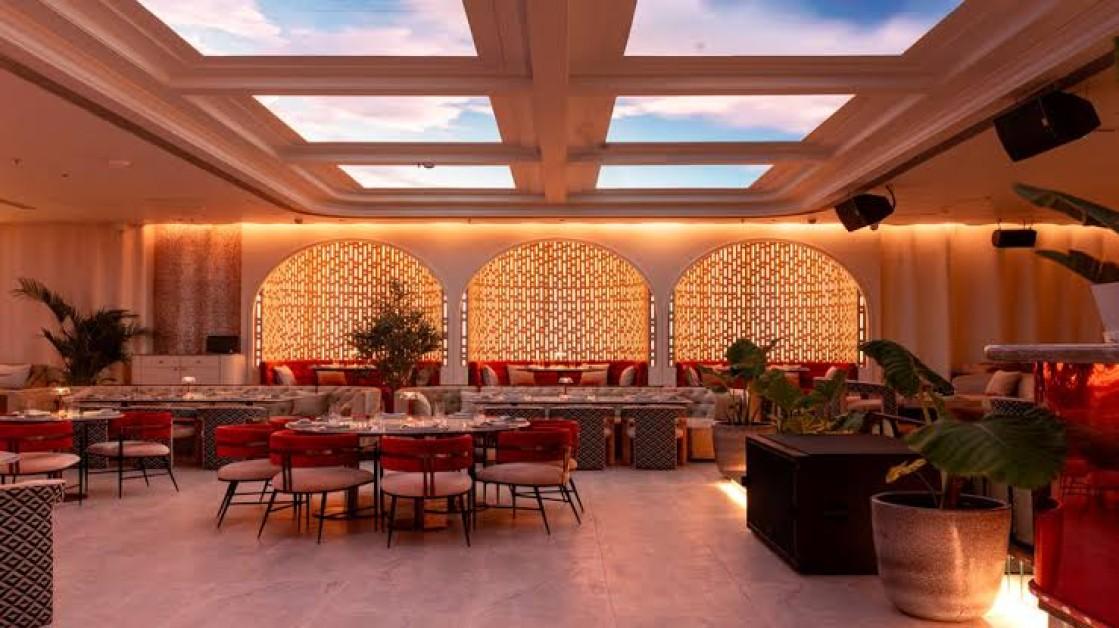
The restaurant features sculpted architectural elements, private cabanas and a dynamic LED skylight ceiling designed to change the visual atmosphere between daytime and evening. (Mercii)
That design strategy reflects a broader change in premium hospitality.
For luxury restaurants, the room itself is increasingly part of the product.
Restaurant Spans Around 9,000 Square Feet
Mercii occupies approximately 9,000 square feet in Mumbai's Santacruz neighbourhood.
Its scale allows the venue to combine restaurant seating with a large bar, entertainment areas and private spaces.
One private section can accommodate approximately 30 guests and includes its own bar. (The Indian Express)
This creates several potential revenue streams.
The restaurant can serve conventional diners while also targeting private celebrations, corporate gatherings and high-value events.
₹10,000 Signature Dishes Generate Attention
The most visible element of Mercii's positioning has been its menu pricing.
Recent reports have highlighted a Salt Crusted Red Snapper priced at ₹10,000.
Another signature dish, Truffle Pasta from Wheel, costs ₹8,500 and is prepared and finished tableside using truffle sauce and Parmesan. (The Times of India)
These are exceptional prices even within India's premium restaurant market.
But they also illustrate an important feature of luxury hospitality economics.
The highest-priced menu items can function as marketing assets.
Extreme Pricing Can Generate Publicity
Most customers do not necessarily need to purchase the most expensive item for it to provide commercial value.
A ₹10,000 dish creates conversation.
A ₹1.88 lakh bottle of champagne creates even more.
Consumers discuss it.
Social-media accounts share it.
News publications cover it.
Potential diners become curious about the restaurant.
That visibility can reduce the cost of introducing a relatively new hospitality brand to a crowded market.
Mercii’s Champagne List Extends Beyond ₹1.8 Lakh
The restaurant's beverage programme pushes its luxury positioning further.
Premium French champagne has been listed at as much as ₹1,88,550, while other high-end wines also reach substantial prices. (NDTV Food)
Alcohol can be particularly important to upscale restaurant economics because premium beverages can materially increase the average bill per table.
A group ordering an expensive bottle can generate significantly greater revenue than one ordering food alone.
Not Every Meal at Mercii Costs Tens of Thousands
The headline prices can create a misleading impression that every dish operates at the extreme end of the market.
That is not the case.
Restaurant listings put an approximate standard dining cost at around ₹3,000 for two people without alcohol, while the broader menu includes considerably less expensive dishes alongside its high-ticket signatures. (Zomato)
This creates a pricing ladder.
Customers can participate at several expenditure levels while the extreme premium items maintain the restaurant's luxury image.
Luxury Restaurants Sell More Than Food
The business model of an ultra-premium restaurant differs significantly from that of a mass-market restaurant.
Food quality remains fundamental.
But the customer is purchasing a broader experience.
That can include:
ambience,
privacy,
service,
design,
presentation,
social status,
and entertainment.
The restaurant therefore competes partly with other forms of discretionary luxury spending rather than only with other places to eat.
Tableside Theatre Adds Perceived Value
Mercii uses tableside presentation for some signature dishes.
Its truffle pasta, for example, is finished in a Parmesan wheel in front of diners. (NDTV Food)
This transforms preparation into entertainment.
Dining Becomes Performance
A conventional plate arrives from the kitchen.
Experiential dining introduces:
flambéing,
carving,
mixing,
pouring,
and finishing
at the table.
These actions create memorable moments.
They also create highly shareable visual content for social media.
Instagram Has Changed Restaurant Design
Restaurants once primarily needed to look attractive to people physically sitting inside them.
Today they also need to look attractive through a smartphone camera.
Every Customer Can Become a Distributor
A visually distinctive restaurant can appear repeatedly across:
Instagram,
YouTube,
and other social platforms.
Customers effectively generate free marketing content.
Architecture therefore becomes part of digital customer acquisition.
Mercii's artificial skylight ceiling is particularly suited to this environment because it creates an immediately recognisable visual identity.
Celebrity Association Provides Additional Visibility
Arpita Khan Sharma's involvement gives Mercii a natural connection with India's entertainment ecosystem.
The restaurant has attracted attention partly because of visits from Bollywood personalities and other high-profile guests. (The Financial Express)
Celebrity Footfall Can Become Marketing
A luxury restaurant frequented by recognisable personalities can develop a reputation as a social destination.
That perception matters.
Some customers are not simply looking for an excellent meal.
They want access to spaces associated with exclusivity.
This dynamic is particularly powerful in Mumbai, where entertainment, fashion, finance and hospitality frequently intersect.
Celebrity-Owned Restaurants Are Becoming Visible Category
Mercii is not an isolated example.
Indian celebrities and entertainment figures have increasingly become involved with restaurant businesses.
Mumbai alone has developed a sizeable group of celebrity-associated hospitality concepts. (The Times of India)
Celebrity involvement provides immediate awareness.
But it does not guarantee commercial success.
Restaurants remain operationally difficult businesses requiring consistent food, service, inventory management and customer retention.
The celebrity connection can attract the first visit.
The restaurant experience determines whether customers return.
Mumbai Provides Natural Market for Premium Dining
Mumbai combines several characteristics favourable to luxury restaurants.
The city contains significant populations of:
business owners,
senior executives,
financial professionals,
entertainment personalities,
high-net-worth families,
and international visitors.
These groups create demand for premium hospitality.
Mumbai also has a strong culture of business dining, celebrations and nightlife.
India’s Luxury Consumption Base Is Broadening
The broader significance of restaurants such as Mercii lies in changing consumer behaviour.
India's premium economy is expanding beyond traditional luxury categories such as jewellery, watches and automobiles.
Affluent consumers increasingly spend on experiences.
These include:
restaurants,
hotels,
travel,
wellness,
entertainment,
and private events.
Experiential luxury can become particularly attractive because it produces memories and social interaction rather than simply ownership of another physical object.
Dining Is Becoming Form of Lifestyle Consumption
For some affluent consumers, choosing a restaurant is increasingly similar to choosing a fashion brand or hotel.
The venue communicates taste.
Brand Identity Matters
A luxury restaurant needs recognisable positioning.
It might become known for:
a particular chef,
architecture,
rare ingredients,
views,
cocktails,
or exceptional service.
Mercii's combination of European-inspired cuisine, theatrical interiors and high-priced signature dishes creates a clearly differentiated identity.
Premium Ingredients Support Higher Pricing
Luxury restaurant economics also depend on ingredient sourcing.
Imported cheeses, seafood, truffles, premium meats and specialised ingredients can cost substantially more than ordinary restaurant supplies.
Ingredient Cost Is Only One Component
Customers are also paying for:
skilled chefs,
specialised equipment,
interior design,
prime real estate,
service staff,
and hospitality infrastructure.
A restaurant with expensive interiors and high staff-to-customer ratios needs substantially greater revenue per table than a casual dining operation.
Mumbai Real Estate Raises Operating Costs
Location is a major factor in restaurant economics.
Premium Mumbai neighbourhoods carry high property costs.
Large dining spaces therefore need strong revenue productivity.
Every Square Foot Needs Commercial Purpose
Restaurants can improve economics through:
higher menu prices,
premium beverages,
private dining,
events,
and multiple service periods.
Large-format luxury venues face particular pressure because interior investment and occupancy costs can be substantial.
Private Dining Can Increase Revenue
Mercii offers private cabanas and customised event packages. (Mercii)
This is strategically important.
Private events can generate high revenue from a concentrated group of customers.
Celebrations Support Premium Spending
Birthdays, anniversaries and corporate occasions often involve higher expenditure than ordinary meals.
Customers may order:
premium beverages,
special menus,
decorations,
and additional services.
Private spaces therefore allow luxury restaurants to monetise their ambience more effectively.
Cocktail Programmes Become Independent Attraction
Upscale restaurants increasingly treat bars as major business units rather than secondary facilities.
Mercii promotes a dedicated cocktail programme alongside its food offering. (Mercii)
A strong beverage identity can attract customers who may not initially visit for a complete dinner.
This expands potential demand into late-evening and nightlife periods.
Menu Evolution Helps Generate Repeat Visits
Luxury restaurants cannot depend permanently on launch curiosity.
Customers need reasons to return.
Mercii introduced a Nikkei-European menu in 2026 featuring Japanese-Peruvian influences alongside European techniques. (NDTV Food)
Menu Changes Create Newness
Returning diners can experience something different.
New menus also generate additional:
media coverage,
social content,
chef storytelling,
and promotional campaigns.
For hospitality businesses, periodic reinvention can help maintain relevance after initial launch attention fades.
Chefs Become Part of Restaurant Branding
Modern fine dining increasingly markets the people behind the food.
Mercii's culinary programme has involved chefs with international training and experience.
Its official positioning emphasises culinary expertise alongside design and hospitality. (Mercii)
Chef Reputation Can Support Pricing
Consumers may pay more when they believe they are receiving specialised culinary expertise.
Chef identity therefore functions similarly to designer identity in fashion.
The restaurant becomes associated with a particular creative approach.
Mumbai’s Fine-Dining Market Is Becoming More Diverse
The city's premium dining ecosystem is not moving in only one direction.
Large luxury restaurants coexist with small chef-led tasting rooms.
In 2026, Mumbai has also experienced growing demand for highly limited chef's-table concepts, including restaurants where only a handful of seats are available and reservations disappear rapidly. (Time Out Worldwide)
This demonstrates that luxury does not necessarily require enormous physical scale.
Scarcity itself can create premium value.
Two Luxury Models Are Emerging
One model emphasises spectacle.
Large interiors.
Bars.
Celebrity visibility.
Private rooms.
Expensive beverages.
The second emphasises intimacy.
Few seats.
Chef interaction.
Tasting menus.
Reservation scarcity.
Both can target affluent customers while providing completely different experiences.
Luxury Hospitality Is Becoming Segmented
As India's affluent consumer population expands, premium restaurants can target narrower audiences.
Some customers want sophisticated business dining.
Others want nightlife.
Some seek culinary experimentation.
Others want privacy.
Some want highly photographed social environments.
This segmentation allows more premium concepts to coexist without competing directly on identical terms.
Restaurant Businesses Still Face Difficult Economics
High menu prices do not automatically produce high profits.
Restaurants have significant operating expenses.
These can include:
rent,
staff salaries,
ingredients,
utilities,
licences,
maintenance,
and marketing.
Premium restaurants face additional costs because customers expect exceptional service and interiors.
Luxury Customers Have Higher Expectations
A ₹500 meal and a ₹10,000 dish are judged differently.
The more a restaurant charges, the less tolerance customers have for mistakes.
Service Becomes Critical
Premium diners expect:
knowledgeable staff,
fast problem resolution,
careful presentation,
and consistent hospitality.
A single disappointing experience can generate damaging online reviews.
Luxury pricing therefore creates both opportunity and operational pressure.
Social Media Can Amplify Criticism Too
The same platforms that make premium restaurants famous can rapidly spread negative reactions.
High prices are particularly vulnerable to online scrutiny.
Consumers compare the cost with perceived value.
A restaurant therefore needs to demonstrate why its experience commands a premium.
The debate surrounding Mercii's prices illustrates this dynamic.
Attention can simultaneously generate curiosity and criticism.
Price Can Become Part of Brand Positioning
Luxury economics often behave differently from mass-market economics.
A very low price can sometimes weaken exclusivity.
Expensive Products Signal Positioning
This does not mean customers will accept arbitrary pricing.
Quality still matters.
But premium pricing communicates that a business is intentionally serving a particular market.
Mercii's highest-priced dishes and beverages clearly establish its position at the luxury end of Mumbai dining.
Affluent Consumers Seek Privacy
Privacy can be especially valuable in cities with large entertainment and business communities.
High-profile customers may prefer restaurants that provide secluded spaces.
Private rooms and cabanas therefore become competitive assets.
They allow celebrities, executives and families to dine with less public exposure.
This can strengthen loyalty among valuable customer segments.
Hospitality and Entertainment Are Converging
Luxury restaurants increasingly resemble entertainment venues.
They can combine:
food,
music,
lighting,
cocktails,
architecture,
and social interaction.
The objective is to create an entire evening rather than simply serve dinner.
This makes restaurants competitors not only to other restaurants but to clubs, lounges, hotels and other leisure businesses.
India’s Premium Restaurant Opportunity Extends Beyond Mumbai
Mumbai may be one of the strongest luxury markets, but premium hospitality is expanding across other Indian cities.
Delhi NCR, Bengaluru, Hyderabad, Goa and other affluent urban centres support increasingly sophisticated restaurant concepts.
Wealth Creation Expands Addressable Market
Entrepreneurship, technology, finance and professional services are creating additional affluent consumers.
As disposable incomes rise, restaurant spending can move from occasional necessity toward lifestyle consumption.
This gives hospitality entrepreneurs room to build more specialised premium brands.
International Culinary Concepts Are Becoming More Accessible
Indian consumers increasingly travel internationally and encounter global dining formats.
Their expectations return with them.
Restaurants therefore experiment with:
Nikkei cuisine,
modern European cooking,
Japanese techniques,
tasting menus,
and specialised cocktail programmes.
Mercii's combination of European and Nikkei influences reflects this increasingly international customer palate. (Mercii)
Luxury Hotels Face More Independent Competition
Historically, some of India's most premium restaurants were located inside five-star hotels.
Independent operators are increasingly competing for the same customer.
Independent Restaurants Can Move Faster
They can build more focused identities and change menus or concepts without operating within a larger hotel brand.
Hotels retain advantages in service infrastructure, international clientele and accommodation integration.
The competition is therefore raising standards across premium hospitality.
Restaurant Technology Is Becoming Important
Even luxury dining increasingly depends on digital systems.
Reservations, customer databases, inventory and payments can all be managed technologically.
Customer Data Can Improve Hospitality
A restaurant can potentially remember:
previous visits,
dietary preferences,
special occasions,
and preferred seating.
Used appropriately, this information allows more personalised service.
Personalisation is particularly valuable when customers are paying premium prices.
Reservation Platforms Influence Discovery
Consumers increasingly discover restaurants through digital dining platforms and social media.
Mercii is listed on major reservation and restaurant-discovery services, where customers can view menus, ratings and booking options. (District)
This changes customer acquisition.
A restaurant's digital profile can be almost as important as its physical frontage.
Luxury Dining Can Support Wider Local Economy
A successful high-end restaurant supports numerous businesses beyond its own operation.
These include:
food suppliers,
interior designers,
florists,
event companies,
valet services,
technology vendors,
and beverage distributors.
Premium hospitality therefore contributes to a broader urban service economy.
The Real Test Is Repeat Business
Initial publicity can fill tables temporarily.
Long-term restaurant economics depend on returning customers.
Novelty Eventually Fades
The ceiling becomes familiar.
The celebrity connection becomes established.
The expensive menu stops being surprising.
At that point, food quality and service become decisive.
Successful luxury restaurants need to convert curiosity into loyalty.
That will ultimately determine whether concepts such as Mercii become enduring hospitality brands.
Mercii Illustrates India’s Experience Economy
The restaurant's significance is therefore larger than individual menu prices.
It illustrates how premium consumption is evolving.
Customers increasingly pay for combinations of:
product,
service,
environment,
exclusivity,
and memory.
That same pattern can be seen across luxury travel, wellness, entertainment and hospitality.
Restaurants are becoming an increasingly visible part of this experience economy.
Conclusion
Mumbai's Mercii has attracted renewed attention through ₹10,000 signature dishes, an ₹8,500 tableside truffle pasta and champagne priced at as much as ₹1,88,550. (The Times of India)
But the larger business story is not simply that one Mumbai restaurant has an expensive menu.
Mercii represents an increasingly sophisticated premium hospitality model built around food, design, privacy, entertainment and social experience.
Its 9,000-square-foot format, immersive ceiling, private dining spaces, premium beverage programme and internationally influenced cuisine illustrate how restaurants are becoming lifestyle destinations rather than purely places to eat. (Mercii)
India's expanding affluent consumer base is creating opportunities for hospitality businesses to serve increasingly specialised segments, from large theatrical luxury restaurants to tiny reservation-only chef's tables.
The opportunity is substantial, but so is the challenge. Luxury customers demand exceptional consistency, and publicity alone cannot sustain a restaurant.
For Mercii and India's wider ultra-premium dining sector, long-term success will ultimately depend on whether operators can turn high-spending first-time visitors into loyal customers who believe the experience justifies the price.
 Mumbai’s Mercii Highlights Growth of India’s Ultra-Premium Dining Market FAQs
POST A COMMENT (0)
All Comments (0)
Replies (0)