





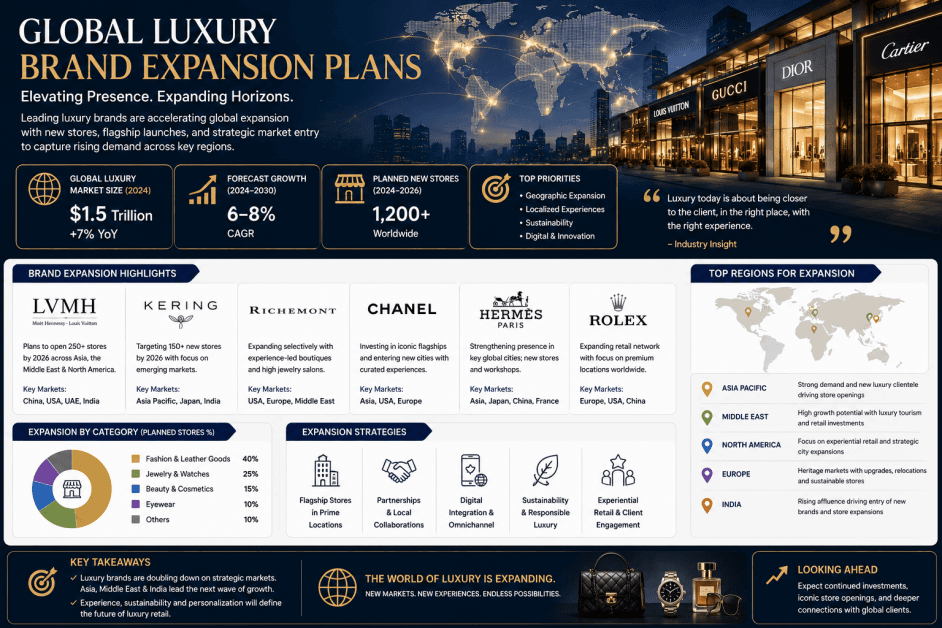
Global Luxury Brand Expansion Plans: How Premium Brands Are Growing Worldwide
Global luxury brands are accelerating their expansion strategies as demand for premium products continues to grow across developed and emerging markets. Luxury fashion houses, jewelry companies, watchmakers, beauty brands, and premium lifestyle businesses are investing in new flagship stores, digital commerce, exclusive customer experiences, and high-growth regions to strengthen their global presence.
Despite economic uncertainty in some markets, long-term demand for luxury goods remains supported by rising wealth, premium consumer spending, tourism, and younger generations entering the luxury market.
Luxury Industry Continues to Expand
The global luxury sector includes a wide range of premium products and services, including:
-
Fashion and apparel
-
Handbags and leather goods
-
Jewelry
-
Watches
-
Beauty and cosmetics
-
Footwear
-
Luxury automobiles
-
Hospitality
-
Home décor
-
Lifestyle accessories
Many brands are adopting multi-channel growth strategies that combine physical retail expansion with digital innovation to reach customers wherever they shop.
Key Expansion Strategies
Opening New Flagship Stores
Luxury brands continue to invest in flagship boutiques in major shopping destinations across cities such as New York, Paris, Milan, London, Dubai, Singapore, Tokyo, Shanghai, Mumbai, and Seoul.
These stores are designed to offer immersive brand experiences alongside exclusive collections and personalized services.
Expanding in Emerging Markets
Brands are increasing their presence in high-growth regions where rising incomes and expanding affluent populations are creating new opportunities.
Key markets include:
-
India
-
Southeast Asia
-
Middle East
-
Africa
-
Latin America
Expansion often includes new retail stores, local partnerships, and enhanced customer services.
Strengthening Digital Commerce
Luxury companies are investing in:
-
Official e-commerce platforms
-
Mobile shopping apps
-
Live shopping experiences
-
Virtual consultations
-
AI-powered personalization
-
Omnichannel retail
Digital channels help brands engage customers while maintaining premium service standards.
Enhancing Customer Experience
Luxury retailers increasingly focus on personalized experiences, including:
-
Private shopping appointments
-
VIP lounges
-
Exclusive product launches
-
Loyalty programs
-
Bespoke customization
-
Concierge services
These initiatives strengthen customer relationships and encourage repeat purchases.
Investing in Sustainability
Many luxury brands are incorporating sustainability into their expansion plans through:
-
Responsible sourcing
-
Recycled materials
-
Renewable energy
-
Circular fashion initiatives
-
Transparent supply chains
-
Lower-emission operations
Environmental responsibility is becoming an important factor for many luxury consumers.
Key Growth Drivers
Rising Global Wealth
An expanding population of affluent consumers continues to support demand for premium goods and experiences.
Growing Middle-Class Aspirations
In several emerging economies, higher disposable incomes are encouraging consumers to purchase luxury products for the first time.
Tourism Recovery
International travel supports luxury retail sales, particularly in major shopping destinations and airport boutiques.
Younger Consumers
Millennials and Generation Z are increasingly influencing luxury purchasing decisions through digital engagement and lifestyle preferences.
Digital Innovation
Artificial intelligence, data analytics, and digital marketing enable brands to deliver more personalized shopping experiences and improve customer engagement.
Technology Transforming Luxury Retail
Luxury brands are adopting advanced technologies such as:
-
Artificial intelligence for personalization
-
Virtual try-on experiences
-
Augmented reality product visualization
-
Customer relationship management (CRM) platforms
-
Predictive demand forecasting
-
Smart inventory management
-
Digital clienteling tools
-
Contactless payments
-
Data analytics
These technologies help brands enhance operational efficiency while delivering premium customer experiences.
Challenges Facing Luxury Brands
Economic Uncertainty
Inflation, currency fluctuations, and slower economic growth can influence consumer spending in some markets.
Supply Chain Complexity
Maintaining product quality while expanding global production and distribution requires careful planning.
Counterfeit Products
Protecting brand reputation remains a priority as counterfeit luxury goods continue to circulate in global markets.
Changing Consumer Expectations
Customers increasingly expect sustainability, digital convenience, and highly personalized service.
Balancing Exclusivity and Growth
Luxury brands must expand carefully while preserving the exclusivity and prestige that define their identity.
Future Outlook
The global luxury industry is expected to continue growing over the long term as premium brands expand into new regions and invest in digital innovation.
Key trends expected to shape future expansion include:
-
Growth in emerging markets
-
AI-powered customer personalization
-
Luxury e-commerce expansion
-
Omnichannel retail strategies
-
Sustainable product development
-
Smart retail technologies
-
Experiential flagship stores
-
Premium travel retail
-
Luxury resale and circular fashion
-
Exclusive membership experiences
Brands are also expected to increase investments in local manufacturing partnerships, digital engagement, and data-driven customer relationship strategies to strengthen long-term growth.
Conclusion
Global luxury brands are pursuing expansion through a combination of new retail locations, digital transformation, personalized customer experiences, and entry into high-growth markets. Rising consumer wealth, evolving shopping preferences, and advances in technology continue to create new opportunities across fashion, jewelry, beauty, hospitality, and lifestyle sectors.
While challenges such as economic uncertainty, supply chain management, and sustainability remain, the long-term outlook for the luxury industry remains positive. Companies that successfully combine innovation with craftsmanship, exclusivity, and exceptional customer service are likely to remain well positioned for future growth.
 Global Luxury Brand Expansion Plans: Key Growth Strategies and Market Trends FAQs
POST A COMMENT (0)
All Comments (0)
Replies (0)