





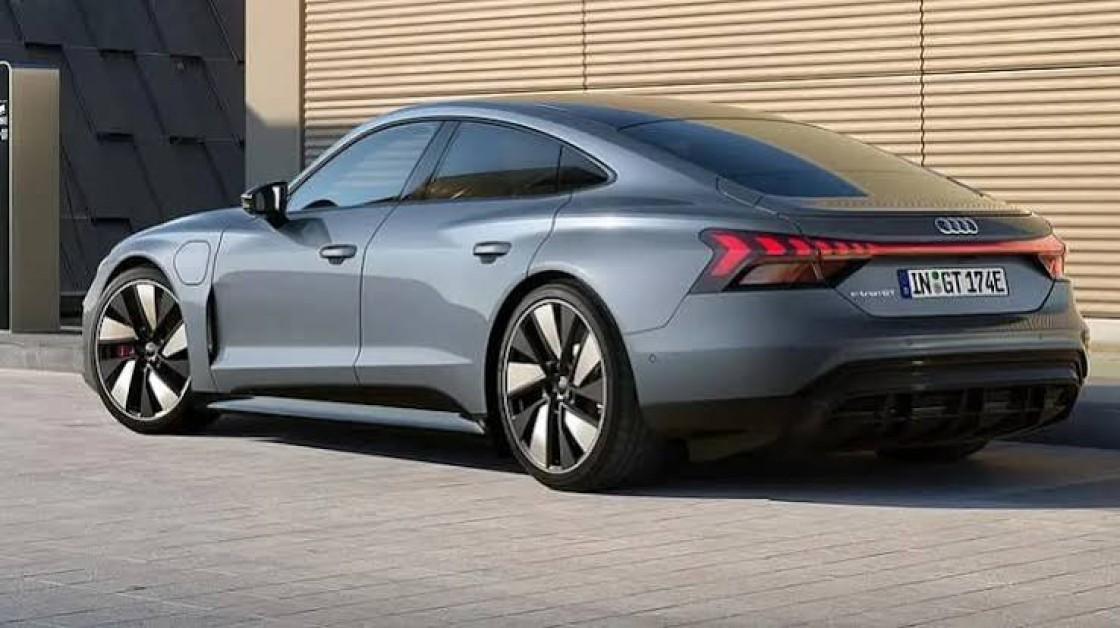
Audi India Plans Six New Vehicle Launches Over 18 Months to Double Its Luxury-Car Market Share
Audi India is preparing one of its most aggressive product offensives in the country, with plans to introduce six new vehicles over the next 18 months as the German luxury automaker seeks to revive sales and significantly increase its share of India's premium passenger-vehicle market.
The planned launches will include electric vehicles alongside conventional models, giving Audi a broader product pipeline as it competes with Mercedes-Benz, BMW, Jaguar Land Rover and other premium manufacturers. Audi is targeting a doubling of its current luxury-car market share over the next three years. (The Economic Times)
The strategy comes as India's luxury-car market continues to expand, supported by rising wealth, premiumisation and increasing demand for high-end SUVs and technologically advanced vehicles.
Six New Vehicles Planned Over 18 Months

Audi plans to introduce six vehicles in India during the coming 18 months, representing one of the company's largest product pushes in the market. (The Economic Times)
The programme is expected to combine new-generation models with electric vehicles, allowing Audi to refresh its portfolio across multiple luxury segments.
The strategy could help address one of the company's recent challenges in India: a comparatively limited flow of new products while major competitors continued expanding their line-ups.
Q3, A5 and Q9 Among Key Models
Three important models identified as part of Audi India's upcoming product strategy are the new Q3, A5 and Q9. (Times of India)
These vehicles could strengthen Audi's presence across different areas of the premium market.
The Q3 can address demand for compact luxury SUVs, while the A5 can strengthen Audi's premium passenger-car portfolio. The Q9, meanwhile, is positioned to expand the brand's presence at the upper end of the SUV market.
Together, the products could provide Audi with broader coverage of India's increasingly SUV-focused luxury-car segment.
Audi Targets Doubling Its Market Share
Audi India is aiming to double its current market share of approximately 8% over the next three years. (Times of India)
Achieving that target would require the company to substantially accelerate sales while competing against established luxury-market leaders.
The strategy will depend on several factors:
-
New product launches
-
Dealer-network expansion
-
Customer experience
-
Vehicle availability
-
Competitive pricing
-
Electric vehicle adoption
-
Financing
-
After-sales service
A sustained product pipeline will be particularly important because luxury-car customers often expect access to the newest global models.
Audi Sales Show Modest H1 Growth
Audi sold approximately 2,182 vehicles in India during the first half of 2026, compared with 2,118 vehicles during H1 2025, representing growth of about 3%, according to sales data compiled from VAHAN. (Autocar)
That placed Audi behind Mercedes-Benz, BMW and Jaguar Land Rover during the period.
Mercedes-Benz recorded 9,768 units in H1 2026, while BMW Group India reached 9,075 units and JLR recorded 3,039 units. (Autocar)
The figures illustrate the scale of the challenge facing Audi as it seeks to regain market share.
Luxury-Car Market Continues Expanding
India's luxury passenger-vehicle market grew approximately 4% during the first half of 2026. (Autocar)
The segment remains small compared with India's overall passenger-car market, but long-term growth potential is substantial.
Demand is supported by:
-
Rising household wealth
-
Growing entrepreneur population
-
Executive compensation
-
Premiumisation
-
Luxury consumption
-
Easier financing
-
Expansion beyond major metros
-
Younger luxury buyers
These structural trends are encouraging global premium automakers to increase their focus on India.
SUVs Remain Critical to Audi’s Strategy
SUVs have become increasingly important within India's luxury-car market.
Customers value premium SUVs for their road presence, cabin space, ground clearance and combination of performance with practicality.
Audi already has a strong SUV heritage through its Q-series portfolio.
Upcoming additions could strengthen its ability to compete across:
-
Compact luxury SUVs
-
Mid-size premium SUVs
-
Large luxury SUVs
-
Performance SUVs
-
Electric SUVs
A stronger Q-series line-up could therefore become central to Audi's market-share strategy.
Electric Vehicles Form Part of Product Offensive
Audi's six-model programme is expected to include electric vehicles. (The Economic Times)
Luxury EVs represent an important strategic segment because premium customers can often absorb the higher initial cost associated with battery-electric technology.
Audi's global e-tron portfolio gives it products capable of competing as India's premium EV market expands.
Important factors influencing luxury EV adoption include:
-
Driving range
-
Charging infrastructure
-
Battery performance
-
Vehicle pricing
-
Technology
-
Charging speed
-
Resale value
-
Ownership experience
Luxury manufacturers are increasingly treating electric vehicles as a permanent part of their Indian portfolios rather than niche experiments.
Competition With Mercedes-Benz and BMW Intensifies
Audi's expansion comes as Mercedes-Benz and BMW continue to record strong performance in India.
During H1 2026, Mercedes-Benz retained the luxury-market lead with 9,768 vehicles, while BMW sold 9,075 units and recorded 17% year-on-year growth. (Autocar)
BMW's SUV sales increased 35% during the period and represented approximately 65% of its total volumes.
These numbers demonstrate why Audi needs both new models and stronger execution to materially increase its market share.
Premium Segments Offer Stronger Opportunity
Audi previously indicated that India's luxury market was experiencing stronger momentum in higher-priced C and D segments, including vehicles costing more than ₹75 lakh, even as rising prices affected demand at the more accessible end of the premium market. (The Economic Times)
This trend could influence Audi's future product mix.
Higher-end vehicles can offer manufacturers:
-
Better margins
-
Greater customisation revenue
-
Stronger brand positioning
-
Higher technology content
-
Premium ownership programmes
However, volumes in these categories remain smaller.
Dealership Expansion Supports Growth Plan
Audi's strategy is not limited to vehicle launches.
The company is also working to strengthen its dealership network and modernise the customer experience as part of its broader expansion programme. (Times of India)
For luxury manufacturers, retail experience remains an important part of brand differentiation.
Customers increasingly expect:
-
Premium showrooms
-
Digital purchasing tools
-
Personalised sales
-
Fast service
-
Luxury lounges
-
Vehicle customisation
-
Connected ownership services
A stronger network can also help Audi reach wealthy customers outside India's largest metropolitan markets.
Tier 2 Cities Could Drive Incremental Demand
India's luxury-car opportunity is gradually expanding beyond Delhi, Mumbai and Bengaluru.
Cities with growing affluent populations can create additional demand for premium vehicles.
Potential growth can come from:
-
Business owners
-
Entrepreneurs
-
Senior executives
-
Professionals
-
High-net-worth families
Expanding dealership and service coverage in these markets could help luxury brands build incremental volumes.
Pricing Remains a Challenge
Luxury automakers continue to face pressure from rising costs and currency movements.
Audi increased prices across its Indian model range by up to 2% from April 1, 2026, citing higher input costs and currency fluctuations. (NDTV)
Higher prices can particularly affect entry-level luxury customers who may be more sensitive to financing costs and monthly payments.
Audi will therefore need to balance premium positioning with competitive pricing.
Localisation Could Become Increasingly Important
Greater localisation can potentially help premium automakers manage costs and improve competitiveness.
Local assembly can provide benefits including:
-
Reduced import exposure
-
Lower logistics costs
-
Improved availability
-
Faster supply
-
Greater pricing flexibility
-
Reduced currency sensitivity
However, localisation decisions depend on expected sales volumes and the economics of individual models.
As Audi seeks to double its market share, higher volumes could strengthen the case for deeper localisation over time.
Product Freshness Will Be Critical
Luxury-car buyers place considerable value on technology, design and access to the latest models.
A prolonged gap between global launches and Indian introductions can weaken competitiveness.
Audi's 18-month product offensive could therefore improve its position by refreshing showrooms more frequently and giving customers additional choices.
New models can also generate:
-
Dealership traffic
-
Media attention
-
Test-drive demand
-
Customer upgrades
-
Brand visibility
Maintaining momentum after the initial launches will remain important.
What the Industry Should Watch
Audi India's expansion strategy puts several indicators in focus:
-
Timing of six launches
-
Q3 introduction
-
A5 launch
-
Q9 arrival
-
New electric models
-
Sales growth
-
Market-share gains
-
Dealership expansion
-
Local assembly strategy
-
Customer response
The company's ability to convert new-product interest into sustained sales will ultimately determine whether its market-share target is achievable.
Outlook
Audi India's planned six-model offensive represents a significant attempt to strengthen the brand's position in one of the world's most promising premium automotive markets.
India's luxury segment continues to grow, but Audi faces strong competition from Mercedes-Benz and BMW, both of which currently sell substantially more vehicles in the country. (Autocar)
New models, electric vehicles, expanded dealerships and a stronger customer ecosystem could help narrow that gap.
The next 18 months will therefore be important in determining whether Audi can transform its renewed product strategy into meaningful market-share gains.
Conclusion
Audi India's plan to introduce six new vehicles over 18 months signals a more aggressive phase for the German luxury brand in the country.
The company is seeking to double its approximately 8% luxury-car market share over three years while strengthening its product portfolio, dealership network and customer experience. (Times of India)
Models including the Q3, A5 and Q9, together with additional electric offerings, could give Audi greater coverage across India's premium automotive market.
Success, however, will depend on more than launches. Competitive pricing, product availability, localisation, service quality and sustained customer demand will determine whether Audi can close the sales gap with India's leading luxury automakers.
 Audi India Plans Six New Vehicle Launches as It Targets Doubling Luxury-Car Market Share FAQs
POST A COMMENT (0)
All Comments (0)
Replies (0)