





Introduction
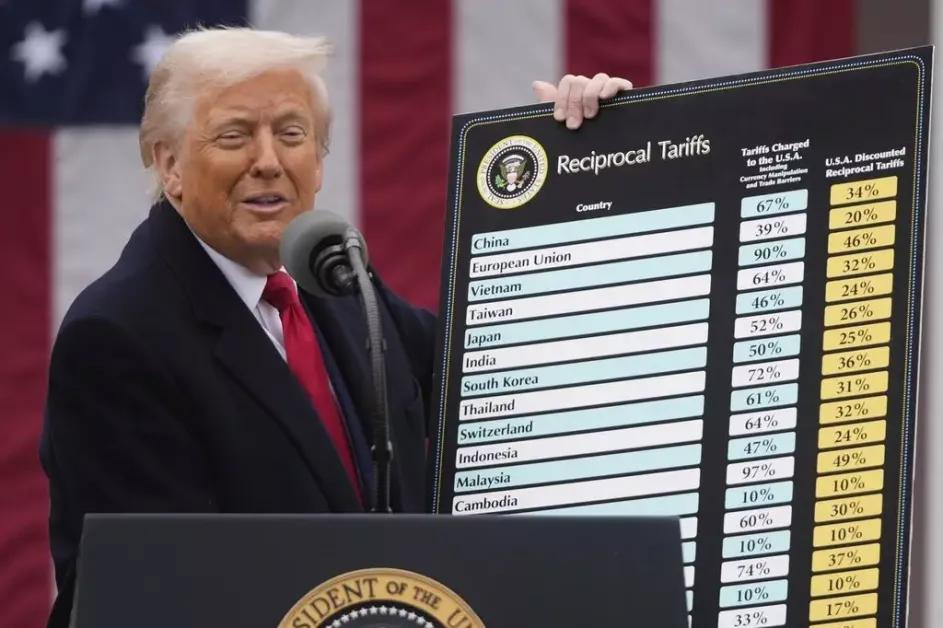
Former US President Donald Trump has issued a stark warning that the United States may need to “unwind” key trade agreements if the Supreme Court rules against his controversial tariff policies. The statement underscores both the high stakes of ongoing legal challenges and the potential for significant disruption to America’s global trade commitments.
Trump’s Warning
In remarks delivered during a recent policy discussion, Trump reiterated his long-standing belief that tariffs are essential tools for protecting American industries and ensuring fair competition. He argued that if the Supreme Court overturns his policies, it could strip future presidents of critical leverage in trade negotiations.
“If the Court rules against us, the United States may have no choice but to unwind certain trade deals,” Trump said. “We cannot stay in agreements that disadvantage American workers if we’re not allowed to enforce fairness through tariffs.”
The Legal Challenge
At the center of the controversy is a legal battle over whether Trump’s use of executive authority to impose sweeping tariffs exceeded constitutional limits. Critics claim his approach bypassed Congress and destabilized global markets, while supporters maintain that the president has broad powers to act in matters of national economic security.
The Supreme Court’s ruling, expected later this year, could redefine the scope of presidential authority on trade. A decision against Trump’s tariff framework would likely limit future administrations’ ability to impose similar measures without legislative approval.
Trade Deals at Risk
Trump’s warning has cast uncertainty over several major agreements, including the United States–Mexico–Canada Agreement (USMCA) and deals with Asian and European partners. While he did not specify which pacts could be targeted, analysts say any deal perceived as limiting Washington’s flexibility on tariffs could be vulnerable.
This stance reflects Trump’s broader skepticism of multilateral agreements, which he has often described as “unfair” or “disastrous” for US workers. The threat of unwinding deals highlights the potential for renewed turbulence in global trade relations.
Economic Implications
If Trump were to follow through on his warning, the economic consequences could be profound. Unwinding trade deals would disrupt supply chains, raise costs for consumers, and create uncertainty for businesses that depend on international markets.
Proponents argue that tough measures are necessary to protect domestic industries from foreign competition and predatory trade practices, especially from China. Critics, however, caution that pulling out of agreements could weaken the US economy, harm exporters, and erode American leadership in global trade.
Political Dimensions
Trump’s warning also carries clear political undertones. With trade policy central to his populist message, he continues to frame tariffs as a matter of national sovereignty and worker protection. By linking the Supreme Court decision to broader trade commitments, Trump positions himself as the defender of American independence against both global institutions and domestic legal constraints.
This strategy may resonate with voters who believe past trade deals have hollowed out American manufacturing, even as it alarms allies and trading partners who rely on US commitments for stability.
Expert Reactions
Trade experts note that Trump’s rhetoric may be partly strategic—intended to pressure both the Supreme Court and Congress. Some argue that his warning reflects more of a political signal than a concrete plan, since unwinding established trade agreements would require complex legal and diplomatic maneuvers.
Still, even the threat of withdrawal could unsettle markets and raise doubts about the future of international trade frameworks. Investors, exporters, and policymakers are now watching the Supreme Court case closely for clues about the direction of US trade policy.
Looking Ahead
As the Supreme Court prepares to rule, the possibility of a dramatic shift in US trade relations looms. If Trump’s tariff policies are upheld, it would solidify presidential authority in trade matters for future administrations. If they are struck down, the United States could face both legal and political battles over how to balance congressional power, executive authority, and international commitments.
Either outcome will shape the future of American trade for years to come.
Trump’s warning that the US may need to “unwind” trade deals if the Supreme Court rules against his tariff policies highlights the intersection of law, politics, and economics in shaping America’s global role. Whether viewed as a genuine threat or political posturing, the statement reflects the deep divisions surrounding trade policy and the future of American economic strategy.
The coming months will determine not only the fate of Trump’s tariffs but also the broader direction of US trade relations in an increasingly competitive world.
 Related News
POST A COMMENT (0)
All Comments (0)
Replies (0)