





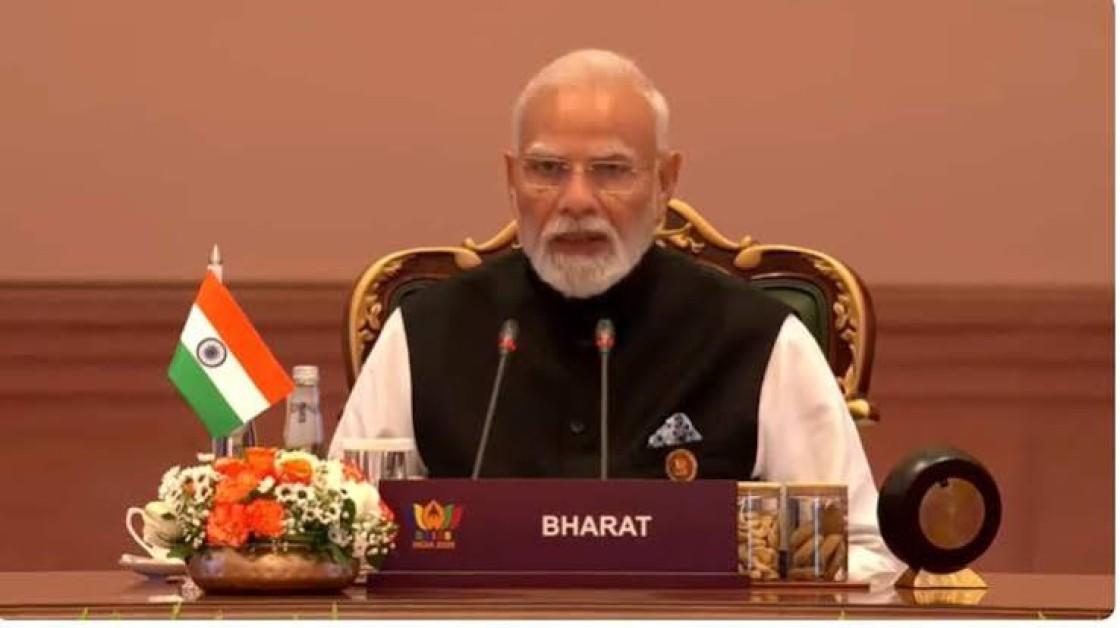
Modi and Xi Push for Stronger India-China Business Links and Improved Mobility at New Delhi Talks
Prime Minister Narendra Modi and Chinese President Xi Jinping agreed to deepen economic engagement, improve cross-border mobility and strengthen business-to-business cooperation during bilateral talks held in New Delhi on the sidelines of the BRICS Summit, marking another step in the gradual stabilisation of India-China relations after years of border tensions.
The meeting focused on expanding practical cooperation in areas including trade, investment, manufacturing, tourism, education, visas and direct connectivity, while reaffirming the importance of maintaining peace and stability along the Line of Actual Control (LAC).
Both leaders also discussed measures to improve the overall business environment for companies operating in each other's markets, signalling a renewed emphasis on economic engagement despite continuing strategic differences.
The talks represent one of the highest-level bilateral engagements between the two countries since efforts began to restore diplomatic momentum following the easing of military tensions along the border.
Modi and Xi Hold Bilateral Talks in New Delhi

The meeting took place in New Delhi during the BRICS Summit, bringing together the leaders of Asia's two largest economies.
The discussions covered the current state of bilateral relations and reviewed progress made since previous diplomatic engagements aimed at rebuilding communication channels.
Both sides emphasised the importance of maintaining regular dialogue and expanding cooperation in areas where mutual economic interests align.
The meeting also highlighted the role of BRICS as a platform for broader engagement among emerging economies.
Business Cooperation Becomes a Key Priority
Economic cooperation emerged as one of the central themes of the talks.
India and China discussed strengthening commercial engagement by encouraging greater interaction between businesses, investors and industry associations.
The leaders agreed that stronger business ties could contribute to expanding bilateral trade while creating new opportunities in sectors where both countries have complementary capabilities.
The emphasis was on improving the overall ecosystem for commercial engagement rather than announcing a single investment package.
Focus on Improving Cross-Border Mobility
A major outcome of the discussions was the commitment to improve people-to-people mobility.
Both countries agreed to work toward making travel easier for:
-
business executives
-
students
-
tourists
-
researchers
-
professionals
-
cultural delegations
Improved mobility is expected to support trade, education partnerships and tourism while helping businesses operate more efficiently across both markets.
The issue has become increasingly important as travel restrictions and visa processes tightened in recent years.
Visa Facilitation Discussed for Business and Tourism
The two leaders reviewed ongoing efforts to simplify visa procedures.
Business travel has been one of the areas most affected since bilateral tensions escalated several years ago.
Easier visa processing could help companies restore executive travel, supplier visits, manufacturing partnerships and investment discussions.
Tourism and educational exchanges were also discussed as areas where improved mobility could rebuild broader engagement between the two countries.
Direct Connectivity Returns to the Agenda
India and China also discussed improving connectivity between the two countries.
The conversation included the possibility of restoring or expanding direct transport links that facilitate commercial and passenger movement.
Improved connectivity could reduce travel time for business travellers while supporting tourism and academic exchanges.
Any operational decisions would require implementation through relevant regulatory and aviation authorities.
Trade Relationship Remains Economically Significant
India and China remain major trading partners despite geopolitical tensions.
Bilateral trade spans sectors including:
-
electronics
-
machinery
-
pharmaceuticals
-
chemicals
-
automotive components
-
renewable-energy equipment
-
industrial goods
-
consumer products
The discussions acknowledged the importance of maintaining stable commercial engagement while addressing structural issues affecting market access and supply chains.
Manufacturing Cooperation Discussed
Manufacturing cooperation featured prominently during the talks.
Both sides explored opportunities for greater industrial collaboration, particularly where supply chains and production capabilities intersect.
The conversation reflected the growing importance of manufacturing within India's economic strategy as the country expands domestic production across multiple sectors.
Manufacturing partnerships remain subject to India's regulatory and national-security framework.
Investment Climate Reviewed
The leaders also discussed improving the investment environment.
Businesses from both countries have faced uncertainty in recent years because of tighter regulatory scrutiny and geopolitical developments.
The talks focused on creating more predictable conditions for legitimate commercial activity while maintaining each country's regulatory priorities.
No specific investment commitments were announced during the meeting.
Peace at the Border Remains Foundation for Progress
Prime Minister Modi reiterated that peace and stability along the Line of Actual Control remain essential for broader bilateral relations.
The leaders reviewed progress made through diplomatic and military dialogue aimed at reducing tensions in border areas.
Both sides acknowledged that maintaining stability creates a better environment for expanding cooperation in trade, investment and people-to-people exchanges.
Business Engagement Linked to Stable Relations
The discussions reflected a broader diplomatic approach in which economic engagement and border stability progress together.
While strategic differences remain, both governments signalled that practical cooperation can continue in areas where mutual interests exist.
Business links, mobility and commercial exchanges are being treated as important components of rebuilding confidence between the two countries.
Education and Academic Exchanges Receive Attention
Educational cooperation was identified as another area for renewed engagement.
Both countries discussed encouraging greater exchanges involving:
-
universities
-
researchers
-
students
-
academic institutions
Academic mobility can support scientific collaboration, language education and research partnerships across multiple disciplines.
Tourism Seen as Confidence-Building Measure
Tourism was also highlighted during the meeting.
Improving travel arrangements and connectivity could help revive visitor flows between India and China after several years of disruption.
Tourism is viewed as both an economic opportunity and a way to strengthen people-to-people connections beyond official diplomatic engagement.
BRICS Summit Provides Diplomatic Platform
The bilateral meeting took place alongside the BRICS Summit, providing an opportunity for both leaders to engage while participating in a broader multilateral forum.
BRICS continues to serve as an important platform for discussions on trade, development finance, technology, global governance and cooperation among emerging economies.
The sidelines of the summit also allowed India and China to review bilateral issues within a wider geopolitical context.
Economic Cooperation Does Not Remove Strategic Differences
The discussions underscored that improving business relations does not automatically resolve all strategic issues.
India and China continue to have differences related to border management, security and regional geopolitics.
The latest engagement instead reflects an effort to expand cooperation where progress is possible while continuing dialogue on more complex issues through established diplomatic mechanisms.
Businesses Watch for Practical Policy Changes
The business community will now watch for implementation measures following the talks.
Areas attracting attention include:
-
visa facilitation
-
restoration of connectivity
-
regulatory engagement
-
business delegation exchanges
-
trade facilitation initiatives
Concrete policy actions in these areas could have a more immediate impact on companies operating across India and China.
Conclusion
Prime Minister Narendra Modi and Chinese President Xi Jinping used their New Delhi meeting to reinforce a shared commitment to expanding India-China business engagement, improving cross-border mobility and strengthening practical economic cooperation while continuing dialogue on broader bilateral issues.
The talks placed particular emphasis on trade, investment, manufacturing, tourism, education and easier movement of business professionals and students, signalling an effort to gradually rebuild commercial confidence between Asia's two largest economies.
At the same time, both leaders reaffirmed that maintaining peace and stability along the Line of Actual Control remains the foundation for broader progress in bilateral relations.
While no major commercial agreements were announced, the meeting indicates a renewed focus on creating conditions for stronger business-to-business engagement and greater people-to-people connectivity as India and China seek a more stable and pragmatic economic relationship.
 Modi and Xi Push Stronger India-China Business Ties and Mobility at New Delhi Talks FAQs
POST A COMMENT (0)
All Comments (0)
Replies (0)