




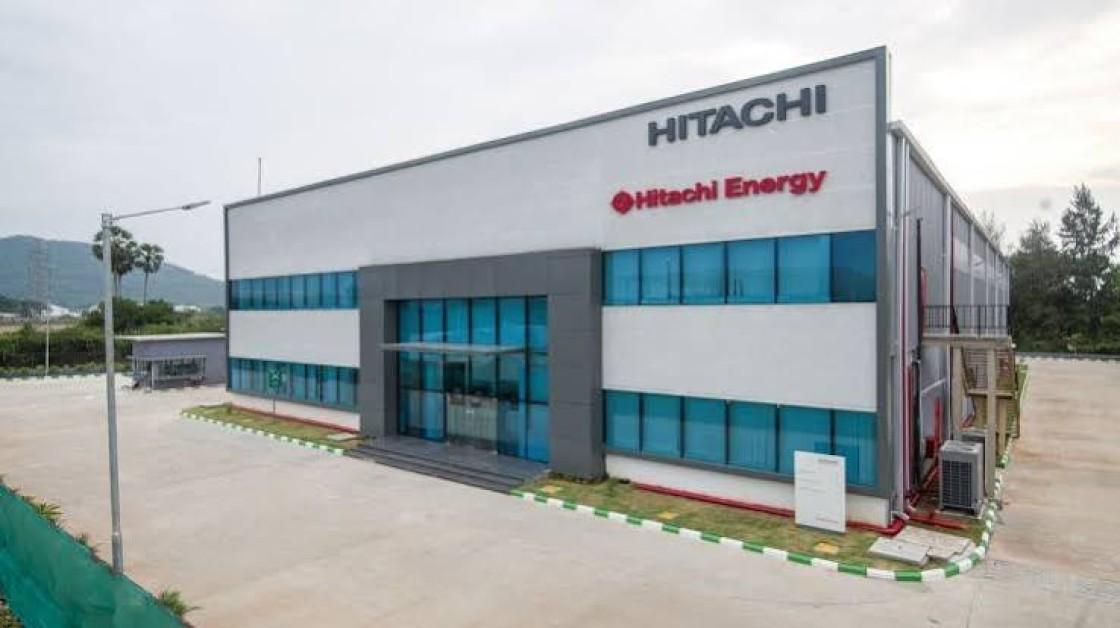
Hitachi Energy India Q2 FY27 Results on November 12 Put Grid Modernisation, Power Equipment Demand and Order Inflows in Focus
Bengaluru, November 12, 2026: Hitachi Energy India Limited is scheduled to announce its financial results for the quarter and half-year ended September 30, 2026, with investors closely monitoring power equipment demand, electricity grid modernisation, order inflows, project execution and operating profitability.
The Bengaluru-headquartered power technology company has scheduled a meeting of its board of directors for Thursday, November 12, to consider and approve its unaudited financial results.
The announcement follows a strong opening quarter for FY2026–27, during which Hitachi Energy India reported revenue growth of 68.6% and a 123.5% increase in profit after tax.
The company also reported its highest-ever order backlog of approximately ₹32,222 crore at the end of June 2026.
The substantial backlog reflects demand for high-voltage transmission equipment, transformers, grid integration systems and other electricity infrastructure technologies.
Investors will assess whether the company has maintained its order momentum while converting existing contracts into revenue.
The September-quarter results will also provide an indication of how India's electricity infrastructure investment cycle is influencing equipment manufacturers.
Demand associated with renewable energy integration, industrial electrification, data centres and grid expansion remains central to the company's business outlook.
Hitachi Energy India Board Meeting Scheduled for November 12

Hitachi Energy India informed the National Stock Exchange and BSE on November 2, 2026, that its board would meet on November 12.
The meeting will consider and approve the company's unaudited financial results for the second quarter and half-year ended September 30, 2026.
The company has also scheduled an investor and analyst conference call for the same day.
The conference call will take place between 6:00 p.m. and 7:00 p.m. IST.
Managing Director and Chief Executive Officer N Venu and Chief Financial Officer Ajay Singh are among the scheduled management participants.
The discussion is expected to address financial performance, operational developments and the company's business outlook.
Until the official results are disclosed, the September-quarter revenue and profit figures should not be treated as confirmed.
Hitachi Energy India Q2 FY27: Key Indicators to Watch
| Indicator | Q1 FY27 Benchmark | Investor Focus |
|---|---|---|
| Revenue from operations | ₹2,493.7 crore | Project execution and sales growth |
| Profit after tax | ₹294.2 crore | Earnings performance |
| Profit before tax | ₹389.5 crore | Underlying profitability |
| Operational EBITDA | ₹399.9 crore | Operating earnings |
| Operational EBITDA margin | 16.0% | Margin sustainability |
| Order inflows | ₹5,096.5 crore | New business momentum |
| Outstanding order backlog | ₹32,222.1 crore | Future revenue visibility |
| Export share of qualifying orders | 33.6% | International demand |
| Battery storage order | 165 MW / 330 MWh | Energy storage opportunities |
The figures represent the company's previously reported June-quarter performance and provide a benchmark for assessing the September-quarter announcement.
Q1 FY27 Revenue Increased 68.6% to ₹2,493.7 Crore
Hitachi Energy India reported revenue from operations of approximately ₹2,493.7 crore during the quarter ended June 30, 2026.
This compared with ₹1,478.9 crore in the corresponding quarter of the previous financial year.
The increase represented year-on-year growth of 68.6%.
The company attributed the performance to strong execution of its existing order backlog across business activities.
Revenue growth in the power equipment industry depends on the timing of manufacturing deliveries, project milestones and customer acceptance.
Large transmission projects can involve multiple phases of engineering, manufacturing and commissioning.
Consequently, quarterly revenue may fluctuate according to execution schedules.
Investors will examine whether the September-quarter results demonstrate continued growth in project deliveries.
The relationship between revenue growth and operating profitability will also be important.
Net Profit More Than Doubled in June Quarter
Hitachi Energy India reported profit after tax of approximately ₹294.2 crore during Q1 FY27.
This compared with approximately ₹131.6 crore in Q1 FY26.
The increase represented growth of 123.5%.
Profit before tax increased 120.2% to approximately ₹389.5 crore.
The improvement was supported by stronger revenue, operational efficiency and a favourable product mix.
The company also identified growing export contributions as a factor supporting profitability.
However, a strong opening quarter does not guarantee equivalent growth throughout the financial year.
The September-quarter results will show whether earnings momentum continued.
Investors will assess profitability alongside order execution, product mix and operating costs.
Operational EBITDA Margin Reached 16%
Hitachi Energy India reported operational EBITDA of approximately ₹399.9 crore during Q1 FY27.
The operational EBITDA margin stood at 16%.
Operational EBITDA is a company-defined performance measure that excludes specified items, including certain restructuring expenses, depreciation and foreign-exchange or commodity timing differences.
It should therefore be distinguished from statutory profit measures.
The margin reflected improved execution and a favourable mix of products and projects.
However, operating profitability can vary between quarters depending on the type of contracts executed.
High-voltage equipment, grid integration projects and service contracts may have different cost structures.
Investors will monitor whether the September-quarter results show stable margins.
The ability to maintain profitability while increasing revenue will be an important indicator of operating performance.
Order Inflows Reached ₹5,096.5 Crore in Q1 FY27
Hitachi Energy India reported orders worth approximately ₹5,096.5 crore during the June quarter.
The company stated that orders increased 26.1% year-on-year and 39.7% sequentially after excluding certain high-voltage direct current orders from the respective comparison periods.
The qualification is important because large HVDC contracts can create substantial fluctuations in quarterly order values.
Order inflows represent new business secured during a reporting period.
They provide information about future revenue opportunities but do not immediately translate into sales.
Execution may extend across several quarters or years.
Investors will examine whether the September-quarter order inflows indicate continued demand from utilities, industries, data centres and renewable energy developers.
Record ₹32,222 Crore Order Backlog Supports Revenue Visibility
Hitachi Energy India's outstanding order backlog reached approximately ₹32,222.1 crore at the end of June 2026.
The company described it as its highest-ever order backlog.
The figure provides substantial visibility into future manufacturing and project activity.
However, an order backlog represents contracted work that remains to be executed.
Revenue recognition depends on contractual terms, production milestones and delivery schedules.
The profitability of the backlog also depends on the type of projects and their associated costs.
Investors will therefore assess the quality of the order book alongside its size.
The September-quarter results will provide an opportunity to evaluate how effectively the company is converting existing contracts into revenue.
Grid Modernisation Remains a Major Business Opportunity
India's electricity network requires continued investment to support rising power demand and changing generation patterns.
Grid modernisation involves upgrading transmission equipment, substations, protection systems and control technologies.
These investments can improve network reliability and increase the capacity to transmit electricity.
Modern electricity networks must also accommodate power generated from renewable sources.
Hitachi Energy India supplies equipment and technologies used in power transmission and distribution systems.
Its portfolio includes transformers, high-voltage equipment and grid integration solutions.
Demand for these products is influenced by investment decisions made by utilities, transmission developers and industrial customers.
For Hitachi Energy India, grid modernisation remains an important long-term business opportunity.
High-Voltage Direct Current Technology Supports Transmission Expansion
High-voltage direct current, or HVDC, technology is used to transmit large quantities of electricity over long distances and for certain specialised grid connections.
HVDC systems can provide advantages in specific transmission applications, particularly where power must travel over substantial distances.
The technology involves converter stations, control systems and other specialised electrical equipment.
Large HVDC projects can be technically complex and capital-intensive.
Their execution requires engineering, manufacturing, installation and commissioning.
Hitachi Energy has established capabilities in HVDC technology.
For the Indian listed business, the timing and scope of awarded contracts determine their financial contribution.
Investors will monitor whether additional HVDC-related orders support the company's backlog.
Transformer Demand Reflects Electricity Infrastructure Investment
Power transformers are essential components of electricity transmission and distribution networks.
They change voltage levels to enable efficient transmission and safe distribution of electricity.
Growing electricity demand can require additional transformer capacity.
Network upgrades and renewable energy projects also create demand for transformer equipment.
Hitachi Energy India manufactures and supplies transformer technologies for different applications.
The company's manufacturing performance depends on materials, engineering capacity and production schedules.
Investors will monitor whether transformer-related demand remains strong during the September quarter.
The availability and cost of key inputs will also influence profitability.
Renewable Energy Integration Creates Grid Equipment Demand
India's expansion of solar and wind power generation is increasing the importance of grid integration.
Renewable electricity production can vary with weather conditions.
Transmission networks must therefore accommodate changing generation patterns while maintaining system stability.
Grid integration may require substations, transformers, reactive power compensation and control technologies.
Hitachi Energy India provides products and systems used in these applications.
The company's June-quarter order activity included demand for grid connection solutions and power-quality equipment.
Investors will assess whether renewable energy-related projects continue contributing to new orders.
However, renewable capacity announcements should not be treated as confirmed equipment contracts until procurement decisions are completed.
Battery Energy Storage Opens a New Growth Area
Hitachi Energy India reported securing its first battery energy storage system order during Q1 FY27.
The project involves a 165-megawatt, 330-megawatt-hour battery energy storage system in Andhra Pradesh.
Battery energy storage systems can absorb electricity when it is available and discharge it when required.
They can support grid flexibility and help manage fluctuations in electricity generation and demand.
The company's entry into this segment creates an additional opportunity beyond conventional transmission equipment.
However, battery storage projects involve specialised engineering, equipment integration and execution requirements.
Their profitability depends on contract terms and project costs.
Investors will monitor whether the company secures additional energy storage orders.
Data Centres Become an Important Source of Demand
Data centres require reliable electricity supplies to operate servers, networking equipment and cooling systems.
The expansion of cloud computing and artificial intelligence infrastructure is increasing attention on power requirements.
Large data centres may need dedicated substations, transformers, protection systems and power-quality equipment.
Hitachi Energy India reported that data centres contributed significantly to its June-quarter order activity.
The company also identified demand from industrial customers and renewable energy projects.
Data centre infrastructure therefore represents a potentially important source of future orders.
However, the financial contribution depends on confirmed contracts and their execution.
Investors will assess whether the September-quarter order mix shows continued demand from digital infrastructure customers.
Industrial Electrification Supports Equipment Sales
Manufacturing facilities and other industrial operations require electricity infrastructure to support production.
Industrial electrification can involve new substations, transformers, switchgear and power management systems.
Investment in factories and industrial facilities may therefore create demand for power equipment.
Hitachi Energy India serves industrial customers alongside utilities and transmission developers.
The company's June-quarter order inflows reflected demand from several customer categories.
Diversification across industries can reduce dependence on a single source of orders.
However, industrial investment cycles may vary according to economic conditions.
Investors will monitor whether industrial customers continue placing orders for grid equipment and services.
Exports Accounted for 33.6% of Qualifying Orders
International demand is an important part of Hitachi Energy India's business.
During Q1 FY27, export orders accounted for approximately 33.6% of total orders after excluding HVDC orders from the calculation.
The company reported receiving orders from Europe, North America and South Asia.
The orders covered grid integration and power-quality products.
Export demand can support manufacturing utilisation and provide access to additional markets.
However, international business also introduces currency, logistics and trade-related risks.
The profitability of export orders depends on product mix, contract terms and execution costs.
Investors will monitor whether export contributions continue supporting the company's order inflows and operating margins.
Manufacturing Capacity Expansion Supports Future Execution
Hitachi Energy India began construction of its 20th manufacturing unit at Karjan in Vadodara, Gujarat, during June 2026.
The expansion is intended to strengthen manufacturing capabilities and supply-chain resilience.
Additional production capacity can help companies respond to growing demand.
However, new facilities require investment in equipment, infrastructure and workforce capabilities.
The benefits depend on commissioning schedules and future utilisation.
For Hitachi Energy India, capacity expansion is important because a substantial order backlog requires consistent manufacturing execution.
Investors will monitor progress on the new facility and its expected contribution to production capacity.
Supply-Chain Management Remains Critical
Power equipment manufacturing requires specialised materials and components.
Transformers, high-voltage systems and other products may depend on copper, electrical steel, insulation materials and electronic components.
Changes in material costs can influence manufacturing margins.
Supply-chain disruptions may also affect delivery schedules.
Large infrastructure projects often involve contractual delivery commitments.
Consequently, equipment availability and procurement planning are important to execution.
Hitachi Energy India has identified supply-chain development as a priority.
Investors will assess whether the company can maintain delivery schedules while managing input-cost pressures.
Power Quality Equipment Gains Importance
Power quality refers to the characteristics of electricity supplied through a network.
Voltage fluctuations, harmonics and other disturbances can affect industrial equipment and electricity systems.
Power-quality technologies help utilities and industrial customers manage these conditions.
The increasing complexity of electricity networks can create demand for such equipment.
Hitachi Energy India reported power-quality products among the categories contributing to its June-quarter orders.
The business can benefit from grid modernisation and industrial electrification.
However, demand depends on customer investment and project requirements.
Investors will monitor whether power-quality equipment continues contributing to order growth.
Service Contracts Provide Additional Business Opportunities
Hitachi Energy India also receives orders for services associated with electricity infrastructure.
These may include maintenance, commissioning, equipment upgrades and lifecycle support.
The company reported service orders from utilities, distribution companies, industries and transport customers during Q1 FY27.
Service activities can provide business opportunities beyond the initial sale of equipment.
However, the timing and profitability of service revenue depend on contractual arrangements.
For investors, service orders may contribute to business diversification.
The September-quarter results will provide further information about overall operating performance, although individual service contributions may not be separately disclosed.
Working Capital Matters for Large Power Projects
Large electricity infrastructure contracts can require substantial working capital.
Manufacturers may need to procure materials and begin production before receiving all customer payments.
The timing of billing and collections depends on contract terms.
Inventory requirements can also increase as order execution accelerates.
For Hitachi Energy India, managing working capital is important because rapid revenue growth may require additional resources.
Investors will examine receivables, inventories and cash generation in the half-year financial statements.
Strong operating profitability is valuable, but sustainable growth also requires effective cash management.
India's Electricity Demand Supports Long-Term Investment
India's electricity demand is influenced by economic activity, industrial production, household consumption and infrastructure development.
Growth in electricity consumption can require investment in generation, transmission and distribution.
The integration of renewable energy adds further requirements for network flexibility.
Hitachi Energy India operates in several areas associated with these developments.
However, industry demand does not automatically translate into orders for an individual company.
Procurement decisions, competition and execution capacity influence contract awards.
Investors will therefore distinguish between the broader electricity investment opportunity and the company's confirmed order backlog.
Hitachi Energy India Shares Remain Sensitive to Earnings
Hitachi Energy India is listed on the National Stock Exchange under the symbol POWERINDIA and on the BSE under code 543187.
Its share price is influenced by order inflows, revenue growth, operating margins and investor expectations.
The company's strong June-quarter results and record backlog provide a financial benchmark.
However, equity valuations also depend on future earnings and the pace of order execution.
Changes in project schedules or operating costs may affect profitability.
Investors will assess the September-quarter results against the company's growth expectations.
A large order book provides visibility but does not eliminate execution or valuation risks.
Outlook for Hitachi Energy India in FY27
Hitachi Energy India enters the September-quarter earnings announcement with strong demand for grid equipment and a record order backlog.
The company reported substantial growth in revenue and profit during Q1 FY27.
Order inflows were supported by demand for HVDC, transformers, grid connection systems and power-quality equipment.
The company has also entered the battery energy storage segment and is expanding manufacturing capacity.
These developments provide opportunities for future growth.
However, execution remains central to financial performance.
The company must manage manufacturing schedules, supply-chain costs and project requirements.
The November 12 results will indicate whether the strong opening-quarter momentum continued into the second quarter.
Management commentary on order inflows, margins and capacity expansion will be important for assessing the remainder of FY27.
Conclusion
Hitachi Energy India Limited is scheduled to announce its Q2 FY27 financial results on November 12, with investors focused on grid modernisation, power equipment demand, order inflows and operating profitability.
The company enters the reporting event after recording June-quarter revenue growth of 68.6% to ₹2,493.7 crore and profit after tax growth of 123.5% to ₹294.2 crore.
Its order backlog reached a record ₹32,222.1 crore, providing substantial visibility into future project activity.
Demand from utilities, renewable energy developers, industries and data centres remains important to the company's growth outlook.
The company's first battery energy storage order and ongoing manufacturing expansion also demonstrate its efforts to participate in emerging electricity infrastructure opportunities.
However, sustained financial growth will depend on converting the order backlog into revenue while maintaining margins and managing working capital.
For investors, the September-quarter results will provide an important indication of how effectively Hitachi Energy India is responding to India's expanding electricity infrastructure requirements.
 Hitachi Energy India Q2 FY27 Results: Grid Orders, Revenue and Margins in Focus FAQs

POST A COMMENT (0)
All Comments (0)
Replies (0)