





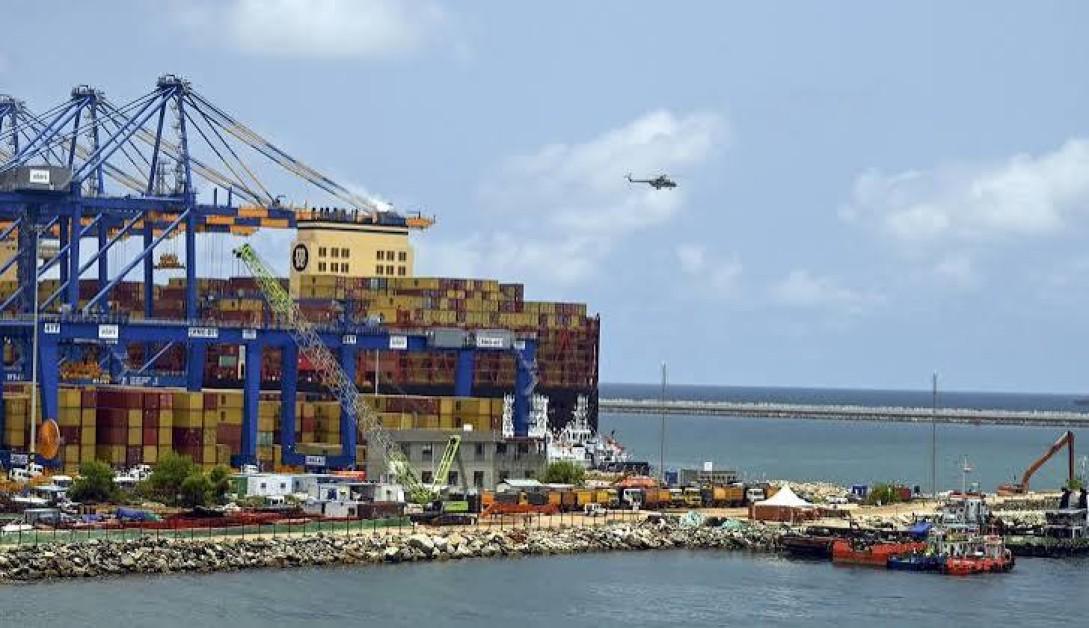
Vizhinjam International Seaport Starts Export-Import Cargo Operations From August 18
Vizhinjam International Seaport in Kerala commenced full export-import cargo operations on August 18, 2026, marking its transition from an international transshipment-focused facility into a broader gateway for direct Indian imports and exports. The launch allows cargo originating in or destined for India to move directly through Vizhinjam following the required customs approvals. The development significantly expands the commercial role of the deep-water port, which is strategically located close to major international shipping routes and has been designed to handle some of the world's largest container vessels. (The Times of India)
Vizhinjam Begins Full EXIM Operations

The commencement of gateway cargo services represents one of the most important operational milestones since commercial activity began at the port.
Direct Import and Export Cargo Can Now Move Through Vizhinjam
Vizhinjam had primarily functioned as an international container transshipment hub, handling containers transferred between large mainline vessels and feeder ships.
From August 18, the port can also process direct export and import cargo connected with Indian businesses.
This fundamentally expands its commercial role.
Exporters can send containers from the port directly into international shipping networks, while imported cargo can enter India through Vizhinjam and proceed through customs clearance and domestic logistics channels.
The change gives shipping lines another gateway option along India's southern coastline while creating additional logistics choices for exporters and importers in Kerala and neighbouring states. (ETInfra.com)
Kerala Marks Launch With First Cargo Movement
The commencement of EXIM services was formally marked on August 18 with the flagging off of initial cargo from the port.
The event also coincided with the announcement of Mission Samudra, Kerala's broader initiative associated with strengthening the state's maritime and logistics capabilities.
For Kerala, the operational expansion is strategically important because Vizhinjam can now contribute directly to international trade rather than functioning mainly as an intermediate transshipment location. (The Economic Times)
Customs Approval Cleared the Way for EXIM Operations
Gateway cargo operations required specific customs authorisation before they could begin.
CBIC Granted Final Approval
The Central Board of Indirect Taxes and Customs granted the required clearance for Vizhinjam to commence EXIM cargo operations from August 18.
Customs authorisation enables the port to process international cargo entering and leaving India.
It establishes the regulatory framework covering export documentation, import clearance, inspections and other customs procedures.
The approval was therefore essential before Vizhinjam could evolve from a transshipment facility into a full international cargo gateway. (Business Standard)
Initial Operations Carry Specific Conditions
The customs approval also includes operating conditions governing the handling of EXIM cargo.
One consideration is that the port currently does not have a designated Container Freight Station attached to it.
Container Freight Stations provide facilities where cargo can be consolidated, deconsolidated, inspected and cleared outside the main port terminal.
Until supporting logistics infrastructure develops further, authorities and the port operator will need to manage cargo flows within the approved arrangements.
The operating model can evolve as cargo volumes increase and surrounding logistics infrastructure expands. (Business Standard)
Vizhinjam Moves Beyond Transshipment Business
The new cargo capability creates a second major business pillar for the port.
Transshipment Remains Core Opportunity
Vizhinjam was developed primarily to capture container transshipment traffic.
Transshipment occurs when containers arriving on one vessel are transferred onto another ship before continuing to their final destination.
Historically, a meaningful portion of Indian container cargo has been transshipped through foreign hubs.
Developing domestic transshipment capacity can allow more of this activity to remain within Indian ports.
Vizhinjam's deep draught and location close to major global shipping routes give it structural advantages in competing for this traffic.
Gateway Cargo Creates Additional Revenue Stream
EXIM operations add a different type of business.
Instead of merely transferring containers between vessels, Vizhinjam can now directly serve Indian exporters and importers.
This creates revenue opportunities across terminal handling, storage and related logistics services.
It can also strengthen vessel economics.
A mainline ship calling at Vizhinjam can potentially handle both transshipment cargo and cargo originating from or destined for India.
Higher container volumes can make the port more commercially attractive to global shipping lines.
Location Gives Vizhinjam Strategic Advantage
Geography is one of the strongest elements of the port's commercial proposition.
Port Sits Close to International Shipping Routes
Vizhinjam is located near one of the world's major east-west maritime corridors.
Large container vessels travelling between Asia, Europe and the Middle East pass relatively close to India's southern coastline.
Ports located far from main shipping routes require vessels to make longer diversions.
Additional sailing consumes fuel and increases voyage time.
Vizhinjam's proximity can therefore reduce the deviation required for ships making port calls.
This is particularly relevant for very large container vessels operating on tightly scheduled global routes.
Natural Deep Water Supports Megamax Vessels
Vizhinjam also benefits from naturally deep water.
Deep draught allows ports to accommodate increasingly large container ships carrying tens of thousands of containers.
Adani Ports says the facility has been designed with infrastructure capable of handling Megamax container vessels. Phase 1 capacity is planned at around one million twenty-foot equivalent units, with substantial additional capacity envisaged through later phases. (Adani Ports)
South Indian Exporters Gain Another Gateway
Direct international cargo operations could become particularly relevant for businesses across southern India.
Kerala Exporters Gain Local International Port Option
Kerala exports products across sectors including seafood, food products, spices and manufactured goods.
A major international container port within the state can potentially simplify logistics for some exporters.
Instead of transporting containers longer distances to other gateway ports, businesses may be able to route suitable cargo through Vizhinjam.
The actual commercial advantage will depend on shipping connectivity, freight rates and inland transportation costs.
As additional global services call at the port, the range of destinations available to exporters could expand.
Tamil Nadu Businesses Could Also Use Vizhinjam
Vizhinjam's economic catchment is not limited to Kerala.
Southern Tamil Nadu lies within potential trucking distance of the port.
Manufacturers and exporters will compare Vizhinjam with existing ports according to total logistics cost and transit time.
Competition between ports can benefit cargo owners if it creates better service options and pricing.
Over time, improved road and rail connectivity could widen Vizhinjam's inland cargo catchment further.
Direct Mainline Connectivity Could Reduce Transshipment Dependence
One of the broader strategic objectives surrounding Vizhinjam is strengthening India's direct connection with global shipping networks.
Foreign Hubs Have Historically Handled Indian Cargo
Some Indian containers historically travelled first on feeder vessels to larger international transshipment hubs before being transferred onto mainline ships.
This process adds another handling stage.
Each additional movement can increase cost and transit time.
Domestic transshipment capacity provides an opportunity to retain more of that activity within India.
Vizhinjam's ability to attract major shipping lines is therefore strategically important beyond Kerala itself.
EXIM Cargo Makes Port More Attractive to Shipping Lines
Gateway cargo can strengthen the commercial case for mainline services.
Shipping companies want ports capable of generating sufficient container volumes.
Combining domestic import-export cargo with international transshipment traffic can create a larger overall cargo base.
As volumes increase, carriers may add more frequent services.
More services can then attract additional cargo.
This creates a network effect in which port traffic and shipping connectivity reinforce one another.
Port Automation Supports Faster Vessel Handling
Container shipping economics place significant emphasis on turnaround time.
Automated Systems Improve Terminal Productivity
Vizhinjam has been developed with extensive automation and modern container-handling systems.
Large vessels incur significant operating costs while sitting at berth.
Shipping companies therefore prefer terminals capable of loading and unloading containers efficiently.
Automated equipment can improve consistency and allow terminals to process large container volumes more rapidly.
Adani Ports positions Vizhinjam as a highly automated terminal designed for quick vessel turnaround. (Adani Ports)
Productivity Can Influence Shipping-Line Decisions
Global carriers compare ports using several operational metrics.
These include berth availability, crane productivity, turnaround time, reliability and total port costs.
Strong performance can encourage shipping lines to increase calls.
Poor reliability can have the opposite effect.
As Vizhinjam moves into full EXIM operations, maintaining high operational productivity will therefore become an important part of converting its infrastructure advantages into sustained cargo growth.
Road Connectivity Becomes Increasingly Important
Gateway cargo introduces much greater interaction between the port and inland logistics networks.
Containers Must Move Between Port and Businesses
Transshipment containers can remain within the port before being loaded onto another vessel.
EXIM cargo is different.
Export containers need to arrive from factories, warehouses and logistics centres.
Imported containers need to leave the terminal and travel inland.
This increases truck movements and makes road connectivity more important.
Highway links need sufficient capacity to prevent congestion as volumes expand.
Rail Connectivity Can Expand Catchment Area
Rail access could eventually become particularly valuable for cargo moving over longer distances.
Container trains can move large volumes more efficiently than road transport for certain routes.
Improved multimodal connectivity could allow Vizhinjam to compete for cargo originating farther away from Kerala.
That would increase its potential gateway market and provide inland manufacturers with another route to international shipping.
Vizhinjam Could Stimulate Logistics Investment
Ports often create commercial ecosystems extending well beyond terminal boundaries.
Warehousing Demand Could Increase
As direct import-export volumes rise, logistics companies may need additional warehousing near the port.
Facilities can be used to store goods before export or after import.
Distribution centres can also serve regional consumer markets.
This can create opportunities for industrial and logistics real-estate developers.
The scale of investment will depend on how quickly EXIM volumes grow.
Freight and Customs Businesses Can Expand
Gateway cargo creates demand for a range of specialist services.
Freight forwarders help companies organise international transportation.
Customs brokers assist businesses with documentation and clearance.
Transport companies move containers between terminals and inland destinations.
Inspection, storage and cargo-management services also become necessary.
The growth of these businesses can increase the wider economic impact of the port beyond employment at the terminal itself.
Kerala Targets Larger Maritime Economy
The EXIM launch supports Kerala's ambition to develop a broader maritime and logistics ecosystem.
Mission Samudra Signals Wider Strategy
The state announced Mission Samudra alongside the beginning of EXIM services.
The initiative places Vizhinjam within a broader strategy involving maritime activity and economic development rather than viewing the port as an isolated infrastructure asset. (The Times of India)
A major container port can support related industries ranging from logistics and warehousing to maritime services.
Developing these industries can increase the economic value generated by each unit of cargo moving through the port.
Port-Led Development Could Attract Industry
Manufacturers consider logistics costs when choosing factory locations.
Companies producing export-oriented goods can benefit from proximity to an efficient international port.
Import-dependent industries can similarly reduce inland transportation requirements.
If Vizhinjam develops extensive shipping connectivity, industrial areas within its economic catchment could become more attractive.
This could gradually encourage investment in manufacturing and distribution infrastructure.
Adani Ports Operates the Terminal
The project combines government ownership and oversight with private-sector development and operations.
Port Developed Through Public-Private Partnership
Vizhinjam International Seaport is a Government of Kerala project developed under a landlord model with a public-private partnership component.
The project follows a design, build, finance, operate and transfer structure. (Vizhinjam International Seaport)
Adani Vizhinjam Port Private Limited operates the container terminal.
The model combines public ownership of the strategic port asset with private capital and operating expertise.
Adani Gains Strategic Transshipment Asset
For Adani Ports and Special Economic Zone, Vizhinjam strengthens an already extensive Indian port portfolio.
The facility differs from many traditional gateway ports because of its particular focus on international container transshipment.
Adding EXIM cargo increases the addressable market.
If Vizhinjam captures both domestic gateway volumes and international transshipment activity, it could become a strategically important component of Adani Ports' container business.
Competition Between Indian Ports Will Intensify
Vizhinjam enters an established network of container gateways.
Existing Ports Already Serve South India
Southern India has major container ports including Chennai, Kamarajar, VOC Port and Cochin.
Private terminals also compete for shipping-line services and cargo.
Exporters make routing decisions based on freight rates, shipping schedules, inland transportation and reliability.
Vizhinjam will therefore need to compete commercially rather than relying only on its physical advantages.
Competition Can Improve Logistics Efficiency
More port capacity can benefit businesses when it encourages operators to improve productivity and pricing.
Shipping lines also gain additional routing options.
Over time, ports may specialise according to geography, vessel size and cargo type.
Vizhinjam's deep-water transshipment capability gives it a differentiated position.
Its new EXIM operations now allow it to compete more directly for Indian gateway cargo as well.
India Wants Greater Share of Global Container Activity
Vizhinjam fits into a broader national push to modernise maritime infrastructure.
Large Ports Can Lower Logistics Friction
Efficient ports shorten cargo dwell times and improve supply-chain reliability.
These factors directly affect exporters.
A manufacturer competing internationally needs confidence that products will reach customers on schedule.
Port congestion or inefficient handling can reduce competitiveness even when factory production itself is efficient.
Modern terminals therefore form an important component of industrial policy.
Domestic Transshipment Has Strategic Value
Reducing dependence on overseas transshipment hubs can retain more shipping-related economic activity inside India.
It can also improve supply-chain resilience.
When containers pass through foreign hubs, Indian cargo becomes dependent on capacity and operational conditions outside the country.
Domestic alternatives provide additional routing flexibility.
Vizhinjam's location and deep-water characteristics make it an important part of this strategy.
EXIM Operations Will Test Commercial Execution
Infrastructure advantages alone will not determine the port's long-term success.
Cargo Volumes Need to Scale
The new services need to attract consistent export and import volumes.
Shipping lines evaluate cargo availability when determining vessel schedules.
Low volumes can make direct calls less economical.
Vizhinjam therefore needs relationships with exporters, importers, freight forwarders and shipping companies.
Building these commercial networks can take time even after physical infrastructure is completed.
Service Reliability Will Determine Customer Retention
Businesses can switch ports when another gateway offers better reliability or pricing.
Vizhinjam must therefore deliver consistent customs processing, terminal handling and inland connectivity.
Successful initial operations can encourage more customers to test the port.
Repeated positive experiences can convert trial shipments into regular cargo flows.
This commercial execution will ultimately determine whether Vizhinjam becomes a major Indian gateway rather than remaining primarily a transshipment facility.
Conclusion
Vizhinjam International Seaport commencing export-import cargo operations on August 18, 2026, represents a major expansion of the Kerala port's role in India's maritime economy.
The facility can now directly handle Indian imports and exports alongside its international transshipment operations after receiving the required customs clearance. Its deep-water harbour, proximity to major global shipping routes and modern automated terminal infrastructure provide strong structural advantages.
For Kerala and neighbouring southern states, the new gateway offers an additional route into global container networks and could stimulate investment across trucking, warehousing, freight forwarding and industrial logistics.
The longer-term opportunity is considerably larger than the first cargo movements. If Vizhinjam can combine strong EXIM volumes with its existing transshipment business and attract regular mainline vessel services, it could develop into one of India's most strategically important international container gateways.
 Vizhinjam Port Begins Full EXIM Cargo Operations in Kerala FAQs
POST A COMMENT (0)
All Comments (0)
Replies (0)