





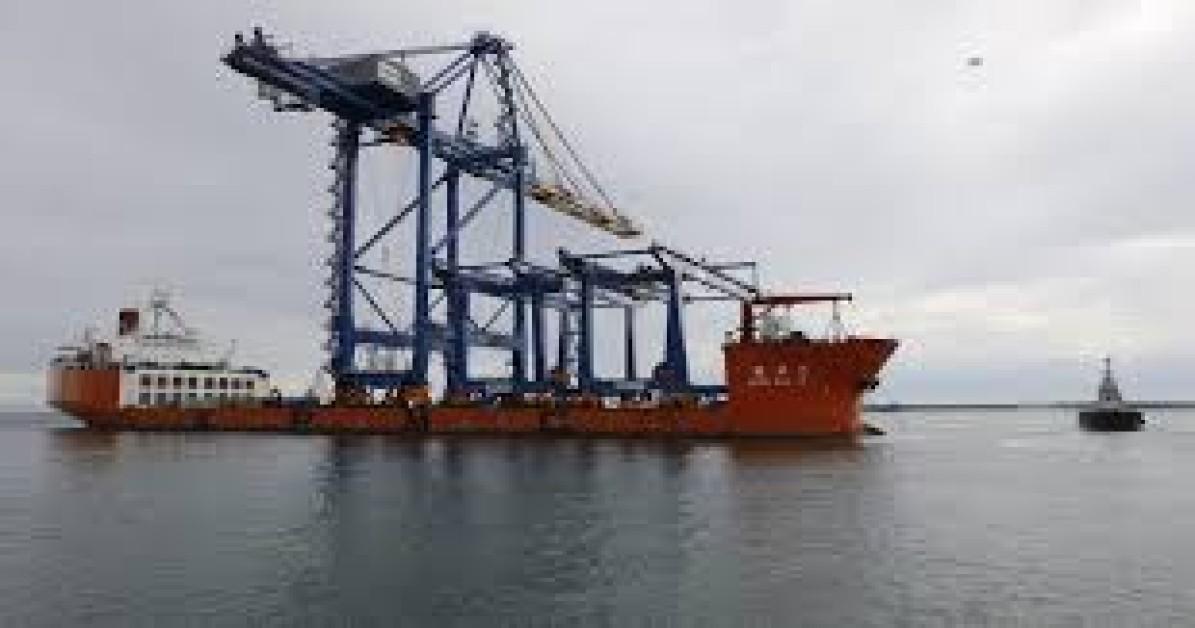
Vizhinjam International Seaport Gets Customs Approval to Begin EXIM Operations From August 18
Vizhinjam International Seaport has secured Customs approval to commence export-import operations from August 18, marking another significant step in the development of India's first dedicated deepwater container transshipment port.
The approval enables Vizhinjam to handle domestic export and import cargo directly in addition to its rapidly expanding transshipment operations, broadening the port's commercial role within India's maritime logistics network.
For Indian exporters and importers, direct EXIM handling at Vizhinjam could create another gateway for international container trade while strengthening the country's efforts to retain more cargo within domestic ports.
EXIM Operations Set to Begin From August 18

Customs authorities have cleared Vizhinjam International Seaport to begin EXIM cargo operations from August 18.
EXIM operations involve cargo moving directly between Indian businesses and international markets.
This expands Vizhinjam's role beyond container transshipment, where containers are transferred between large mainline vessels and smaller feeder ships.
The development allows the port to serve two major functions:
-
International transshipment
-
Direct Indian export-import cargo
Combining these activities could significantly strengthen Vizhinjam's long-term commercial potential.
Customs Approval Is a Critical Operational Milestone
International cargo cannot move through a port solely because physical infrastructure is available.
Customs systems and procedures are required for:
-
Cargo declarations
-
Import clearance
-
Export documentation
-
Duty assessment
-
Cargo examination
-
Compliance verification
Receiving approval therefore creates the regulatory foundation needed for Vizhinjam to function as a full-fledged international trade gateway.
Vizhinjam Has Strategic Geographic Advantage
Vizhinjam's location near major east-west international shipping routes is one of its strongest competitive advantages.
Large container vessels travelling between Asia, Europe and the Middle East pass relatively close to India's southern coastline.
This reduces the deviation required for ships calling at the port.
For shipping lines, shorter deviations can potentially reduce:
-
Fuel consumption
-
Voyage time
-
Operating costs
-
Schedule disruption
Geography therefore gives Vizhinjam a natural advantage in competing for transshipment traffic.
Deep Draft Supports Large Container Ships
Vizhinjam has been developed as a deepwater port capable of accommodating some of the world's largest container vessels.
Modern shipping lines increasingly deploy ultra-large container ships on major international routes.
Such vessels require substantial water depth and specialised infrastructure.
Vizhinjam's natural depth reduces the need for extensive recurring dredging compared with ports facing greater sedimentation challenges.
This can potentially improve long-term operating economics.
EXIM Cargo Adds New Revenue Opportunity
Direct export-import handling creates additional revenue opportunities for the port.
Port income can be generated through services such as:
-
Container handling
-
Vessel services
-
Storage
-
Terminal operations
-
Logistics
-
Cargo movement
A combination of transshipment and EXIM traffic can provide a broader commercial base than dependence on a single cargo category.
Kerala Exporters Could Gain New Gateway
Businesses in Kerala and surrounding regions could benefit from direct access to an international container terminal.
Potential export sectors include:
-
Seafood
-
Spices
-
Food products
-
Rubber products
-
Engineering goods
-
Textiles
-
Manufactured products
The economic benefit will depend on shipping connectivity, freight rates and the efficiency of inland logistics connecting businesses with the port.
Importers Could Also Benefit
Vizhinjam can serve importers bringing goods into southern India.
Direct port access could potentially reduce the distance cargo needs to travel after arriving in the country.
Import categories could include:
-
Industrial components
-
Machinery
-
Consumer goods
-
Raw materials
-
Electronics
-
Manufacturing inputs
Efficient port and customs processing will be important for translating geographic advantages into lower logistics costs.
India Wants to Retain More Transshipment Cargo
A major strategic objective behind Vizhinjam is reducing India's dependence on overseas transshipment hubs.
Historically, substantial volumes of Indian container cargo have been transshipped through foreign ports.
This can create additional:
-
Handling costs
-
Transit time
-
Foreign-exchange expenditure
-
Supply-chain complexity
Developing a globally competitive domestic transshipment hub could allow a larger portion of this activity to remain within India.
Colombo Is an Important Regional Competitor
Colombo has historically handled significant volumes of India-linked transshipment cargo because of its location and established shipping connectivity.
Vizhinjam's development creates a domestic alternative.
However, port competition depends on far more than physical infrastructure.
Shipping lines consider:
-
Port charges
-
Reliability
-
Vessel turnaround time
-
Network connectivity
-
Terminal productivity
-
Cargo volumes
Vizhinjam will therefore need sustained operational performance to build market share.
International Shipping Lines Are Critical
A major transshipment hub requires frequent calls from global container carriers.
Shipping lines design networks around ports capable of providing:
-
Large cargo volumes
-
Reliable schedules
-
Fast operations
-
Competitive costs
-
Feeder connections
As more mainline vessels call at Vizhinjam, the port can become more attractive to additional customers.
This can create a network effect in which higher traffic strengthens connectivity and improved connectivity attracts more cargo.
Adani Ports Plays Central Operating Role
Vizhinjam International Seaport is being developed under a public-private partnership involving the Kerala government and Adani Ports and Special Economic Zone.
Adani Ports brings experience operating a large network of Indian ports and logistics infrastructure.
Operational expertise will be particularly important as Vizhinjam scales from an emerging terminal into a larger international maritime hub.
Port-Led Logistics Could Expand Around Vizhinjam
Large ports can create economic ecosystems extending beyond terminal boundaries.
Potential development can include:
-
Warehousing
-
Container freight stations
-
Distribution centres
-
Trucking
-
Cold-chain facilities
-
Customs services
-
Shipping agencies
These activities can generate additional investment and employment around the port region.
Road Connectivity Will Matter
Efficient inland connectivity is essential for EXIM cargo.
Containers need to move quickly between the port and production or consumption centres.
Road infrastructure therefore becomes critical for:
-
Truck turnaround
-
Freight costs
-
Reliability
-
Congestion management
-
Last-mile connectivity
Without efficient inland transportation, some of the benefits of a modern port can be lost.
Rail Connectivity Could Expand the Catchment Area
Rail connections can significantly increase the geographic area served by a container port.
Efficient rail freight could allow Vizhinjam to compete for cargo originating far beyond Kerala.
Potential hinterland markets include parts of:
-
Tamil Nadu
-
Karnataka
-
Other southern regions
A larger catchment area would increase the pool of export-import cargo available to the terminal.
Manufacturing Could Benefit From Better Port Access
Reliable international shipping connectivity is an important consideration for manufacturers selecting production locations.
Industries with significant import and export requirements value:
-
Port proximity
-
Predictable transit
-
Competitive freight
-
Customs efficiency
-
Container availability
If Vizhinjam develops into a major shipping hub, it could strengthen southern India's attractiveness for export-oriented manufacturing.
Global Supply Chains Value Port Reliability
Businesses increasingly prioritise resilience alongside cost.
Recent global disruptions have demonstrated how port congestion and shipping interruptions can affect manufacturing and retail supply chains.
A larger network of capable Indian ports can provide businesses with more routing options.
Vizhinjam therefore contributes to India's broader maritime resilience in addition to its commercial role.
Digital Customs Systems Will Be Important
Fast cargo clearance can become a significant competitive advantage.
Modern ports increasingly rely on digital systems covering:
-
Cargo documentation
-
Customs declarations
-
Container tracking
-
Gate management
-
Payments
-
Vessel planning
Reducing manual processes can improve turnaround times and provide greater visibility to exporters and importers.
Port Productivity Will Determine Competitiveness
Physical infrastructure alone does not guarantee success.
The terminal will need to demonstrate high productivity across metrics such as:
-
Crane moves per hour
-
Vessel turnaround
-
Berth utilisation
-
Container dwell time
-
Gate turnaround
Shipping companies can quickly shift cargo between competing ports if service quality deteriorates.
Operational discipline will therefore remain essential.
Larger Vessels Can Improve Shipping Economics
Ultra-large container vessels can reduce the transportation cost per container when operated efficiently.
Ports capable of handling these ships can therefore become important nodes within global shipping networks.
Vizhinjam's deepwater characteristics position it to participate directly in these mainline routes rather than depending entirely on smaller feeder vessels.
India’s Maritime Ambitions Continue to Expand
India is investing heavily in ports, logistics corridors and maritime infrastructure as it seeks to increase manufacturing and international trade.
Efficient ports can contribute to:
-
Lower logistics costs
-
Faster exports
-
Manufacturing competitiveness
-
Foreign investment
-
Supply-chain resilience
Vizhinjam represents one of the most strategically significant projects within this broader maritime infrastructure push.
What Businesses Should Watch
The start of EXIM operations puts several indicators in focus:
-
Direct export-import container volumes
-
Mainline vessel calls
-
Transshipment volumes
-
Customs clearance times
-
Port charges
-
Vessel turnaround
-
Road connectivity
-
Rail connectivity
-
Shipping-line additions
-
Logistics investment
These factors will determine how quickly Vizhinjam develops from a major transshipment terminal into a broader international trade gateway.
Outlook
Customs approval for EXIM operations represents an important new phase for Vizhinjam International Seaport.
The port already possesses significant advantages through its deep draft and proximity to major international shipping routes.
Adding direct export-import cargo could increase volumes, broaden revenue opportunities and strengthen the terminal's integration with India's domestic economy.
The long-term opportunity is substantial, but success will depend on competitive pricing, efficient customs processing, inland connectivity and sustained participation from global shipping lines.
Conclusion
Vizhinjam International Seaport's Customs approval to begin EXIM operations from August 18 marks a major step in the port's transition into a comprehensive international container gateway.
The ability to handle direct Indian exports and imports alongside transshipment cargo expands its commercial role and could provide businesses across southern India with improved access to global shipping networks.
Vizhinjam's deepwater characteristics and strategic location give it significant structural advantages, but building a major maritime hub will require strong operational performance and efficient hinterland connectivity.
If the port succeeds in combining substantial transshipment traffic with growing domestic EXIM volumes, it could play an increasingly important role in India's efforts to lower logistics costs, retain maritime business and strengthen its position within global supply chains.
 Vizhinjam International Seaport Gets Customs Approval to Start EXIM Operations From August 18 FAQs
POST A COMMENT (0)
All Comments (0)
Replies (0)