




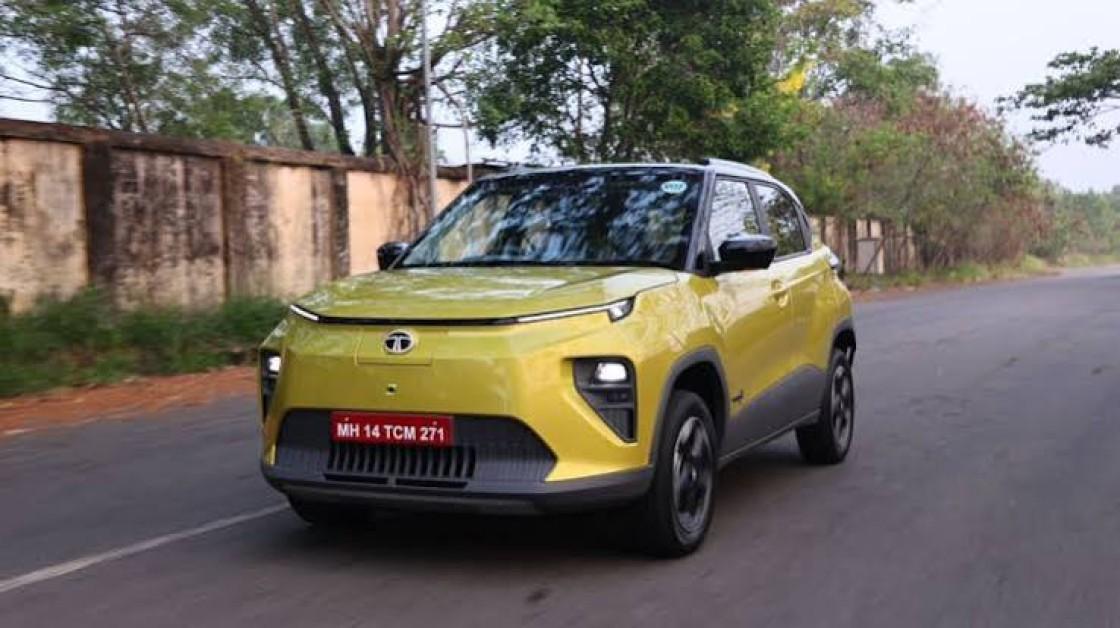
Tata Motors Passenger Vehicles' Q2 FY27 Results Announcement Brings Domestic Car Sales, Electric Vehicles and Jaguar Land Rover Performance Into Focus
Mumbai, November 13, 2026: Tata Motors Passenger Vehicles Limited is set to announce its financial results for the second quarter of fiscal year 2026–27 on Friday, November 13, placing domestic passenger vehicle growth, electric vehicle sales and Jaguar Land Rover's global financial performance at the centre of investor attention.
The announcement follows a record September quarter for Tata Motors' domestic passenger vehicle business, which reported total sales of 201,723 vehicles, representing 40% year-on-year growth.
Electric vehicle sales increased 90% to 47,150 units, while combined electric and compressed natural gas (CNG) vehicles accounted for 51% of the company's passenger vehicle volumes.
The strong domestic performance provides a positive operating backdrop for the earnings announcement.
However, the consolidated financial results will also reflect Jaguar Land Rover, whose profitability, wholesale volumes and international market conditions remain important to the group's overall earnings.
The company has scheduled an investor and analyst conference call for 6:30 p.m. IST, with senior executives from Tata Motors Passenger Vehicles and Jaguar Land Rover expected to discuss the quarter's performance.
Investors will examine whether higher domestic sales translated into stronger operating margins and whether Jaguar Land Rover's performance supported or constrained consolidated profitability.
Tata Motors Passenger Vehicles Confirms November 13 Earnings Announcement

Tata Motors Passenger Vehicles has confirmed that its results for the quarter ended September 30, 2026, will be released on November 13.
The company will host a joint investor conference call with Jaguar Land Rover management.
The call is scheduled to begin at 6:30 p.m. IST and continue until approximately 7:45 p.m.
The management team is expected to include Tata Motors Passenger Vehicles Managing Director and Chief Executive Officer Shailesh Chandra, Jaguar Land Rover Chief Executive Officer P. B. Balaji, Tata Motors Passenger Vehicles Chief Financial Officer Dhiman Gupta and Jaguar Land Rover Chief Financial Officer Richard Molyneux.
The presentation will cover consolidated performance, domestic passenger vehicle operations and Jaguar Land Rover.
JLR will not conduct a separate earnings conference call for the quarter.
The combined discussion will therefore be important for understanding the performance of the group's Indian and international automotive businesses.
Tata Motors Passenger Vehicles Q2 FY27: Key Details
| Indicator | Details |
|---|---|
| Company | Tata Motors Passenger Vehicles Limited |
| Reporting period | July–September 2026 |
| Financial year | FY2026–27 |
| Results announcement | November 13, 2026 |
| Investor conference call | November 13, 2026 |
| Conference call time | 6:30 p.m. IST |
| Domestic passenger vehicle sales | 201,723 units |
| Year-on-year passenger vehicle growth | 40% |
| Electric vehicle sales | 47,150 units |
| Year-on-year EV growth | 90% |
| EV share of Tata Motors PV sales | Approximately 23% |
| Combined EV and CNG share | 51% |
| International luxury vehicle business | Jaguar Land Rover |
| NSE symbol | TMPV |
The operational sales figures were announced before the earnings release and provide a reference point for evaluating the financial results.
Tata Motors Records Highest-Ever Quarterly Passenger Vehicle Sales
Tata Motors Passenger Vehicles reported sales of 201,723 vehicles during July–September 2026.
This compared with 144,397 vehicles in the corresponding quarter of FY26.
The increase represented approximately 40% year-on-year growth.
The company described the performance as its highest-ever quarterly passenger vehicle sales.
The figures include domestic and international passenger vehicle sales.
Domestic volumes reached 196,674 units, compared with 140,189 units a year earlier.
International passenger vehicle sales increased to 5,049 units from 4,208 units.
The results indicate strong demand across the company's vehicle portfolio.
However, sales growth must be evaluated alongside vehicle pricing, production costs and profitability.
Tata Motors Passenger Vehicle Sales: Q2 FY27 Performance
| Business Segment | Q2 FY27 | Q2 FY26 | Growth |
|---|---|---|---|
| Domestic passenger vehicles | 196,674 | 140,189 | 40% |
| International passenger vehicles | 5,049 | 4,208 | 20% |
| Total passenger vehicles | 201,723 | 144,397 | 40% |
| Electric vehicles, domestic and international | 47,150 | 24,855 | 90% |
The figures demonstrate the scale of growth in Tata Motors' Indian passenger vehicle operations during the September quarter.
September Sales Cross 70,000 Vehicles
Tata Motors Passenger Vehicles reported total sales of 70,210 units in September 2026.
This compared with 60,907 units in September 2025.
The increase represented approximately 15% year-on-year growth.
Domestic passenger vehicle sales reached 68,810 units, also rising approximately 15%.
The company crossed the 70,000-unit monthly sales milestone for the first time.
The September performance followed strong sales during July and August.
However, monthly sales can be influenced by dealership inventory, festive demand and shipment schedules.
Investors will therefore examine whether the September sales momentum continued into the subsequent quarter.
Electric Vehicle Sales Surge 90% to 47,150 Units
Electric vehicles were among the strongest contributors to Tata Motors Passenger Vehicles' September-quarter growth.
The company sold 47,150 electric vehicles during Q2 FY27.
This compared with 24,855 units in the corresponding period a year earlier.
The increase represented approximately 90% year-on-year growth.
Tata Motors described the quarter as its strongest-ever period for electric vehicle sales.
Electric vehicles accounted for approximately 23% of total passenger vehicle volumes.
The company said this was substantially above the broader industry's electric vehicle penetration of approximately 8%.
The performance demonstrates growing demand for Tata Motors' electric vehicle portfolio.
However, the contribution to profitability will depend on pricing, battery costs, manufacturing efficiency and product mix.
Tata Motors Strengthens Its Electric Vehicle Position
Tata Motors has developed a broad electric passenger vehicle portfolio in India.
Its electric models span several vehicle categories and price segments.
The company competes in the electric vehicle market through products including the Tiago EV, Punch EV, Nexon EV and Curvv EV.
A broader product portfolio allows Tata Motors to serve customers with different budgets and driving requirements.
However, competition in India's electric passenger vehicle market is increasing.
Manufacturers are introducing additional electric models and expanding charging-related services.
Tata Motors must therefore maintain product competitiveness while managing costs.
The September-quarter results will provide insight into whether higher electric vehicle volumes are improving operating economics.
Electric Vehicle Penetration Reaches 23%
Electric vehicles accounted for approximately 23% of Tata Motors Passenger Vehicles' sales during the September quarter.
This represents a significant increase in the contribution of battery-powered vehicles to the company's product mix.
The figure is particularly important because electric vehicles have different cost structures from conventional petrol and diesel vehicles.
Battery packs, power electronics and software are important components of electric vehicle production.
Their costs can influence profitability.
However, higher volumes may improve manufacturing efficiency and fixed-cost absorption.
Investors will examine whether rising electric vehicle penetration is contributing positively to the company's financial performance.
CNG Vehicles Account for 28% of Sales
Compressed natural gas vehicles also contributed to Tata Motors' quarterly growth.
The company reported its highest-ever quarterly CNG vehicle sales.
CNG vehicles accounted for approximately 28% of total passenger vehicle volumes.
Together, electric and CNG vehicles represented 51% of Tata Motors' sales.
The combined share demonstrates the growing importance of alternative powertrains within the company's portfolio.
CNG vehicles can appeal to customers seeking lower running costs.
However, demand depends on fuel prices, infrastructure availability and vehicle pricing.
The company will need to manage its product mix as consumer preferences evolve.
Alternative Powertrains Become a Majority of Sales
The combined contribution of electric and CNG vehicles exceeded half of Tata Motors Passenger Vehicles' quarterly sales.
This marks an important shift in the composition of the company's domestic business.
Traditional petrol and diesel vehicles remain significant.
However, alternative powertrains are becoming increasingly important to sales growth.
The shift reflects changing consumer preferences and the availability of different vehicle technologies.
For Tata Motors, a diversified powertrain portfolio can provide opportunities across multiple customer segments.
However, each technology has different manufacturing and investment requirements.
The company's profitability will depend partly on how effectively it manages this changing product mix.
Tata Punch Supports Domestic SUV Sales
The Tata Punch remained an important contributor to the company's domestic passenger vehicle performance.
Tata Motors said the Punch emerged as India's highest-selling SUV during the September quarter.
The model competes in a highly competitive segment of the Indian passenger vehicle market.
Demand for compact SUVs has become an important driver of industry sales.
Customers often evaluate these vehicles based on price, design, features and running costs.
The Punch is available in different powertrain configurations, supporting a broader customer base.
However, competition remains intense.
Investors will examine whether Tata Motors can maintain strong sales volumes while protecting margins.
SUV Demand Remains Important to India's Passenger Vehicle Market
Sport utility vehicles account for a substantial share of India's passenger vehicle demand.
Manufacturers have expanded their SUV portfolios to address changing consumer preferences.
Tata Motors participates in several SUV categories through models including the Punch, Nexon, Curvv, Harrier and Safari.
The company's ability to maintain competitive products across these segments is important to domestic growth.
However, the SUV market includes strong competition from Maruti Suzuki, Hyundai, Mahindra and other manufacturers.
Pricing, features, availability and after-sales service influence purchasing decisions.
The September-quarter results will provide information about whether Tata Motors' product mix supported stronger financial performance.
Domestic Sales Growth Must Translate Into Higher Margins
A 40% increase in vehicle sales provides a favourable operating environment.
However, higher volumes do not automatically guarantee higher profitability.
Automobile manufacturers face costs associated with steel, aluminium, electronics, batteries and other components.
Marketing expenses, dealer incentives and product development costs also influence earnings.
Tata Motors' profitability depends on average selling prices, product mix and manufacturing efficiency.
The September-quarter results will show whether higher volumes improved operating leverage.
Investors will also examine the contribution of electric vehicles and CNG models.
Management commentary on pricing and cost management will be important.
Jaguar Land Rover Remains Critical to Consolidated Earnings
Jaguar Land Rover is a wholly owned subsidiary of Tata Motors Passenger Vehicles.
The luxury automotive business operates internationally through the Range Rover, Defender, Discovery and Jaguar brands.
Its financial performance is influenced by global luxury vehicle demand, pricing, production volumes and currency movements.
JLR's revenue and profitability can have a substantial effect on Tata Motors Passenger Vehicles' consolidated results.
Consequently, strong domestic sales do not necessarily guarantee strong consolidated earnings.
Investors must evaluate the Indian passenger vehicle business and Jaguar Land Rover separately before assessing group performance.
The November 13 earnings presentation will provide an update on both businesses.
JLR Wholesale and Retail Sales Under Scrutiny
Jaguar Land Rover's wholesale volumes represent vehicles sold to retailers, while retail volumes reflect sales to end customers.
The distinction is important because changes in inventory and distribution timing can affect reported figures.
Investors will examine both measures for the September quarter.
They will also assess the performance of different vehicle brands and markets.
Luxury vehicle demand can be influenced by economic conditions, financing costs and consumer confidence.
JLR's production and delivery schedules are also important.
The financial results will show how sales activity translated into revenue and profitability.
Jaguar Land Rover Faces Global Market Challenges
JLR operates in several major automotive markets.
These include the United Kingdom, Europe, North America and China.
Demand conditions can vary considerably across regions.
Luxury vehicle purchases are sensitive to consumer confidence and economic expectations.
Trade policies, tariffs and currency movements can also affect international operations.
Investors will examine whether JLR experienced changes in demand or pricing during the September quarter.
Management commentary on regional markets may provide insight into the company's outlook.
However, the effect of each factor will need to be assessed against the reported financial results.
JLR Profitability and Free Cash Flow in Focus
Operating profitability is a major consideration for Jaguar Land Rover investors.
The company must manage manufacturing costs, product development expenses and investment in future vehicle technologies.
Luxury vehicles can generate strong revenue per unit.
However, profitability depends on pricing, sales mix and production efficiency.
Free cash flow is also important because it indicates how much cash remains after operating and investment requirements.
A company may report accounting profits while experiencing cash outflows.
Investors will therefore examine JLR's operating margins, capital expenditure and cash generation.
The September-quarter results will provide an update on these financial measures.
Range Rover and Defender Remain Important to JLR
Range Rover and Defender are important components of Jaguar Land Rover's luxury vehicle portfolio.
These models contribute to the company's positioning in the premium SUV market.
Their performance can influence revenue per vehicle and overall profitability.
However, luxury vehicle demand varies across countries and customer segments.
JLR must also manage product development and manufacturing costs.
Investors will examine whether its higher-value vehicle portfolio supported margins during the September quarter.
Management commentary on product demand and order trends may provide additional context.
Jaguar's Brand Transformation Adds Strategic Uncertainty
Jaguar Land Rover is pursuing a transformation of the Jaguar brand.
The strategy involves changes to its product portfolio and positioning.
Such transitions can create periods of reduced sales while new products are developed and introduced.
However, the long-term commercial outcome depends on customer acceptance and product execution.
Investors will examine whether the transition affected JLR's quarterly performance.
They will also monitor capital expenditure associated with future models.
The company's ability to manage the transition without excessive financial disruption will remain important.
Electric Mobility Investment Extends Beyond India
Tata Motors Passenger Vehicles' electric mobility strategy includes both its domestic business and Jaguar Land Rover.
However, the two businesses operate in different market segments.
India's electric passenger vehicle market is influenced by affordability, charging access and consumer running costs.
JLR operates in the global premium automotive market, where customer expectations and pricing differ.
Both businesses require investment in batteries, software and vehicle platforms.
However, their profitability and capital requirements must be evaluated separately.
Investors will assess whether the group's electric mobility investments are generating adequate returns.
Tata Motors' Demerger Changes Financial Comparisons
Tata Motors completed a restructuring that separated its commercial vehicle and passenger vehicle businesses.
Tata Motors Passenger Vehicles Limited now houses the domestic passenger vehicle business, electric vehicle operations and Jaguar Land Rover.
The commercial vehicle business operates through a separately listed entity.
This structure is important when comparing current financial results with historical Tata Motors figures.
Earlier consolidated financial statements may include businesses that are no longer part of the passenger vehicle group.
Investors should therefore use comparable financial information when assessing year-on-year growth.
The November 13 results will be evaluated in the context of the post-demerger structure.
Passenger Vehicle and Commercial Vehicle Businesses Are Separate
Following the restructuring, Tata Motors Passenger Vehicles and Tata Motors' commercial vehicle operations are separate listed businesses.
The passenger vehicle company includes domestic cars, SUVs, electric vehicles and Jaguar Land Rover.
The commercial vehicle company focuses on trucks, buses and related transport products.
Their operating conditions differ significantly.
Passenger vehicle demand is influenced by household spending and consumer preferences.
Commercial vehicle demand is more closely connected to freight movement and infrastructure activity.
Investors should therefore avoid combining the operating performance of the two companies when evaluating the passenger vehicle earnings announcement.
Commodity Costs Could Influence Earnings
Automobile manufacturing requires substantial quantities of raw materials and components.
Steel, aluminium, rubber, electronics and batteries are important cost items.
Changes in commodity prices can affect production expenses.
The impact depends on procurement arrangements and the ability to adjust vehicle prices.
Manufacturers may also face costs associated with logistics and supplier operations.
Tata Motors' September-quarter margins will provide information about how effectively the company managed these pressures.
Investors will examine whether higher sales volumes helped offset cost increases.
Festive Demand Supports the Domestic Market Outlook
India's festive season is an important period for passenger vehicle sales.
Consumers often purchase vehicles during major festivals, supporting retail demand.
Tata Motors entered the festive period after recording strong September-quarter volumes.
The company reported that domestic passenger vehicle demand remained healthy despite seasonal conditions.
However, festive-season sales must be assessed alongside dealer inventory and retail registrations.
Strong wholesale shipments do not always indicate equivalent retail sales.
Investors will therefore monitor management commentary on dealer stocks and consumer demand.
The outlook for the December quarter will depend partly on whether festive momentum is sustained.
What Investors Will Watch in the Earnings Call
The November 13 conference call will provide an opportunity to evaluate several important financial and operational indicators.
Domestic passenger vehicle revenue will show how higher sales volumes translated into financial performance.
Operating margins will provide insight into pricing and cost management.
Electric vehicle profitability will be important because of the segment's rapid growth.
JLR's revenue, margins and cash flow will remain central to consolidated earnings.
Investors will also monitor capital expenditure, product development and management's outlook.
The combined performance of these businesses will determine the group's financial trajectory.
Tata Motors Passenger Vehicles Shares May React to Results
Tata Motors Passenger Vehicles shares trade on Indian stock exchanges under the symbol TMPV.
Quarterly results can influence share prices when financial performance differs from investor expectations.
Strong domestic sales may support market sentiment.
However, weaker-than-expected JLR profitability could offset positive developments in India.
Similarly, improved margins or cash generation could influence valuations.
The market reaction will depend on the balance between domestic growth, international earnings and management guidance.
Broader automobile sector conditions and equity market movements may also affect trading.
Outlook for Tata Motors Passenger Vehicles in FY27
Tata Motors Passenger Vehicles enters the second half of FY27 with strong domestic sales momentum.
Its September-quarter passenger vehicle volumes increased 40%, while electric vehicle sales rose 90%.
Alternative powertrains accounted for a majority of sales.
These developments provide opportunities for revenue growth.
However, profitability will depend on manufacturing efficiency, pricing and product mix.
Jaguar Land Rover's international performance remains a major factor in consolidated earnings.
The company must also manage investment in future vehicle technologies.
The November 13 results will provide an important update on whether domestic growth and international profitability are moving in the same direction.
Conclusion
Tata Motors Passenger Vehicles' November 13 earnings announcement will place domestic sales growth, electric mobility and Jaguar Land Rover's financial performance under investor scrutiny.
The company recorded its highest-ever quarterly passenger vehicle sales of 201,723 units during July–September 2026, representing 40% year-on-year growth.
Electric vehicle sales increased 90% to 47,150 units, while EV and CNG vehicles together accounted for 51% of sales.
These figures demonstrate strong momentum in the Indian passenger vehicle business.
However, the group's consolidated financial performance will also depend heavily on Jaguar Land Rover.
Investors will examine JLR's sales, operating margins and cash generation alongside Tata Motors' domestic profitability.
The earnings release and management conference call will help determine whether strong operating volumes are translating into sustainable financial performance across the passenger vehicle group.
 Tata Motors Passenger Vehicles Q2 FY27 Results: EV Sales and JLR in Focus FAQs

POST A COMMENT (0)
All Comments (0)
Replies (0)