




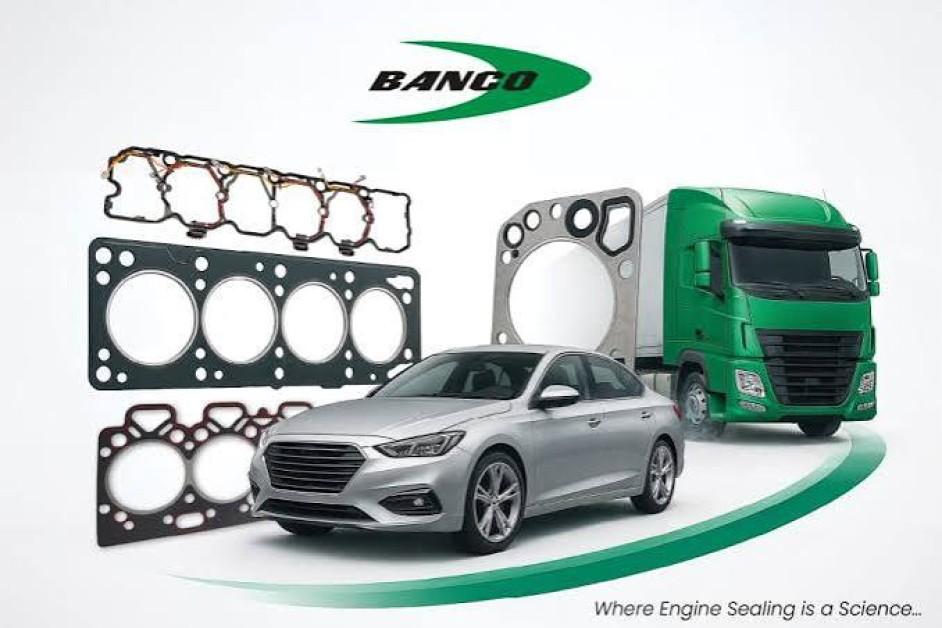
Banco Products India Q2 FY27 Profit Rises 19% to ₹165 Crore as Automotive Cooling Systems Demand Strengthens
Vadodara, November 7, 2026: Banco Products (India) Limited reported a 19.1% year-on-year increase in consolidated net profit to ₹165.37 crore for the quarter ended September 30, 2026, supported by higher revenue and improved operating profitability across its automotive and industrial cooling systems business.
The Vadodara-based manufacturer announced its unaudited second-quarter FY2026–27 financial results on November 6, reporting consolidated revenue from operations of approximately ₹1,264.5 crore, an increase of 21.8% from ₹1,038.2 crore in the corresponding quarter of the previous financial year.
Consolidated profit before tax increased to approximately ₹225.8 crore from ₹174.7 crore, reflecting stronger earnings before taxation.
The results highlight the performance of Banco Products' automotive component operations, which supply engine cooling and heat-transfer solutions for vehicle manufacturers and industrial applications.
The company serves domestic original equipment manufacturers, aftermarket customers and international markets.
Its earnings performance is influenced by vehicle production, industrial equipment demand, export conditions, raw-material costs and manufacturing efficiency.
The September-quarter results also demonstrated an improvement in operating profitability, although standalone earnings were affected by a decline in other income compared with the previous year.
Banco Products Consolidated Revenue Rises 21.8%

Banco Products reported consolidated revenue from operations of approximately ₹1,264.5 crore during the July–September 2026 quarter.
This compared with ₹1,038.2 crore in Q2 FY26, representing year-on-year growth of 21.8%.
The company also recorded sequential revenue growth from approximately ₹1,183.9 crore in the June 2026 quarter.
The increase indicates that consolidated sales improved on both an annual and quarterly basis.
Total consolidated income reached approximately ₹1,270.3 crore, compared with ₹1,096.7 crore a year earlier.
The difference between revenue from operations and total income reflects other income recorded during the reporting period.
For an automotive component manufacturer, revenue performance depends on customer production schedules, product demand and the contribution of domestic and international operations.
Banco Products' consolidated figures include the performance of its relevant subsidiaries, making them particularly important when evaluating the company's overall business scale.
However, the published financial statements do not separately establish how much of the quarterly revenue increase came from domestic automotive customers, overseas sales or individual product categories.
Consolidated Net Profit Increases to ₹165.37 Crore
Banco Products reported consolidated profit after tax of approximately ₹165.37 crore for Q2 FY27.
This compared with ₹138.90 crore in the corresponding quarter of FY26.
The increase represented year-on-year growth of approximately 19.1%.
Net profit also increased sequentially from approximately ₹122.4 crore in Q1 FY27.
The quarterly improvement indicates that the company generated stronger earnings alongside higher revenue.
Consolidated profit before tax reached approximately ₹225.8 crore, compared with ₹174.7 crore a year earlier.
The profit increase reflects improved overall financial performance during the reporting period.
Nevertheless, the company's earnings remain exposed to changes in customer demand, raw-material costs, foreign-exchange movements and operating expenses.
Investors assessing the sustainability of profitability will need to consider whether the improvement is supported by recurring manufacturing earnings and stable operating conditions.
Operating EBITDA Shows Significant Improvement
Banco Products' consolidated operating EBITDA increased to approximately ₹262.6 crore during Q2 FY27.
This compared with approximately ₹149.3 crore in the corresponding quarter of the previous financial year.
The increase represented growth of approximately 76%.
The calculation excludes other income and is based on reported operating revenue and expenses, with depreciation and finance costs added back.
The corresponding EBITDA margin improved to approximately 20.8% from 14.4%.
The improvement indicates that operating earnings grew faster than revenue.
Higher operating margins can reflect better capacity utilisation, favourable product mix, manufacturing efficiency or changes in cost conditions.
However, the financial results alone do not establish the precise contribution of each factor.
Banco Products' ability to maintain improved margins will depend on production volumes, pricing arrangements, material costs and the performance of its consolidated operations.
Standalone Revenue Grows 30.1%
Banco Products' standalone financial results also recorded strong revenue growth.
Standalone revenue from operations increased to approximately ₹374.43 crore from ₹287.72 crore in Q2 FY26.
The increase represented year-on-year growth of approximately 30.1%.
Standalone operating EBITDA rose to approximately ₹66.37 crore from ₹47.67 crore.
This represented an increase of approximately 39.2%.
The standalone EBITDA margin improved to around 17.7% from 16.6%.
These figures indicate stronger operating performance within the company's standalone business.
However, standalone net profit declined to approximately ₹75.46 crore from ₹137.77 crore.
The decline was influenced by a substantial reduction in other income, which fell to approximately ₹32.63 crore from ₹108.92 crore.
This distinction is important because the underlying operating business recorded growth even as reported standalone net profit declined.
Investors should therefore assess operating profitability separately from changes in non-operating income.
Consolidated and Standalone Results Show Different Trends
Banco Products' September-quarter financial statements demonstrate the importance of distinguishing consolidated and standalone performance.
Consolidated revenue exceeded ₹1,264 crore, while standalone revenue stood at approximately ₹374 crore.
The difference reflects the contribution of businesses included in the consolidated financial statements.
Consolidated net profit increased year-on-year, while standalone profit declined.
These movements do not necessarily indicate contradictory operating trends.
Consolidated and standalone accounts measure different reporting scopes, and changes in other income can significantly affect reported profit.
For investors, consolidated results provide a broader view of the company's financial performance.
Standalone results help assess the operations and financial position of the parent company.
Both sets of figures are relevant when evaluating profitability, cash generation and capital allocation.
Automotive Cooling Systems Remain Central to Banco Products
Banco Products operates in the automotive ancillary industry, with a focus on heat-transfer and cooling technologies.
Its product portfolio includes cooling solutions used in automotive and industrial applications.
Engine cooling systems are essential for maintaining appropriate operating temperatures in vehicles and machinery.
Internal combustion engines generate substantial heat during operation.
Cooling systems help regulate temperatures, protect components and support operating efficiency.
Commercial vehicles, agricultural tractors, construction equipment and industrial machinery often operate under demanding conditions.
These applications require cooling systems capable of functioning across different temperatures, loads and operating environments.
Banco Products' engineering and manufacturing capabilities position it within this specialised component market.
Demand for its products is influenced by equipment production, replacement requirements and customer technology specifications.
Heat Exchangers Support Automotive and Industrial Applications
Heat exchangers are an important category within Banco Products' broader cooling technology portfolio.
These systems transfer heat between fluids or operating environments to maintain suitable temperatures.
They are used in automotive cooling, industrial equipment and other applications requiring thermal management.
Product performance depends on heat-transfer efficiency, durability, material selection and design.
Manufacturers must meet customer requirements relating to operating temperatures, pressure conditions and reliability.
For suppliers, engineering capabilities and manufacturing quality are important competitive factors.
Changes in vehicle design and industrial equipment specifications can create opportunities for product development.
However, demand for heat exchangers remains connected to customer production schedules and the replacement market.
Banco Products' ability to maintain relationships with original equipment manufacturers and aftermarket distributors will remain relevant to future business performance.
Commercial Vehicle Demand Influences Component Orders
Commercial vehicles represent an important end-use market for automotive cooling systems.
Trucks, buses and other transport vehicles require thermal management solutions capable of operating under sustained loads.
Demand for commercial vehicles is influenced by freight activity, infrastructure development, logistics investment and economic conditions.
When fleet operators expand or replace vehicles, manufacturers may increase production.
Higher vehicle production can support demand for components supplied by automotive ancillary companies.
However, commercial vehicle demand can fluctuate with financing conditions, transportation profitability and business investment.
For Banco Products, the relationship between vehicle production and component orders is an important consideration.
The company's quarterly financial statements do not provide sufficient detail to attribute the reported revenue growth to a specific change in commercial vehicle demand.
Nevertheless, the segment remains relevant to the broader market for cooling technologies.
Agricultural and Off-Highway Equipment Provide Additional Demand
Agricultural machinery and off-highway equipment are other important applications for cooling systems.
Tractors and other agricultural machines operate under variable loads and environmental conditions.
Reliable engine cooling is essential for maintaining performance during field operations.
Demand for agricultural equipment is influenced by rural income, monsoon conditions, crop production and financing availability.
Construction and off-highway equipment demand is influenced by infrastructure investment, industrial activity and project execution.
These markets can follow different demand cycles from passenger vehicles.
Exposure to multiple equipment categories can therefore provide component manufacturers with a broader customer base.
However, diversification does not eliminate the risks associated with changes in capital expenditure and equipment production.
For Banco Products, demand across these applications will remain important to monitor during the remainder of FY27.
International Business Provides Exposure to Export Markets
Banco Products maintains an international business supplying cooling solutions to overseas customers.
The company identifies the European Union as a major export market.
It also operates an export-oriented manufacturing facility in Vadodara.
International business provides opportunities to serve customers beyond India's domestic automotive industry.
Export demand is influenced by vehicle production, industrial activity, customer inventories and economic conditions in destination markets.
European automotive and industrial manufacturers face changing technology requirements, energy costs and competitive conditions.
These developments can influence component sourcing and procurement decisions.
Currency movements also affect export competitiveness and the domestic value of overseas revenue.
Banco Products' consolidated results demonstrate the scale of its wider business, but the available quarterly figures do not separately quantify export revenue growth.
Consequently, the contribution of international demand to the latest earnings improvement cannot be established from the headline financial results alone.
Domestic OEM and Aftermarket Channels Remain Important
Banco Products supplies automotive cooling and related components through original equipment manufacturer and aftermarket channels.
The company identifies original equipment manufacturers as the principal customers within its domestic business.
According to its investor information, OEM sales account for approximately 80–85% of domestic sales, with aftermarket sales contributing the remainder.
Original equipment demand depends on vehicle and machinery production schedules.
Aftermarket demand is associated with replacement parts, maintenance and repair requirements.
The two channels have different operating characteristics.
OEM sales are influenced by production volumes and customer procurement arrangements, while aftermarket demand is affected by the installed vehicle population, equipment age and usage patterns.
Maintaining a presence in both channels can provide access to different sources of demand.
However, the company's quarterly results do not provide a detailed breakdown of the contribution from each channel.
Half-Year Revenue Crosses ₹2,400 Crore
For the six months ended September 30, 2026, Banco Products reported consolidated revenue from operations of approximately ₹2,425 crore.
The company also reported consolidated profit before tax of approximately ₹404.4 crore for the first half of FY27.
The half-year figures indicate that the company's operations generated substantial revenue and earnings during the April–September period.
The results should be assessed alongside working capital, cash generation and capital expenditure requirements.
Manufacturing businesses often need to maintain inventories of raw materials and finished components to meet customer delivery schedules.
Higher production volumes can increase the amount of capital tied up in inventories and receivables.
Consequently, operating cash flow remains an important measure of financial performance alongside reported profit.
For Banco Products, the ability to convert earnings into cash will influence financial flexibility and future investment capacity.
Raw-Material Costs Influence Cooling Systems Profitability
Manufacturers of automotive cooling systems are exposed to changes in industrial raw-material prices.
Aluminium, copper and other materials are used in various heat-transfer and cooling applications.
Changes in commodity prices can influence manufacturing costs and operating margins.
The impact depends on material requirements, procurement arrangements, inventory valuation and customer pricing agreements.
Manufacturers may attempt to recover higher costs through selling-price adjustments.
However, pricing changes may not immediately offset increases in input expenses.
Energy costs, labour productivity and logistics expenses also affect manufacturing profitability.
Banco Products' stronger operating EBITDA during Q2 FY27 indicates improved operating earnings, but the available results do not identify the precise contribution from individual cost categories.
Investors will therefore monitor whether the improvement can be maintained under changing commodity market conditions.
Manufacturing Efficiency Supports Competitive Position
Cooling systems manufacturing requires engineering expertise, process control and consistent product quality.
Suppliers must meet technical specifications established by vehicle and equipment manufacturers.
Manufacturing efficiency can influence product costs, delivery performance and profitability.
Higher capacity utilisation may improve fixed-cost absorption when production volumes increase.
However, rapid production growth can also require additional expenditure on materials, labour and equipment.
Banco Products' reported margin improvement demonstrates stronger operating profitability during the September quarter.
The sustainability of that improvement will depend on demand, pricing and operational performance.
The company's engineering capabilities and customer relationships remain relevant to its ability to compete in domestic and international markets.
Global Automotive Technology Creates New Requirements
The automotive industry is undergoing technological changes that affect component suppliers.
Manufacturers are developing vehicles with improved efficiency, lower emissions and increasingly sophisticated electronic systems.
Thermal management remains important across different propulsion technologies, although product requirements can vary substantially.
Conventional internal combustion engines require systems to manage engine temperatures.
Electric and hybrid vehicles have different cooling requirements associated with batteries, power electronics and other components.
These developments may create opportunities for suppliers with relevant engineering capabilities.
However, the potential benefits depend on product development, customer approvals and commercial demand.
Banco Products' existing expertise in heat-transfer technologies provides a foundation for participating in changing equipment requirements, but specific future revenue opportunities cannot be assumed without supporting company disclosures.
Investor Focus Turns to Margins and Export Performance
Banco Products' November 6 earnings announcement places several financial and operational factors in focus.
The company's consolidated revenue increased by more than one-fifth year-on-year.
Operating EBITDA grew substantially faster than revenue, resulting in improved margins.
Consolidated net profit also increased despite lower other income.
However, standalone profit declined because the previous year's comparison included significantly higher other income.
The contrast highlights the importance of distinguishing operating performance from non-operating financial contributions.
Investors will also assess international demand, domestic OEM orders and the sustainability of manufacturing margins.
The performance of consolidated subsidiaries remains particularly important because they contribute substantially to the group's reported revenue.
Company Submits Revised Board Meeting Disclosure
Banco Products submitted a revised stock exchange disclosure following its November 6 board meeting.
The company explained that one page of the standalone limited review report had been inadvertently omitted during the scanning process.
The revised submission included the missing page.
Banco Products stated that there was no change to the financial results.
The unaudited standalone and consolidated results were accompanied by auditors' limited review reports with an unmodified conclusion.
The revision was therefore administrative rather than a change in the reported financial performance.
The clarification is relevant for investors reviewing the company's regulatory filings and financial disclosures.
Implications for India's Automotive Components Industry
Banco Products' quarterly performance provides an indication of business conditions within the automotive cooling and heat-transfer segment.
India's automotive components industry serves domestic vehicle manufacturers, industrial equipment producers and international customers.
Demand is influenced by vehicle production, equipment investment and replacement requirements.
Manufacturers with specialised engineering capabilities can participate in multiple end-use markets.
However, profitability depends on cost competitiveness, product quality and customer relationships.
The increasing importance of advanced vehicle technologies also creates new product development requirements.
For component suppliers, maintaining technical capabilities and adapting to changing customer needs will remain important.
Banco Products' results demonstrate stronger consolidated earnings during the September quarter, although the performance of a single company should not be treated as a comprehensive measure of the entire industry.
Outlook for Banco Products India in FY27
Banco Products enters the second half of FY27 following improved consolidated revenue and operating profitability.
Domestic automotive production will remain an important source of demand.
Commercial vehicles, agricultural equipment and industrial machinery will influence the wider market for cooling systems.
International economic conditions and European industrial demand may affect export opportunities.
Raw-material costs and currency movements will also remain important financial considerations.
The company's ability to maintain operating margins will depend on manufacturing efficiency, product mix and customer pricing arrangements.
Investors will continue monitoring the contribution from consolidated operations, the sustainability of earnings growth and the conversion of profits into operating cash flow.
While the latest results demonstrate stronger financial performance, future growth will remain dependent on market demand and operational execution.
Conclusion
Banco Products (India) Limited reported consolidated revenue of approximately ₹1,264.5 crore during Q2 FY27, representing year-on-year growth of 21.8%.
Consolidated net profit increased 19.1% to ₹165.37 crore, while operating EBITDA rose approximately 76% to ₹262.6 crore.
The EBITDA margin improved to around 20.8%, reflecting stronger operating profitability.
Standalone revenue also increased 30.1%, although standalone net profit declined because other income was substantially lower than in the corresponding quarter of the previous year.
The results highlight the company's position in automotive cooling systems, heat exchangers and related industrial components.
Domestic vehicle production, international equipment demand, raw-material costs and manufacturing efficiency will remain important factors influencing future performance.
For investors and industry participants, Banco Products' November 6 earnings announcement provides evidence of stronger consolidated operating performance while placing continued attention on profitability, export demand and the sustainability of margins.
 Banco Products India Q2 FY27 Profit Rises 19% as Revenue Grows 22% FAQs

POST A COMMENT (0)
All Comments (0)
Replies (0)