




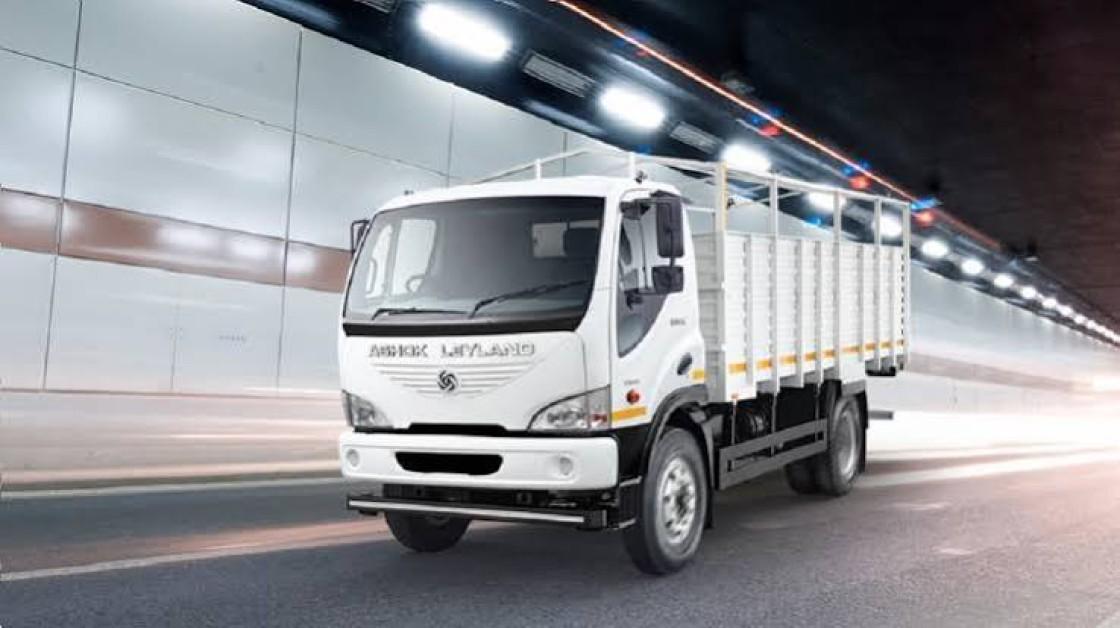
Ashok Leyland Q2 FY27 Results on November 14 Put Commercial Vehicle Demand, Exports and Margins in Focus
Chennai, November 14, 2026: Ashok Leyland, the Hinduja Group's flagship commercial vehicle manufacturer, is scheduled to announce its financial results for the second quarter of FY2026–27 on Saturday, November 14, putting domestic truck demand, export performance and operating profitability under investor scrutiny.
The company's board is scheduled to consider and approve its unaudited standalone and consolidated financial results for the quarter and six months ended September 30, 2026.
Investors will also monitor a proposal to declare an interim dividend for FY27. If approved, the company has specified November 20, 2026, as the record date.
The earnings announcement follows a period of strong vehicle sales, with quarterly volumes rising significantly compared with the corresponding period last year.
The central question is whether higher volumes have translated into stronger revenue, earnings and operating margins.
Ashok Leyland has also scheduled an earnings conference call for November 16, when management is expected to discuss the results and business outlook.
Ashok Leyland Q2 FY27 Results: Key Highlights

| Indicator | Details |
|---|---|
| Company | Ashok Leyland Limited |
| NSE symbol | ASHOKLEY |
| BSE code | 500477 |
| Reporting period | July–September 2026 |
| Financial year | FY2026–27 |
| Board meeting | November 14, 2026 |
| Results | Standalone and consolidated, unaudited |
| Q2 vehicle sales, including exports | 64,677 units |
| Year-on-year volume growth | Approximately 31.7% |
| Previous-year Q2 volume | 49,116 units |
| Q2 M&HCV truck sales | 33,801 units |
| Q2 light commercial vehicle sales | 22,500 units |
| Q2 M&HCV bus sales | 8,376 units |
| Interim dividend | Under board consideration |
| Conditional dividend record date | November 20, 2026 |
| Earnings conference call | November 16, 2026, at 11:00 a.m. IST |
The vehicle sales figures are based on reported monthly sales data for July, August and September. Final second-quarter financial performance will be established by the company's results announcement.
Ashok Leyland Reports Strong Commercial Vehicle Sales Ahead of Earnings
Ashok Leyland enters its second-quarter earnings announcement with strong volume growth across its commercial vehicle business.
The company reported total vehicle sales of 64,677 units during July–September 2026, including exports.
This compares with 49,116 units in the corresponding quarter of the previous financial year.
The increase represents approximately 31.7% year-on-year growth.
Sequentially, sales rose from 48,763 units in the April–June quarter, an increase of approximately 32.6%.
The improvement provides a positive volume backdrop for the earnings announcement.
However, vehicle sales growth does not automatically translate into an equivalent increase in profitability.
Revenue and margins also depend on product mix, pricing, manufacturing costs, operating expenses and export realisations.
Investors will therefore examine whether the stronger sales performance has improved the company's financial results.
Medium and Heavy Commercial Vehicle Trucks Lead Growth
Medium and heavy commercial vehicle trucks were an important driver of Ashok Leyland's quarterly sales growth.
The company sold 33,801 M&HCV trucks during the September quarter.
That represented approximately 49.5% growth compared with the same period last year.
The segment is particularly important because demand for medium and heavy trucks is closely associated with economic activity.
Infrastructure construction, freight transportation, industrial production and mining operations influence purchasing decisions.
An improvement in truck demand can indicate stronger fleet utilisation or expectations of increased cargo movement.
However, commercial vehicle demand is also cyclical.
Fleet operators may delay purchases when financing costs rise or freight demand weakens.
The company's earnings announcement will help investors assess how higher truck volumes affected revenue and profitability.
Light Commercial Vehicle Sales Rise More Than 22%
Ashok Leyland's light commercial vehicle business also recorded strong growth.
Sales reached 22,500 units during the July–September quarter, an increase of approximately 22.3% year-on-year.
Light commercial vehicles are used in urban logistics, distribution, small-business transportation and last-mile delivery.
Demand in this segment is influenced by retail activity, e-commerce distribution and the movement of goods between warehouses and customers.
The segment provides Ashok Leyland with exposure to a different part of the transportation market from heavy-duty trucks.
Higher LCV volumes can support revenue diversification.
However, competition and pricing conditions remain important determinants of profitability.
Investors will look for management commentary on demand trends, product launches and competitive conditions in the segment.
Bus Sales Record Moderate Growth
Ashok Leyland sold 8,376 medium and heavy commercial vehicle buses during the quarter.
The figure represented approximately 3.3% year-on-year growth.
Bus demand is influenced by public transport procurement, private fleet investment, school transportation and institutional orders.
The timing of government and institutional tenders can cause fluctuations between quarters.
Consequently, bus sales may not follow the same pattern as truck demand.
Although growth was slower than in the truck and LCV segments, the bus business remains important to Ashok Leyland's product portfolio.
Investors will monitor order execution, demand from state transport undertakings and the outlook for new procurement.
The company's commentary may also provide insight into the contribution of alternative-fuel and electric mobility products.
Export Growth Becomes a Major Earnings Indicator
Export performance will be another important area of attention in Ashok Leyland's quarterly results.
International markets provide an opportunity to diversify revenue beyond domestic commercial vehicle demand.
Ashok Leyland has an established presence in several overseas markets, including countries in Asia, Africa and the Middle East.
However, export demand can fluctuate with economic conditions, foreign exchange movements and regional political developments.
Investors will examine whether overseas sales contributed meaningfully to the company's quarterly growth.
They will also assess the profitability of exports.
Higher international volumes can support manufacturing utilisation, but the effect on margins depends on product mix, logistics costs and currency realisations.
Management commentary on overseas order pipelines and regional demand will be particularly relevant.
Operating Margins Remain Central to the Results
Operating profitability is likely to be one of the most closely watched indicators in Ashok Leyland's second-quarter earnings.
Commercial vehicle manufacturers face significant expenses related to steel, aluminium, components, labour and energy.
Higher vehicle sales can improve profitability by spreading fixed manufacturing costs across a larger production base.
However, the benefit can be offset by higher input costs or competitive pricing.
Investors will focus on earnings before interest, taxes, depreciation and amortisation, commonly known as EBITDA.
The EBITDA margin measures operating earnings relative to revenue.
An improvement would suggest that the company has converted higher sales volumes into stronger operating efficiency.
A decline could indicate pressure from raw materials, product mix or other expenses.
Raw Material Costs Could Influence Profitability
Commodity prices remain important for commercial vehicle manufacturers.
Steel and aluminium are widely used in truck and bus production.
Changes in their prices can affect manufacturing costs, particularly when supply contracts are renegotiated.
Tyres, electronic components and other vehicle parts also influence expenses.
Ashok Leyland's ability to manage these costs will be important in determining quarterly margins.
Manufacturers can respond through procurement efficiencies, product pricing and operational improvements.
However, price increases may be difficult to implement when competition is intense.
Investors will examine whether the company maintained pricing discipline while increasing sales.
The results may also indicate whether higher production volumes helped offset cost pressures.
Previous Quarter Provides a Benchmark for Earnings
Ashok Leyland's first-quarter FY27 performance provides a useful benchmark for evaluating the September-quarter results.
On a consolidated basis, the company reported revenue of approximately ₹13,070 crore for April–June 2026, compared with ₹11,709 crore a year earlier.
Consolidated EBITDA was approximately ₹2,410 crore, while net profit stood at around ₹668 crore.
Revenue increased by roughly 12% year-on-year, while net profit growth was considerably slower.
This difference underlines the importance of examining profitability alongside sales growth.
Investors should also distinguish consolidated results from standalone results, because the figures include different business operations.
The September-quarter announcement will provide a clearer picture of whether the sharp increase in vehicle volumes improved earnings.
Interim Dividend Decision Adds Another Investor Focus
Ashok Leyland's board will also consider declaring an interim dividend for FY2026–27.
The company informed stock exchanges about the additional agenda item on November 10.
If the board approves the dividend, November 20, 2026, will be the record date for determining eligible shareholders.
However, neither the declaration nor the amount of any dividend should be treated as confirmed before the board's decision.
Dividend announcements can attract investor interest because they provide information about shareholder distributions and capital allocation.
The decision will also be considered alongside the company's investment requirements, liquidity position and future business plans.
Commercial Vehicle Demand Offers Clues About Economic Activity
Ashok Leyland's quarterly performance is relevant beyond the company's own financial results.
Commercial vehicle demand is closely connected to freight movement, infrastructure development and industrial activity.
Heavy trucks are widely used to transport construction materials, agricultural commodities and manufactured goods.
Light commercial vehicles support distribution networks and smaller businesses.
Bus demand is linked to public transportation and institutional fleet requirements.
Stronger sales can therefore provide information about activity across different parts of the Indian economy.
However, commercial vehicle purchases are also influenced by replacement cycles, financing conditions and changes in fleet utilisation.
A single quarter's growth should not be interpreted as a definitive measure of overall economic performance.
Electric Mobility and Alternative-Fuel Vehicles Remain Important
Investors will also look for updates on Ashok Leyland's electric mobility and alternative-fuel initiatives.
The commercial vehicle industry is gradually incorporating electric and lower-emission technologies.
Demand is influenced by government procurement, operating economics, charging infrastructure and fleet operators' investment decisions.
Electric buses represent an important opportunity because public transport operators are increasingly evaluating cleaner technologies.
However, adoption rates vary across vehicle categories.
Heavy-duty freight transportation presents different operational challenges from urban bus services.
Ashok Leyland's longer-term competitiveness will depend partly on its ability to develop commercially viable products while maintaining profitability in conventional vehicles.
Financial Services Restructuring Could Influence Consolidated Reporting
Ashok Leyland has also disclosed a restructuring involving Hinduja Leyland Finance and NDL Ventures.
The National Company Law Tribunal sanctioned the relevant scheme of arrangement on November 3, 2026.
Under the proposed structure, Hinduja Leyland Finance will be absorbed into NDL Ventures when the scheme becomes effective.
Ashok Leyland's shareholding in the resulting entity is expected to be approximately 59.64%, compared with its earlier 61.12% holding in Hinduja Leyland Finance.
The restructuring is relevant because financial services operations can influence consolidated financial reporting.
Investors will examine any related accounting disclosures and the implications for the group's financial position.
However, the restructuring should not be assumed to have affected second-quarter results unless the company confirms the applicable accounting treatment.
November 16 Earnings Call Will Be Important for Guidance
Ashok Leyland has scheduled an earnings conference call for Monday, November 16, 2026, at 11:00 a.m. IST.
The discussion will provide an opportunity for management to explain the quarterly financial performance.
Investors will be particularly interested in the outlook for truck demand, exports and operating margins.
Management commentary may also address commodity costs, pricing and production capacity.
The company's assessment of demand during the second half of FY27 will be significant.
Commercial vehicle manufacturers are sensitive to changes in economic activity, freight demand and infrastructure spending.
Any updated outlook could influence expectations for revenue growth and profitability in the coming quarters.
What Investors Will Watch in Ashok Leyland's Q2 FY27 Results
The earnings announcement will be evaluated against the company's strong sales performance.
| Key Indicator | What Investors Will Assess |
|---|---|
| Revenue growth | Whether higher vehicle volumes translated into stronger sales |
| EBITDA | Improvement in operating earnings |
| EBITDA margin | Effect of product mix, input costs and operating efficiency |
| Net profit | Whether earnings growth kept pace with revenue |
| M&HCV demand | Sustainability of strong truck sales |
| LCV performance | Demand from distribution and logistics businesses |
| Exports | Overseas growth and regional market conditions |
| Cash flow | Working capital and capital expenditure requirements |
| Interim dividend | Board approval and dividend amount |
| FY27 outlook | Management expectations for demand and profitability |
The most important distinction will be between volume growth and earnings quality.
Strong vehicle sales provide a positive starting point, but sustainable profitability requires effective cost management and competitive pricing.
Outlook for the Second Half of FY27
Ashok Leyland's performance during the remainder of FY27 will depend on domestic commercial vehicle demand, export conditions and manufacturing costs.
Infrastructure investment and freight movement could support truck demand.
However, changes in fuel prices, financing costs and business confidence may influence fleet purchasing decisions.
Export markets offer opportunities for growth but remain exposed to regional economic conditions and currency movements.
Operating margins will depend on the balance between vehicle pricing, input costs and production efficiency.
The September-quarter results and subsequent management commentary will help investors assess whether the strong volume momentum can continue.
Conclusion
Ashok Leyland's November 14, 2026, earnings announcement comes after a strong quarter for commercial vehicle sales.
The company reported 64,677 vehicle sales during July–September, representing approximately 31.7% year-on-year growth.
Medium and heavy commercial vehicle trucks led the expansion, while light commercial vehicles also recorded substantial growth.
Investors will now examine whether higher volumes have improved revenue, EBITDA margins and net profit.
Export performance, raw material costs and demand expectations will be central to the assessment.
The board's consideration of an interim dividend adds another important development for shareholders.
With an earnings conference call scheduled for November 16, management's outlook will help determine how investors assess the company's prospects for the remainder of FY27.
 Ashok Leyland Q2 FY27 Results: November 14 Earnings, Commercial Vehicle Sales and Margin Outlook FAQs

POST A COMMENT (0)
All Comments (0)
Replies (0)