





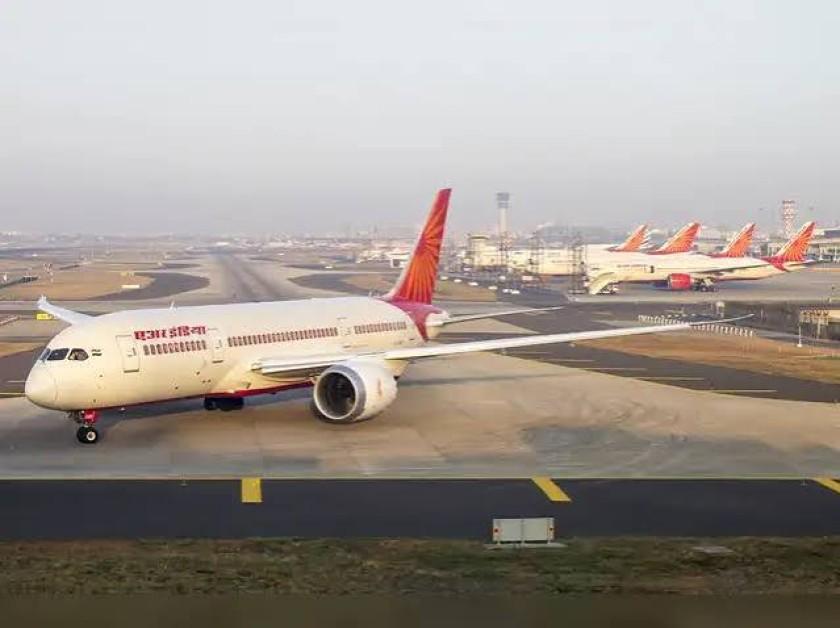
Air India Says Transformation Has Made Significant Progress as Tata Group Maps Long-Term Turnaround
Air India says its transformation under Tata Group has made significant progress, even as the airline's leadership acknowledges that rebuilding the carrier into a globally competitive aviation business will remain a long-term undertaking.
Since returning to Tata Group ownership, Air India has been pursuing a broad transformation spanning aircraft, technology, customer experience, operational systems, workforce capabilities and its domestic and international network.
The airline's progress is increasingly being assessed not simply through short-term financial results but through whether these structural changes can eventually produce a more reliable, competitive and financially sustainable carrier.
Tata Group Takes a Long-Term View of Air India

Transforming a large legacy airline requires significantly more than changing ownership or management.
Air India entered Tata Group with ageing aircraft, legacy technology, operational inefficiencies and service challenges accumulated over many years. Addressing those issues requires substantial capital investment and organisational restructuring.
The turnaround therefore involves multiple areas simultaneously, including fleet modernisation, technology upgrades, employee training, network planning and customer service.
Tata Group has indicated that the transformation should be evaluated over a longer horizon rather than expecting every challenge to be resolved immediately.
Transformation Has Reached Multiple Parts of the Airline
Air India's turnaround programme extends across almost every major function of the company.
Important areas include:
-
Fleet modernisation
-
Aircraft refurbishment
-
Technology systems
-
Customer experience
-
Network expansion
-
Employee training
-
Operational reliability
-
Maintenance capabilities
-
Digital services
-
Organisational integration
Progress across these areas is intended to create a stronger foundation for the airline's future growth.
Fleet Modernisation Remains Central
Aircraft are among the most visible components of Air India's transformation.
The airline has committed to a major fleet renewal programme as it seeks to replace older aircraft, increase capacity and improve the passenger experience.
Newer aircraft can offer several advantages, including greater fuel efficiency, improved reliability, modern cabin products and lower maintenance requirements.
Fleet renewal also gives Air India greater flexibility to expand domestic and international routes.
However, aircraft deliveries remain dependent on global manufacturers and supply chains, meaning the transformation cannot occur entirely according to the airline's preferred timetable.
Refurbishing Existing Aircraft Is Equally Important
New aircraft deliveries alone cannot transform the passenger experience quickly enough across a large airline.
Air India must therefore upgrade existing aircraft while waiting for new planes to arrive.
Cabin refurbishment programmes can involve:
-
New seats
-
Updated entertainment systems
-
Improved cabin interiors
-
Premium-class upgrades
-
New lighting
-
Better connectivity
-
Refreshed passenger amenities
-
Improved onboard technology
These investments are particularly important on international routes where Air India competes directly with established global airlines.
Technology Overhaul Supports Operational Improvement
Air India's transformation also involves replacing and upgrading legacy technology systems.
Modern airline operations depend on sophisticated digital infrastructure supporting reservations, revenue management, crew scheduling, maintenance, customer service and flight operations.
Improved technology can help Air India increase efficiency while providing passengers with more reliable digital services.
The airline has also been strengthening its website, mobile applications and digital customer interfaces as more travellers manage bookings through online channels.
Vistara Integration Reshapes Full-Service Operations
The integration of Vistara into Air India represents another major component of Tata Group's aviation restructuring.
Bringing the two full-service airlines together creates a larger network, broader fleet and more substantial customer base under the Air India brand.
However, airline integrations are complex.
They require alignment across:
-
Employees
-
Aircraft
-
Technology
-
Loyalty programmes
-
Routes
-
Service standards
-
Operational procedures
-
Corporate culture
Successful integration could provide Air India with greater scale while reducing duplication across Tata Group's aviation businesses.
Air India Express Strengthens Low-Cost Strategy
Tata Group's aviation restructuring also includes Air India Express as its principal low-cost airline.
This creates a clearer two-brand strategy, with Air India positioned as the full-service carrier and Air India Express serving price-sensitive and short-haul markets.
A coordinated network could allow the group to serve different passenger segments while improving connectivity across domestic and international routes.
The challenge will be ensuring that both businesses develop sustainable economics while maintaining distinct market positions.
Customer Experience Remains a Critical Test
For passengers, the success of Air India's transformation will ultimately be judged through the travel experience.
Fleet investment and corporate restructuring will have limited impact on brand perception unless customers see improvements in areas such as:
-
On-time performance
-
Cabin quality
-
Food and beverage service
-
Baggage handling
-
Customer support
-
Digital booking
-
Airport experience
-
Service consistency
Air India must therefore translate corporate investment into improvements that passengers can directly experience.
Global Expansion Creates Major Opportunity
India's growing economy and expanding international travel market create a substantial long-term opportunity for Air India.
Millions of passengers travel between India and destinations across North America, Europe, the Middle East and Asia.
Historically, a significant proportion of this traffic has travelled through overseas hubs.
A stronger Air India could capture more passengers through direct services connecting Indian cities with major international destinations.
This strategy could also support the development of Indian airports as larger global aviation hubs.
Financial Turnaround Remains Challenging
Operational progress does not eliminate the financial challenges associated with rebuilding a major airline.
Air India and Air India Express have continued to face substantial losses while Tata Group invests heavily in transformation.
Airline profitability is particularly sensitive to:
-
Aviation fuel prices
-
Foreign exchange movements
-
Aircraft utilisation
-
Ticket yields
-
Load factors
-
Maintenance expenses
-
Financing costs
-
Geopolitical disruptions
-
Airspace restrictions
-
Competitive pricing
The financial turnaround will therefore depend on both internal execution and external industry conditions.
Geopolitical Risks Add Complexity
International aviation has faced additional pressure from geopolitical conflicts and airspace disruptions.
When airlines must avoid certain regions, flights can become longer and more expensive.
Additional flying time increases fuel consumption, crew costs and aircraft utilisation requirements.
For Air India, which is expanding its international network, managing these disruptions represents an important operational and financial challenge.
India's Aviation Growth Supports Long-Term Strategy
Despite near-term difficulties, India's aviation fundamentals remain attractive.
Long-term demand is being supported by:
-
Rising household incomes
-
Expanding middle-class travel
-
Growing business activity
-
International tourism
-
Airport infrastructure investment
-
Increasing regional connectivity
-
Greater demand for direct international flights
-
India's expanding global economic links
These structural trends provide the foundation for Tata Group's willingness to invest heavily in rebuilding Air India.
What the Industry Should Watch
The next phase of Air India's transformation will be judged through measurable improvements rather than announcements alone.
Important indicators include fleet deliveries, aircraft refurbishment, on-time performance, customer satisfaction, international network expansion and financial performance.
The industry will also monitor whether the integration of Tata Group's aviation businesses creates meaningful operating efficiencies.
Improvement in profitability will eventually become one of the most important measures of whether the transformation has succeeded.
Outlook
Air India's statement that its transformation has made significant progress reflects the scale of changes implemented since Tata Group regained control of the carrier.
However, the airline's transformation remains unfinished.
Fleet modernisation, technology upgrades, organisational integration and customer experience improvements require years of sustained investment and execution.
India's rapidly expanding aviation market gives Air India a substantial opportunity, particularly if it can capture more international traffic and build a stronger domestic network.
Conclusion
Air India's transformation under Tata Group has moved beyond the initial restructuring phase and into a longer period focused on execution, operational improvement and sustainable growth.
Progress across fleet renewal, technology, network development and organisational integration has strengthened the airline's foundation, but significant challenges remain.
The ultimate success of Tata Group's turnaround will depend on whether these investments translate into consistently better passenger experiences, stronger operational performance and sustainable profitability.
For Air India, the transformation is therefore not simply about rebuilding an airline. It is about creating a carrier capable of competing globally while serving one of the world's fastest-growing aviation markets.
 Air India Transformation Advances Under Tata Group Turnaround FAQs
POST A COMMENT (0)
All Comments (0)
Replies (0)