




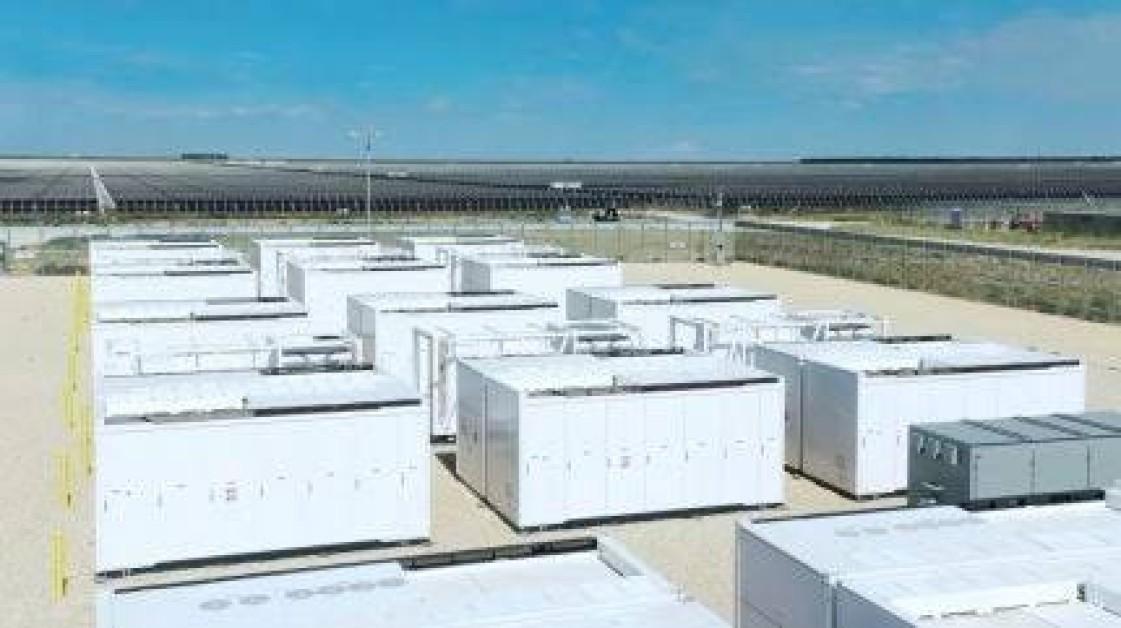
ACME Solar Commissions New Renewable Energy Capacity in Rajasthan
Gurugram, November 20, 2026: ACME Solar Holdings Limited has commissioned 57.69 megawatts (MW) of contracted Firm and Dispatchable Renewable Energy (FDRE) capacity at its renewable energy project in Rajasthan, marking another step in the company's expansion of solar power generation integrated with battery energy storage.
The commissioned portion comprises 100.02 MW of installed solar capacity and a Battery Energy Storage System (BESS) rated at 57.69 MW with an energy storage capacity of 265.38 megawatt-hours (MWh).
The project is being developed through ACME Sigma Urja Private Limited, a wholly owned subsidiary of ACME Solar Holdings.
Located at Kharnai village in Rawatbhata tehsil of Rajasthan's Chittorgarh district, the facility forms part of a larger 250 MW contracted FDRE project.
The company confirmed that the new capacity was commissioned on November 19, 2026, with commercial operations scheduled to begin on November 21, 2026.
The project is connected to the Neemuch Pooling Station, while a Power Purchase Agreement (PPA) has been signed with NHPC Limited.
The development strengthens ACME Solar's presence in India's expanding market for renewable electricity supported by energy storage systems.
Key Details of ACME Solar's Rajasthan FDRE Project

|
Project Parameter |
Details |
|---|---|
|
Company |
ACME Solar Holdings Limited |
|
Project subsidiary |
ACME Sigma Urja Private Limited |
|
Project category |
Firm and Dispatchable Renewable Energy |
|
Newly commissioned contracted capacity |
57.69 MW |
|
Installed solar capacity in commissioned portion |
100.02 MW |
|
Battery power capacity |
57.69 MW |
|
Battery energy capacity |
265.38 MWh |
|
Total contracted FDRE project capacity |
250 MW |
|
Commissioned share of contracted capacity |
Approximately 23.08% |
|
Project location |
Kharnai village, Rawatbhata, Chittorgarh, Rajasthan |
|
Grid connection |
Neemuch Pooling Station |
|
Power purchaser |
NHPC Limited |
|
Commissioning date |
November 19, 2026 |
|
Scheduled commercial operation date |
November 21, 2026 |
|
NSE symbol |
ACMESOLAR |
|
BSE code |
544283 |
The 57.69 MW figure represents contracted dispatchable renewable energy capacity. It should not be confused with the project's 100.02 MW installed solar generation capacity or the battery's 265.38 MWh energy storage capacity.
Project Forms Part of Larger 250 MW FDRE Development
The commissioned capacity represents the latest milestone in ACME Solar's 250 MW FDRE project in Rajasthan.
The newly commissioned 57.69 MW accounts for approximately 23.08% of the total contracted capacity.
The remaining contracted capacity is expected to be developed and commissioned in accordance with the project's execution schedule and applicable requirements.
ACME Solar has not specified a revised completion date for the entire 250 MW development in its latest announcement.
The commissioning demonstrates progress in bringing the project's renewable generation and battery storage infrastructure into service.
Unlike conventional standalone solar projects, FDRE developments are designed to provide electricity according to specified supply requirements.
This approach can improve the usefulness of renewable electricity for power purchasers that require more predictable supply arrangements.
Solar Generation Combined With Battery Storage
The commissioned portion combines two different energy infrastructure components.
The first is a solar power installation with an installed capacity of 100.02 MW.
The second is a battery energy storage system capable of delivering up to 57.69 MW of power, with a stated storage capacity of 265.38 MWh.
These components perform different functions.
Solar panels generate electricity when sufficient sunlight is available.
The battery system stores electrical energy and can discharge it later according to operational requirements.
This arrangement allows a portion of the electricity generated during daylight hours to be used during other periods.
It can also help the project manage fluctuations in renewable generation.
The combination is particularly relevant for electricity supply arrangements requiring greater predictability than standalone solar generation can provide.
Understanding the Difference Between MW and MWh
The project's capacity figures represent two different measurements.
Megawatts (MW) measure the rate at which electricity can be generated or delivered at a particular moment.
Megawatt-hours (MWh) measure the quantity of energy generated, stored or supplied over a period.
For ACME Solar's commissioned battery system:
Battery power rating
57.69 MW
Maximum rated output
Battery energy capacity
265.38 MWh
Rated stored energy
Theoretical discharge duration at rated power
Approximately 4.6 hours
Calculated as 265.38 MWh ÷ 57.69 MW. Actual usable discharge duration depends on battery operating limits, efficiency and contractual requirements.
The battery's storage duration is important because it indicates how long the system could theoretically deliver electricity at its rated output.
However, actual operations may involve partial discharge, reserve requirements and other technical considerations.
What Is Firm and Dispatchable Renewable Energy?
Firm and Dispatchable Renewable Energy refers to renewable electricity supply arrangements designed to meet defined delivery requirements.
Traditional solar and wind generation depend on weather conditions.
Solar power is unavailable at night, while wind generation varies with wind speeds.
FDRE projects address some of these limitations by combining renewable generation with technologies such as battery energy storage.
In certain configurations, multiple renewable generation sources may also be integrated.
The objective is to provide electricity more predictably and in accordance with contractual supply schedules.
This does not mean that renewable generation becomes completely independent of weather conditions.
Instead, storage and generation planning help improve the ability to deliver electricity during required periods.
For electricity buyers, FDRE projects can provide a more structured renewable energy supply product than standalone intermittent generation.
NHPC Signs Power Purchase Agreement for the Project
ACME Solar confirmed that a Power Purchase Agreement has been signed with NHPC Limited for the Rajasthan FDRE project.
NHPC is a central public sector enterprise operating in India's power sector.
A PPA establishes the commercial framework under which electricity is supplied to the purchasing entity.
Such agreements typically specify contractual capacity, supply obligations, tariff arrangements and other commercial conditions.
For renewable energy developers, PPAs can provide long-term revenue visibility, subject to successful project execution and compliance with contractual requirements.
The latest commissioning announcement does not disclose the tariff applicable to this particular project.
It also does not specify the total revenue expected from the newly commissioned capacity.
The financial contribution will depend on electricity supplied, contractual provisions and operating performance.
Neemuch Pooling Station Provides Grid Connectivity
The project is connected to the Neemuch Pooling Station.
Pooling stations play an important role in connecting electricity generation facilities to the wider transmission network.
They collect power from connected generation projects and facilitate its transfer into the grid through the relevant transmission infrastructure.
For large renewable energy projects, grid connectivity is essential because generation capacity must be supported by infrastructure capable of transmitting electricity to the intended delivery point.
The Neemuch connection provides an important operational link between ACME Solar's Rajasthan facility and the power transmission system.
Reliable connectivity is particularly important for FDRE projects because electricity delivery must align with the relevant supply requirements.
Rajasthan Remains an Important Renewable Energy Investment Destination
Rajasthan is one of India's major renewable energy development regions.
The state has substantial solar energy potential because of its climatic conditions and availability of suitable land in several districts.
It has attracted investments in utility-scale solar power, hybrid renewable energy and battery storage infrastructure.
Large renewable energy projects also depend on transmission connectivity, land availability, regulatory approvals and financing arrangements.
The development of battery-backed renewable projects represents a further stage in the state's energy infrastructure expansion.
ACME Solar's Chittorgarh project adds to the company's existing renewable energy investments in Rajasthan.
The integration of solar generation and storage demonstrates how renewable developers are increasingly focusing on electricity delivery capabilities rather than generation capacity alone.
ACME Solar Expands Battery Storage Portfolio
The latest commissioning follows several other developments in ACME Solar's battery energy storage business.
On November 17, the company announced the additional commissioning of 52.32 MW and 209.28 MWh of battery storage capacity at a separate FDRE project in Bikaner, Rajasthan.
That project is being developed through ACME Greentech Seventh Private Limited.
Following the commissioning, cumulative commissioned battery discharge capacity at the Bikaner project reached 247.67 MW and 990.68 MWh.
The Bikaner project has a total contracted battery discharge capacity of 300 MW and 1,200 MWh.
Its power purchase arrangement is associated with SJVN Limited.
These developments demonstrate ACME Solar's simultaneous execution of multiple renewable energy and storage projects.
However, the Bikaner and Chittorgarh facilities are separate developments with different project structures and contractual arrangements.
ACME Solar's Renewable Energy Portfolio Reaches 8,370 MW
ACME Solar operates a diversified renewable energy portfolio covering solar, wind, hybrid, battery storage and FDRE projects.
The company has reported a contracted portfolio of approximately 8,370 MW.
This includes operating assets and projects under development or construction.
The company's portfolio reflects its strategy of combining renewable generation with storage and dispatchable power solutions.
ACME Solar also maintains in-house engineering, procurement and construction capabilities, along with operations and maintenance functions.
These capabilities allow the company to participate in multiple stages of renewable energy project development.
The Rajasthan commissioning contributes to the execution of its contracted project pipeline.
ACME Solar Reports Strong September-Quarter Financial Performance
The commissioning follows a period of significant financial growth for ACME Solar.
For the quarter ended September 30, 2026, the company reported consolidated net profit of approximately ₹268.40 crore.
This represented an increase of 133.25% from ₹115.07 crore in the corresponding quarter of the previous year.
Consolidated sales increased approximately 89.70% to ₹887.01 crore, compared with ₹467.59 crore a year earlier.
ACME Solar consolidated Q2 performance

■ Sales
■ Net profit
₹ crore; September quarters of FY26 and FY27.
The financial results reflect the company's broader operating performance during the quarter.
The newly commissioned 57.69 MW FDRE capacity was announced after the September reporting period and therefore should not be treated as a contributor to those quarterly results.
Its future financial contribution will depend on commercial operations, electricity delivery and the applicable PPA terms.
Why Battery Storage Is Becoming Important for India's Power Sector
India's growing renewable energy capacity creates additional requirements for grid management.
Solar generation is concentrated during daylight hours, while electricity demand can remain high during evening periods.
Battery energy storage systems can help shift electricity from periods of generation to periods of demand.
They may also support grid balancing and improve the operational flexibility of renewable power projects.
For electricity purchasers, battery-backed renewable supply can reduce some of the scheduling challenges associated with variable generation.
However, storage projects involve additional capital expenditure and operating considerations.
Battery performance, replacement costs, degradation and efficiency can influence long-term project economics.
The commercial success of FDRE projects therefore depends on both renewable generation performance and storage system management.
What the Commissioning Means for ACME Solar's Business
The newly commissioned capacity represents another step toward converting ACME Solar's contracted project pipeline into operational assets.
For renewable energy developers, project commissioning is important because it marks progress toward electricity delivery and associated revenue generation.
The scheduled commercial operation date of November 21, 2026, establishes the intended start of commercial operations for the newly commissioned portion.
The company will need to manage the facility according to the technical and commercial requirements of its PPA.
The integration of solar generation and storage also provides operating experience relevant to future FDRE developments.
However, the latest announcement does not quantify the project's expected annual generation, operating profit or return on investment.
Those outcomes will depend on actual operating performance and contractual conditions.
What Investors and Industry Participants Should Monitor
The immediate milestone is the scheduled commencement of commercial operations on November 21.
Investors will monitor subsequent disclosures confirming operational progress and the commissioning of additional capacity within the 250 MW project.
Other important considerations include battery performance, electricity delivery obligations and project execution costs.
The pace of commissioning across ACME Solar's wider portfolio will also influence future capacity growth.
Financial results will provide additional information about how newly operational assets contribute to revenue and profitability.
For the broader renewable energy sector, the development highlights the growing role of battery storage in supporting dispatchable electricity supply.
Conclusion
ACME Solar Holdings' commissioning of 57.69 MW of Firm and Dispatchable Renewable Energy capacity in Rajasthan marks another milestone in its renewable energy expansion strategy.
The newly commissioned portion combines 100.02 MW of installed solar generation with a 57.69 MW battery energy storage system capable of storing 265.38 MWh of electricity.
Developed through ACME Sigma Urja Private Limited, the project is located in Chittorgarh district and forms part of a larger 250 MW contracted FDRE development.
The facility is connected to the Neemuch Pooling Station, with NHPC Limited serving as the contracted power purchaser.
Commercial operations are scheduled to begin on November 21, 2026.
The development strengthens ACME Solar's execution pipeline and reflects the increasing importance of integrated renewable generation and battery storage in India's electricity sector.
 ACME Solar Commissions 57.69 MW FDRE Capacity With 265.38 MWh Battery Storage at Rajasthan Project FAQs

POST A COMMENT (0)
All Comments (0)
Replies (0)