




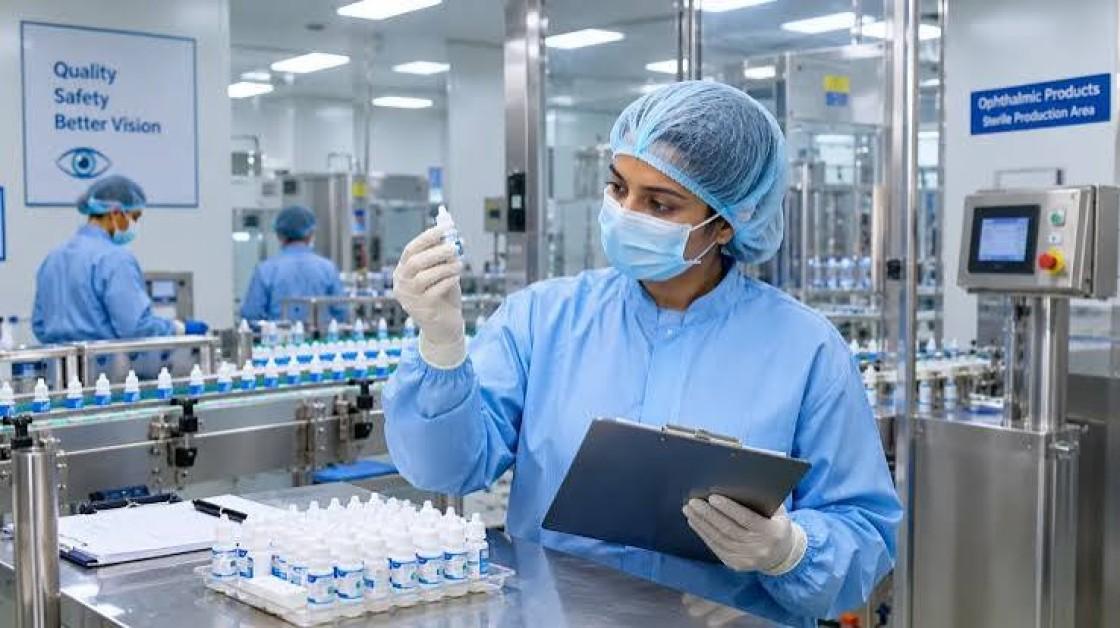
Indian Regulators Restrict Eye-Care Drug Manufacturing at Sun Pharma's Assam Facility
Sun Pharmaceutical Industries Limited, India's largest pharmaceutical company by revenue, has faced regulatory restrictions on the manufacture, sale and distribution of ophthalmic medicines produced at its facility in Assam following concerns over pharmaceutical quality management and product safety.
The restrictions were imposed on August 20, 2026, after a joint inspection by the Central Drugs Standard Control Organisation (CDSCO) and the Assam state drug regulatory authority identified deficiencies in the facility's quality management systems.
The regulatory action became the subject of wider public reporting on October 30, drawing attention to the company's earlier voluntary recall of approximately 11 ophthalmic brands from the Indian market.
Regulators also sought additional information concerning 332 batches of ophthalmic suspension products.
The extent of potential contamination across the affected products remains unclear.
Sun Pharma has stated that it voluntarily recalled the products and temporarily suspended the relevant manufacturing activities while keeping Indian regulators informed.
The company has undertaken corrective measures, while its compliance response has been under regulatory review.
The development highlights the importance of manufacturing quality, contamination controls and regulatory compliance in the production of sterile pharmaceutical products.
Key Details of Sun Pharma's Assam Manufacturing Restrictions

|
Particulars |
Details |
|---|---|
|
Company |
Sun Pharmaceutical Industries Limited |
|
NSE symbol |
SUNPHARMA |
|
BSE code |
524715 |
|
Affected facility |
Assam, India |
|
Product category |
Ophthalmic medicines |
|
Regulatory authorities |
CDSCO and Assam Drugs Controller |
|
Regulatory show-cause notice |
August 10, 2026 |
|
Regulatory restriction order |
August 20, 2026 |
|
Public reporting of restrictions |
October 30, 2026 |
|
Voluntary product recall |
July 2026 |
|
Brands identified in recall |
Approximately 11 |
|
Batches under regulatory inquiry |
332 ophthalmic suspension batches |
|
Main regulatory concern |
Quality management deficiencies |
|
Company response |
Voluntary recall, manufacturing suspension and remedial measures |
|
Resumption of production |
Subject to satisfactory regulatory compliance |
The restrictions concern ophthalmic products associated with the Assam facility, not a suspension of Sun Pharma's entire pharmaceutical manufacturing business.
Regulatory Inspection Identifies Quality Management Deficiencies
The regulatory action followed a joint inspection conducted by central and state drug authorities.
Inspectors identified deficiencies in systems intended to maintain pharmaceutical quality and product safety.
Quality management systems are particularly important in sterile medicine manufacturing because products must be protected from microbial contamination and other manufacturing defects.
The authorities issued a show-cause notice to Sun Pharma on August 10, seeking an explanation for the identified deficiencies.
After reviewing the company's response, regulators issued an order on August 20 restricting the manufacture, sale and distribution of ophthalmic products from the affected facility.
The order requires satisfactory corrective action before manufacturing can resume under the applicable regulatory conditions.
The case demonstrates how inspection findings can lead to restrictions when authorities determine that manufacturing controls require improvement.
Sun Pharma Says Manufacturing Suspension Was Voluntary
Sun Pharma has characterised the product recall and temporary manufacturing suspension as voluntary measures.
During the company's Q2 FY27 earnings discussion on October 30, Managing Director Kirti Ganorkar addressed the ophthalmology product issue.
He stated that the company had voluntarily recalled 11 ophthalmology products and temporarily stopped the relevant manufacturing activities.
He also said the company had kept Indian regulators informed and undertaken remedial measures.
The company's account should be distinguished from the regulatory documents describing the August 20 restriction order.
Both developments form part of the same sequence: the company initiated recall and suspension measures, while regulators subsequently imposed formal restrictions following inspection findings.
The company has indicated that product quality and patient safety remain priorities.
Company Clarifies That Regulatory Developments Occurred in August
On November 2, 2026, Sun Pharma submitted a clarification to the stock exchanges concerning reports about the Assam facility.
The company stated that the reported developments related to August 2026 and did not represent a new event occurring on October 30.
Sun Pharma said it had assessed the matter at the relevant time and had not considered it to require disclosure under Regulation 30 of SEBI's listing regulations.
The clarification followed queries from the stock exchanges concerning the news report and movements in the company's share price.
Sun Pharma also noted that it had announced its financial results for the quarter and half-year ended September 30 on October 30.
The company said it could not attribute the share price movement to the manufacturing report or any particular factor.
It further stated that it was not aware of undisclosed material information requiring disclosure under the applicable listing regulations.
This clarification is important because the October news coverage concerned regulatory developments that had occurred approximately two months earlier.
Voluntary Recall Covers Approximately 11 Ophthalmic Brands
Sun Pharma initiated a voluntary recall of approximately 11 eye-care brands in July 2026.
The company informed distributors and stockists that the withdrawal was being undertaken as a precautionary measure.
The recalled products included several formulations used in ophthalmic treatment.
Among the identified products were Lotepred 1% eye drops, Nepalact OD, Nepalact-Z, Brinzotim and Depopred.
These products are associated with treatment needs such as eye inflammation and other ophthalmic conditions.
However, the specific clinical use varies by formulation.
The recall was intended to remove affected products from the distribution chain while quality concerns were examined.
A precautionary recall does not establish that every recalled unit was contaminated or caused harm.
Nevertheless, such measures are important in protecting patients when product quality cannot be assured.
Regulators Seek Information on 332 Ophthalmic Batches
Regulatory documents also referred to 332 batches of ophthalmic suspension products.
Authorities sought additional information relating to these batches as part of the investigation.
Ophthalmic suspensions are liquid formulations containing dispersed medicinal particles.
They require carefully controlled manufacturing processes to maintain quality, uniformity and sterility.
The number of batches involved indicates the potential scale of the regulatory review.
However, the exact relationship between the 332 batches and the approximately 11 recalled brands has not been fully established publicly.
It remains unclear whether all the batches belong exclusively to the identified brands or include additional products.
It is also not established that every batch was contaminated.
The distinction between products under investigation and products confirmed to have defects is essential when assessing the matter.
Assam Facility Located in Kokjhar Village
The affected manufacturing operation is associated with Sun Pharma's facility in Kokjhar village, Assam.
The site has been identified as an important part of the company's sterile pharmaceutical manufacturing infrastructure.
Sterile manufacturing facilities require specialised production environments, equipment and quality-control procedures.
These requirements are particularly important for ophthalmic medicines because products are applied directly to sensitive eye tissues.
Manufacturing controls must minimise the possibility of contamination during production, filling and packaging.
A failure in these systems can create regulatory and patient-safety concerns.
The restrictions at the Assam facility therefore have implications for manufacturing compliance and supply continuity.
The operational impact will depend on the duration of the restrictions and the company's ability to restore approved production.
Ophthalmic Medicines Require Stringent Sterility Controls
Eye-care medicines are among the pharmaceutical products requiring particularly careful manufacturing controls.
Many ophthalmic preparations must be sterile because they come into direct contact with the eye.
Contamination can create risks that are different from those associated with some non-sterile medicines.
Manufacturers must maintain appropriate environmental controls, validated production processes and reliable testing procedures.
Sterility assurance involves several layers of protection.
These include equipment qualification, environmental monitoring, personnel practices, process validation and batch-release controls.
A satisfactory finished-product test alone cannot substitute for a reliable manufacturing quality system.
Regulators therefore evaluate the overall manufacturing process when assessing sterile pharmaceutical facilities.
The Assam case illustrates the importance of maintaining these controls consistently.
Ophthalmologists' Advisory Raises Patient-Safety Concerns
The regulatory action followed concerns raised by the All India Ophthalmological Society.
In June 2026, the professional association issued a patient-safety advisory concerning certain batches of Predmet eye drops.
The advisory followed reports of infections and concerns about possible microbial contamination.
Santosh Honavar, an ophthalmologist and secretary of the association, reported that infections had been observed in some patients who used the product and that testing of sealed bottles had identified contamination.
The reported findings heightened attention to ophthalmic product safety.
However, they should not be interpreted as evidence that every product or batch involved in Sun Pharma's wider recall was contaminated.
The extent of any patient harm associated with the broader regulatory action has not been established publicly.
For patients using ophthalmic medicines, product quality and appropriate medical guidance are particularly important.
Anyone concerned about a recalled medicine should consult their prescribing clinician or pharmacist rather than independently changing treatment.
Quality Management Systems Under Regulatory Scrutiny
The deficiencies identified during the Assam inspection concern the systems responsible for ensuring manufacturing quality.
A pharmaceutical quality management system includes procedures for monitoring production, investigating deviations and preventing defective products from reaching patients.
It also includes documentation, training, validation and corrective action processes.
When regulators identify deficiencies, manufacturers may be required to investigate root causes and implement corrective and preventive actions.
These measures can involve equipment changes, revised procedures, additional testing and staff training.
Regulators may also require evidence demonstrating that the corrective measures are effective.
The time needed to complete these activities depends on the nature and extent of the findings.
Sun Pharma's ability to resume ophthalmic manufacturing at the affected facility will depend on satisfying the relevant regulatory requirements.
Compliance Report Submitted for Regulatory Review
Sun Pharma has submitted a compliance response relating to the Assam manufacturing restrictions.
The response has been under review by the relevant authorities.
A compliance submission generally provides information about corrective measures taken to address inspection observations.
However, submission does not automatically mean that regulators have accepted the measures.
Authorities may seek additional information or verification before permitting restricted operations to resume.
The regulatory review process is therefore important to determining the facility's production timeline.
Until the relevant requirements are satisfied, the restrictions remain a material operational consideration for the affected ophthalmic products.
No confirmed date for resumption should be assumed without an official update.
Ophthalmology Represents a Smaller but Strategic Business Segment
Ophthalmology accounts for approximately 3% of Sun Pharma's domestic revenue, according to its FY2025–26 annual reporting.
This suggests that the affected therapeutic category represents a relatively limited portion of the company's Indian business.
However, the financial implications of a manufacturing restriction cannot be determined from revenue share alone.
The impact depends on the products manufactured at the affected site, available alternative capacity and the duration of the interruption.
Product recalls can also create expenses associated with returns, investigations and corrective action.
The company may face additional costs if manufacturing processes require changes or revalidation.
Furthermore, sterile manufacturing capabilities are strategically important to pharmaceutical companies operating in regulated international markets.
Consequently, the operational significance of the Assam issue may extend beyond the immediate revenue contribution of ophthalmology products.
Potential Impact on Product Availability
Restrictions on manufacturing and distribution can affect the availability of specific medicines.
The extent of disruption depends on inventory levels, alternative manufacturing arrangements and the duration of regulatory restrictions.
Pharmaceutical companies may be able to supply certain products from other approved facilities.
However, manufacturing-site changes can require regulatory authorisation, depending on the product and market.
For ophthalmic medicines, production must comply with applicable sterility and quality requirements.
Sun Pharma's ability to maintain supply will therefore depend on the status of affected products and the availability of compliant manufacturing arrangements.
Patients should rely on healthcare professionals for suitable alternatives where a prescribed product is unavailable.
Previous US FDA Action Adds Regulatory Context
The Assam developments follow earlier regulatory scrutiny involving another Sun Pharma manufacturing facility.
In 2025, the US Food and Drug Administration restricted shipments from the company's Halol facility in Gujarat after identifying deficiencies associated with contamination controls.
The Halol matter concerns a different manufacturing site and regulatory process.
It should not be treated as evidence that the same deficiencies occurred at the Assam facility.
However, the developments demonstrate the importance of sterile manufacturing compliance across pharmaceutical operations.
International pharmaceutical companies must meet regulatory requirements in every market where their products are supplied.
Inspection findings can affect production, product approvals and market access.
For Sun Pharma, maintaining consistent manufacturing standards remains important to its domestic and international business.
Indian Pharmaceutical Quality Standards Face Wider Attention
India is one of the world's major pharmaceutical manufacturing centres.
The industry supplies medicines to domestic patients and international markets.
Its competitiveness depends on manufacturing scale, affordability and compliance with applicable quality standards.
Regulatory authorities have increased attention to manufacturing quality following several high-profile drug safety incidents.
These developments have reinforced the importance of inspection systems, traceability and effective enforcement.
For pharmaceutical manufacturers, quality compliance is not limited to meeting minimum documentation requirements.
It requires reliable systems that prevent manufacturing defects and identify problems before products reach patients.
The Sun Pharma case highlights the operational and reputational consequences that can arise when regulators identify weaknesses in those systems.
Sun Pharma's Q2 FY27 Profit Declines Amid Exceptional Charges
The Assam manufacturing issue attracted attention around the time Sun Pharma announced its September-quarter financial results.
For Q2 FY27, the company reported consolidated net profit of approximately ₹1,989 crore, compared with ₹3,118 crore in the corresponding quarter of the previous financial year.
This represented a decline of approximately 36%.
Revenue from operations increased to approximately ₹16,199 crore, supported by pharmaceutical business growth.
The decline in reported profit was substantially influenced by exceptional charges, including costs associated with the company's planned Organon acquisition and a US antitrust-related provision.
These financial charges are separate from the Assam ophthalmic manufacturing restrictions.
Investors should therefore avoid attributing the quarterly profit decline directly to the eye-care drug recall.
The company's reported results reflect several business and accounting factors.
Sun Pharma's Q2 FY27 Financial Performance
|
Financial Indicator |
Q2 FY27 |
Q2 FY26 |
Change |
|---|---|---|---|
|
Consolidated revenue |
Approximately ₹16,199 crore |
Approximately ₹14,478 crore |
+11.9% |
|
Consolidated net profit |
Approximately ₹1,989 crore |
Approximately ₹3,118 crore |
−36.2% |
|
Exceptional charges |
Approximately ₹1,269 crore |
— |
Significant impact on profit |
|
Ophthalmology share of domestic revenue |
Approximately 3% in FY26 |
— |
Limited direct segment exposure |
The figures show that Sun Pharma's consolidated revenue continued growing even as exceptional expenses reduced reported profitability.
The financial impact specifically attributable to the Assam restrictions has not been separately quantified in the information available.
Investors Monitor Regulatory and Operational Risks
Manufacturing restrictions can influence pharmaceutical companies through several channels.
These include lost production, recall expenses, compliance costs and possible supply disruption.
The duration of regulatory restrictions is often an important factor in assessing the potential financial impact.
A short interruption may have a different effect from a prolonged manufacturing suspension.
Investors will also consider whether production can be transferred to other qualified facilities.
However, alternative manufacturing arrangements must satisfy applicable regulatory requirements.
Sun Pharma's diversified operations may provide flexibility, but the specific impact on affected ophthalmic products remains uncertain.
The company's future disclosures will be important in clarifying the operational and financial consequences.
Key Developments Investors and Industry Stakeholders Will Monitor
|
Area |
Key Consideration |
|---|---|
|
Regulatory compliance |
Whether authorities accept corrective measures |
|
Manufacturing restart |
Timing of permitted ophthalmic production |
|
Product recall |
Final scope and status of affected products |
|
Quality investigation |
Findings relating to contamination and process controls |
|
Patient safety |
Any confirmed adverse events and clinical assessments |
|
Product availability |
Ability to maintain supply through approved channels |
|
Compliance expenditure |
Costs associated with corrective measures |
|
Revenue impact |
Financial contribution of affected products |
|
International regulatory exposure |
Any implications for other markets |
|
Company disclosures |
Updates on the facility and regulatory review |
These factors will determine how the Assam issue develops beyond the initial manufacturing restrictions.
Outlook for Sun Pharma's Ophthalmic Operations
Sun Pharma's near-term priority at the affected Assam facility is resolving the identified quality concerns and satisfying regulatory requirements.
The company has stated that it undertook voluntary recall and manufacturing suspension measures.
It has also reported remedial action intended to address the concerns.
However, the regulatory process remains important because manufacturing cannot resume without the necessary compliance clearance.
The broader financial implications will depend on the duration of the restrictions and the final scope of affected products.
The company's ophthalmology business represents a relatively small portion of domestic revenue, but sterile manufacturing quality is strategically significant.
Investors and healthcare stakeholders will monitor regulatory updates, product availability and any additional information about patient safety.
Conclusion
Sun Pharmaceutical Industries has faced restrictions on ophthalmic drug manufacturing, sale and distribution at its Assam facility following quality management deficiencies identified by Indian drug regulators.
The formal regulatory order was issued on August 20, 2026, after a joint inspection by central and state authorities.
The action followed Sun Pharma's voluntary recall of approximately 11 ophthalmic brands in July.
Regulators also sought additional information concerning 332 batches of ophthalmic suspension products.
The extent of contamination across the wider group of affected products remains uncertain.
Sun Pharma has stated that it voluntarily recalled the products, temporarily suspended manufacturing and implemented remedial measures.
In a November 2 stock exchange clarification, the company emphasised that the matter concerned developments from August rather than a new October event.
The restrictions highlight the importance of quality management systems in sterile pharmaceutical manufacturing.
The next significant development will be the regulatory assessment of Sun Pharma's corrective measures and confirmation of whether ophthalmic production can resume at the facility.
 Sun Pharma Halts Eye Drug Production at Assam Facility Over Quality Lapses FAQs

POST A COMMENT (0)
All Comments (0)
Replies (0)