




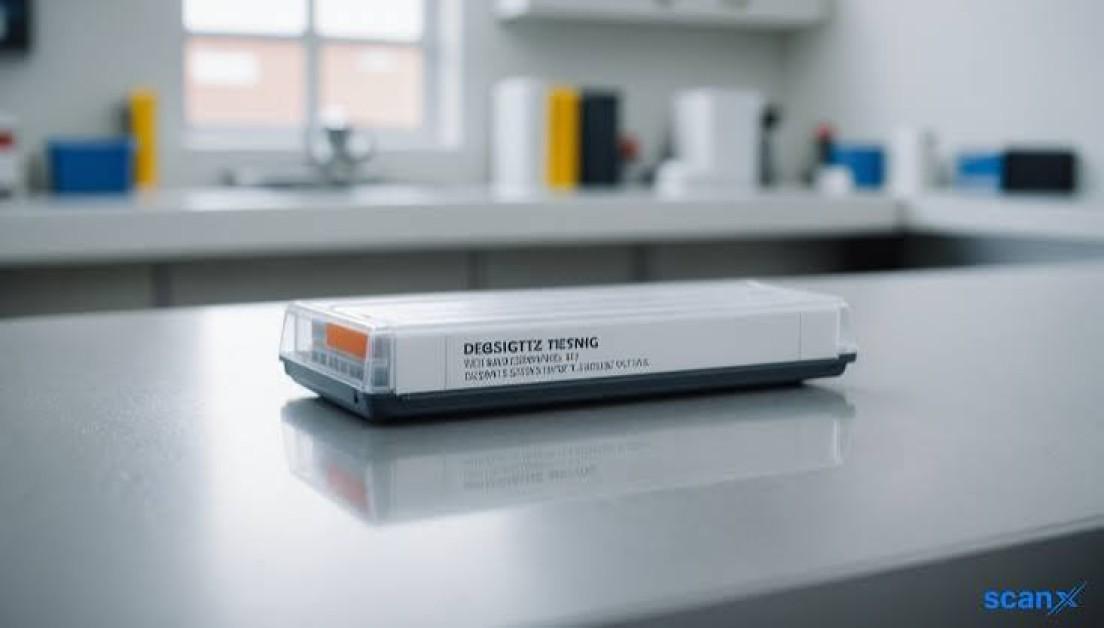
Lords Mark Industries Introduces Radiation-Free Breast Screening Technology
Mumbai, November 23, 2026: Lords Mark Industries Limited has announced the launch of a radiation-free breast cancer screening device as part of its expansion into India's healthcare diagnostics and medical technology market.
The device is positioned as a non-invasive breast screening solution intended to support the identification of potential breast abnormalities without exposing patients to ionising radiation.
The announcement reflects the company's efforts to strengthen its presence in healthcare technology and address demand for accessible breast health screening services.
Breast cancer remains a major public health concern in India, where timely diagnosis and access to appropriate medical facilities are important factors in patient outcomes.
Technologies that can support breast health assessments may provide additional options for healthcare providers, particularly in settings where conventional diagnostic infrastructure is limited.
However, the clinical value of any new screening device depends on its underlying technology, regulatory authorisation, diagnostic accuracy and validation through appropriate medical studies.
A radiation-free screening method should not automatically be considered equivalent to mammography or other established breast imaging procedures.
Lords Mark Industries Secures Manufacturing Licence for Breast Screening Device
Lords Mark Industries announced on November 23 that it had secured a manufacturing licence for its proprietary radiation-free breast screening technology.
The licence, numbered MFG/MD/2026/000736, was issued under Form MD-5 of the Medical Devices Rules, 2017.
It authorises the manufacture of the Class B medical device for sale or distribution in India.
The regulatory milestone provides the company with a foundation for its planned commercial rollout, although the effectiveness of the technology in clinical screening must be evaluated separately.
Key Details of the Breast Screening Device
|
Particulars |
Details |
|---|---|
|
Company |
Lords Mark Industries Limited |
|
Product |
Lords Med Breast Cancer Screening Kit |
|
Announcement date |
November 23, 2026 |
|
Technology |
Wearable thermal sensing |
|
Number of sensors |
28–36 |
|
Radiation exposure |
None |
|
Device classification |
Class B |
|
Manufacturing licence |
MFG/MD/2026/000736 |
|
Regulatory framework |
Medical Devices Rules, 2017 |
|
Proposed screening price |
Below ₹700 |
|
Planned service launch |
January 2027 |
|
Initial distribution channel |
Lord's Path Labs |
|
BSE code |
501261 |
The company plans to make the screening service available through its diagnostic network and partnerships with healthcare institutions.
How Lords Med Breast Cancer Screening Technology Works
The Lords Med Breast Cancer Screening Kit uses a wearable system equipped with 28–36 thermal sensors.
These sensors measure temperature patterns across the breast surface.
The technology is designed to identify temperature variations that may indicate underlying physiological abnormalities.
The system does not use ionising radiation, distinguishing it from conventional X-ray mammography.
Thermal Sensors Measure Breast Surface Temperature
The wearable device records temperature information from different regions of the breast.
Changes in surface temperature can occur for several reasons, including variations in blood flow, inflammation and other physiological processes.
The device uses these measurements to identify patterns that may warrant further medical evaluation.
However, temperature variations are not specific to breast cancer.
An abnormal thermal pattern cannot independently establish the presence of a malignant tumour, and a normal result cannot reliably exclude cancer without adequate clinical validation.
Artificial Intelligence Supports Pattern Analysis
The company's broader technology development programme incorporates artificial intelligence-driven temperature mapping.
Such systems can analyse measurements and identify patterns across multiple sensor readings.
The potential benefit is automated analysis of complex information.
Nevertheless, the reliability of the findings depends on the quality of clinical data, validation methods and the system's demonstrated diagnostic performance.
Lords Mark Targets Breast Screening at Below ₹700 Per Test
Affordability is a central part of Lords Mark Industries' commercial strategy.
The company has proposed a screening price of less than ₹700 per test.
This pricing is intended to encourage participation among women who may face financial barriers to preventive healthcare.
The proposed amount could make the service accessible to a broader population if the company successfully establishes its planned screening network.
However, the price remains a commercial target rather than a confirmed nationwide tariff.
Additional diagnostic investigations, if recommended, may involve separate expenses.
Why Affordable Screening Matters
Breast cancer screening services are not equally accessible across all regions of India.
Availability can vary depending on healthcare infrastructure, specialist services and household resources.
Lower-cost assessment technologies may help expand initial access to breast health services.
However, affordability alone does not establish that a screening method improves health outcomes.
Clinical accuracy, appropriate patient selection, reliable referrals and access to confirmatory testing are equally important.
Commercial Screening Services Planned From January 2027
Lords Mark Industries intends to begin offering the screening service through its Lord's Path Labs network in January 2027.
The company also plans to collaborate with private hospitals, diagnostic laboratories and other healthcare institutions.
These partnerships are intended to expand the availability of the device beyond the company's existing facilities.
The rollout strategy includes exploring opportunities to integrate screening services with government healthcare schemes.
Such arrangements could potentially increase access in communities with limited diagnostic infrastructure.
However, the company has not announced confirmed government contracts, reimbursement agreements or nationwide deployment targets for the device.
India Represents a Growing Breast Cancer Diagnostics Market
India's breast cancer burden creates substantial demand for accessible and reliable diagnostic services.
According to figures cited in the company's announcement, the International Agency for Research on Cancer estimated 237,231 new breast cancer cases in India during 2024.
The scale of the disease burden highlights the importance of timely medical evaluation and access to appropriate healthcare.
Breast cancer outcomes depend on several factors, including disease stage, tumour characteristics, treatment availability and overall patient health.
Early detection can improve treatment opportunities, but screening programmes must use appropriately validated methods.
Indian Breast Cancer Diagnostics Market Projected to Reach $419.1 Million by 2033
Lords Mark Industries has highlighted the commercial potential of India's breast cancer diagnostics market.
Market estimates cited in its announcement indicate that the sector generated approximately $179.7 million in revenue during 2025.
The market is projected to reach $419.1 million by 2033.
India breast cancer diagnostics market

Industry estimates cited by Lords Mark Industries; 2033 is a projection.
The projected expansion reflects expectations of increasing demand for diagnostic technologies and healthcare services.
However, these estimates concern the broader diagnostics market and do not represent expected sales for Lords Mark Industries.
The company's ability to capture a share of the market will depend on clinical acceptance, distribution, pricing and competition.
Second Major Medical Device Offering After AI-Enabled Dialysis Machine
The breast screening kit represents Lords Mark Industries' second major medical device offering following its artificial intelligence-enabled dialysis machine.
The company has been expanding its healthcare technology portfolio through medical equipment, diagnostic products and related services.
Its broader development programme includes additional medical device manufacturing capabilities and diagnostic technologies.
The expansion reflects a strategy of building a diversified healthcare technology business.
The company's November operational update also indicated that production of its AI-based dialysis machines had commenced at its Bengaluru facility.
Commercial performance across these businesses will depend on manufacturing execution, regulatory requirements and customer adoption.
Medical Device Manufacturing Licence Marks Regulatory Milestone
Obtaining a manufacturing licence is an important step towards commercialisation.
The licence permits the company to manufacture the specified Class B device for sale or distribution under the applicable regulatory framework.
However, regulatory manufacturing authorisation and evidence of clinical screening effectiveness are distinct considerations.
The company's November announcement did not provide detailed peer-reviewed clinical results establishing the device's sensitivity, specificity or effectiveness in reducing breast cancer mortality.
Those measurements are essential when evaluating a technology intended for cancer screening.
Lords Mark Industries previously outlined plans for further clinical studies involving its breast screening technology.
The outcomes of such studies will be important for assessing its potential role in clinical practice.
Can Radiation-Free Thermal Screening Replace Mammography?
The absence of ionising radiation is a technical characteristic of the Lords Med device.
It does not, by itself, establish superior safety, accuracy or effectiveness compared with established screening methods.
Mammography remains an established breast cancer screening technique for appropriately selected populations.
Ultrasound and magnetic resonance imaging may also be used in specific clinical circumstances.
Thermal sensing technologies measure surface temperature patterns rather than directly producing anatomical images of breast tissue.
Consequently, the methods provide different types of information.
A thermal screening result should not be treated as a definitive diagnosis or as a substitute for recommended mammography, ultrasound, biopsy or other medical investigations.
The clinical role of Lords Mark's device will depend on independent validation and appropriate medical guidance.
Implications for India's Medical Device Manufacturing Industry
The announcement reflects the growing participation of Indian companies in medical device development.
Domestic manufacturers are increasingly exploring technologies involving sensors, software, connected devices and artificial intelligence.
These products may create opportunities to improve access to healthcare services while supporting local manufacturing.
However, medical devices intended for screening or diagnosis require particularly careful evaluation.
Manufacturers must demonstrate appropriate quality controls and comply with relevant regulatory requirements.
Healthcare providers must also understand the limitations of new technologies before incorporating them into clinical pathways.
Lords Mark's manufacturing licence establishes a regulatory foundation for production, while clinical evidence and real-world performance will determine the device's broader medical significance.
Commercial Opportunities and Business Risks for Lords Mark Industries
The planned launch could create a new revenue stream for Lords Mark Industries.
The company intends to offer screening services through its own laboratory network and external healthcare partnerships.
A service-based model could generate revenue from individual screening procedures and institutional arrangements.
However, the company has not disclosed confirmed screening volumes, device sales targets or expected revenue from the product.
The commercial opportunity also involves several uncertainties.
These include the cost of establishing screening services, healthcare provider adoption, clinical validation requirements and the availability of confirmatory diagnostic services.
The proposed price below ₹700 may support affordability, but the profitability of the service will depend on operating expenses and utilisation.
Lords Mark Industries Shares Face Investor Scrutiny
The manufacturing licence announcement attracted attention from investors evaluating the company's healthcare expansion.
During morning trading on November 23, Lords Mark Industries shares declined approximately 4.99%, despite the regulatory milestone.
The movement demonstrates that a positive corporate announcement does not necessarily result in an immediate increase in share price.
Investors may consider broader company valuations, financial performance, market conditions and expectations for commercial execution.
The manufacturing licence establishes an important development milestone, but the product's eventual contribution to earnings remains uncertain.
Future disclosures regarding commercial adoption, screening volumes and financial performance will provide greater clarity.
What Happens Next for the Breast Screening Device?
The company's next major objective is the planned January 2027 rollout through Lord's Path Labs.
Preparations are expected to involve manufacturing, distribution, training and integration with participating healthcare providers.
The company also intends to develop partnerships with private hospitals and diagnostic laboratories.
Clinical validation and evidence regarding diagnostic performance will remain important considerations for healthcare adoption.
The commercial rollout will be an early test of the company's ability to translate its manufacturing licence into an operational screening service.
Conclusion
Lords Mark Industries' announcement of a radiation-free breast screening device represents an expansion of its medical technology portfolio.
The company has obtained a Class B medical device manufacturing licence for the Lords Med Breast Cancer Screening Kit, which uses 28–36 thermal sensors to measure breast surface temperature patterns.
It plans to introduce screening services through Lord's Path Labs from January 2027 at a proposed price below ₹700 per test.
The company also intends to establish partnerships with hospitals, diagnostic laboratories and other healthcare institutions.
The development creates a potential commercial opportunity in India's growing breast cancer diagnostics market.
However, the manufacturing licence and proposed affordability do not independently establish the device's clinical effectiveness.
The technology's long-term significance will depend on reliable clinical evidence, responsible medical use, successful commercial deployment and its ability to support appropriate diagnostic follow-up.
 Lords Mark Launches Radiation-Free Breast Cancer Screening Device FAQs

POST A COMMENT (0)
All Comments (0)
Replies (0)