





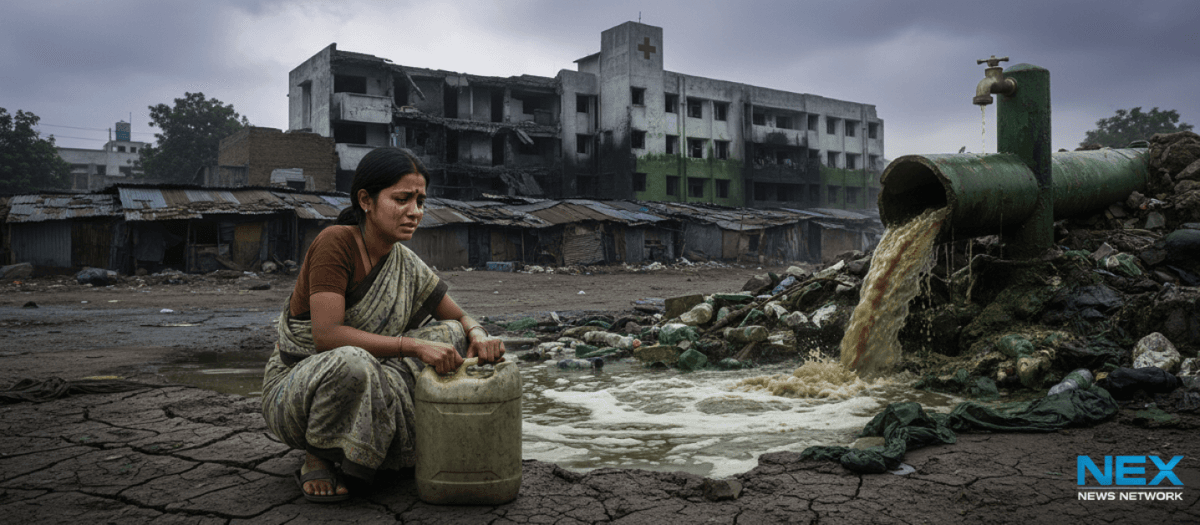
A severe health crisis has unfolded in Indore as a sewage leak contaminated the city's water supply, leading to widespread illness.
The situation has taken a grim turn with the death toll rising to 10 and over 1,400 people falling ill. The High Court has taken cognizance of the matter and has sought a report on the situation.
The indore water crisis highlights the need for immediate action to rectify the sewage leak and ensure safe drinking water for the residents.
Key Takeaways
- The death toll has risen to 10 due to the contaminated water supply.
- Over 1,400 people have fallen ill as a result of the sewage leak.
- The High Court has intervened and sought a report on the health crisis.
- The incident has brought the issue of water contamination to the forefront.
- Immediate action is required to rectify the sewage leak and prevent further health risks.
Current Situation and Death Toll
A severe public health emergency has been declared in Indore as a result of a sewage leak contaminating the water supply, leading to 10 deaths and 1,400 illnesses. The crisis has prompted immediate action from local authorities and healthcare providers.
Overview of the Crisis
The contamination of the water supply has been identified as the primary cause of the health crisis in Indore. The sewage leak has polluted the water, making it unsafe for consumption.
Geographic Scope of Contamination
The contaminated water supply has affected several areas within Indore, with the exact geographic scope still being assessed. Efforts are underway to identify all impacted regions and contain the contamination.
Timeline of First Reported Cases
The first cases of illness were reported on %DATE%, with the number of affected individuals rising rapidly over the subsequent days. The swift response from healthcare providers has been crucial in managing the crisis.
Confirmed Casualties
The total number of confirmed casualties stands at 10 deaths, with over 1,400 people reported ill. The demographics of the victims and the causes of death are being analyzed to understand the full impact of the crisis.
Victim Demographics
The victims include a range of ages and backgrounds, with no specific demographic being disproportionately affected. Further analysis is needed to determine any patterns in the victim demographics.
Cause of Deaths
The primary cause of death has been linked to the consumption of contaminated water, with underlying health conditions potentially exacerbating the severity of the illnesses. Investigations are ongoing to determine the exact cause of deaths.
Indore water crisis: 10 dead, 1,400 ill after sewage leak; HC orders inquiry
A sewage leak has led to a massive water contamination crisis in Indore, resulting in 10 deaths and 1,400 cases of illness, prompting a High Court inquiry. The crisis has raised serious concerns about the city's water management and infrastructure.
Timeline of Events
The crisis unfolded over several days, with the initial contamination detected on [Date]. The sequence of events is crucial to understanding the escalation of the crisis.
Initial Contamination Detection
The first reports of contaminated water emerged when residents began complaining of unusual odors and tastes in their tap water. Authorities were alerted, but the response was initially slow.
Escalation of the Crisis
As more cases of illness were reported, the situation quickly escalated. Hospitals were flooded with patients showing symptoms of waterborne diseases. The administration struggled to keep up with the demand for medical care.
Affected Areas in Indore
The impact of the water contamination was not uniform across Indore. Certain neighborhoods were more severely affected than others.
Neighborhood-specific Impact
Areas with older infrastructure were particularly vulnerable to the contamination. Residents in these neighborhoods faced the highest risk of illness.
Population Density Considerations
High population density areas exacerbated the crisis, as more people were exposed to the contaminated water. This highlighted the need for targeted interventions in densely populated regions.
The High Court's inquiry into the matter is expected to shed light on the responsibilities and potential negligence involved in the crisis. It will be crucial in determining the next steps for recovery and prevention.
Cause of Contamination: Sewage Leak Investigation
A thorough investigation is underway to determine the exact cause of the sewage leak that led to the contamination of Indore's water supply. Initial findings suggest that the leak was a result of infrastructure failures, which allowed sewage to mix with the drinking water.
Technical Details of the Sewage Leak
The sewage leak is believed to have occurred due to a failure in the water distribution system. Specifically, the point of failure was identified at a junction where sewage and water supply lines crossed.
Point of Failure in the System
The exact point of failure was a corroded pipe section that had not been replaced in years, despite repeated warnings about the age and condition of pipelines.
Contamination Spread Mechanics
Once the sewage leak occurred, the contaminated water spread through the distribution network, affecting a wide area. The contamination spread was facilitated by the interconnected nature of the water supply system.
Infrastructure Failures Identified
Further investigation revealed that infrastructure failures went beyond the immediate point of the sewage leak. The age and condition of pipelines were found to be substandard across much of the network.
Age and Condition of Pipelines
Many of the pipelines were decades old and had not been adequately maintained, leading to frequent leaks and contamination risks.
Maintenance History and Oversight
A review of the maintenance history showed a lack of regular inspections and repairs, contributing to the overall deterioration of the water distribution infrastructure.
The findings underscore the need for immediate action to upgrade Indore's water infrastructure to prevent future crises.
Health Impact and Medical Response
The recent sewage leak in Indore's water supply has triggered a public health emergency, necessitating immediate medical response. The contamination has led to a significant health crisis, with numerous individuals reporting symptoms of waterborne diseases.
Symptoms and Illnesses Reported
The symptoms reported by those affected include severe gastrointestinal issues, fever, and in some cases, dehydration. The most common waterborne diseases identified in the crisis are cholera, typhoid, and dysentery.
Common Waterborne Diseases Identified
The contaminated water has been found to be contaminated with bacteria such as E. coli and other pathogens that cause cholera and typhoid. These diseases are known to spread rapidly through contaminated water sources.
Vulnerable Populations Most Affected
The most vulnerable populations, including children, the elderly, and those with compromised immune systems, are disproportionately affected by the waterborne diseases. These groups require immediate medical attention to prevent severe health complications.
Hospital Preparedness and Treatment Protocols
Hospitals in Indore have ramped up their preparedness to handle the influx of patients. Treatment protocols are in place, focusing on rehydration therapy, antibiotic treatment for bacterial infections, and isolation to prevent further spread of the disease.
Medical Resources Deployed
Additional medical resources, including IV fluids, antibiotics, and medical personnel, have been deployed to affected areas. The response includes both government and non-governmental organizations working together to provide necessary care.
Challenges in Treatment Delivery
Despite the efforts, challenges persist in delivering treatment effectively, including the shortage of medical supplies and the high volume of patients. Ensuring timely and adequate care remains a significant challenge.
| Disease | Symptoms | Treatment |
|---|---|---|
| Cholera | Severe diarrhea, dehydration | Rehydration therapy, antibiotics |
| Typhoid | Fever, headache, abdominal pain | Antibiotics, supportive care |
| Dysentery | Bloody diarrhea, abdominal pain | Antibiotics, fluid replacement |
Government Response and Emergency Measures
The Indore water crisis has prompted a swift government response to mitigate the situation. The authorities have taken several immediate actions to address the contamination and ensure the public's safety.
Immediate Actions Taken
The government has initiated a series of emergency measures to tackle the crisis. These include shutting down the contaminated water supply lines and issuing public health advisories.
Water Supply Shutdown Procedures
The municipal authorities have systematically shut down the affected water supply lines to prevent further contamination. This process has been carried out in phases to minimize disruption to the public.
Public Health Advisories Issued
Public health advisories have been issued, warning citizens about the risks associated with consuming the contaminated water. The advisories have been disseminated through various media channels.
Clean Water Distribution Efforts
To alleviate the suffering of the affected population, the government has launched clean water distribution efforts. This includes deploying water tankers and implementing water purification initiatives.
Tanker Deployment Strategy
Water tankers have been deployed to areas where the piped water supply is contaminated. The tankers are sourced from unaffected regions and are equipped with purification systems.
Water Purification Initiatives
Water purification initiatives have been undertaken to restore the potability of the water supply. This involves installing temporary purification plants and distributing water purification tablets.
| Measure | Description | Status |
|---|---|---|
| Water Supply Shutdown | Systematic shutdown of contaminated water supply lines | Ongoing |
| Public Health Advisories | Issuance of health warnings through media channels | Completed |
| Clean Water Distribution | Deployment of water tankers and purification initiatives | Ongoing |
High Court Intervention and Legal Proceedings
The High Court's intervention in the Indore water crisis marks a significant development in the ongoing legal proceedings. The court's decision to take cognizance of the situation underscores the gravity of the crisis and the need for immediate, effective action.
Details of the Court Order
The High Court has issued a comprehensive order outlining the necessary steps to address the crisis. This includes:
Specific Directives to Authorities
The court has directed the local authorities to ensure the immediate repair of the sewage leak and to provide safe drinking water to the affected populations. Additionally, the authorities are required to submit a detailed report on the actions taken.
Timeline for Compliance
The authorities have been given a strict timeline to comply with the court's directives, with regular updates to be submitted to the court.

Accountability Questions Raised
The High Court's inquiry has also raised questions about the accountability of officials responsible for the maintenance of water supply infrastructure.
Officials Under Scrutiny
Several officials are under scrutiny for their role in the infrastructure failure that led to the contamination of the water supply.
Potential Legal Consequences
If found negligent, these officials may face legal consequences, including potential prosecution for their role in the crisis.
| Aspect | Details | Status |
|---|---|---|
| Court Directives | Repair sewage leak, provide safe drinking water | Pending |
| Timeline for Compliance | Immediate action required | Ongoing |
| Officials Under Scrutiny | Maintenance officials | Under Investigation |
"The High Court's intervention is a crucial step towards ensuring accountability and preventing such crises in the future."
Historical Context of Water Management in Indore
A review of Indore's water management history reveals a pattern of infrastructure failures that have contributed to the city's ongoing water crisis. Understanding this historical context is crucial to addressing the current challenges.
Previous Contamination Incidents
Indore has experienced several contamination incidents in the past, highlighting the vulnerabilities in its water management system. These incidents have often been linked to infrastructure failures, including sewage leaks and outdated water treatment facilities.
Patterns of Infrastructure Failure
The recurring nature of these incidents suggests a systemic issue with Indore's water infrastructure. Poor maintenance and inadequate investment in modernization have been cited as contributing factors.
Lessons Not Learned
Despite previous incidents, the same mistakes appear to be repeated, indicating a lack of learning from past experiences. This raises questions about the effectiveness of the city's water management policies and practices.
Infrastructure Development and Challenges
Indore's infrastructure development has not kept pace with its growing population and urbanization. The city's water management challenges are compounded by budget constraints and bureaucratic delays in implementing modernization efforts.
Budget Allocation History
A review of budget allocations for water management over the years shows a trend of inconsistent funding and prioritization of other infrastructure projects. This has resulted in a lack of necessary upgrades to the water supply and treatment systems.
Modernization Efforts and Obstacles
Efforts to modernize Indore's water infrastructure have faced numerous obstacles, including regulatory hurdles and public resistance to new projects. Overcoming these challenges is essential to improving the city's water management capabilities.
Economic and Social Impact of the Crisis
The recent water crisis in Indore has not only raised health concerns but also led to substantial economic and social challenges. The city's economy, heavily reliant on commerce and trade, has been significantly affected.
Business Disruptions
The water crisis has caused considerable disruptions to businesses in Indore. Many commercial establishments have been forced to shut down temporarily due to the unavailability of clean water.
Commercial Establishments Affected
Hotels and restaurants have been among the most affected, with many unable to operate due to the water shortage. Retail businesses have also seen a decline in customer traffic.
Financial Losses Estimated
The financial losses incurred by businesses are substantial, with estimates suggesting a significant impact on the local economy. The crisis has also led to job losses, further exacerbating the economic strain.

Social Consequences
The social consequences of the crisis have been equally severe, with widespread disruptions to daily life.
School and Institution Closures
Schools and educational institutions have been closed as a precautionary measure, affecting thousands of students. This has not only disrupted the academic calendar but also caused concerns among parents.
Community Support Networks
In response to the crisis, community support networks have been established to provide aid to those affected. These initiatives have been crucial in helping residents cope with the situation.
The overall impact of the Indore water crisis on the city's economy and society has been profound, highlighting the need for sustainable water management practices.
Conclusion: Long-term Implications and Path Forward
The Indore water crisis has highlighted significant vulnerabilities in the city's water management infrastructure. The contamination incident, resulting in 10 deaths and 1,400 illnesses, underscores the need for immediate and long-term solutions to prevent such crises in the future.
The long-term implications of this crisis extend beyond the immediate health impacts, affecting the social and economic fabric of the community. Ensuring a safe and reliable water supply will require substantial investments in infrastructure, including the repair and upgrade of sewage systems to prevent future leaks and contamination.
Moving forward, the path forward for Indore involves not only addressing the immediate causes of the contamination but also adopting a comprehensive approach to water management. This includes enhancing water treatment processes, improving waste management practices, and implementing robust monitoring systems to detect potential contamination early.
By taking proactive steps, Indore can mitigate the risk of future water crises, protecting the health and well-being of its residents and supporting sustainable development.
 Indore Water Crisis: 10 Dead, 1,400 Ill Due to Sewage Contamination FAQs
POST A COMMENT (0)
All Comments (0)
Replies (0)