





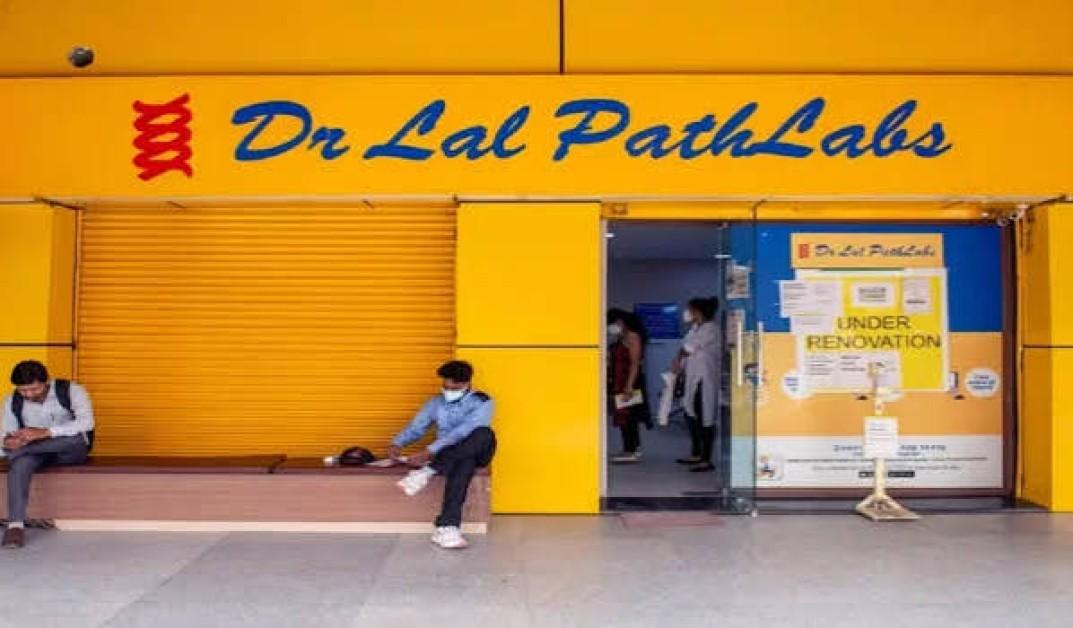
Dr Lal PathLabs Moves to Full Ownership of Centrapath Labs Through Subsidiary Acquisition
Dr Lal PathLabs Limited, one of India's established diagnostic healthcare service providers, has announced that its subsidiary has acquired the remaining 30% equity stake in Centrapath Labs, completing the consolidation of ownership in the diagnostic laboratory business.
The transaction increases the group's indirect ownership in Centrapath Labs from 70% to 100%, eliminating the remaining minority shareholding.
The acquisition reflects a corporate restructuring within Dr Lal PathLabs' existing diagnostics portfolio rather than the purchase of an entirely new business.
Full ownership can simplify corporate governance, financial reporting and operational decision-making, while allowing the parent group to retain the complete economic interest in the subsidiary's future performance.
The development comes as India's organised diagnostics industry continues to evolve through network expansion, technology investment and consolidation among healthcare service providers.
Transaction Completes Acquisition of Remaining Minority Interest

The transaction involves the acquisition of the outstanding 30% shareholding in Centrapath Labs by an existing subsidiary of Dr Lal PathLabs.
Before the latest acquisition, the group already controlled Centrapath Labs through a majority ownership position.
The purchase of the remaining shares converts the business into a wholly owned entity within the group's corporate structure.
This distinction is important because acquiring a minority stake in an already controlled subsidiary generally has different accounting and operational implications from acquiring control of an independent company.
The transaction consolidates ownership rather than necessarily introducing additional revenue or operating assets into the group's consolidated financial statements.
The financial consideration, payment structure and other transaction terms have not been established in the information available for this report.
Full Ownership Strengthens Corporate Control and Decision-Making
A wholly owned subsidiary structure gives the controlling group complete ownership of the entity's equity.
For Dr Lal PathLabs, the consolidation could simplify decisions concerning investment, management appointments, technology deployment and operational integration.
When a company owns less than 100% of a subsidiary, minority shareholders retain economic rights and may have governance protections under applicable agreements and corporate law.
Acquiring the remaining equity eliminates the minority ownership interest and can simplify certain corporate processes.
Full ownership may also provide greater flexibility when restructuring business operations or allocating capital within the group.
However, the actual operational impact will depend on Centrapath Labs' existing management structure, contractual arrangements and integration plans.
What the Acquisition Means for Dr Lal PathLabs' Diagnostics Business
Dr Lal PathLabs operates in India's diagnostic testing industry, providing pathology and laboratory services through an extensive network of laboratories and patient service centres.
Its business includes routine blood tests, preventive health packages, specialised pathology investigations and other diagnostic services.
The company serves individual patients, healthcare providers and institutional customers.
Centrapath Labs forms part of the group's existing corporate portfolio.
By completing the acquisition of the remaining stake, Dr Lal PathLabs gains full economic ownership of the subsidiary.
This may allow the group to coordinate business planning and investment decisions more directly.
However, the acquisition does not automatically indicate an expansion in laboratory capacity, testing volumes or geographical coverage.
Those outcomes would require separate operational developments or additional investments.
Diagnostics Industry Sees Continued Ownership Consolidation
India's diagnostics industry includes large organised laboratory chains, hospital-based diagnostic facilities, regional operators and independent pathology laboratories.
Organised diagnostic companies have pursued expansion through new laboratories, collection centres, franchise networks and acquisitions.
Ownership consolidation can form part of this broader business strategy.
Companies may initially acquire controlling stakes in regional diagnostic businesses while retaining minority shareholders.
Subsequent acquisitions of remaining shares can provide complete ownership after the initial business relationship has been established.
Such transactions may simplify governance and enable the parent company to align operating practices across its network.
However, each acquisition must be evaluated on its individual commercial terms and financial implications.
The Centrapath Labs transaction represents a consolidation of an existing investment rather than evidence of a new market entry.
Financial Reporting Implications of the 30% Stake Purchase
Because Dr Lal PathLabs already held a controlling interest in Centrapath Labs, the subsidiary's financial results would generally have been included in the group's consolidated accounts before the latest acquisition.
Under applicable accounting standards, a parent company normally consolidates the assets, liabilities, income and expenses of subsidiaries it controls.
The portion of equity and profit attributable to other shareholders is separately recognised as a non-controlling interest.
Acquiring the remaining 30% stake eliminates the corresponding non-controlling ownership interest.
Consequently, the transaction may affect the allocation of consolidated equity and future profits attributable to shareholders of the parent company.
It does not necessarily increase consolidated revenue because the subsidiary's operations were already included in the group accounts.
The precise accounting treatment will depend on the transaction structure and applicable financial reporting requirements.
Potential Benefits of Complete Ownership
Full ownership of Centrapath Labs could provide several potential advantages for Dr Lal PathLabs.
Simplified governance: The group may be able to make strategic and operational decisions without coordinating with minority shareholders.
Greater financial flexibility: Future capital allocation and business restructuring decisions may become easier to implement within a wholly owned structure.
Complete economic participation: The group will hold the full equity interest in the subsidiary's future earnings and net assets.
Operational coordination: Management may have greater flexibility to align technology, procurement, quality systems and administrative processes.
Reduced ownership complexity: Eliminating minority shareholdings can simplify the corporate structure and certain financial reporting requirements.
These are potential benefits associated with complete ownership. The company has not established that the transaction will generate specific cost savings or additional operating income.
Technology and Quality Standards Remain Important in Diagnostics
Diagnostic laboratory businesses depend on testing accuracy, turnaround times, sample handling and reliable reporting systems.
Organised diagnostic companies invest in laboratory automation, digital platforms, information systems and quality assurance processes.
A common technology and operating framework can help companies manage laboratories across different locations.
For Dr Lal PathLabs, full ownership of Centrapath Labs may create opportunities for closer coordination of business systems and operational standards.
However, any specific integration measures would need to be confirmed through subsequent company disclosures.
The acquisition itself does not establish that new laboratory technologies, testing equipment or operational changes have been introduced.
India's Diagnostics Market Offers Long-Term Growth Opportunities
Demand for diagnostic services in India is influenced by healthcare awareness, preventive testing, chronic disease management and access to medical services.
Laboratory testing plays an important role in diagnosis, treatment monitoring and preventive healthcare.
The expansion of organised diagnostic networks has increased access to standardised testing services in many urban and regional markets.
Digital booking platforms, home sample collection and electronic reporting have also changed how patients interact with diagnostic providers.
At the same time, the industry remains competitive, with pricing, service quality, geographic accessibility and brand reputation influencing customer choices.
For established operators such as Dr Lal PathLabs, maintaining service quality while expanding operational efficiency remains important.
Ownership consolidation can support corporate simplification, but sustained business growth ultimately depends on testing volumes, customer demand and operating performance.
What Investors Should Monitor
For investors evaluating Dr Lal PathLabs, the acquisition raises several financial and operational considerations.
The purchase consideration will be important in assessing whether the remaining stake was acquired at an attractive valuation.
Investors will also examine the effect on consolidated equity, cash balances and non-controlling interests.
Any changes in the subsidiary's operating performance or integration strategy may become relevant in future reporting periods.
Because the group already controlled Centrapath Labs, the acquisition should not automatically be interpreted as generating additional consolidated revenue.
The transaction's financial significance will depend on the subsidiary's earnings contribution, acquisition cost and subsequent business performance.
Further regulatory disclosures may provide greater clarity on these matters.
Conclusion
Dr Lal PathLabs' acquisition of the remaining 30% stake in Centrapath Labs marks the completion of ownership consolidation within its existing diagnostics portfolio.
The transaction increases the group's indirect equity interest from 70% to 100%, eliminating the remaining minority shareholding.
Full ownership may simplify corporate governance, improve strategic flexibility and allow the group to retain the complete economic interest in the subsidiary.
However, because Centrapath Labs was already controlled by the group, the transaction does not necessarily result in additional consolidated revenue or immediate operational expansion.
Its longer-term significance will depend on the acquisition consideration, financial impact and any subsequent integration initiatives.
The development reflects the continuing importance of corporate restructuring and ownership consolidation within India's organised healthcare diagnostics industry.
 Dr Lal PathLabs Subsidiary Acquires 30% Stake in Centrapath Labs, Consolidating Full Ownership FAQs
POST A COMMENT (0)
All Comments (0)
Replies (0)