





Prime Minister Announces AI Skills Training Programme Targeting 1 Crore Indian Youth
Prime Minister Narendra Modi has announced a major artificial-intelligence skilling initiative aimed at equipping one crore Indian youth with AI capabilities, putting technology skills at the centre of the government's employment and human-capital agenda.
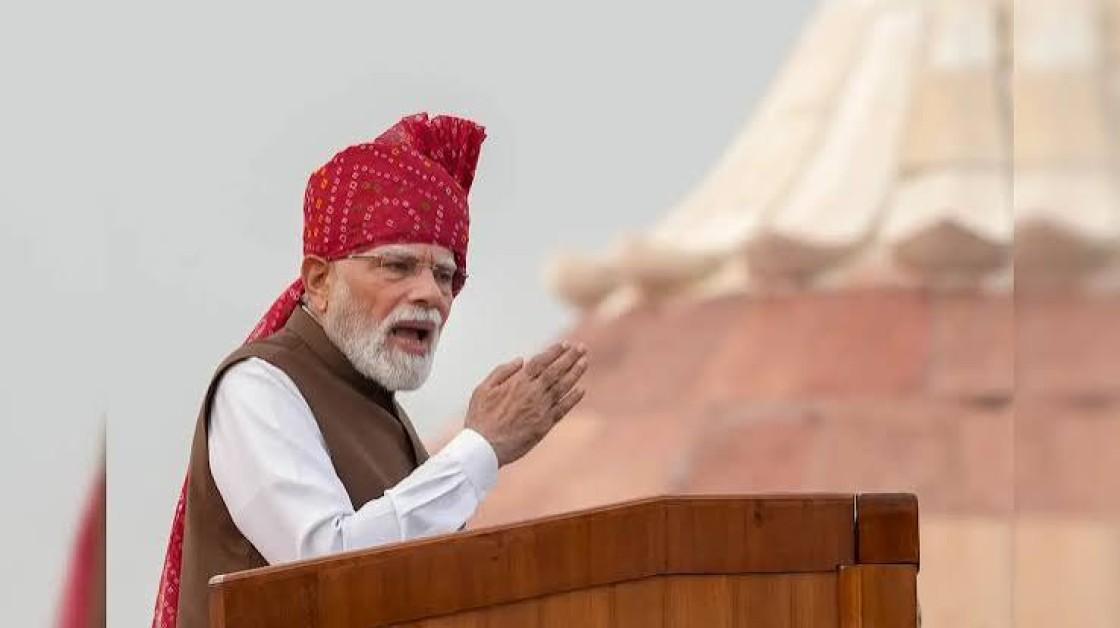
The announcement came during the Prime Minister's Independence Day address on August 15, 2026, as he outlined a broader strategy covering technology, manufacturing, employment, semiconductors and economic development. (The Economic Times)
The scale of the target—10 million young people—makes the initiative potentially one of India's largest technology-skilling programmes.
It also builds on existing government efforts under the IndiaAI Mission, Skill India and programmes such as YUVA AI for All, which have already been designed to expand foundational AI literacy nationwide. (Press Information Bureau)
One Crore Youth to Receive AI Training

The headline commitment is straightforward:
1 crore Indian youth → AI skills training
The Prime Minister said specialised skilling courses would be used to equip young people with artificial-intelligence capabilities. (The Times of India)
The announcement reflects the government's view that AI literacy will increasingly become an important component of employability as technology transforms both traditional and digital industries.
AI Becomes Central to India’s Youth Strategy
India possesses one of the world's largest young populations.
That demographic scale can become an economic advantage only when workers possess skills relevant to emerging industries.
Artificial intelligence is increasingly affecting occupations across:
-
Information technology
-
Manufacturing
-
Financial services
-
Healthcare
-
Retail
-
Media
-
Logistics
-
Agriculture
-
Professional services
The new programme therefore has implications extending well beyond India's technology industry.
Programme Builds on Existing AI-Skilling Infrastructure
The government is not starting from zero.
India already operates several AI education and skilling initiatives.
One important programme is YUVA AI for All, a free national foundational AI course designed to reach one crore citizens. It is available in 11 Indian languages through platforms including DIKSHA, iGOT Karmayogi and FutureSkills Prime. (Press Information Bureau)
The Independence Day commitment reinforces the government's broader ambition to take AI skills beyond specialist engineers and researchers.
YUVA AI for All Targets Mass AI Literacy
YUVA AI for All is designed as an introductory programme rather than an advanced engineering qualification.
Government material describes it as a free, self-paced course lasting approximately four to four-and-a-half hours and aimed at developing foundational AI proficiency. (Press Information Bureau)
That distinction matters.
India's AI workforce strategy requires different levels of capability:
AI awareness → AI users → AI practitioners → AI engineers → AI researchers
Mass literacy programmes can create the first layer, while deeper technical training is needed for specialised employment.
AI Training Is Already Entering Schools
India has also begun introducing AI education earlier in the learning journey.
The SOAR — Skilling for AI Readiness programme, launched in July 2025, introduces AI awareness and foundational skills to students from Classes 6 to 12.
It includes three 15-hour student modules:
-
AI to be Aware
-
AI to Aspire
-
AI to Acquire
A separate 45-hour module supports educators, including training around ethical AI and basic machine-learning concepts. (Press Information Bureau)
AI Education Is Expanding Across Age Groups
Another government initiative, YUVAi, focuses on students from Classes 8 to 12 and encourages young people to develop AI-driven solutions across areas including agriculture, healthcare, education, transport and rural development. (Press Information Bureau)
Together, these programmes indicate an increasingly layered national strategy.
AI education is moving from specialist university programmes toward:
Schools + Vocational training + Professionals + General citizens
That could substantially broaden India's AI talent pipeline.
PMKVY 4.0 Already Includes Artificial Intelligence
Artificial intelligence is also part of India's mainstream vocational-skilling system.
Under Pradhan Mantri Kaushal Vikas Yojana 4.0, training covers emerging technologies including:
-
Artificial intelligence
-
Machine learning
-
Robotics
-
Cloud computing
-
Internet of Things
-
Green technologies
The government says PMKVY training is increasingly aligned with labour-market demand and industry-defined skill requirements. (Press Information Bureau)
More Than 27 Lakh Candidates Trained Under PMKVY 4.0
As of June 2026, more than 27 lakh candidates had been trained across 40 sectors and 741 districts under PMKVY 4.0, according to government data. (Press Information Bureau)
The existing Skill India infrastructure therefore provides one possible foundation for scaling newer AI-focused programmes.
India already has training centres, digital platforms, Sector Skill Councils and vocational institutions that could support nationwide delivery.
India Wants AI Skills Beyond Major Technology Cities
A central challenge will be geographic inclusion.
India's established technology workforce remains concentrated around cities such as Bengaluru, Hyderabad, Pune, Chennai, Delhi-NCR and Mumbai.
A programme targeting one crore young people cannot depend only on these technology centres.
Training will need to reach:
-
Tier-II cities
-
Tier-III cities
-
Rural districts
-
Aspirational districts
-
Smaller colleges
-
ITIs
-
Vocational institutions
Government skilling policy is already attempting to expand training infrastructure across underserved regions. (Press Information Bureau)
Local-Language Training Could Be Critical
Language can become a major barrier when technology education is delivered primarily in English.
YUVA AI for All already addresses this challenge by offering training in 11 Indian languages, including Hindi, Bengali, Gujarati, Kannada, Malayalam, Marathi, Odia, Punjabi, Tamil and Telugu. (Press Information Bureau)
Scaling multilingual AI education could significantly increase participation among learners outside India's traditional technology workforce.
AI Literacy Is Different From AI Engineering
One important issue will be defining what qualifies as "AI training."
Learning how to use generative AI tools is very different from learning to build machine-learning systems.
AI capability can include several levels:
Basic AI literacy
Understanding what AI is, where it can be used and its limitations.
Applied AI skills
Using AI tools effectively in everyday professional workflows.
Technical AI skills
Programming, machine learning, model development and data engineering.
Advanced AI expertise
Model research, architecture development, AI infrastructure and specialised scientific work.
The economic impact of the programme will depend partly on how many learners progress beyond basic literacy.
Businesses Increasingly Need Applied AI Skills
Most Indian workers will not become AI researchers.
But millions could increasingly need to use AI as part of their jobs.
An accountant might use AI for document analysis.
A marketer might use it for campaign research.
A software developer might use an AI coding assistant.
A manufacturing engineer could use AI-powered predictive-maintenance systems.
The practical opportunity is therefore much larger than the number of specialist AI jobs.
AI Could Change India’s IT Services Industry
India's information-technology services industry employs millions of workers and serves major global corporations.
Generative AI is changing software development, testing, customer support and business-process operations.
Indian IT companies increasingly need employees capable of working alongside AI systems.
Large-scale AI reskilling could therefore become strategically important for maintaining India's competitiveness in global technology services.
Coding Roles Are Already Changing
AI coding assistants can generate, explain and test software.
That does not necessarily eliminate software-development roles, but it can change what employers expect from developers.
Future programmers may spend less time writing routine code and more time on:
-
Architecture
-
Problem solving
-
Verification
-
System integration
-
AI supervision
Training programmes will therefore need to focus on how work changes rather than teaching only traditional technical skills.
Manufacturing Workers Will Also Need AI Capabilities
The Prime Minister's Independence Day address linked technology with a wider industrial-development agenda that included manufacturing and semiconductor expansion. (The Times of India)
Modern factories increasingly use AI for:
-
Quality inspection
-
Predictive maintenance
-
Robotics
-
Supply-chain planning
-
Production optimisation
India's manufacturing ambitions therefore create demand for workers combining industrial skills with digital capabilities.
MSMEs Could Benefit From AI-Literate Workers
India's micro, small and medium enterprises often lack large technology teams.
AI tools could lower the cost of accessing capabilities that previously required specialist staff.
Small businesses can potentially use AI for:
-
Accounting
-
Marketing
-
Customer service
-
Inventory planning
-
Translation
-
Product design
Training young workers to deploy these tools could help diffuse AI adoption beyond large corporations.
Startups Could Gain a Larger Talent Pool
India already has a large technology-startup ecosystem.
One of the biggest constraints for emerging AI companies is access to skilled employees.
A larger trained workforce could increase the supply of:
-
AI developers
-
Data analysts
-
Machine-learning engineers
-
Product managers
-
AI operations specialists
That could reduce talent bottlenecks as domestic AI startups expand.
India Is Also Expanding AI Infrastructure
Skills alone are insufficient.
Developers and startups also need computing infrastructure, datasets, research support and capital.
The IndiaAI Mission is intended to broaden access to compute and other AI resources while supporting innovation across the ecosystem. (Press Information Bureau)
The broader strategy therefore combines:
Compute + Skills + Data + Startups + Research + Applications
Training one crore young people would strengthen the human-capital component of that system.
Semiconductor Expansion Supports the Same Technology Strategy
During the Independence Day address, the Prime Minister also highlighted plans for seven to eight semiconductor plants over the next one to two years. (The Economic Times)
AI and semiconductors are increasingly interconnected.
AI systems require enormous computing capacity, while advanced chips form the foundation of modern AI infrastructure.
India's strategy is therefore increasingly connecting software skills with hardware and manufacturing capacity.
AI Skills Could Support Global Capability Centres
India has become a major destination for Global Capability Centres operated by multinational companies.
These centres increasingly perform sophisticated work across:
-
Software engineering
-
Finance
-
Analytics
-
Product development
-
Cybersecurity
-
Artificial intelligence
A deeper AI talent pool could strengthen India's ability to attract additional high-value global operations.
Certification Quality Will Matter
Training one crore people is an ambitious quantitative target.
But employers ultimately care about capability.
Successful implementation will therefore require credible:
-
Assessments
-
Certifications
-
Projects
-
Practical assignments
-
Industry alignment
A certificate without demonstrable skills has limited labour-market value.
Government programmes will need to ensure that scale does not come at the expense of training quality.
Industry Partnerships Could Improve Employability
Technology companies can help define which skills employers actually need.
Existing government AI-skilling programmes already involve collaborations with global technology companies including IBM, Microsoft and Cisco. (Press Information Bureau)
Industry participation can help keep curricula current as AI technology changes rapidly.
This is particularly important because AI tools and workflows can evolve much faster than traditional educational syllabuses.
Training Must Keep Pace With Rapid AI Development
A conventional curriculum can remain relevant for years.
AI education may require more frequent updates.
Skills that were valuable two years ago may become automated or replaced by newer tools.
Training providers therefore need mechanisms for continuous curriculum revision.
The programme's long-term success will depend on building a reskilling system, not simply completing a one-time training campaign.
Free Online Coaching Was Also Announced
The Prime Minister's youth-focused Independence Day announcements extended beyond AI.
He also announced free online coaching for young people preparing for competitive examinations. (The Times of India)
Together, the announcements show a broader emphasis on expanding digital access to education, skills and employment preparation.
Employment Outcomes Will Be the Real Test
Training numbers provide an easily measurable headline.
The more meaningful long-term indicators will be:
-
Course completion
-
Certification
-
Employment
-
Wage improvement
-
Startup creation
-
Productivity gains
-
Employer adoption
If millions complete courses but employers see little improvement in practical capabilities, the programme's economic impact will remain limited.
AI Training Should Include Responsible Use
AI education also needs to cover risks.
Workers increasingly need to understand:
-
Hallucinations
-
Privacy
-
Cybersecurity
-
Bias
-
Copyright
-
Data protection
-
Verification
Government AI education initiatives have already emphasised responsible and ethical AI use. (Press Information Bureau)
This becomes more important as generative AI spreads into schools, businesses and government services.
India Has an Opportunity to Become a Global AI Talent Hub
India's existing technology workforce gives the country a strong foundation.
The strategic opportunity is to extend AI capability far beyond the existing IT sector.
If successful, the country could create multiple layers of talent:
Mass AI users
AI-enabled professionals
Specialist engineers
Advanced researchers
That depth could strengthen India's competitiveness as global companies increase investment in artificial intelligence.
Scale Could Become India’s Competitive Advantage
India may not need every trained person to become an AI specialist.
The more significant opportunity could be widespread adoption.
If millions of workers become comfortable using AI tools productively, the technology could spread through the broader economy much faster.
That could improve productivity across thousands of businesses rather than concentrating AI expertise inside a small number of technology companies.
What Businesses Should Watch
Companies should monitor how the programme is implemented, which institutions deliver training, what certifications are offered and whether industry partners become directly involved.
Employers should also watch whether graduates develop practical capabilities suitable for real business workflows.
The initiative could eventually expand the pool of entry-level AI-enabled talent available to Indian companies.
Outlook
Prime Minister Modi's announcement places AI skills at the centre of India's youth-development strategy, with a target of training one crore young people. (The Economic Times)
The country already has substantial infrastructure supporting this objective through Skill India, PMKVY, SOAR, YUVAi, FutureSkills Prime and the IndiaAI Mission. (Press Information Bureau)
The challenge now shifts from announcing scale to delivering measurable capability.
If implementation combines accessible courses, practical training, credible assessment and strong industry participation, the programme could materially expand India's AI-ready workforce.
Conclusion
India's plan to equip one crore youth with artificial-intelligence skills represents one of the government's most ambitious attempts to prepare the country's workforce for technology-led economic change.
The announcement comes as AI rapidly reshapes software development, manufacturing, finance, professional services and other major industries.
India already possesses several building blocks for mass AI education. YUVA AI for All targets one crore citizens with foundational AI literacy, SOAR introduces AI skills in schools, PMKVY supports emerging-technology training and FutureSkills Prime provides industry-oriented digital programmes. (Press Information Bureau)
The next challenge is ensuring that scale produces economic value.
For the initiative to materially strengthen India's workforce, training will need to translate into practical AI capability, stronger employability and higher productivity.
If that happens, India's enormous youth population could become one of its most important competitive advantages in the global AI economy.
 PM Modi Announces AI Skills Training for 1 Crore Indian Youth in Independence Day Address FAQs
POST A COMMENT (0)
All Comments (0)
Replies (0)