





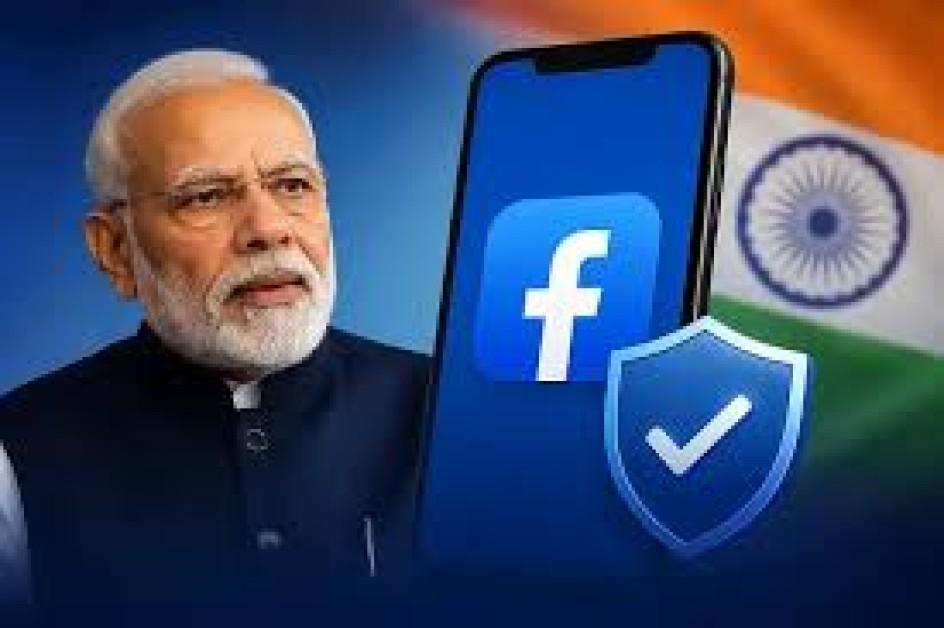
MeitY Summons Meta Over Temporary Removal of Prime Minister’s Facebook Video
The Ministry of Electronics and Information Technology has summoned senior Meta executives after Facebook temporarily removed a video posted by Prime Minister Narendra Modi, escalating government scrutiny of the technology company’s content-moderation and review systems.
Meta restored the video after acknowledging that it had been removed in error. The government nevertheless sought a detailed explanation of the policy, technical and decision-making processes that caused the content to become temporarily unavailable.
The incident has brought renewed attention to the accountability of global social media platforms, particularly when automated systems or moderation decisions affect official communications from elected leaders.
Meta’s Global Policy Leadership Called for Explanation

MeitY summoned Meta’s global public policy leadership rather than limiting discussions to the company’s local representatives.
The escalation indicates that the government is seeking a broader explanation of how Facebook’s global moderation systems handled the Prime Minister’s post and what safeguards Meta will establish to prevent a recurrence.
Government officials are expected to seek clarity on:
-
The reason the video was removed
-
Whether automated systems were involved
-
Which policy was applied
-
Whether the action underwent human review
-
How quickly the error was detected
-
Why safeguards for a high-profile account failed
-
What corrective measures Meta will introduce
-
Whether similar posts were affected
Meta has expressed regret and agreed to explain the incident at a senior level. (Reuters)
Video Was Restored After Meta Cited an Error
The video was briefly unavailable on Facebook before being restored.
Meta said the removal was an error, but the initial explanation did not fully resolve the government’s concerns. Officials reportedly considered a general reference to an error insufficient without a detailed account of how the moderation decision occurred.
The government’s response reflects the seriousness attached to the temporary interruption of an official communication from the Prime Minister.
Meta’s restoration of the post ended the immediate disruption, but questions remain regarding the reliability and transparency of the systems that triggered the removal. (The Economic Times)
Post Addressed Youth and Examination Paper Leaks
The video featured Prime Minister Modi addressing younger audiences and discussing government action against examination paper leaks.
The post was published during a period of public debate and student protests related to examination integrity.
Because the content involved an official policy message from the head of government, its temporary removal attracted greater scrutiny than an ordinary content-moderation dispute.
The incident demonstrates how a platform decision affecting even one post can have wider implications when the content concerns public policy, government communication or a nationally important issue. (The Indian Express)
Government Seeks More Than a Technical Explanation
Meta’s initial response characterised the removal as an error, with some reports linking the incident to an AI or technical moderation problem.
However, MeitY is seeking a more complete explanation covering both technology and policy.
A detailed review may need to establish:
-
Which system flagged the video
-
What signal triggered the action
-
Whether a legal request was incorrectly associated with it
-
Whether automated moderation made the decision
-
Whether a human reviewer approved the restriction
-
How the appeal or restoration process operated
-
Why the account’s public significance did not trigger additional checks
The distinction between a technical failure and a policy-enforcement error is important because the required corrective measures may differ substantially. (www.ndtv.com)
Meta Promises Additional Oversight
Meta has indicated that posts from the Prime Minister and other prominent Indian public figures will receive additional oversight and senior review.
Such safeguards could reduce the risk that automated moderation systems incorrectly restrict high-impact public communications.
Potential measures could include:
-
Senior-level review before removal
-
Faster escalation procedures
-
Special handling for official government accounts
-
Improved detection of false moderation signals
-
Stronger human oversight
-
Immediate notification of account administrators
-
Faster restoration mechanisms
-
Post-incident audits
These protections must still be implemented consistently without creating arbitrary or politically selective moderation standards. (The Times of India)
Automated Moderation Faces a Scale Problem
Facebook processes an enormous volume of text, video, audio and images every day.
At that scale, Meta relies heavily on automated systems to identify content that may violate platform policies or legal requirements.
These systems can help detect harmful material quickly, but they can also produce false positives.
Errors may occur because algorithms misunderstand:
-
Context
-
Satire
-
Political speech
-
Regional languages
-
News reporting
-
Edited video
-
Public-interest content
-
References to sensitive events
The challenge for platforms is to combine speed and scale with sufficient human judgement, particularly when content has significant public or political importance.
High-Profile Accounts Require Stronger Safeguards
Official government accounts often communicate policy decisions, emergency information and statements of public importance.
An incorrect restriction can therefore affect more than the account holder.
It can also limit public access to information and create confusion about whether a post was removed voluntarily, restricted by a government or taken down by the platform.
Meta and other platforms need clear systems that distinguish high-impact official communication from ordinary user-generated content while still enforcing legitimate safety policies consistently.
The incident may encourage broader industry discussion about special review procedures for verified public institutions and elected officials.
Platform Accountability Becomes a Regulatory Priority
India has one of the world’s largest populations of social media users, making platform governance a major regulatory issue.
Technology companies operating in the country must manage competing responsibilities involving:
-
User safety
-
Freedom of expression
-
Government orders
-
Election integrity
-
Misinformation
-
Grievance handling
-
Content transparency
-
Legal compliance
The Prime Minister’s video incident demonstrates why governments increasingly demand greater transparency into how global platforms make moderation decisions.
It also reinforces pressure on companies to establish local accountability even when moderation systems are designed and operated globally.
Content Moderation Is Not Merely a Technical Function
Social media moderation can influence which political messages, news reports and public statements users see.
As a result, decisions made by algorithms or private companies can have consequences for public discourse.
Platforms must determine how to handle:
-
Political speech
-
Official statements
-
Graphic content
-
Public-interest exceptions
-
Legal demands
-
Misleading claims
-
Sensitive social issues
-
Coordinated manipulation
These decisions require policy judgement, not simply technical filtering.
When errors occur, governments and users increasingly expect companies to explain not only what happened but why the system failed.
Human Review Remains Essential
AI can process content faster than human teams, but automated decisions remain vulnerable to contextual mistakes.
High-risk moderation actions may require additional human review before enforcement, particularly when a post comes from a verified public authority.
Human oversight can help determine:
-
Whether content is being reported or endorsed
-
Whether it serves a public-interest purpose
-
Whether political context changes its meaning
-
Whether a legal request applies to the correct post
-
Whether removal is proportionate
-
Whether an exception should apply
The challenge is designing review systems that operate quickly enough for digital platforms while reducing serious errors.
Transparency Around Legal Requests Matters
Some reports initially indicated that the restriction appeared connected to a legal request.
This raised questions about whether a request concerning separate online content may have been incorrectly applied to the Prime Minister’s video.
Platforms regularly receive legal and regulatory demands from governments, courts and law-enforcement authorities.
Clear records are therefore essential to establish:
-
Who submitted a request
-
Which content it covered
-
Which jurisdiction applied
-
What legal basis was cited
-
Who reviewed the request
-
What enforcement action followed
-
Whether the affected user was notified
-
How errors can be challenged
Improved transparency could reduce uncertainty when content becomes unavailable.
Incident Could Influence Future Platform Procedures
The government’s intervention may result in changes to how Meta reviews sensitive content involving major Indian public figures and institutions.
Possible outcomes include:
-
Stronger escalation protocols
-
More local policy expertise
-
Expanded senior review
-
Faster government communication channels
-
Additional audit trails
-
Improved account protections
-
Greater disclosure of moderation errors
-
Enhanced grievance mechanisms
Meta’s response will be closely watched by other digital platforms operating in India.
Business Implications for Global Technology Companies
The matter also has commercial significance.
India is a major growth market for Meta, with a large user base across Facebook, Instagram and WhatsApp.
Regulatory disputes can increase:
-
Compliance costs
-
Legal exposure
-
Government scrutiny
-
Reputational risk
-
Operational complexity
-
Senior management involvement
-
Product-design requirements
-
Investment in moderation teams
Technology companies must therefore treat content governance as a core business function rather than a secondary trust-and-safety issue.
Reputation and Trust Are at Stake
Meta’s platforms depend on users, advertisers, public institutions and businesses trusting that content rules will be applied accurately.
Incorrectly removing a prominent official post can create concern among other users about the reliability of the platform’s systems.
Trust can be affected when enforcement appears:
-
Inconsistent
-
Unexplained
-
Politically sensitive
-
Difficult to appeal
-
Driven by opaque algorithms
-
Slow to correct
-
Uneven across accounts
-
Detached from local context
Meta’s willingness to provide a detailed explanation and demonstrate corrective action will therefore be important.
Broader Debate Over AI-Led Moderation
The incident arrives as technology companies increasingly use artificial intelligence to manage platform content.
AI can improve speed and identify harmful material at scale, but reliance on automated systems creates new governance questions.
These include:
-
Who is accountable for algorithmic errors?
-
What level of human review is required?
-
How should high-impact accounts be treated?
-
How quickly must mistakes be corrected?
-
Should users receive detailed explanations?
-
How should moderation systems be independently audited?
-
What data is used to train enforcement models?
-
How should regional context be incorporated?
The answers will shape future relationships between governments and global platforms.
Risks to Monitor
Several risks remain following the summons:
-
An incomplete explanation from Meta
-
Further regulatory action
-
Repeated moderation errors
-
Lack of transparency
-
Political controversy
-
Overcorrection for high-profile accounts
-
Inconsistent enforcement
-
Weak grievance procedures
-
Increased compliance costs
-
Reputational damage
Meta will need to show that its response addresses the underlying system rather than treating the incident as an isolated mistake.
What Businesses and Policymakers Should Watch
Important developments include:
-
Meta’s formal explanation
-
Details of the technical failure
-
Changes to senior-review procedures
-
MeitY’s assessment
-
Any regulatory directions
-
Revised moderation safeguards
-
Treatment of verified official accounts
-
Transparency reporting
-
Grievance-response timelines
-
Wider changes across Facebook and Instagram
The government’s final response will indicate whether Meta’s corrective commitments are considered adequate.
Outlook
The temporary removal has already been reversed, but the regulatory consequences may continue.
MeitY’s decision to summon senior Meta leadership shows that the government expects global platforms to provide clear accountability when moderation systems affect high-profile public communication.
Meta is likely to strengthen oversight for prominent Indian accounts and review the technical process that led to the error.
The wider issue, however, extends beyond a single post. Governments, platforms and users increasingly need transparent systems for deciding how automated moderation should operate in politically and socially sensitive situations.
Conclusion
MeitY’s summons to Meta over the temporary removal of Prime Minister Narendra Modi’s Facebook video represents a significant test of platform accountability in India.
Meta restored the video, expressed regret and described the removal as an error. The government has nevertheless demanded a deeper explanation of the policy and technology failures involved. (Reuters)
The incident highlights the risks created when automated moderation systems make incorrect decisions involving official public communication.
For Meta, resolving the matter will require more than restoring one video. The company must demonstrate that it has introduced stronger safeguards, clearer review processes and faster escalation mechanisms capable of preventing similar failures.
 MeitY Summons Meta Over Removal of Prime Minister’s Facebook Video FAQs
POST A COMMENT (0)
All Comments (0)
Replies (0)