




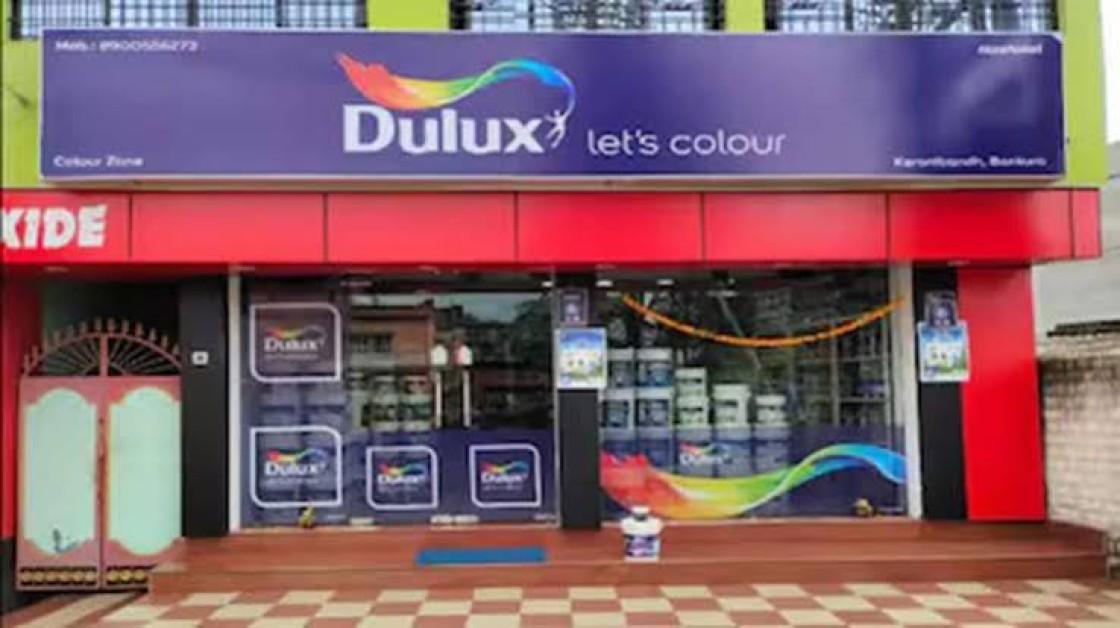
Karnataka GST Department Reduces JSW Dulux Tax Demand From ₹118.33 Crore to ₹42.04 Crore
JSW Dulux Limited, formerly known as Akzo Nobel India Limited, has received partial relief in a Goods and Services Tax (GST) dispute after the Karnataka GST Department reduced its total demand from ₹118.33 crore to ₹42.04 crore. The revised order represents a reduction of approximately ₹76.29 crore, or 64.5%, in the company's potential tax, interest and penalty exposure.
The company disclosed the development to the BSE and National Stock Exchange on October 19, 2026, under the Securities and Exchange Board of India's listing regulations.
The order, dated October 15, 2026, was issued by the Assistant Commissioner of Commercial Taxes, LGSTO LTU, Bengaluru. JSW Dulux received it on October 19 at approximately 3:30 PM.
The dispute concerns the alleged wrongful claim of input tax credit for the financial year April 2020 to March 2021.
Although the revised demand is substantially lower than the amount originally proposed, the tax dispute remains unresolved. JSW Dulux has indicated that it is preparing further submissions to the relevant authorities within the prescribed timeframe.
JSW Dulux Receives Revised Karnataka GST Order

The Karnataka GST Department originally issued a show-cause notice to JSW Dulux on August 5, 2026.
The notice proposed disallowance of input tax credit under Section 74 of the Central Goods and Services Tax and State Goods and Services Tax framework.
The original aggregate demand amounted to ₹118,33,32,869, including tax, interest and penalty.
JSW Dulux submitted its response along with supporting documents within the stipulated period.
Following consideration of the company's submission, the tax authority issued a revised order reducing the aggregate demand to ₹42,04,21,825.
The reduction provides partial relief, but it does not constitute complete cancellation of the demand or final settlement of the proceedings.
Key Highlights of JSW Dulux GST Demand Reduction
|
Particulars |
Details |
|---|---|
|
Company |
JSW Dulux Limited |
|
Former Name |
Akzo Nobel India Limited |
|
Tax Authority |
Karnataka GST Department |
|
Original Demand |
₹118.33 Crore |
|
Revised Demand |
₹42.04 Crore |
|
Reduction |
₹76.29 Crore |
|
Percentage Reduction |
Approximately 64.5% |
|
Original Notice Date |
August 5, 2026 |
|
Revised Order Date |
October 15, 2026 |
|
Order Received |
October 19, 2026 |
|
Disclosure Date |
October 19, 2026 |
|
Relevant Financial Year |
April 2020–March 2021 |
|
Nature of Dispute |
Disallowance of Input Tax Credit |
|
Applicable Provision |
Section 74 of CGST/SGST Act |
|
Current Status |
Further Response Being Prepared |
The revised order substantially reduces the amount under dispute while leaving a financial demand of more than ₹42 crore outstanding.
Revised GST Demand Includes Tax, Interest and Penalty
The revised demand comprises three components: the disputed GST amount, interest and penalty.
The tax component has been reduced from approximately ₹40.09 crore to ₹14.07 crore.
Interest has declined from ₹38.18 crore to ₹13.90 crore, while the penalty has been reduced from ₹40.07 crore to ₹14.07 crore.
The detailed comparison is as follows:
|
Demand Component |
Original Demand |
Revised Demand |
Reduction |
|---|---|---|---|
|
Tax |
₹40.09 Crore |
₹14.07 Crore |
₹26.02 Crore |
|
Interest |
₹38.18 Crore |
₹13.90 Crore |
₹24.27 Crore |
|
Penalty |
₹40.07 Crore |
₹14.07 Crore |
₹26.00 Crore |
|
Total |
₹118.33 Crore |
₹42.04 Crore |
₹76.29 Crore |
The figures are rounded to two decimal places. The revised demand consists of tax amounting to ₹14,06,89,554, interest of ₹13,90,42,717 and a penalty of ₹14,06,89,554.
GST Dispute Relates to Input Tax Credit for FY21
The proceedings concern input tax credit claimed by JSW Dulux for the period April 2020 to March 2021.
Input tax credit is a mechanism under India's GST framework that allows eligible businesses to offset GST paid on purchases against their output tax liability.
The mechanism is intended to prevent the cascading effect of taxes across the supply chain.
However, businesses must satisfy statutory conditions to claim eligible credits.
Tax authorities may scrutinise claims based on documentation, transaction records and compliance requirements.
In this case, the Karnataka GST Department proposed disallowing certain input tax credits claimed by JSW Dulux.
The company contested the proposed demand by submitting its response and supporting documents.
The subsequent reduction indicates that the authority revised its assessment after reviewing the company's submissions.
It does not establish that the remaining disputed amount has been accepted by JSW Dulux.
Section 74 of CGST and SGST Act Forms Legal Basis
The original show-cause notice referred to Section 74 of the CGST and SGST Acts, 2017.
Section 74, as applicable to the relevant tax period, addresses proceedings involving tax not paid, short-paid, erroneously refunded or input tax credit wrongly availed or utilised in circumstances involving fraud, wilful misstatement or suppression of facts.
The provision permits tax authorities to initiate proceedings and determine tax, interest and penalties in qualifying cases.
However, the issuance of a notice under Section 74 does not by itself establish wrongdoing.
The underlying allegations remain subject to the applicable legal and administrative process.
JSW Dulux's response and the subsequent reduction in the demand demonstrate that the amount initially proposed was subject to examination.
The company may continue contesting the revised findings through the procedures available under GST law.
JSW Dulux Submitted Supporting Documents
Following receipt of the original show-cause notice on August 5, JSW Dulux submitted a response within the prescribed period.
The submission included supporting documentation relating to the disputed input tax credit.
The Assistant Commissioner of Commercial Taxes subsequently examined the company's response and issued the October 15 order.
The revised assessment reduced the aggregate demand by approximately 64.5%.
The company's disclosure does not provide a detailed breakdown of every argument accepted or rejected by the tax authority.
Consequently, the reduction should not be attributed to any specific legal finding beyond what has been disclosed.
The remaining ₹42.04 crore demand is still subject to further proceedings.
Company Prepares Further Response to GST Authorities
JSW Dulux has indicated that the October 15 order allows for further submissions to the relevant authorities.
The company is preparing its response within the timeframe specified in the order.
This means the proceedings have not reached a final resolution.
Further developments may include additional submissions, examination by the relevant authorities or proceedings under the applicable appeal framework.
The eventual outcome could affect the company's financial exposure.
However, there is no confirmed basis to assume that the remaining demand will be fully cancelled or upheld.
The company is expected to disclose material developments in accordance with applicable stock exchange regulations.
Financial Exposure Falls by Approximately 64.5%
The reduction from ₹118.33 crore to ₹42.04 crore materially lowers the amount currently demanded.
The change can be calculated as:
The revised demand represents approximately 35.5% of the amount originally proposed.
From a financial-risk perspective, the order reduces the maximum amount identified in this particular proceeding compared with the initial notice.
However, the revised figure should not automatically be treated as a confirmed expense or cash outflow.
The eventual accounting impact depends on the company's assessment of the obligation, the outcome of further proceedings and applicable financial reporting requirements.
Accounting Treatment and Potential Financial Impact
Tax disputes can affect companies through provisions, contingent liability disclosures or eventual payments.
The appropriate accounting treatment depends on the probability of an outflow and whether the amount can be reliably estimated.
A disputed demand does not necessarily result in an immediate charge to profit and loss.
JSW Dulux had not reported a payment or provision against the revised demand in the available disclosure.
The company's ultimate financial exposure will depend on the outcome of the proceedings and its accounting assessment.
If a liability is ultimately confirmed and payable, it could affect cash flow.
Conversely, further relief could reduce or eliminate the remaining amount.
Investors should therefore distinguish the stated demand from an amount already paid or recognised as an expense.
Regulatory Disclosure Under SEBI Listing Rules
JSW Dulux informed the stock exchanges about the development under Regulation 30 of the SEBI Listing Obligations and Disclosure Requirements Regulations.
The regulation requires listed companies to disclose specified material events and information.
Litigation, regulatory proceedings and significant tax demands can fall within these disclosure requirements.
The purpose is to ensure that investors receive timely information about developments that may affect a listed company.
JSW Dulux's October 19 filing provided the background to the dispute, the original demand, the revised order and the company's intended response.
Further material developments may require additional disclosures.
JSW Dulux Operates in India's Paints and Coatings Industry
JSW Dulux Limited, formerly Akzo Nobel India Limited, operates in the Indian paints and coatings sector.
Its business includes decorative paints and related products marketed under established consumer brands.
The company participates in a competitive industry serving residential, commercial and industrial demand.
Paint manufacturers depend on extensive supply chains involving raw materials, packaging, logistics and distribution.
These activities require GST compliance across procurement and sales transactions.
Input tax credit management is therefore an important component of financial and tax administration.
The current Karnataka GST proceeding relates to historical tax claims rather than a newly announced operational issue.
No disruption to the company's manufacturing or product distribution operations has been established by the disclosure.
Implications for Corporate GST Compliance
The case highlights the importance of maintaining accurate documentation for input tax credit claims.
Businesses claiming GST credits must ensure that transactions satisfy applicable statutory requirements.
These requirements can involve tax invoices, supplier compliance, goods or services received and prescribed return filings.
Discrepancies may result in scrutiny, notices or demands from tax authorities.
The JSW Dulux case also demonstrates that amounts proposed in initial notices may change following review of supporting information.
However, each dispute depends on its particular facts and applicable legal provisions.
The reduction in this case does not establish a general precedent for other taxpayers.
What Investors Will Monitor Going Forward
The principal issue for JSW Dulux investors is whether the remaining ₹42.04 crore demand will be sustained, reduced further or cancelled.
The company's next response to the Karnataka GST Department will be an important procedural development.
Investors will also monitor any subsequent order, appeal or material accounting adjustment.
The outcome may influence the company's reported liabilities and cash flow.
JSW Dulux has separately scheduled a board meeting for November 4, 2026, to consider its unaudited financial results for the quarter and six months ended September 30, 2026.
Those results may provide additional financial context, although the GST dispute remains a separate regulatory matter.
Conclusion
JSW Dulux Limited has received partial relief after the Karnataka GST Department reduced its demand from ₹118.33 crore to ₹42.04 crore.
The revised order lowers the amount under dispute by approximately ₹76.29 crore, representing a reduction of 64.5%.
The matter relates to alleged ineligible input tax credit claims for the financial year ended March 2021.
The October 15 order followed the company's response to a show-cause notice issued on August 5, 2026.
Although the reduction significantly lowers the stated financial exposure, the proceedings remain open.
JSW Dulux is preparing further submissions, and the final financial outcome has not yet been determined.
The development highlights the importance of regulatory compliance, documentation and timely disclosure in managing corporate tax disputes.
 JSW Dulux Karnataka GST Demand Cut 64.5% to ₹42.04 Crore FAQs

POST A COMMENT (0)
All Comments (0)
Replies (0)