





India Plans to Phase Out Imported SCADA Systems From Power Grid by 2030
India is preparing to phase out imported Supervisory Control and Data Acquisition systems from its electricity grid by 2030, as the government moves to reduce foreign dependence in one of the country's most strategically sensitive infrastructure networks.
The plan targets SCADA systems, the digital control platforms that allow electricity utilities and grid operators to remotely monitor equipment, collect operational data and control parts of the power network.
Because these systems interact directly with critical electricity infrastructure, cybersecurity vulnerabilities or dependence on foreign suppliers can create risks extending far beyond conventional technology procurement.
The government's objective is therefore not simply to substitute imported equipment with domestically manufactured alternatives.
It is to build an increasingly indigenous digital control architecture for India's electricity system, giving domestic institutions greater control over software, hardware, maintenance, upgrades and cybersecurity.
The transition is expected to occur gradually through replacement cycles, new procurement standards and wider adoption of domestically developed technology rather than through an immediate removal of all existing systems.
What Is a SCADA System?

SCADA stands for:
Supervisory Control and Data Acquisition.
It is a technology platform used to monitor and control industrial infrastructure.
SCADA systems are widely deployed across:
electricity networks,
oil and gas facilities,
water systems,
factories,
transport infrastructure,
and other industrial operations.
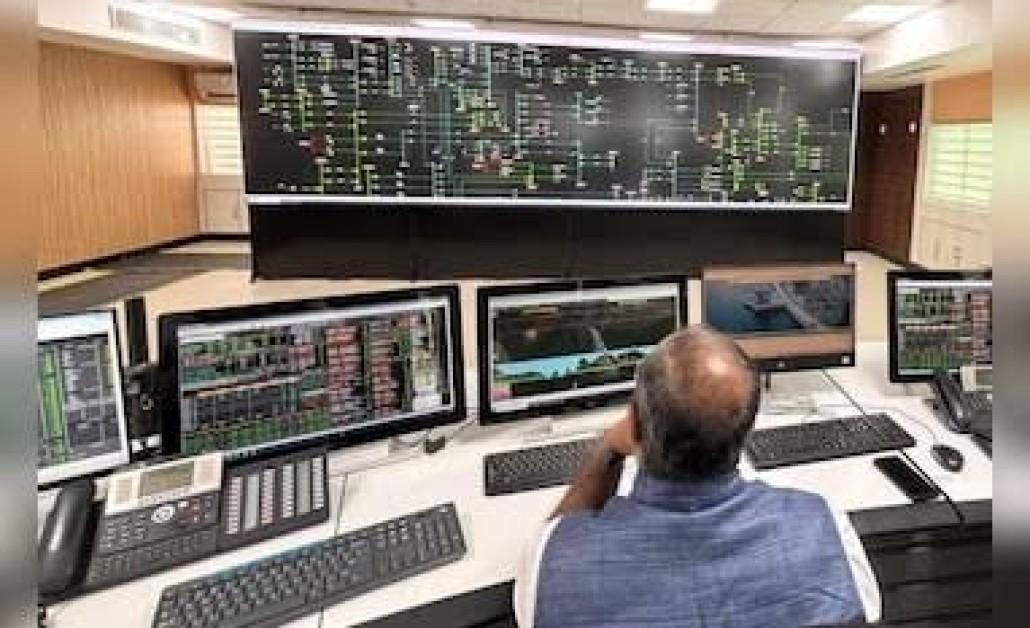
Within the electricity sector, SCADA provides operators with a real-time view of what is happening across the network.
SCADA Acts Like the Grid’s Digital Nervous System
A modern electricity grid contains enormous numbers of assets.
These include:
substations,
transformers,
transmission lines,
circuit breakers,
generating stations,
and distribution equipment.
Operators cannot physically inspect every asset continuously.
SCADA systems collect data from these locations and transmit it to control centres.
This allows engineers to understand grid conditions remotely.
Operators Can Monitor the Grid in Real Time
SCADA systems can display information including:
voltage,
current,
frequency,
power flows,
equipment status,
and alarms.
If a component begins operating outside normal limits, operators can be alerted.
This makes SCADA essential for maintaining grid reliability.
SCADA Can Also Control Equipment Remotely
Monitoring is only part of the system.
SCADA can also allow authorised operators to issue commands.
For example, operators may remotely:
open or close breakers,
change operating configurations,
or isolate equipment.
That control capability makes cybersecurity particularly important.
A compromised system could potentially affect physical infrastructure.
India’s Grid Is Becoming More Digital
India's electricity network is undergoing rapid technological transformation.
The country is adding:
renewable energy,
battery storage,
smart meters,
digital substations,
and increasingly automated grid-management systems.
Digitalisation improves efficiency and visibility.
But it also expands the number of potential cyberattack surfaces.
Imported Systems Create Strategic Dependence
Foreign SCADA platforms can create several forms of dependency.
Utilities may rely on overseas suppliers for:
software updates,
technical support,
replacement components,
licences,
and cybersecurity patches.
If the vendor relationship is disrupted, maintaining critical systems can become more difficult.
That concern becomes particularly significant for infrastructure expected to operate continuously for decades.
Cybersecurity Is Central to the 2030 Objective
The electricity grid is classified as critical infrastructure because disruptions can affect almost every part of the economy.
Hospitals require electricity.
Telecommunications networks require electricity.
Banks and data centres require electricity.
Factories require electricity.
Transport systems increasingly depend on electricity.
A large-scale grid cyberattack could therefore produce cascading consequences.
Foreign Technology Can Create Supply-Chain Risk
The security problem does not necessarily imply that imported technology contains malicious components.
The broader issue is supply-chain control.
Complex industrial systems can contain:
hardware,
firmware,
operating software,
communications modules,
and third-party libraries.
Grid operators need confidence that these components can be independently assessed, maintained and secured throughout their operating life.
Domestic systems can provide greater visibility into that supply chain.
Indigenous Systems Can Improve Source-Code Control
One potential advantage of domestically developed technology is greater control over software.
Security agencies and utilities may be able to:
audit source code,
test vulnerabilities,
and develop patches
without depending entirely on an overseas vendor.
That can shorten response times when new cybersecurity threats emerge.
Maintenance Sovereignty Is Also Important
Critical infrastructure can remain operational for decades.
Technology vendors may:
change ownership,
discontinue products,
or stop supporting older versions.
A domestic ecosystem can reduce the risk that essential grid infrastructure becomes dependent on technology no longer actively supported by its original foreign supplier.
2030 Provides a Transition Window
India is not expected to replace every imported SCADA system immediately.
That would be expensive and operationally risky.
Instead, the 2030 target provides several years for:
technology development,
testing,
procurement changes,
and phased replacement.
Utilities can migrate systems during normal modernisation cycles.
Existing Systems Cannot Simply Be Switched Off
Power-grid control infrastructure operates continuously.
Replacing it requires careful planning.
A utility may need to:
install a new system,
test it alongside the existing platform,
train operators,
validate communications,
and then migrate operations.
Any failure during transition could affect electricity reliability.
This makes phased implementation essential.
New Projects Could Adopt Domestic Systems First
The easiest place to reduce import dependence is often new infrastructure.
New substations and control centres can specify indigenous SCADA systems during procurement.
Existing installations can then be replaced as they reach:
end of life,
major upgrade cycles,
or scheduled modernisation.
This approach reduces disruption.
Domestic Manufacturing Is Only Part of the Challenge
Building an indigenous SCADA ecosystem requires more than assembling hardware in India.
True technological independence requires domestic capability across:
software,
firmware,
communications protocols,
system integration,
cybersecurity,
and long-term maintenance.
A product assembled domestically from imported critical components may still contain strategic dependencies.
India Needs Indigenous Software Capabilities
SCADA software performs complex tasks.
It needs to:
collect enormous volumes of data,
process alarms,
display grid conditions,
store operational information,
and communicate securely with remote equipment.
The software must also remain reliable under extremely demanding operating conditions.
Developing these platforms requires specialised engineering expertise.
Hardware Must Meet Industrial Standards
Power-grid equipment operates in difficult environments.
Systems may face:
heat,
dust,
electrical interference,
and continuous operation.
Industrial hardware therefore needs much higher reliability than ordinary consumer electronics.
Domestic suppliers will need to meet rigorous technical standards before utilities can deploy their systems at scale.
Interoperability Is Critical
India's grid contains equipment from many manufacturers.
A new SCADA platform must communicate with existing:
relays,
sensors,
remote terminal units,
intelligent electronic devices,
and control systems.
If equipment cannot communicate properly, utilities can become locked into individual vendors.
Open standards and interoperability therefore become strategically important.
Vendor Lock-In Is a Long-Term Risk
A utility purchasing proprietary technology can become dependent on one supplier.
Switching later may require replacing substantial infrastructure.
This can increase costs and reduce flexibility.
India's localisation strategy has an opportunity to encourage architectures that make future upgrades easier.
Domestic Competition Will Matter
Replacing foreign suppliers with a single domestic supplier would create another form of dependency.
A healthier ecosystem would include multiple qualified Indian vendors.
Competition can encourage:
innovation,
better pricing,
and stronger cybersecurity.
It also gives utilities alternative suppliers if one company experiences problems.
Testing Will Be Essential Before Large-Scale Deployment
Power-grid technology cannot be deployed simply because it is domestically manufactured.
Reliability must remain the primary requirement.
Systems will need rigorous testing for:
cybersecurity,
performance,
and compatibility.
A malfunctioning control system could create substantial operational consequences.
Cybersecurity Testing Needs to Be Continuous
Security certification cannot be a one-time exercise.
Cyber threats evolve constantly.
A system considered secure today may contain vulnerabilities discovered later.
Utilities therefore need continuous:
monitoring,
patching,
and penetration testing.
The 2030 localisation objective needs to be accompanied by long-term cybersecurity governance.
CEA Has Strengthened Cybersecurity Framework
The Central Electricity Authority has already developed cybersecurity guidelines for India's power sector.
These frameworks address areas such as:
asset identification,
network security,
incident response,
and supply-chain controls.
Indigenous SCADA deployment can become another layer within this wider security architecture.
Power Grid Is Increasingly Attractive Cyber Target
Electricity infrastructure has become a major target globally.
Cyberattacks against utilities can be motivated by:
espionage,
financial crime,
and geopolitical conflict.
As grids become more digital, the consequences of compromised operational technology can become more severe.
This is why countries increasingly treat energy technology as a national-security issue.
Operational Technology Is Different From Normal IT
SCADA belongs to a category known as:
Operational Technology, or OT.
Traditional information technology manages data.
Operational technology controls physical processes.
That distinction matters.
If an office computer is compromised, information may be lost.
If an industrial control system is compromised, physical equipment may be affected.
OT Systems Often Remain in Service for Decades
Consumer software changes rapidly.
Power infrastructure does not.
A substation control system may remain operational for many years.
This creates cybersecurity challenges because older equipment may use technologies developed before today's threat environment existed.
Modernisation therefore needs to address legacy systems as well as new installations.
Renewable Energy Makes Grid Control More Complex
India is rapidly adding renewable electricity capacity.
Solar and wind generation behave differently from conventional power plants.
Their output changes with:
sunlight,
weather,
and wind conditions.
Grid operators therefore need increasingly sophisticated digital systems to balance electricity supply and demand.
More Renewable Power Means More Data
A traditional grid with relatively few large power stations is easier to monitor than a network containing thousands of distributed energy resources.
As renewables expand, control centres need greater visibility.
SCADA and related energy-management technologies therefore become even more important.
Battery Storage Adds Another Digital Layer
Large battery-storage systems can charge when electricity is abundant and discharge when demand is high.
But they require sophisticated control.
Grid operators need information about:
battery availability,
state of charge,
and network conditions.
The electricity system is therefore becoming increasingly software-driven.
Smart Meters Expand the Digital Grid
India's smart-meter rollout adds millions of connected devices to the electricity ecosystem.
Smart meters are not conventional transmission-grid SCADA systems.
But together they illustrate the broader direction of the power sector:
more sensors,
more communications,
and more automation.
Every additional connected system creates both operational benefits and cybersecurity responsibilities.
Data Centres Increase Reliability Requirements
India is also building substantial data-centre capacity.
Data centres require highly reliable electricity.
Artificial intelligence workloads can consume enormous amounts of power.
As digital infrastructure expands, grid reliability becomes even more economically important.
Secure grid-control technology therefore supports the digital economy itself.
Domestic SCADA Could Become Major Industrial Opportunity
The localisation programme could create a sizeable market for Indian technology companies.
Potential opportunities include:
control software,
industrial computers,
communications equipment,
cybersecurity products,
and system integration.
A successful domestic ecosystem could eventually supply markets outside India.
Indian Engineering Firms Could Benefit
India already has significant capabilities in:
power equipment,
industrial automation,
and software engineering.
Combining these strengths could support indigenous SCADA development.
Large engineering companies may work alongside specialised technology firms and startups.
This could create a new intersection between India's traditional electrical-equipment industry and its software sector.
Startups Could Develop Specialised Grid Technology
Power-sector localisation may also create opportunities for startups.
Smaller companies can specialise in:
industrial cybersecurity,
analytics,
and monitoring tools.
However, utilities typically require proven reliability.
Startups may therefore need partnerships with established engineering companies to enter critical infrastructure projects.
Public Procurement Can Create Initial Demand
Government and state-owned utilities represent major buyers of grid technology.
Procurement rules can therefore shape the domestic industry.
If tenders increasingly require indigenous solutions, vendors gain predictable demand.
That demand can justify greater investment in research and development.
Localisation Requirements Need Careful Design
Procurement rules should distinguish between:
genuine indigenous technology,
and imported systems assembled locally.
Otherwise, localisation targets may increase domestic assembly without reducing strategic technological dependence.
Criteria may therefore need to examine:
intellectual property,
source-code ownership,
and critical components.
Cost Cannot Be Ignored
Imported systems may sometimes be cheaper or more mature.
Domestic alternatives may initially require higher investment.
Utilities therefore need to evaluate total lifecycle costs rather than purchase prices alone.
A system that provides better local support and lower long-term maintenance costs may prove economically competitive even if its initial price is higher.
Reliability Must Come Before Localisation Percentage
Electricity is essential infrastructure.
The government cannot compromise grid reliability simply to meet localisation targets.
Domestic technology needs to demonstrate equivalent or better:
performance,
security,
and reliability.
The 2030 timeline provides time for that capability to mature.
Training Grid Operators Will Be Necessary
Technology replacement also affects people.
Operators accustomed to one platform need training on another.
Engineers need to understand:
system architecture,
cybersecurity,
and troubleshooting.
Training programmes therefore need to accompany hardware and software deployment.
Universities Could Support Talent Development
SCADA localisation requires specialised knowledge across electrical engineering and computer science.
Academic institutions can contribute through:
research,
cybersecurity laboratories,
and industrial automation programmes.
Collaboration between universities, utilities and manufacturers could help develop the required talent pool.
Domestic Standards Can Improve Long-Term Security
India can also use the transition to establish stronger technical standards.
These could govern:
authentication,
software updates,
and data logging.
Standardisation can reduce fragmented security practices across utilities.
It can also simplify interoperability between equipment from different suppliers.
Secure Updates Are Critical
Industrial systems increasingly require software updates.
Those updates themselves can become an attack vector.
A secure system needs to verify that updates are authentic and have not been modified.
Domestic control over update infrastructure can reduce certain supply-chain risks.
Network Segmentation Can Limit Cyberattacks
Cybersecurity does not depend solely on which country manufactured a system.
Architecture matters too.
Critical operational networks should be segmented from less secure corporate IT networks.
Access needs to be restricted.
Even indigenous technology can be vulnerable if deployed poorly.
Localisation Is Not the Same as Cybersecurity
This distinction is important.
Replacing an imported SCADA platform with an Indian platform does not automatically make the grid secure.
Domestic systems can also contain:
bugs,
and vulnerabilities.
Security requires continuous engineering and operational discipline.
Localisation primarily provides greater control over the technology supply chain.
Indigenous Technology Can Improve Incident Response
When a vulnerability is discovered, response speed matters.
A domestic vendor working closely with Indian utilities may be able to:
analyse the problem,
and deploy fixes
more quickly.
Security agencies can also coordinate directly with local developers.
That can become valuable during major cyber incidents.
Power-Sector Localisation Fits Broader Industrial Strategy
India has been pursuing domestic capability across strategically important sectors including:
defence,
electronics,
and semiconductors.
Power-grid technology fits naturally into this strategy.
The common objective is reducing dependence on overseas suppliers for infrastructure considered economically or strategically critical.
Energy Security Now Includes Digital Security
Traditionally, energy security meant ensuring adequate supplies of:
coal,
oil,
and electricity.
Digitalisation has expanded the definition.
A country may have sufficient generating capacity but still face energy-security risks if digital control systems are vulnerable.
Cybersecurity has therefore become part of national energy security.
Imported SCADA Replacement Could Become Large Modernisation Programme
India's electricity network is enormous.
Replacing imported systems across transmission and distribution networks could require significant investment over several years.
That creates both a challenge and an industrial opportunity.
Utilities need to coordinate replacement without disrupting operations.
Domestic suppliers need to scale manufacturing and support capacity simultaneously.
States Will Play Important Role
India's electricity system is not controlled by a single organisation.
State transmission utilities and distribution companies operate substantial infrastructure.
Achieving a nationwide localisation objective will therefore require coordination across:
central agencies,
state governments,
and utilities.
Implementation speed may differ across regions.
Private Utilities Will Also Matter
Private electricity companies operate important distribution and infrastructure assets.
National cybersecurity objectives therefore need participation from both:
public-sector,
and private-sector utilities.
Common technical standards can help create consistency across the industry.
2030 Will Be a Milestone Rather Than Endpoint
Even if imported SCADA systems are largely eliminated by 2030, technology modernisation will continue.
Cyber threats will evolve.
Grid architecture will become more complex.
New energy resources will emerge.
India will therefore need continuous investment in domestic industrial-control technology beyond the initial localisation deadline.
Conclusion
India's plan to phase out imported SCADA systems from its electricity grid by 2030 represents a significant shift in how the country approaches critical infrastructure.
SCADA platforms sit at the operational heart of the power system.
They allow grid operators to monitor electricity flows, identify problems and remotely control essential equipment.
That makes them strategically different from ordinary imported technology.
Dependence on foreign vendors can create long-term vulnerabilities involving software, maintenance, cybersecurity and supply chains.
India's objective is therefore to develop a domestic ecosystem capable of providing the hardware, software, integration and security required to operate increasingly digital electricity networks.
The transition will need to be gradual.
Existing systems cannot simply be removed without careful testing and migration.
New infrastructure can adopt indigenous technology first, while older imported platforms can be replaced through scheduled modernisation.
The challenge is substantial because localisation cannot come at the expense of reliability.
Domestic systems must meet the demanding technical and cybersecurity standards required for infrastructure that operates continuously and supports virtually every part of the economy.
But the strategic opportunity is equally significant.
As India expands renewable energy, battery storage, smart infrastructure and data centres, the electricity grid will become more dependent on software and automation.
Building domestic control over that technology could therefore achieve two objectives simultaneously: strengthening national cybersecurity while creating an indigenous industrial technology ecosystem around one of India's most critical infrastructure networks.
 India Plans to Phase Out Imported SCADA Systems From Power Grid by 2030 FAQs
POST A COMMENT (0)
All Comments (0)
Replies (0)