




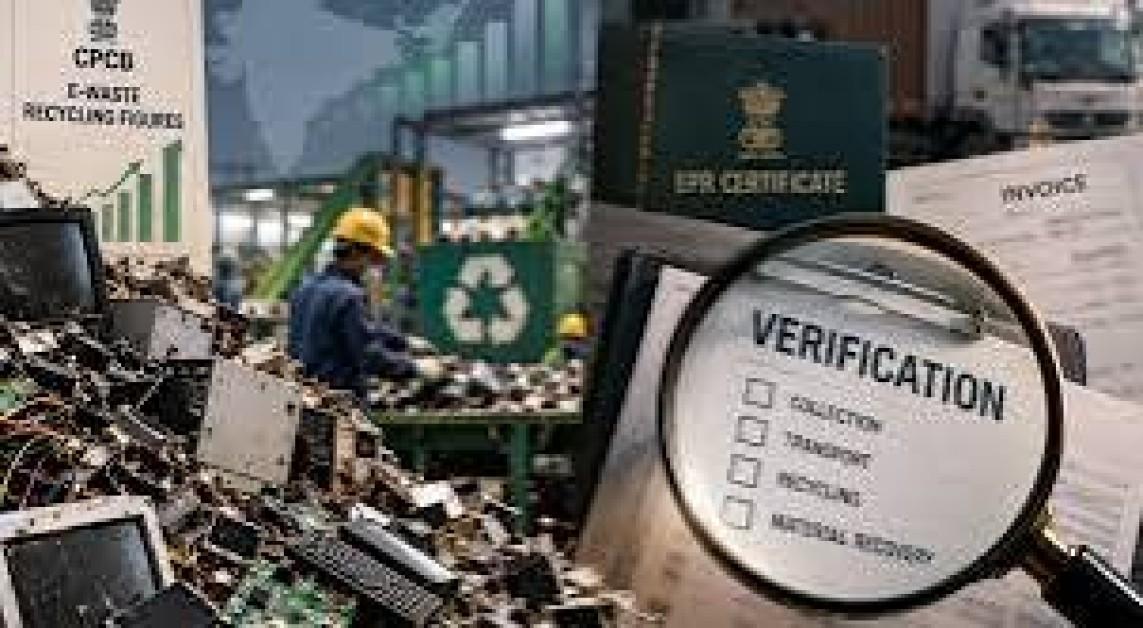
India Orders Nationwide Audit of Over 2,000 Waste Recyclers to Crack Down on Fake E-Waste Compliance Certificates
New Delhi, November 14, 2026: India has ordered a nationwide audit of more than 2,000 waste recycling facilities, including 309 electronic waste processors, as authorities intensify scrutiny of inflated recycling claims, forged compliance documents and suspected irregularities in the country's Extended Producer Responsibility (EPR) system.
The inspections, directed by the Central Pollution Control Board (CPCB), will examine whether registered recyclers possess the machinery, operational capacity and supporting records necessary to substantiate the quantities of waste they claim to process.
The initiative follows a federal investigation that uncovered fake compliance documentation involving an electronic waste recycler that had not performed the recycling activities represented in its records.
The investigation also identified failures by appliance manufacturers Haier and Godrej & Boyce to detect the fraudulent paperwork. Both companies have stated their commitment to regulatory compliance.
The nationwide inspection directive was issued in July 2026 and became publicly known through reporting on November 13.
The action represents a significant effort to strengthen oversight of India's electronic waste recycling industry, where environmental compliance certificates play an important role in helping electronics manufacturers meet statutory recycling obligations.
CPCB Directs States to Inspect More Than 2,000 Recycling Facilities
The Central Pollution Control Board has instructed state authorities to conduct inspections across more than 2,000 waste recycling facilities.
The audit covers different categories of recyclers, including 309 facilities specifically involved in electronic waste processing.
The directive was issued in July through a communication from CPCB Chairman Amandeep Garg.
State pollution control authorities have been instructed to verify the operational capabilities of registered facilities and investigate inconsistencies between reported recycling activity and actual production.
The inspections are intended to identify recyclers that may have generated compliance certificates without processing the corresponding quantities of waste.
Authorities will examine physical infrastructure, equipment utilisation and documentary evidence.
The programme is particularly important because recycling certificates are used by electronics producers to demonstrate compliance with environmental obligations.
If certificates are issued without genuine recycling activity, the credibility of the system is undermined.
India E-Waste Recycling Audit: Key Details
| Indicator | Details |
|---|---|
| Regulatory authority | Central Pollution Control Board |
| Nationwide audit directive | July 2026 |
| Public reporting of directive | November 13, 2026 |
| Recycling facilities covered | More than 2,000 |
| Dedicated e-waste recyclers | 309 |
| Main concern | Inflated recycling claims and forged documentation |
| Compliance mechanism | Extended Producer Responsibility certificates |
| Inspection methods | Machinery checks, plant trials and electricity verification |
| Major violation | Forged or manipulated documents |
| Potential regulatory action | Restriction on generating EPR certificates |
| State with major concentration | Uttar Pradesh |
| Immediate audits initiated in Uttar Pradesh | 33 e-waste facilities |
Fake EPR Certificates Trigger Regulatory Concerns
The government's intervention follows concerns about fraudulent Extended Producer Responsibility certificates.
Under India's electronic waste management framework, producers are required to meet recycling obligations linked to the electronic products they place on the market.
Registered recyclers generate EPR certificates based on eligible recycling activities.
Producers can purchase these certificates to fulfil applicable recycling targets.
The system is designed to create financial incentives for formal recycling and ensure that manufacturers contribute to the management of electronic waste.
However, the framework depends on the authenticity of recycling records.
A recycler that reports waste processing without actually conducting the activity could generate certificates unsupported by genuine recycling.
This creates a risk that manufacturers may appear compliant even when the required recycling has not occurred.
The nationwide audit aims to identify such discrepancies.
Federal Investigation Exposes Weaknesses in Compliance Verification
The audit initiative follows a federal investigation into suspected recycling documentation fraud.
The investigation found that appliance manufacturers Haier and Godrej & Boyce had failed to detect fake compliance documents issued by a recycler that performed no electronic waste recycling.
Both manufacturers have stated that they are committed to complying with applicable laws.
The findings raised questions about the effectiveness of verification procedures used by companies purchasing EPR certificates.
The issue extends beyond individual manufacturers.
Electronics companies may rely on third-party recycling partners to meet statutory obligations.
If those partners submit inaccurate records, producers can face compliance risks even when they have purchased certificates through established arrangements.
The investigation has therefore increased attention on supplier due diligence and documentary verification.
Importantly, the nationwide audit does not establish wrongdoing by every facility selected for inspection.
Regulatory conclusions will depend on the findings of individual inspections.
What Are Extended Producer Responsibility Certificates?
Extended Producer Responsibility is a regulatory approach that places responsibility on producers for managing products after they reach the end of their useful lives.
In India's electronic waste sector, the framework operates under the E-Waste (Management) Rules, 2022, which came into effect in April 2023.
The rules require covered producers to meet prescribed recycling obligations.
Registered recyclers generate EPR certificates through the regulatory system based on eligible recycling activity.
Producers can acquire these certificates to fulfil their obligations.
The objective is to encourage the collection and processing of electronic waste through authorised facilities.
However, certificates must correspond to genuine recycling operations.
When documentation is manipulated or recycling quantities are overstated, the mechanism can fail to deliver its intended environmental benefits.
How Fraudulent Recycling Certificates Can Distort Compliance
The EPR framework depends on accurate reporting across the recycling chain.
A legitimate recycling operation receives electronic waste, processes it using appropriate equipment and records the resulting material recovery.
The recycler then reports eligible activity through the regulatory system.
Fraud can arise when reported quantities exceed actual processing or supporting records are falsified.
For example, a facility might claim to have processed more electronic waste than its machinery or electricity consumption could reasonably support.
If those claims generate certificates, producers may purchase compliance credits that do not represent actual recycling.
Such practices can create unfair competition for legitimate recyclers.
They can also weaken environmental protection by allowing waste to remain outside properly managed recycling systems.
CPCB Introduces Physical Verification of Recycling Plants
The nationwide audit requires authorities to go beyond reviewing paperwork.
Inspectors have been instructed to examine whether recycling facilities possess the machinery and equipment necessary to perform their declared operations.
They will assess the operational condition of equipment and verify whether production claims are consistent with installed capacity.
Physical verification is important because registration documents alone do not establish that a facility is processing waste at the reported scale.
A recycler may possess the required approvals while operating substantially below its stated capacity.
The inspection process is intended to identify differences between declared and actual operations.
This approach could strengthen confidence in the quantity of electronic waste being recycled through authorised facilities.
Electricity Consumption Becomes a Key Audit Indicator
One of the notable features of the audit is the use of electricity consumption to verify recycling activity.
Electronic waste processing requires machinery and equipment that consume energy.
The level of electricity consumption can therefore provide supporting evidence of industrial activity.
Inspectors will compare electricity records with reported production and processing volumes.
Significant inconsistencies may require further investigation.
However, electricity consumption alone cannot establish whether a recycling claim is fraudulent.
Different technologies and production processes have different energy requirements.
Authorities will need to consider equipment efficiency, operating hours and other relevant factors.
The value of electricity verification lies in its ability to support broader physical and documentary checks.
Trial Runs Will Test Actual Processing Capacity
Inspectors have also been instructed to conduct trial runs of recycling plants.
A trial run allows officials to observe machinery in operation and assess whether a facility can perform the activities it reports.
This can help identify equipment that is installed but not operational.
It may also reveal differences between declared processing capacity and actual production capability.
Trial runs are particularly relevant where a facility claims substantial recycling volumes.
However, an inspection conducted over a limited period may not fully represent annual operations.
Authorities will therefore need to combine trial-run findings with historical records and other evidence.
The objective is to establish whether reported recycling activity is technically and operationally credible.
Forged Documents Classified as Major Violations
The CPCB's inspection procedure treats forged or manipulated documents as serious regulatory violations.
Facilities found using such documents can be blocked from generating EPR certificates.
This restriction is significant because certificate generation is an important commercial activity for registered electronic waste recyclers.
A recycler that loses the ability to issue certificates may face reduced demand from producers seeking to meet recycling obligations.
The measure is intended to discourage false reporting and protect the integrity of the compliance system.
However, enforcement outcomes will depend on the findings and applicable regulatory procedures.
The audit order does not mean that all inspected recyclers will face restrictions.
Uttar Pradesh Becomes a Major Focus of Inspections
Uttar Pradesh accounts for approximately one-third of India's dedicated electronic waste recycling facilities covered by the audit.
This concentration makes the state particularly important to the inspection programme.
On September 18, the Uttar Pradesh Pollution Control Board appointed regional officers to conduct audits.
The state identified 33 electronic waste recycling facilities for immediate inspection.
The facilities include four recycling partners listed by Samsung on its India website.
The presence of a manufacturer-linked recycling partner in an inspection programme does not establish that the manufacturer or recycler has violated the law.
A senior state official confirmed that the inspections were continuing.
The Uttar Pradesh programme provides an early indication of how the nationwide directive is being implemented.
Surprise Inspections Add to Enforcement Pressure
Regulators are also using unannounced inspections to assess recycling operations.
An executive at an Indian electronic waste recycling facility described an inspection in which officials examined electricity bills and tested machinery.
The inspection involved a detailed questionnaire covering operational and compliance requirements.
Surprise visits can help authorities observe conditions without giving facilities extensive time to prepare.
They may also improve the reliability of equipment and inventory checks.
However, the effectiveness of the approach depends on consistent inspection standards and accurate documentation.
The broader audit programme is expected to increase regulatory scrutiny of recycling operations.
India Is Among the World's Largest E-Waste Generators
India is the world's third-largest generator of electronic waste, behind China and the United States.
The country's expanding electronics market has increased the number of devices entering circulation.
Smartphones, computers, televisions, refrigerators and other appliances eventually become waste when they are discarded or replaced.
Electronic waste contains a mixture of valuable and potentially hazardous materials.
Recoverable materials include copper, aluminium, gold and silver.
Hazardous substances can include lead, mercury and other chemicals requiring controlled handling.
Effective recycling is therefore important for both resource recovery and environmental protection.
The growth of India's electronics market makes reliable recycling infrastructure increasingly necessary.
Informal Recycling Accounts for a Large Share of E-Waste
An estimated 78% of India's electronic waste is handled by informal scrap dealers.
Informal recycling networks play a substantial role in collecting and dismantling discarded electronic products.
However, some operations use methods that create environmental and occupational health risks.
Unsafe dismantling, burning and chemical processing can release hazardous substances.
Workers may also lack adequate protective equipment.
The formal recycling system is intended to provide more controlled processing and better material recovery.
However, the existence of registered facilities does not automatically guarantee that all electronic waste is being processed through compliant operations.
The nationwide audit seeks to strengthen the credibility of the formal system.
Electronics Manufacturers Face Greater Compliance Scrutiny
The inspection campaign has implications for companies that manufacture or import electronic products in India.
These include businesses operating in smartphones, computers, televisions and household appliances.
Under the EPR framework, covered producers must meet applicable recycling obligations.
Many rely on registered recyclers to generate the certificates required for compliance.
The audit could encourage manufacturers to review their recycling partnerships more closely.
Companies may need to verify whether certificates are supported by genuine waste-processing activity.
This may involve stronger supplier assessments, document verification and periodic operational reviews.
The objective is to reduce exposure to fraudulent or unsupported compliance claims.
Apple, Samsung and LG Operate Within the Wider E-Waste Compliance System
Major electronics brands, including Apple, Samsung and LG, operate in India's consumer electronics market.
The country's recycling framework affects producers and importers covered by applicable EPR obligations.
The nationwide audit is therefore relevant to the broader electronics industry.
However, the inclusion of recycling partners in the inspection programme should not be interpreted as evidence of wrongdoing by these manufacturers.
Apple, Samsung and LG did not provide responses to questions about their recycling partners and the planned inspections in the November 13 reporting.
The regulatory findings will depend on the results of individual facility audits.
Compliance Costs Could Increase for Electronics Companies
Stronger recycling verification may increase administrative and operational requirements for electronics producers.
Companies could need more detailed checks of their recycling partners.
They may also need to maintain stronger records supporting EPR certificate purchases.
Additional due diligence can involve legal, environmental and procurement teams.
However, better verification may reduce longer-term compliance risks.
Manufacturers that rely on genuine recycling activity may benefit from greater confidence in the certificate system.
The overall cost impact will depend on the final inspection findings and any additional regulatory measures.
Genuine Recyclers Could Benefit From Stronger Enforcement
The audit could improve competitive conditions for recycling businesses that maintain compliant operations.
Fraudulent certificates can distort market pricing by allowing non-performing operators to generate revenue without incurring the full cost of recycling.
Legitimate recyclers must invest in machinery, employees, environmental controls and material recovery systems.
These investments can place them at a disadvantage if competitors issue unsupported certificates.
Stronger verification could reduce such distortions.
However, the commercial impact will depend on consistent enforcement.
The audit could also encourage investment in modern recycling equipment and traceability systems.
Recycling Industry May Face Consolidation Pressure
More rigorous compliance requirements could affect the structure of India's recycling industry.
Facilities that cannot demonstrate adequate operational capacity may face regulatory restrictions.
Smaller operators may need to invest in equipment, recordkeeping and environmental controls.
Some businesses could find these requirements difficult to meet.
Larger or better-capitalised recyclers may be better positioned to absorb additional compliance costs.
However, consolidation is not an inevitable outcome.
The industry impact will depend on the number of violations identified and the regulatory response.
Digital Traceability Could Strengthen EPR Verification
The audit highlights the importance of reliable data in waste management.
Electronic waste recycling involves multiple stages, including collection, transportation, processing and material recovery.
Each stage creates records that can help verify recycling activity.
Digital systems can support the tracking of waste quantities and certificate generation.
However, digital records are only reliable when the underlying information is accurate.
Physical inspections remain necessary to verify that reported operations have actually occurred.
A stronger system would combine documentary controls, operational verification and regulatory oversight.
Circular Economy Goals Depend on Genuine Recycling
India's circular economy ambitions involve recovering useful materials from discarded products and reducing waste.
Electronic waste is particularly important because it contains valuable metals and other reusable materials.
Proper recycling can reduce dependence on virgin resource extraction.
It can also limit environmental damage from unsafe disposal.
However, these benefits depend on actual material recovery.
Certificates unsupported by genuine recycling activity cannot deliver the same environmental outcomes.
The nationwide audit is therefore relevant to the credibility of India's circular economy framework.
Environmental Protection Remains the Central Objective
Electronic waste requires careful handling because some components contain hazardous substances.
Improper disposal can contaminate soil, water and air.
Unsafe processing methods may also expose workers and surrounding communities to harmful materials.
Formal recycling facilities are expected to operate under applicable environmental requirements.
However, effective regulation requires verification that those standards are being followed.
The audit programme seeks to establish whether registered recyclers are operating as declared.
Improved oversight could help reduce the gap between regulatory compliance on paper and actual environmental performance.
What Businesses Should Monitor Next
The next phase of the programme will depend on the completion of state-level inspections.
Electronics manufacturers will monitor whether their recycling partners face compliance restrictions.
Recycling companies will assess the operational and documentation requirements emerging from the audits.
Investors in the waste management sector may examine whether stronger enforcement changes demand for authorised recycling services.
Regulators will need to evaluate findings consistently and determine appropriate action where violations are established.
The results could influence confidence in India's EPR certificate market.
However, the number of non-compliant facilities has not yet been established by the nationwide audit.
Outlook for India's E-Waste Recycling Industry
India's electronic waste recycling industry is likely to remain important as electronics consumption expands.
Growing device ownership and replacement cycles will continue creating waste-management requirements.
The EPR framework is intended to encourage formal recycling and improve producer accountability.
However, the system's effectiveness depends on accurate reporting and credible enforcement.
The nationwide audit represents a significant test of those mechanisms.
If inspections identify fraudulent practices and lead to effective corrective action, confidence in formal recycling could improve.
The longer-term outcome will depend on enforcement consistency, industry investment and the ability to integrate more electronic waste into environmentally sound processing systems.
Conclusion
India's decision to audit more than 2,000 recycling facilities marks a significant escalation in oversight of the electronic waste management industry.
The programme includes 309 dedicated e-waste recyclers and focuses on inflated processing claims, forged documents and the integrity of Extended Producer Responsibility certificates.
Authorities will examine machinery, conduct trial runs and compare electricity consumption with reported recycling activity.
Facilities found using manipulated documentation may be barred from generating EPR certificates.
The initiative follows a federal investigation that exposed weaknesses in recycling compliance verification and raised concerns across the electronics supply chain.
For manufacturers, the development highlights the importance of verifying recycling partners rather than relying exclusively on certificates.
For legitimate recyclers, stronger enforcement could create more transparent competitive conditions.
The effectiveness of the crackdown will ultimately depend on the quality of inspections, the accuracy of regulatory findings and the consistent enforcement of environmental standards.
 India Orders Audit of 2,000 Waste Recyclers Over Fake E-Waste Certificates FAQs

POST A COMMENT (0)
All Comments (0)
Replies (0)