




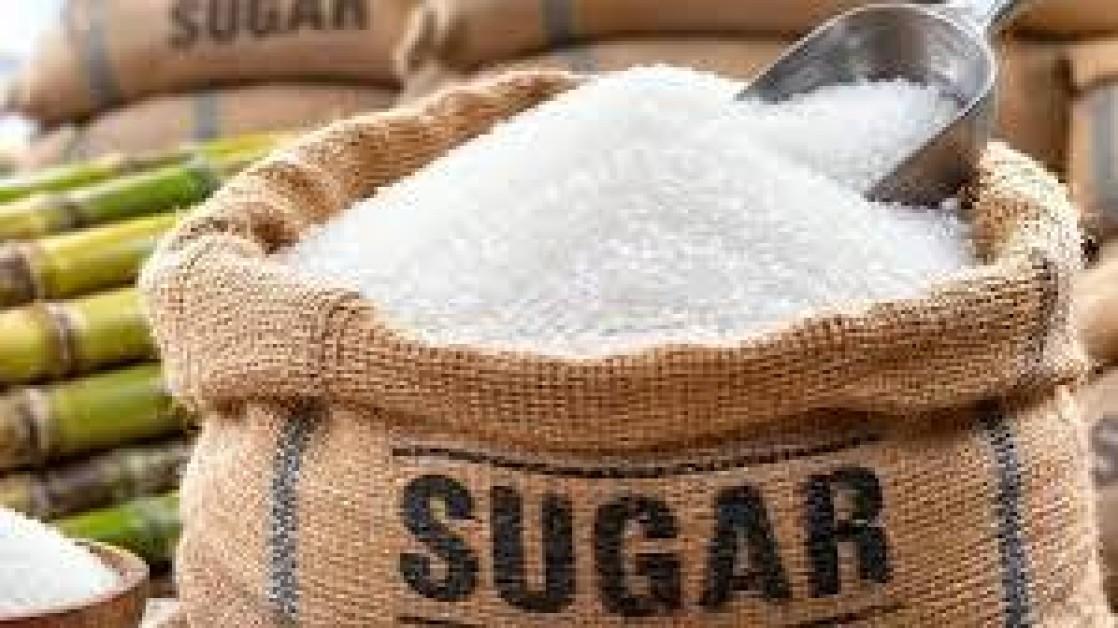
Government Suspends Sugar-Based Ethanol Procurement for 2026–27
The Indian government has directed state-run oil marketing companies to eliminate the diversion of sugar for ethanol production during the 2026–27 ethanol supply year, marking a significant policy shift aimed at protecting domestic sugar availability and containing rising consumer prices.
The decision, reflected in a procurement tender issued on October 16, 2026, excludes ethanol produced from sugarcane juice, sugar, sugar syrup and B-heavy molasses.
The restrictions will apply to the ethanol supply year beginning in November 2026 and ending in October 2027.
However, ethanol produced from C-heavy molasses will remain eligible for procurement because it is derived from the residue left after recoverable sugar has been extracted.
The decision comes amid concerns that inadequate rainfall in Maharashtra and Karnataka, two major sugar-producing states, could reduce sugarcane output.
Domestic sugar prices have risen sharply, increasing pressure on the government to prioritise supplies for household consumption and food processing.
The policy change is expected to affect sugar mills that have invested in ethanol distilleries and relied on flexible allocation of sugarcane between sugar manufacturing and biofuel production.
It also creates new procurement opportunities for grain-based ethanol producers, although changes to maize-based ethanol pricing could affect their profitability.
Key Changes in India's 2026–27 Ethanol Procurement Policy

The latest tender introduces a revised framework for ethanol procurement by public-sector oil marketing companies.
|
Policy Parameter |
2026–27 Position |
|---|---|
|
Ethanol supply year |
November 2026–October 2027 |
|
Sugar diversion for ethanol |
Reduced to zero |
|
Sugarcane juice-based ethanol |
Excluded |
|
Sugar and sugar syrup-based ethanol |
Excluded |
|
B-heavy molasses-based ethanol |
Excluded |
|
C-heavy molasses-based ethanol |
Permitted |
|
Maize-based ethanol |
Permitted |
|
Broken rice-based ethanol |
Permitted |
|
Surplus FCI rice-based ethanol |
Permitted |
|
Indicative ethanol procurement |
Approximately 11 billion litres |
|
Maize ethanol procurement price |
₹68.86 per litre |
|
Previous maize ethanol price |
₹71.86 per litre |
The policy does not suspend India's ethanol-blending programme.
Instead, it changes the feedstocks from which oil marketing companies can procure ethanol.
This distinction is important because the government continues to pursue its E20 petrol-blending programme while seeking to protect domestic sugar supplies.
Oil Marketing Companies Seek 11 Billion Litres of Ethanol
Bharat Petroleum Corporation issued the latest procurement tender on behalf of public-sector oil marketing companies.
The participating companies include Indian Oil Corporation, Hindustan Petroleum Corporation, Mangalore Refinery and Petrochemicals, and Numaligarh Refinery.
The tender seeks approximately 11 billion litres of ethanol for the 2026–27 supply year.
The indicative requirement is divided across four procurement periods.
|
Procurement Period |
Indicative Requirement |
|---|---|
|
November 2026–January 2027 |
3.0 billion litres |
|
February–April 2027 |
3.0 billion litres |
|
May–July 2027 |
2.5 billion litres |
|
August–October 2027 |
2.5 billion litres |
|
Total |
11.0 billion litres |
The volumes represent estimated procurement requirements rather than guaranteed purchases from individual suppliers.
Actual procurement will depend on tender participation, feedstock availability, production capacity and supply agreements.
The tender structure indicates that India intends to maintain substantial ethanol procurement despite excluding several sugarcane-derived feedstocks.
Why the Government Has Halted Sugar Diversion
The central objective of the policy is to increase the amount of sugar available for domestic consumption.
India is the world's largest sugar consumer, with demand coming from households, food manufacturers, beverage producers and other industries.
Sugarcane can be processed into sugar or diverted toward ethanol production through different manufacturing routes.
When sugar availability is abundant, diversion to ethanol can help absorb surplus production and support sugar mill revenues.
However, when production is expected to decline, diversion can reduce the quantity available for consumption.
The government is now prioritising domestic sugar availability because of concerns about lower sugarcane yields.
Poor rainfall and water stress in major producing regions have increased uncertainty about the upcoming harvest.
At the same time, festive-season demand has contributed to rising prices.
By restricting the use of sugar-rich feedstocks for ethanol, policymakers aim to preserve more sugar for the domestic market.
Maharashtra and Karnataka Face Sugarcane Production Risks
Maharashtra and Karnataka are among India's most important sugar-producing states.
Both have experienced rainfall-related challenges that could affect sugarcane availability during the 2026–27 season.
Sugarcane is a water-intensive crop, and its productivity depends heavily on rainfall, irrigation and agricultural conditions.
Inadequate rainfall can reduce crop yields and limit the quantity of cane available for crushing.
This creates uncertainty for sugar mills planning production volumes.
Lower cane availability can also affect the utilisation of sugar manufacturing facilities and ethanol distilleries.
The government's decision reflects concerns that domestic sugar production may not be sufficient to support unrestricted diversion toward ethanol.
However, the final impact on production will depend on actual harvest volumes, recovery rates and weather conditions during the season.
Rising Sugar Prices Increase Pressure on Policymakers
Domestic sugar prices have increased sharply in recent months.
Prices in some wholesale markets reached approximately ₹6,000–₹6,400 per 100 kilograms during August 2026.
Renewed price increases ahead of the festive season have raised concerns about food inflation.
Sugar is an important ingredient in packaged foods, confectionery, beverages and other consumer products.
Higher prices can increase costs for manufacturers and influence retail prices.
For households, rising sugar prices contribute to broader food expenditure.
The government has therefore sought to increase domestic availability through supply-management measures.
The restriction on ethanol diversion is part of that approach.
However, additional sugar availability does not automatically guarantee an immediate reduction in prices.
Market prices will also depend on production, inventories, distribution and consumer demand.
Understanding Sugarcane Juice, B-Heavy and C-Heavy Molasses
The latest policy distinguishes between different feedstocks used in ethanol production.
These differences are important because some feedstocks compete directly with sugar production, while others are residual products of sugar manufacturing.
Sugarcane Juice and Sugar Syrup
Sugarcane juice and sugar syrup can be fermented directly to produce ethanol.
Using these materials for ethanol reduces the amount of cane available for manufacturing crystallised sugar.
The government has excluded ethanol from these sources under the latest procurement tender.
B-Heavy Molasses
B-heavy molasses is generated when sugar extraction is stopped earlier in the manufacturing process.
It retains a relatively high concentration of fermentable sugars.
Producing ethanol from B-heavy molasses can improve ethanol output but reduces recoverable sugar production.
The government has therefore excluded this feedstock from the 2026–27 tender.
C-Heavy Molasses
C-heavy molasses is produced after a greater proportion of recoverable sugar has been extracted.
It contains residual sugars that can still be fermented into ethanol.
Because it is a by-product of conventional sugar manufacturing, its use does not involve the same diversion of recoverable sugar as B-heavy molasses.
C-heavy molasses remains eligible under the revised procurement framework.
Sugar Mills Lose Flexibility to Optimise Production
The restrictions could significantly affect the operating strategies of integrated sugar manufacturers.
Many mills operate both sugar manufacturing facilities and ethanol distilleries.
This structure allows companies to allocate sugarcane and intermediate products between sugar and ethanol based on commercial conditions.
When ethanol offers attractive returns, mills may increase production using sugarcane juice or B-heavy molasses.
When sugar prices are stronger, companies may prioritise sugar production.
The new restrictions remove much of this flexibility for the 2026–27 ethanol supply year.
Mills will need to revise crushing plans, distillery feedstock arrangements and expected sales volumes.
Companies with substantial investments in B-heavy molasses or juice-based ethanol capacity could experience lower utilisation.
The financial impact will vary depending on each company's production configuration, existing contracts and ability to use alternative feedstocks.
Sugar Companies Face Margin and Investment Risks
The policy change creates uncertainty for sugar producers that have invested heavily in ethanol manufacturing capacity.
Ethanol has become an important revenue stream for integrated sugar companies.
It can provide an additional market for sugarcane-derived products and improve cash generation.
However, distillery investments require significant capital expenditure.
If facilities cannot operate at planned utilisation levels, the returns on those investments may decline.
Companies may also face higher unit costs if production volumes fall.
The restrictions could therefore pressure operating margins, particularly for mills with significant dependence on restricted feedstocks.
However, the impact will not be uniform across the industry.
Companies with flexible distilleries, access to grain feedstocks or substantial C-heavy molasses production may be better positioned to adapt.
Higher sugar realisations could also partly offset reduced ethanol revenue, depending on market conditions.
Sugar Stocks Decline Following Policy Announcement
Shares of major listed sugar companies came under selling pressure on October 19, 2026, as investors assessed the implications of the revised ethanol policy.
Stocks affected included Balrampur Chini Mills, EID Parry, Triveni Engineering and Industries, Bajaj Hindusthan Sugar, Shree Renuka Sugars and Dhampur Sugar Mills.
Several of these companies recorded declines of approximately 2% to 6% during morning trading.
The market reaction reflected concerns about reduced ethanol production flexibility and potentially weaker returns on distillery investments.
Major listed companies exposed to the policy change
|
Company |
Business Exposure |
|---|---|
|
Balrampur Chini Mills |
Integrated sugar and ethanol operations |
|
Triveni Engineering and Industries |
Sugar, ethanol and engineering businesses |
|
EID Parry |
Sugar and related businesses |
|
Bajaj Hindusthan Sugar |
Sugar manufacturing and distillery operations |
|
Shree Renuka Sugars |
Sugar refining and ethanol |
|
Dhampur Sugar Mills |
Sugar manufacturing and associated operations |
The actual financial effect on individual companies will depend on their production mix, capacity utilisation and sales arrangements.
Early share price declines reflect investor expectations rather than confirmed earnings losses.
Grain-Based Ethanol Producers Gain Greater Importance
The exclusion of sugar-rich feedstocks increases the importance of grain-based ethanol production.
Under the revised procurement framework, oil marketing companies can continue purchasing ethanol produced from maize, broken rice and surplus rice supplied through the Food Corporation of India.
These alternatives are expected to play a larger role in meeting India's ethanol-blending requirements.
Grain-based distilleries may benefit from increased procurement opportunities.
However, their ability to expand production will depend on raw material availability, operating capacity and procurement economics.
A substantial increase in grain demand could also influence agricultural commodity prices.
Policymakers must therefore balance ethanol requirements with the availability of grains for food, animal feed and other uses.
The shift does not eliminate feedstock competition; it changes where that competition occurs.
Maize Ethanol Procurement Price Reduced to ₹68.86 Per Litre
The latest tender also introduces a reduction in the procurement price for maize-based ethanol.
The price has been lowered from ₹71.86 per litre to ₹68.86 per litre.
This represents a reduction of ₹3 per litre.
The incentive component has been reduced from ₹5.79 per litre to ₹2.79 per litre.
|
Maize Ethanol Pricing |
Previous |
Revised |
|---|---|---|
|
Procurement price |
₹71.86/litre |
₹68.86/litre |
|
Incentive component |
₹5.79/litre |
₹2.79/litre |
|
Reduction |
— |
₹3.00/litre |
The lower procurement price could reduce revenue per litre for maize-based ethanol producers.
This may partially offset the benefits of increased demand resulting from the exclusion of sugar-based feedstocks.
Profitability will depend on maize procurement costs, processing efficiency and plant utilisation.
If grain prices remain elevated, the lower ethanol procurement price could put pressure on producer margins.
India's E20 Petrol Programme Continues
The government has maintained its commitment to the E20 petrol-blending programme.
E20 refers to petrol containing approximately 20% ethanol by volume.
The programme is intended to reduce dependence on imported crude oil, support domestic biofuel production and contribute to lower fossil-fuel consumption.
Ethanol can be manufactured from multiple agricultural feedstocks.
This allows procurement policies to change without necessarily abandoning the blending objective.
The latest decision demonstrates that India is willing to adjust feedstock priorities when agricultural supply conditions become challenging.
However, maintaining E20 blending requirements will depend on adequate ethanol production from permitted sources.
Grain-based distilleries and C-heavy molasses producers will therefore play important roles during the new supply year.
Food Security Takes Priority Over Sugar-Based Biofuel Expansion
The policy highlights the relationship between agricultural commodities and energy production.
Biofuels can provide economic benefits by creating additional demand for agricultural products.
They can also support efforts to reduce petroleum imports.
However, agricultural feedstocks are also essential for food consumption.
When production is abundant, the competing uses may be manageable.
When supplies tighten, diverting food-related commodities toward fuel production can contribute to price pressure.
India's latest decision prioritises domestic sugar availability over additional ethanol production from sugar-rich materials.
This approach reflects concerns about consumer prices and food security.
However, the government must also consider the financial implications for sugar mills and farmers.
A sustainable policy framework will need to balance agricultural incomes, industrial investment, food availability and energy requirements.
Sugarcane Farmers Could Face Indirect Financial Effects
The restrictions primarily affect ethanol procurement and sugar mill production planning.
However, changes in mill profitability can also influence sugarcane farmers.
Sugar mills purchase cane from farmers and are required to make payments according to applicable pricing and payment regulations.
Ethanol revenue has helped some mills generate additional cash flow.
This can support working capital requirements and the timely settlement of cane dues.
If ethanol revenue declines, some mills may face greater financial pressure.
However, higher sugar production and favourable sugar prices could partly offset the impact.
The outcome will depend on each mill's financial position, sugar recovery rates and market realisations.
Farmers will therefore be affected indirectly through the financial performance and procurement decisions of sugar manufacturers.
Distilleries May Need to Reconfigure Feedstock Operations
Integrated sugar mills may consider adjusting distillery operations to use permitted feedstocks.
Some facilities can process multiple raw materials, while others are designed primarily for specific sugarcane-derived inputs.
Switching feedstocks may require technical modifications, additional equipment or changes in operating procedures.
Grain-based ethanol production involves different processing requirements from molasses-based production.
Companies may also need to establish new procurement arrangements for maize or rice.
These changes can involve additional capital expenditure and working capital requirements.
The economic feasibility of conversion will depend on plant design, available infrastructure and expected ethanol prices.
Not every distillery will be able to switch feedstocks quickly or economically.
Consequently, some producers may experience reduced capacity utilisation during the 2026–27 supply year.
Sugar Production Could Increase as Diversion Ends
The decision is intended to direct more recoverable sugar toward domestic production.
By restricting the use of sugarcane juice, syrup and B-heavy molasses for ethanol, mills can retain more sugar within the manufacturing process.
This could increase sugar output relative to a scenario in which unrestricted diversion continued.
However, the actual increase will depend on the quantity and quality of sugarcane available.
Poor rainfall and lower yields could offset some of the expected benefits.
The policy therefore aims to protect supply rather than guarantee a specific production increase.
Sugar inventories, crushing performance and recovery rates will provide clearer evidence of its effectiveness.
Implications for Food and Beverage Manufacturers
The decision could provide some relief to businesses that use sugar as an industrial input.
Food manufacturers, confectionery producers, beverage companies and packaged food businesses are exposed to changes in sugar prices.
Higher input costs can reduce profit margins or lead to increased retail prices.
By preserving more sugar for domestic consumption, the government aims to reduce supply pressure.
However, the timing and scale of any price moderation remain uncertain.
Manufacturers may continue to face elevated procurement costs if sugarcane output falls significantly.
Businesses will therefore monitor production estimates, wholesale prices and inventory levels throughout the crushing season.
The effectiveness of the policy will become clearer as new-season sugar supplies enter the market.
Policy Uncertainty Raises Questions for Future Ethanol Investment
The restriction introduces additional uncertainty for companies planning ethanol capacity expansion.
India's ethanol-blending programme has encouraged significant investment in distilleries over recent years.
Many companies expanded capacity based on expectations of sustained demand for ethanol produced from sugarcane and grains.
The latest decision demonstrates that procurement eligibility can change according to agricultural supply conditions.
This creates a risk for businesses whose facilities depend heavily on a single feedstock.
Future investment decisions may increasingly favour flexible distilleries capable of processing multiple raw materials.
Companies may also place greater emphasis on assessing regulatory and feedstock risks before committing capital.
The long-term direction of ethanol policy will therefore be important for investment planning.
What Sugar Mills and Investors Should Monitor
Several developments will determine the financial impact of the government's decision.
The first is the actual sugarcane harvest in Maharashtra, Karnataka and other producing states.
Lower-than-expected output could maintain pressure on sugar availability despite the diversion restrictions.
The second is the movement in domestic sugar prices.
Stronger sugar realisations may help offset reduced ethanol revenue for some mills.
Third, companies will need to evaluate their distillery capacity utilisation and the feasibility of switching to permitted feedstocks.
The fourth consideration is ethanol procurement pricing.
Lower maize-based ethanol prices could affect the economics of alternative production.
Investors will also monitor whether the government revises the restrictions during the supply year.
The policy could be reconsidered if sugar production and inventories improve, although no such change has been announced.
Conclusion
India's decision to halt sugar diversion for ethanol production during the 2026–27 supply year represents a significant shift in agricultural and energy procurement policy.
The government has excluded ethanol produced from sugarcane juice, sugar, sugar syrup and B-heavy molasses from the latest oil marketing company tender.
The restriction is intended to preserve domestic sugar supplies as poor rainfall threatens production and rising prices create concerns about food inflation.
The policy will require sugar mills to revise production plans and could reduce the utilisation of distilleries dependent on restricted feedstocks.
It may also weaken returns on ethanol investments and increase pressure on the profitability of integrated sugar manufacturers.
At the same time, grain-based ethanol producers and facilities using C-heavy molasses will remain eligible to participate in the procurement programme.
The government continues to pursue its E20 petrol-blending objectives, with oil marketing companies seeking approximately 11 billion litres of ethanol for the new supply year.
The challenge will be maintaining sufficient biofuel supplies while protecting domestic sugar availability and supporting the financial stability of sugar mills.
The ultimate impact will depend on sugarcane production, commodity prices, ethanol procurement economics and the ability of manufacturers to adapt to the revised framework.
 India Halts Sugar Diversion for Ethanol in 2026–27 as Mills Face New Procurement Rules FAQs

POST A COMMENT (0)
All Comments (0)
Replies (0)