




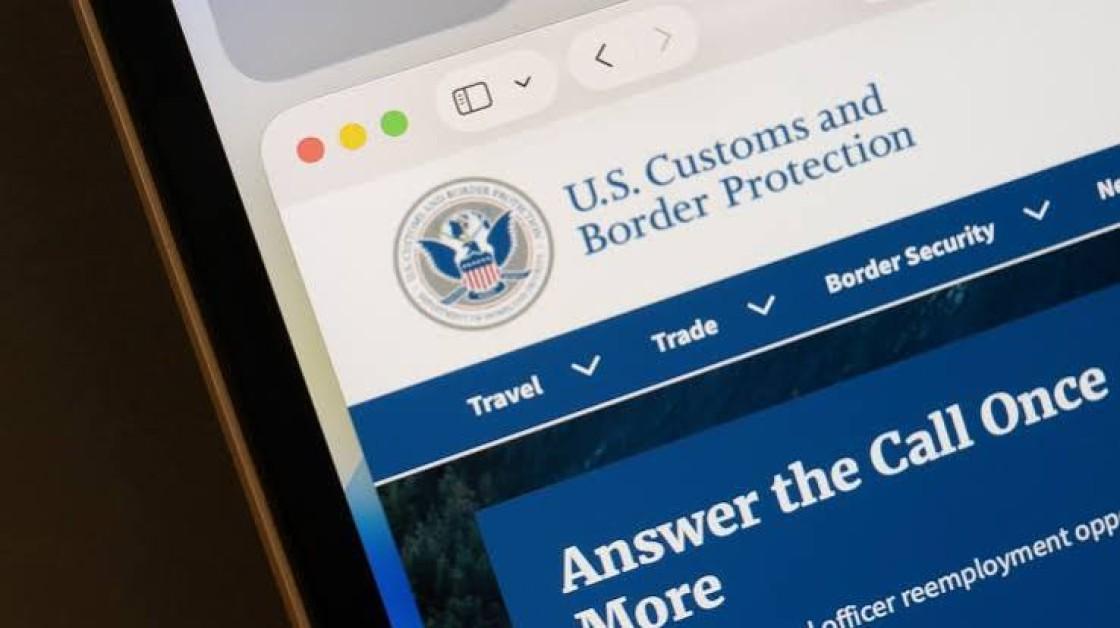
Atul USA Faces US Customs Investigation Over Alleged Chemical Import Duty Evasion
Mumbai, November 20, 2026: Indian chemicals manufacturer Atul Limited has disclosed that its wholly owned American subsidiary, Atul USA Inc., is facing an investigation by US Customs and Border Protection (CBP) over allegations of evading anti-dumping and countervailing duties on imports of 2,4-Dichlorophenoxyacetic Acid (2,4-D) and its derivatives.
The investigation concerns suspicions that Chinese-origin chemicals were transshipped through India before entering the United States, potentially avoiding higher duties applicable to Chinese products.
In a regulatory filing dated November 19, 2026, Atul confirmed that its US subsidiary had received a notice under the Enforce and Protect Act (EAPA), part of the Trade Facilitation and Trade Enforcement Act of 2015.
The company has denied the allegations at the preliminary stage and stated that the potential financial and operational consequences cannot currently be determined.
The investigation introduces regulatory uncertainty for the company's US chemical import operations, although no final determination of duty evasion has been announced.
Key Details of the Atul USA Customs Investigation

|
Parameter |
Details |
|---|---|
|
Parent company |
Atul Limited |
|
Subsidiary under investigation |
Atul USA Inc. |
|
Investigating authority |
US Customs and Border Protection |
|
Applicable legislation |
Enforce and Protect Act |
|
Chemicals involved |
2,4-D and its derivatives |
|
Allegation |
Evasion of anti-dumping and countervailing duties |
|
Suspected trade route |
China through India to the United States |
|
Interim measure |
Suspension of liquidation of covered entries |
|
Relevant import entry date |
After August 11, 2026 |
|
Notice received |
November 18, 2026 |
|
Exchange disclosure |
November 19, 2026 |
|
Company's response |
Denies allegations |
|
Financial impact |
Not yet determined |
The investigation remains at a preliminary stage, and the allegations have not been established as proven violations.
US Authorities Investigate Suspected Transshipment Through India
The investigation focuses on whether 2,4-D and related chemical products originating in China were routed through India before being imported into the United States.
Under US trade regulations, certain imported products may be subject to additional duties depending on their country of origin and applicable trade-remedy orders.
The authorities are examining whether the routing of the products resulted in the avoidance of anti-dumping and countervailing duties that would otherwise have applied.
Transshipment itself is not necessarily unlawful.
International trade frequently involves goods moving through intermediate countries for legitimate commercial and logistical reasons.
However, trade-remedy violations can arise when products are incorrectly declared, their origin is misrepresented or applicable duties are improperly avoided.
The CBP investigation seeks to determine whether such conduct occurred in the transactions involving Atul USA.
Atul Limited has disputed the allegation.
CBP Suspends Final Customs Assessment on Covered Imports
As an interim measure, US Customs and Border Protection has suspended the liquidation of unliquidated entries of the covered merchandise imported after August 11, 2026, or as otherwise permitted by law.
In US customs terminology, liquidation refers to the final assessment of duties and charges payable on imported goods.
Suspending liquidation means the final customs assessment remains unresolved while the investigation proceeds.
The measure allows authorities to preserve the ability to assess applicable duties after determining whether a violation occurred.
CBP may also introduce additional measures considered necessary to protect US government revenue.
Such measures can include requirements relating to import documentation or financial security, depending on the applicable legal framework.
The suspension does not, by itself, establish that Atul USA violated US trade laws.
Atul Limited Denies Allegations and Appoints US Legal Counsel
Atul Limited has rejected the allegations at the preliminary stage.
The company confirmed that it received the public version of the investigation notice on November 18, 2026, at 9:50 p.m. Indian Standard Time.
Following receipt of the notice, Atul USA engaged US-based legal counsel to obtain advice and guidance.
The legal team is expected to assist the subsidiary in responding to the investigation and addressing the requirements of the US authorities.
The company has not disclosed the details of its legal arguments or the documentation it intends to submit.
It has also not provided an estimate of potential duties, penalties or other financial liabilities.
The eventual outcome will depend on the evidence examined by CBP and the findings reached under the applicable investigation procedures.
What Are Anti-Dumping and Countervailing Duties?
Anti-dumping and countervailing duties are trade-remedy measures used to address certain forms of unfairly traded imports.
Although both can increase import costs, they serve different purposes.
Anti-Dumping Duties
Anti-dumping duties may be imposed when imported goods are found to be sold at less than fair value and the relevant legal requirements concerning injury to domestic industry are satisfied.
These duties are intended to address the effects of dumping on domestic producers.
The applicable duty rates can vary according to the product, exporting country and producer.
Countervailing Duties
Countervailing duties address certain imports benefiting from countervailable government subsidies.
These duties seek to offset the effects of subsidies that meet the relevant legal requirements.
Why Country of Origin Matters
The origin of imported goods is important because trade-remedy duties often apply to products from particular countries.
A product originating in China may face a different duty treatment from a comparable product originating in India.
Incorrectly declaring the origin of goods can therefore affect the duties payable.
The Atul USA investigation centres on whether Chinese-origin chemicals were imported under arrangements that improperly avoided applicable duties.
Understanding the Enforce and Protect Act Investigation Process
The Enforce and Protect Act provides US Customs and Border Protection with procedures for investigating allegations of evasion involving anti-dumping and countervailing duty orders.
Investigations may involve examination of import records, transaction documents, shipping information and other relevant evidence.
Authorities may request information from importers and other parties involved in the supply chain.
The process can include interim measures before a final determination is issued.
These measures are designed to protect the collection of duties while the investigation remains unresolved.
A final finding of evasion can result in additional customs enforcement actions and the assessment of applicable duties.
However, the consequences depend on the facts of the case and the relevant statutory provisions.
For Atul USA, the investigation is ongoing, and the company has not announced any final adverse determination.
What Is 2,4-Dichlorophenoxyacetic Acid?
2,4-Dichlorophenoxyacetic Acid, commonly known as 2,4-D, is a chemical compound widely used in agricultural herbicide formulations.
It belongs to the phenoxy herbicide family and is primarily used to control certain broadleaf weeds.
The chemical has applications in agricultural weed management, including in crops where its use is authorised under applicable regulations.
Commercial 2,4-D products may be supplied in different chemical forms, including salts and esters.
These derivatives can have different formulation and application characteristics.
Manufacturing and international trade in such chemicals are subject to various regulatory requirements, including chemical safety, product registration and customs compliance.
The present investigation concerns import duty treatment rather than a finding about the safety or agricultural effectiveness of 2,4-D.
Why the Investigation Matters for India's Chemical Industry
India is an important participant in global chemical manufacturing and exports.
Indian producers supply products to international markets across agrochemicals, pharmaceuticals, dyes, intermediates and specialty chemicals.
The United States is a significant destination for several categories of Indian chemical exports.
Trade-remedy investigations can create uncertainty for companies involved in international supply chains.
Potential implications include additional documentation requirements, changes in customs processing, increased compliance expenses and possible financial exposure.
However, an investigation involving one company does not establish widespread non-compliance across the Indian chemical industry.
The Atul USA case concerns specific allegations relating to particular products and import transactions.
Its broader significance will depend on the eventual findings and any regulatory measures adopted.
Atul Limited Operates Across Life Science and Performance Chemicals
Atul Limited is a Gujarat-based chemical manufacturer associated with the Lalbhai Group.
The company operates across life science chemicals and performance and other chemicals.
Its products serve multiple industries, including agriculture, pharmaceuticals, dyes, coatings, adhesives, construction, textiles and industrial manufacturing.
The company has an international business presence through subsidiaries and commercial operations serving overseas markets.
Atul USA forms part of this international structure.
The customs investigation therefore concerns the company's overseas subsidiary rather than an enforcement proceeding directly initiated against every business operated by the Indian parent.
Nevertheless, developments involving a wholly owned subsidiary can have implications for the parent company's consolidated financial reporting and risk disclosures.
Atul Reports Higher Revenue but Lower Profit in September Quarter
The investigation comes after Atul Limited reported mixed financial performance for the quarter ended September 30, 2026.
Q2 FY27 revenue from operations
₹1,877.04 Cr
20.96% YoY
Q2 FY27 net profit attributable to owners
₹155.72 Cr
13.12% YoY
Revenue from operations increased from approximately ₹1,551.84 crore in the corresponding quarter of the previous financial year.
However, net profit attributable to owners declined from ₹179.24 crore to ₹155.72 crore.
The divergence between revenue growth and profitability highlights the importance of monitoring costs, margins and other financial factors.
The company has not quantified any financial impact from the US customs investigation, so the reported September-quarter performance should not be attributed to the ongoing proceedings.
Atul Shares Close Higher Despite Regulatory Disclosure
Shares of Atul Limited ended Thursday, November 19, at ₹5,076 on the BSE.
The stock gained ₹57.95, representing an increase of approximately 1.15% during the session.
The positive closing movement occurred on the day the company disclosed the investigation.
However, daily share price changes can reflect numerous factors, including broader market conditions, investor positioning and company-specific developments.
The closing gain does not establish that investors have fully assessed the potential consequences of the investigation.
Further disclosures from Atul Limited or US authorities could influence future market sentiment.
Potential Financial and Operational Implications Remain Uncertain
The financial consequences of the investigation cannot currently be quantified.
Several factors will determine the eventual impact.
The first is whether US authorities conclude that the covered imports were subject to duties that were improperly avoided.
The second is the value and volume of the merchandise involved.
The third is the applicable duty rates and the final customs assessment.
Legal expenses, administrative requirements and changes in import procedures may also affect operating costs.
If the allegations are not substantiated, the investigation may conclude without an adverse evasion finding.
If authorities determine that evasion occurred, the company could face additional customs obligations and other measures permitted under US law.
Atul has not announced any quantified liability or final enforcement outcome.
What Investors and Industry Participants Should Monitor
The next significant development will be the progress of the EAPA investigation.
Market participants will monitor whether CBP requests additional information, extends interim measures or issues further findings.
Atul USA's response to the allegations will also be important.
Another consideration is whether the company discloses any estimated financial exposure in subsequent regulatory filings.
Changes in import procedures, shipment documentation or supply-chain arrangements could provide additional information about the operational implications.
The investigation's final determination will be the principal event establishing whether the alleged duty evasion occurred.
Until then, the allegations remain disputed.
Conclusion
The US Customs and Border Protection investigation into Atul USA Inc. represents a significant regulatory development for the international operations of Atul Limited.
The investigation concerns allegations that Chinese-origin 2,4-D and its derivatives were transshipped through India to avoid applicable anti-dumping and countervailing duties.
As an interim measure, US authorities have suspended the final customs assessment of certain covered imports entering the country after August 11, 2026.
Atul Limited has denied the allegations and engaged US legal counsel to respond to the proceedings.
The company has not quantified the potential financial or operational impact, and no final determination of duty evasion has been announced.
The outcome will depend on the evidence examined by US authorities and the applicable customs enforcement procedures.
 Atul Unit Faces US Customs Probe Over Alleged Anti-Dumping Duty Evasion FAQs

POST A COMMENT (0)
All Comments (0)
Replies (0)