




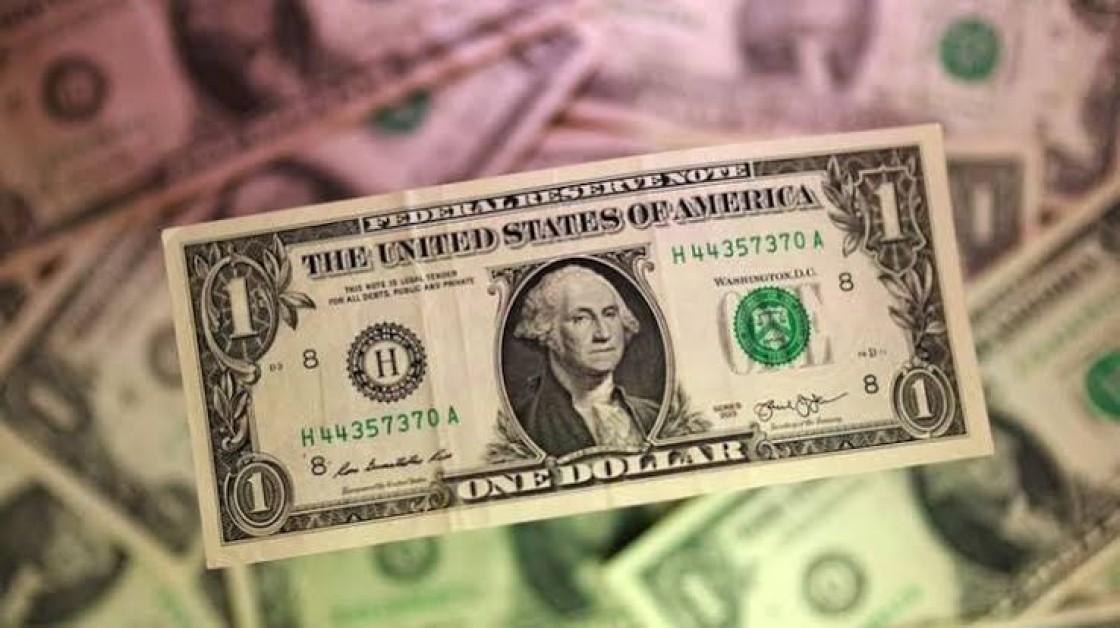
US Dollar Reaches 19-Month High as Investors Expect Further Federal Reserve Tightening
The US dollar climbed to its strongest level since April 2025 on Tuesday, November 17, 2026, extending a six-session rally as expectations of further Federal Reserve interest rate increases and continued investment in American artificial intelligence infrastructure supported demand for the currency.
The US Dollar Index, which measures the dollar against a basket of six major currencies, rose to 103.66, its highest level since April 2, 2025.
The rally followed stronger-than-expected US inflation data and comments from Federal Reserve officials indicating that additional monetary tightening may be required to control persistent price pressures.
Currency traders have increasingly priced in an interest rate increase at the Federal Reserve's December 8–9 policy meeting.
Market expectations have also shifted toward the possibility of further tightening in early 2027.
At the same time, substantial international investment in US technology companies and artificial intelligence infrastructure has provided another source of support for the dollar.
The currency's advance has placed pressure on the euro, Japanese yen, British pound and Australian dollar.
The euro declined to a 19-month low, while the Japanese yen traded near 160 per dollar, a level closely monitored by Japanese authorities.
The Australian dollar also weakened as selling pressure in global technology stocks reduced investor appetite for risk-sensitive currencies.
The dollar's strength reflects a combination of monetary policy expectations, capital flows and relative economic performance.
However, analysts caution that a sharp correction in AI-related equities or unexpected changes in US economic policy could weaken the currency's momentum.
US Dollar and Global Currency Markets: November 17, 2026

|
Market indicator |
Reported level |
|---|---|
|
US Dollar Index (DXY) |
103.66 |
|
Dollar index milestone |
Highest since April 2, 2025 |
|
EUR/USD |
$1.0985 |
|
GBP/USD |
$1.3172 |
|
USD/JPY |
¥159.49 |
|
USD/CHF |
CHF 0.84075 |
|
AUD/USD |
$0.6725 |
|
Next Federal Reserve meeting |
December 8–9, 2026 |
|
Expected policy direction |
Interest rate increase |
|
Market probability of 50-basis-point hike |
Approximately 4% |
Currency quotations reflect reported trading levels on November 17, 2026, rather than fixed daily closing rates. Exchange rates and policy probabilities change throughout the session.
The figures illustrate the dollar's broad strength against several major international currencies.
Dollar Index Rises to 103.66, Highest Since April 2025
The US Dollar Index advanced to 103.66 during Tuesday's trading.
The level marked the strongest reading since April 2, 2025, when financial markets were reacting to the announcement of sweeping US tariffs.
The dollar subsequently experienced significant volatility as investors assessed the implications of trade restrictions, economic growth and monetary policy.
Its latest advance reflects renewed demand for US assets.
What Is the US Dollar Index?
The US Dollar Index, commonly called DXY, measures the dollar's value against a weighted basket of six currencies.
These include the euro, Japanese yen, British pound, Canadian dollar, Swedish krona and Swiss franc.
The euro carries the largest weight in the index.
Consequently, changes in the euro-dollar exchange rate have a substantial influence on DXY.
A rising index indicates that the dollar is strengthening against the basket.
However, it does not necessarily mean the dollar is appreciating against every currency individually.
Six Consecutive Sessions of Gains
The dollar's November 17 advance extended a rally that began after stronger-than-expected US inflation data.
The sustained appreciation indicates that traders have adjusted their expectations for future interest rates.
The shift has increased the relative attractiveness of dollar-denominated assets.
Federal Reserve Rate Hike Expectations Drive Dollar Strength
The Federal Reserve's monetary policy outlook is one of the main reasons behind the dollar's recent gains.
Investors expect the central bank to increase borrowing costs at its December meeting.
The change in expectations follows persistent inflation and statements from policymakers expressing concern about price pressures.
December Interest Rate Decision in Focus
The Federal Reserve's next policy meeting is scheduled for December 8–9, 2026.
Interest rate futures indicate that traders regard an increase as highly likely.
The probability of a larger 50-basis-point increase has declined to approximately 4%.
That compares with nearly 12% a day earlier.
The market therefore expects further tightening but currently places greater weight on a conventional quarter-percentage-point increase.
Why Higher Interest Rates Support the Dollar
Higher US interest rates can increase returns on dollar-denominated deposits and fixed-income investments.
This can attract international capital into US financial markets.
The resulting demand for dollars may support the exchange rate.
However, currency movements also depend on inflation expectations, economic growth and monetary policy in other countries.
Higher interest rates do not guarantee that the dollar will appreciate.
US Inflation Accelerates to 4% in October
The latest US inflation figures have reinforced expectations of further monetary tightening.
Consumer prices increased 4% from a year earlier in October 2026, compared with 3.7% in September.
The acceleration exceeded market expectations and raised concerns that inflationary pressures were spreading across the economy.
Inflation Extends Beyond Energy and Tariffs
Earlier inflation concerns were concentrated partly on energy prices and the effects of trade restrictions.
However, recent data showed broader price increases across goods and services.
Several categories experienced higher costs, including consumer electronics, insurance and selected services.
The broader nature of inflation has made policymakers more cautious about assuming that price pressures will decline automatically.
Core Inflation Remains Important
Core inflation excludes food and energy prices.
It is closely watched because it can provide information about underlying price pressures.
October's monthly core inflation increase reached approximately 0.3%.
That level attracted attention because Federal Reserve officials had discussed the possibility of faster tightening if underlying inflation remained elevated.
The data contributed to the repricing of December interest rate expectations.
Federal Reserve Officials Signal Continued Inflation Concerns
Several Federal Reserve policymakers have expressed concern that inflation remains too high.
Dallas Federal Reserve President Lorie Logan has supported additional quarter-point increases and indicated that the central bank may need to move more rapidly.
Federal Reserve Governor Christopher Waller has discussed conditions under which a larger rate increase could be considered.
Other policymakers have emphasised persistent services inflation.
Fed Chair Kevin Warsh Faces Difficult Policy Decisions
Federal Reserve Chair Kevin Warsh is overseeing monetary policy during a period of elevated inflation and substantial investment in AI infrastructure.
The central bank must balance inflation control with the potential effects of higher borrowing costs on economic activity.
Further tightening could help moderate demand and inflation.
However, it may also increase financing costs for households and businesses.
The December decision will depend on incoming economic data and policymakers' assessment of inflation risks.
Artificial Intelligence Investment Flows Provide Additional Support
Beyond interest rates, international investment in US artificial intelligence companies has contributed to dollar strength.
The United States hosts several leading companies involved in AI processors, cloud computing, software and data centre infrastructure.
Investors seeking exposure to these businesses often purchase US financial assets.
Such investment can create demand for dollars.
How AI Investment Supports the Currency
Foreign investors purchasing US equities or financing American infrastructure projects may need to acquire dollars.
Capital inflows can support the currency when they exceed offsetting flows.
The effect depends on how transactions are financed and whether investors hedge their currency exposure.
Major Areas of AI Investment
Investment has been concentrated in several technology segments.
AI semiconductors
Advanced processors are essential for training and operating large AI systems.
Cloud computing
Technology companies are expanding computing capacity to serve AI customers.
Data centres
New facilities require substantial investment in buildings, electrical systems and networking equipment.
Power infrastructure
AI computing expansion is increasing demand for electricity generation and grid equipment.
Software and applications
Companies are developing products and services that use AI technology.
These investments have strengthened the appeal of certain US assets.
However, capital flows are difficult to isolate, and the precise contribution of AI investment to the dollar's appreciation cannot be measured from the exchange rate alone.
Nvidia Earnings Become a Test for AI Investment Sentiment
Nvidia's upcoming quarterly earnings announcement is another important event for currency and equity markets.
The semiconductor company is scheduled to report results on November 17, 2026.
Nvidia is a major supplier of advanced computing technology used in AI infrastructure.
Its financial performance can influence investor expectations for the broader technology sector.
Why Nvidia Matters for the Dollar
Strong demand for US technology assets can attract international investment.
If Nvidia reports resilient AI infrastructure demand, it could support confidence in the sector.
However, disappointing results or weaker guidance could lead investors to reassess technology valuations.
A substantial selloff in US technology equities could reduce some of the capital flow support associated with AI investment.
Technology Market Volatility Creates Risks
Recent weakness in semiconductor stocks has raised concerns about whether AI-related valuations have become excessive.
Investors are increasingly examining the financial returns generated by large-scale data centre spending.
The dollar could therefore face conflicting influences.
Higher US interest rates may support the currency, while a sharp decline in technology investment sentiment could create downward pressure.
Euro Falls to 19-Month Low Against Dollar
The euro declined to approximately $1.0985 on November 17, reaching its weakest level against the dollar in about 19 months.
The decline reflects both US dollar strength and concerns about the European economic outlook.
Why EUR/USD Is Important
The euro-dollar exchange rate is one of the world's most actively traded currency pairs.
It influences international trade, financial markets and investment flows.
A weaker euro means that one euro purchases fewer US dollars.
For European businesses importing dollar-priced goods, this can increase costs.
Interest Rate Differentials
Differences between Federal Reserve and European Central Bank policy expectations can influence EUR/USD.
If US interest rates are expected to rise faster than European rates, dollar-denominated assets may become relatively more attractive.
However, economic conditions and investor positioning also influence the exchange rate.
Japanese Yen Weakens Toward 160 Per Dollar
The Japanese yen traded near ¥159.49 per US dollar.
The level has attracted attention because Japanese authorities have previously expressed concern about excessive currency volatility.
The yen has remained under pressure as US interest rate expectations have increased.
Why the Yen Is Sensitive to US Yields
Japan and the United States have different monetary policy environments.
When US interest rates are relatively high, some investors may favour dollar-denominated assets.
This can contribute to yen weakness.
Intervention Concerns Increase
Currency traders are monitoring the possibility of Japanese government intervention.
Authorities may intervene when they believe exchange rate movements are excessively rapid or disorderly.
However, there is no automatic intervention trigger at a particular exchange rate.
The decision depends on market conditions and government policy.
Impact on Japan's Economy
A weaker yen can benefit Japanese exporters by increasing the local-currency value of overseas earnings.
However, it can also increase the cost of imported energy, food and raw materials.
The overall economic effect depends on the structure of Japanese trade and domestic demand.
Australian Dollar Falls to 10-Month Low
The Australian dollar weakened to approximately $0.6725 against the US dollar, its lowest level since January 2026.
The currency was affected by broader US dollar strength and weaker investor sentiment toward risk-sensitive assets.
Why the Australian Dollar Is Risk-Sensitive
Australia's currency is influenced by global economic conditions, commodity demand and international investment flows.
During periods of financial market uncertainty, investors may reduce exposure to currencies associated with global growth.
Asian Technology Selloff Adds Pressure
The decline in semiconductor stocks across Asia has contributed to weaker market sentiment.
Investors are reassessing expectations for AI infrastructure spending.
The resulting shift in risk appetite has placed additional pressure on the Australian dollar.
However, Australian monetary policy and domestic economic conditions remain important influences on the currency.
British Pound Declines Against Stronger Dollar
The British pound slipped to approximately $1.3172.
The movement reflected the dollar's broad appreciation against major currencies.
Sterling is influenced by UK economic conditions, Bank of England policy expectations and international capital flows.
A stronger dollar can pressure the pound even without a major change in the UK economic outlook.
The direction of GBP/USD will depend partly on the relative monetary policy outlooks of the United States and United Kingdom.
Swiss Franc Weakens as Dollar Reaches 18-Month High
The dollar rose to approximately 0.84075 Swiss franc, its strongest level against the currency in about 18 months.
The Swiss franc is often considered a defensive currency during periods of market uncertainty.
However, it can weaken against the dollar when US interest rate expectations rise significantly.
The latest movement demonstrates that the dollar's strength has extended across several major currencies.
Stronger Dollar Pressures Gold and Precious Metals
The dollar's advance has contributed to selling pressure in gold.
Spot gold declined to approximately $3,848.51 per ounce on November 16, after touching its lowest level since October 2025.
The stronger dollar increased the cost of gold for buyers using other currencies.
Higher US interest rate expectations also weighed on the metal.
Why Gold Often Moves Against the Dollar
Gold is generally priced internationally in US dollars.
When the dollar strengthens, the metal becomes more expensive in other currencies, assuming its dollar price remains unchanged.
Higher interest rates can also increase the opportunity cost of holding gold, which does not pay interest.
However, gold and the dollar do not always move in opposite directions.
Geopolitical uncertainty and financial market stress can sometimes support both assets.
Impact on Global Commodity Markets
A stronger US dollar can influence prices across several internationally traded commodities.
Oil, metals and agricultural products are commonly priced in dollars.
When the dollar appreciates, these commodities may become more expensive for buyers using other currencies.
This can affect demand and market expectations.
Crude Oil
Oil prices are influenced by supply, demand, production policy and geopolitical developments.
Dollar movements can contribute to price changes, but they are not the only factor.
Industrial Metals
Copper and other metals are sensitive to global manufacturing activity and investment expectations.
A stronger dollar may create additional pressure when economic demand is weak.
Agricultural Commodities
Dollar appreciation can influence import costs for countries purchasing internationally traded food products.
The impact varies according to supply conditions, trade policies and domestic currencies.
What a Stronger Dollar Means for India
The dollar's appreciation has important implications for India because international trade and financial transactions frequently involve US dollars.
India imports substantial quantities of crude oil, machinery, electronics and other products.
A stronger dollar can increase the rupee cost of these imports if the Indian currency weakens.
However, the rupee's performance depends on several factors beyond the Dollar Index.
Indian Rupee and Dollar Exchange Rate
The Indian rupee has experienced substantial volatility during 2026.
On November 11, the rupee strengthened to approximately ₹93.69 per dollar, supported by foreign investment inflows.
This demonstrated that the rupee can appreciate even when the dollar strengthens against other major currencies.
Domestic capital flows and Reserve Bank of India operations can influence the exchange rate.
Impact on Importers
A weaker rupee can increase costs for businesses importing dollar-priced goods.
Companies may face higher expenditure on raw materials, equipment and technology.
Impact on Exporters
Indian exporters earning revenue in dollars may benefit when those earnings are converted into rupees.
However, the benefit depends on costs, hedging arrangements and demand conditions.
Foreign Portfolio Investment
Higher US interest rates can make American financial assets more attractive.
This may influence foreign investment flows into Indian equities and bonds.
However, India's growth prospects, corporate earnings and market valuations also affect investor decisions.
Impact on Indian IT Companies
Indian information technology services companies generate substantial revenue from international customers.
Many receive payments in US dollars.
A stronger dollar relative to the rupee can increase the reported rupee value of dollar-denominated revenue.
However, the financial effect depends on several factors.
These include employee costs, overseas expenses, currency hedging and customer spending.
AI Investment Creates Opportunities and Risks
Global investment in AI infrastructure can support demand for technology services.
Indian IT companies may participate in cloud migration, data engineering and AI implementation projects.
However, changes in customer budgets or technology spending priorities can affect revenue growth.
A stronger dollar therefore does not automatically guarantee improved profitability for Indian IT companies.
Strong Dollar Could Tighten Global Financial Conditions
The dollar plays a central role in international finance.
Many companies and governments borrow in US dollars.
When the dollar strengthens, borrowers earning revenue in other currencies may face higher repayment costs in local-currency terms.
Impact on Emerging Markets
Emerging economies can be sensitive to dollar appreciation.
Higher US yields may attract international capital toward American assets.
This can influence exchange rates and domestic financial conditions.
Corporate Debt
Companies with unhedged dollar liabilities may experience increased repayment costs if their domestic currencies depreciate.
Import Inflation
A weaker domestic currency can increase the cost of imported goods.
Monetary Policy
Central banks may need to consider currency movements when evaluating inflation and financial stability.
However, the impact differs substantially across economies depending on their external balances, reserves and financial structures.
US Treasury Yields Remain a Key Market Indicator
US Treasury yields are closely watched because they influence global borrowing costs and investment returns.
Expectations of higher Federal Reserve policy rates can push short-term yields upward.
Longer-term yields also reflect inflation expectations, economic growth and demand for government bonds.
Relationship Between Yields and the Dollar
Higher US yields can make dollar-denominated bonds more attractive.
International investors may purchase US assets to obtain higher returns.
However, currency-hedging costs can reduce the advantage for some foreign investors.
The relationship between yields and the dollar therefore depends on broader market conditions.
Can the Dollar Rally Continue Into 2027?
The dollar's outlook depends on whether the factors supporting its recent appreciation remain in place.
Further Federal Reserve tightening could support the currency.
Continued international investment in US technology assets may also contribute to demand.
However, several developments could reverse the trend.
Factors That Could Support Further Gains
Persistent inflation
Inflation remaining above the Federal Reserve's target could encourage further tightening.
Higher US interest rates
A wider interest rate advantage could support dollar-denominated investments.
Resilient US economic growth
Strong economic activity may attract capital.
Continued AI investment
International investment in US technology and infrastructure could support the currency.
Weakness in other economies
Slower growth outside the United States may increase the relative appeal of US assets.
Factors That Could Weaken the Dollar
Lower-than-expected inflation
A sustained decline in inflation could reduce expectations for additional rate increases.
Slower US growth
Economic weakness could affect investment demand.
AI equity correction
A substantial decline in technology stocks could reduce investment inflows.
Changes in US policy
Unexpected fiscal or trade policy developments could affect confidence.
Stronger overseas currencies
Changes in monetary policy or economic conditions elsewhere could support competing currencies.
The dollar's recent momentum does not guarantee continued appreciation.
Key Economic Events Investors Will Monitor
Several upcoming developments could influence currency markets.
|
Event |
Importance |
|---|---|
|
US retail sales data |
Indicates consumer spending strength |
|
Nvidia quarterly earnings |
Provides insight into AI investment demand |
|
Federal Reserve meeting minutes |
Offers information about policymakers' views |
|
US inflation indicators |
Influence future interest rate expectations |
|
December 8–9 Fed meeting |
Determines the next policy rate decision |
|
US Treasury yield movements |
Affect global investment returns |
|
Japanese currency policy |
Relevant to yen volatility |
|
Global technology market performance |
Influences capital flows and risk appetite |
The interaction of these developments will help determine whether the dollar maintains its recent gains.
Conclusion
The US dollar climbed to its strongest level since April 2025 on November 17, 2026, as expectations of further Federal Reserve interest rate increases and continued investment in American artificial intelligence assets supported the currency.
The US Dollar Index reached 103.66, extending its advance to a sixth consecutive trading session.
Stronger-than-expected October inflation and hawkish Federal Reserve commentary have reinforced expectations of a December rate increase.
At the same time, substantial investment in US technology companies and AI infrastructure has contributed to the appeal of dollar-denominated assets.
The dollar's appreciation has pressured several major currencies, including the euro, Japanese yen, British pound and Australian dollar.
The euro fell to a 19-month low, while the yen traded near 160 per dollar, increasing attention on potential Japanese currency intervention.
For India and other emerging economies, dollar strength has implications for import costs, foreign investment flows, corporate borrowing and exchange rate stability.
However, the outlook remains uncertain.
A sharp correction in AI-related equities, weaker US economic data or changes in Federal Reserve policy expectations could challenge the dollar's momentum.
The upcoming US retail sales figures, Nvidia earnings and December Federal Reserve meeting will be important in determining whether the currency's rally extends into 2027.
 US Dollar Rises to 19-Month High Amid Fed Hike and AI Investment Boost FAQs

POST A COMMENT (0)
All Comments (0)
Replies (0)