




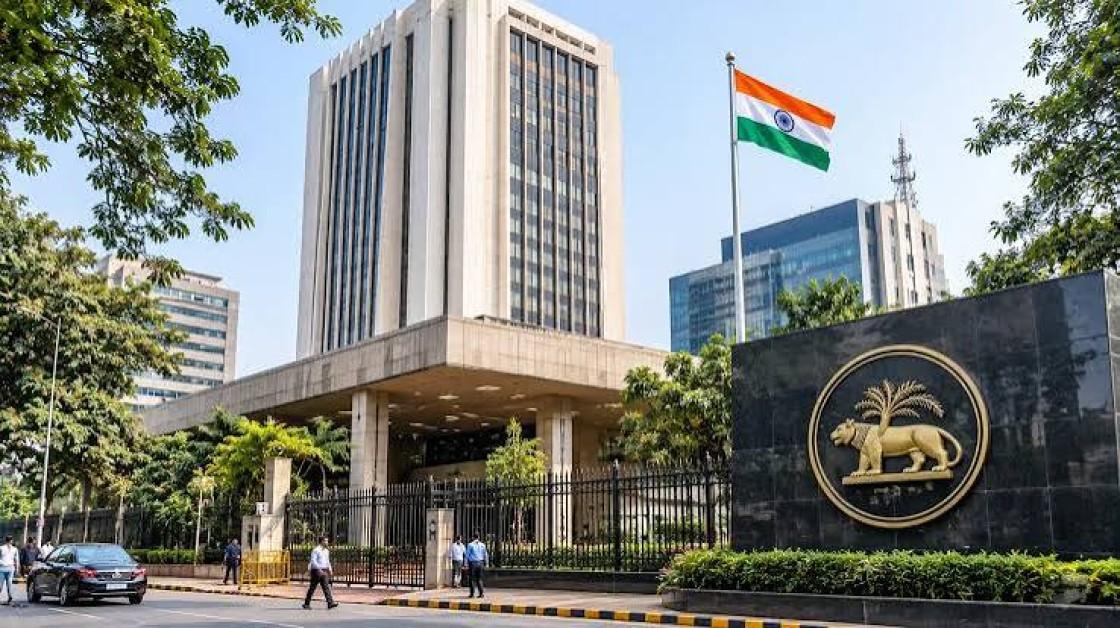
RBI Constitutes Technical Consultative Committee for Financial Markets
The Reserve Bank of India (RBI) has established the Technical Consultative Committee for Financial Markets (TCCFM) to strengthen the functioning, efficiency, liquidity and resilience of India's financial markets.
The committee was announced on November 4, 2026, following a proposal outlined in the central bank's Statement on Developmental and Regulatory Policies on October 7, 2026.
The panel will be chaired by RBI Deputy Governor Rohit Jain, who oversees the Financial Markets Regulation Department.
It brings together seven external members representing major banks, financial market institutions, market associations and investment organisations.
The committee will provide a structured platform for consultations between the RBI and market participants on policy and operational matters affecting money markets, government securities, foreign exchange markets and their associated derivatives.
Its responsibilities will also extend to trading infrastructure, clearing, settlement, reporting mechanisms and emerging risks.
The committee will meet at least once every quarter.
The initiative reflects the RBI's efforts to strengthen regulatory engagement as India's financial markets become increasingly interconnected and sophisticated.
RBI Technical Consultative Committee: Key Highlights

|
Particulars |
Details |
|---|---|
|
Committee name |
Technical Consultative Committee for Financial Markets |
|
Abbreviation |
TCCFM |
|
Constituted by |
Reserve Bank of India |
|
Announcement date |
November 4, 2026 |
|
Original policy announcement |
October 7, 2026 |
|
Chairperson |
RBI Deputy Governor Rohit Jain |
|
External members |
Seven |
|
Total membership |
Eight, including chairperson |
|
Responsible RBI department |
Financial Markets Regulation Department |
|
Meeting frequency |
At least once every quarter |
|
Primary objective |
Improve market functioning, liquidity, efficiency and resilience |
|
Markets covered |
Money, government securities, foreign exchange and related derivatives |
|
Infrastructure focus |
Trading, clearing, settlement and reporting |
|
Committee role |
Technical consultation and policy advice |
The committee is intended to support financial market development through regular consultation rather than function as a separate market regulator.
RBI Deputy Governor Rohit Jain to Chair Committee
RBI Deputy Governor Rohit Jain will chair the newly constituted committee.
The position is significant because the Financial Markets Regulation Department is responsible for regulatory matters involving important segments of India's financial markets.
The committee's chairmanship creates a direct connection between the central bank's regulatory responsibilities and the experience of market participants.
The panel will examine how regulations operate in practice and identify areas where market functioning could improve.
Its discussions may cover liquidity conditions, market infrastructure, transaction processes and emerging risks.
However, the committee will serve in a consultative capacity.
Regulatory decisions will remain subject to the RBI's established institutional processes.
Seven External Experts Appointed to the Committee
The RBI has appointed seven external members with experience in banking, financial markets, clearing infrastructure and investment research.
The composition reflects an effort to include expertise from different parts of India's financial system.
Complete List of TCCFM Members
|
Member |
Position or Affiliation |
|---|---|
|
Rohit Jain |
RBI Deputy Governor; Committee Chairperson |
|
Ananth Narayan |
Former SEBI Whole-Time Member; Professor of Practice, IIT Bombay |
|
Shamsher Singh |
FIMMDA Chairman; Deputy Managing Director, State Bank of India |
|
Neeraj Gambhir |
Executive Director, Axis Bank |
|
Shailendra Jhingan |
Head of Treasury and Economic Research, ICICI Bank |
|
Aditya Bagree |
Managing Director and Head of Markets, Citibank India |
|
Nand Kishore |
Managing Director, Clearing Corporation of India Limited |
|
Ridham Desai |
Managing Director, Morgan Stanley India |
The external membership brings together perspectives from domestic banking, international banking, market infrastructure and institutional investment.
Why RBI Has Established the Committee
India's financial markets have expanded in size, complexity and technological sophistication.
Banks, financial institutions, corporations and investors use money markets, government securities and foreign exchange instruments for financing, liquidity management and risk management.
As these markets evolve, regulatory frameworks must respond to new products, trading practices and operational risks.
Market infrastructure has also become increasingly important.
Trading systems, clearing corporations and settlement arrangements must function reliably during normal conditions and periods of volatility.
The RBI has established the committee to obtain structured feedback on these issues.
Regular consultation can help the central bank understand practical challenges faced by market participants.
It can also support the identification of regulatory measures that unintentionally create operational difficulties.
Committee Will Focus on Five Major Areas
The RBI has established a broad mandate covering financial market development, infrastructure and emerging risks.
|
Area |
Committee Responsibility |
|---|---|
|
Market functioning |
Examine efficiency, liquidity and resilience |
|
Market development |
Identify measures to deepen and broaden markets |
|
Financial infrastructure |
Review trading, clearing, settlement and reporting |
|
Regulatory implementation |
Assess operational challenges and unintended market frictions |
|
Emerging developments |
Examine innovations, international developments and risks |
The RBI may also refer specific market-related issues or macroeconomic considerations to the committee.
Money Market Liquidity Will Be a Major Focus
Money markets are essential to the functioning of India's banking and financial system.
They allow banks and other eligible institutions to borrow and lend funds over short periods.
These transactions help institutions manage daily liquidity requirements.
Efficient money markets support the transmission of monetary policy.
When the RBI changes policy rates or liquidity conditions, money market rates play an important role in transmitting those changes through the financial system.
However, liquidity conditions can vary because of government cash flows, banking activity and broader economic developments.
The committee will examine issues affecting market efficiency and liquidity.
Its recommendations could help identify operational barriers to smoother short-term funding markets.
However, the committee itself will not determine monetary policy rates or independently conduct liquidity operations.
Government Securities Market Development Remains Important
Government securities form a major component of India's financial markets.
They allow the central and state governments to raise funds through debt instruments.
Banks, insurance companies, mutual funds and other institutional investors participate in these markets.
Government bond yields also serve as important reference points for pricing other financial instruments.
A liquid government securities market can support more efficient borrowing and investment.
However, liquidity may differ across securities and maturities.
Some government bonds attract substantial trading activity, while others may be less actively traded.
The committee will examine issues affecting market depth, participation and operational efficiency.
Potential areas of discussion include trading practices, settlement arrangements and market infrastructure.
Any resulting regulatory changes would require separate consideration by the RBI.
Foreign Exchange Market Resilience Under Review
India's foreign exchange market plays an important role in international trade and investment.
Businesses use foreign exchange markets to convert currencies and manage overseas payment obligations.
Banks and institutional investors also participate in currency transactions.
Exchange-rate movements can influence import costs, export competitiveness and foreign investment flows.
A resilient foreign exchange market is therefore important for the broader economy.
The committee will examine the functioning, efficiency and liquidity of currency markets.
It may also consider operational issues affecting market participants.
However, the establishment of the committee does not signal a change in the RBI's exchange-rate policy.
Its mandate concerns market functioning and consultation rather than setting a particular exchange-rate target.
Derivatives Markets Included in the Mandate
The committee will also examine derivatives associated with money markets, government securities and foreign exchange.
Derivatives are financial contracts whose value depends on an underlying asset, rate or benchmark.
They are used by businesses and financial institutions to manage risks.
For example, interest-rate derivatives can help manage exposure to changing borrowing costs.
Currency derivatives can help businesses hedge foreign exchange risks.
However, derivatives markets also require effective risk management and reliable infrastructure.
The committee will assess issues affecting these markets and their associated operational frameworks.
Its work could help identify barriers to market development while maintaining financial stability.
Clearing and Settlement Systems Receive Special Attention
Trading is only one part of financial market activity.
After a transaction is executed, the parties must complete clearing and settlement.
Clearing involves determining obligations arising from transactions.
Settlement involves completing the exchange of funds or securities.
Reliable clearing and settlement arrangements reduce operational and counterparty risks.
Disruptions can affect market confidence and liquidity.
The inclusion of Clearing Corporation of India Limited's Managing Director, Nand Kishore, brings market infrastructure expertise into the committee.
The panel will examine issues involving trading, clearing, settlement and reporting systems.
Its mandate also covers the associated regulatory and operational frameworks.
Financial Market Infrastructure Is Central to Resilience
Modern financial markets depend on technology-intensive infrastructure.
Electronic trading systems, transaction repositories and settlement networks support large volumes of financial activity.
These systems must remain reliable during periods of high market volatility.
Operational disruptions can delay transactions or create uncertainty for participants.
The committee's infrastructure mandate could support discussion of market connectivity, processing efficiency and operational resilience.
However, the RBI has not announced specific technology upgrades or infrastructure projects as part of the committee's formation.
Any future measures will depend on the issues identified and subsequent regulatory decisions.
RBI Seeks to Identify Unintended Regulatory Frictions
One of the committee's most important responsibilities is examining the implementation of RBI measures.
Financial regulations are designed to promote stability, transparency and orderly market functioning.
However, regulatory changes can sometimes create operational difficulties that were not anticipated during policy development.
For example, new reporting requirements or transaction procedures may affect how market participants operate.
The committee will provide a channel for identifying such difficulties.
It can also examine whether existing frameworks create unnecessary barriers to market participation.
The objective is to improve regulatory effectiveness without weakening essential safeguards.
This approach could support more informed policy development.
Committee Will Meet at Least Once Every Quarter
The RBI has specified that the committee will meet at least once every quarter.
This creates a recurring mechanism for consultation.
Regular meetings may help the central bank monitor developments over time.
They can also provide opportunities to review the effects of previously implemented measures.
The quarterly schedule is important because market conditions can change rapidly.
However, the RBI has not announced a fixed public calendar for individual meetings.
The central bank may also refer specific issues to the committee for examination.
The frequency of consultation could increase if circumstances require additional discussion, although no such schedule has been announced.
RBI's Financial Market Consultation Framework
How the committee fits into market regulation
Reserve Bank of India
Financial Markets Regulation Department
Technical Consultative Committee for Financial Markets
RBI Deputy Governor + seven external experts
Money markets
Government securities
Foreign exchange
Related derivatives
Cross-market infrastructure
Trading · Clearing · Settlement · Reporting
Banking Sector Representation Strengthens Market Expertise
Several major banking institutions are represented on the committee.
State Bank of India, Axis Bank, ICICI Bank and Citibank India have executives among the external members.
Banks are major participants in money markets, government securities and foreign exchange transactions.
Their treasury operations provide direct experience of liquidity management, trading conditions and settlement processes.
This expertise could help the committee identify practical issues affecting market functioning.
However, the committee is expected to consider the broader financial system rather than the commercial interests of individual institutions.
Its recommendations will need to balance market development with financial stability.
FIMMDA Representation Brings Fixed-Income Market Perspective
Shamsher Singh, Chairman of the Fixed Income Money Market and Derivatives Association of India, is among the committee members.
FIMMDA represents an important institutional perspective on fixed-income and related financial markets.
Its involvement can support discussion of trading practices, market conventions and operational requirements.
Fixed-income markets are important for government borrowing, corporate financing and institutional investment.
Efficient trading and settlement can improve market participation.
However, market development requires coordination among regulators, intermediaries and infrastructure institutions.
The committee provides a formal setting for such discussions.
Institutional Investment Expertise Broadens the Committee
The inclusion of Ridham Desai from Morgan Stanley India adds institutional investment and market research expertise.
Financial market development is influenced by both domestic and international investor participation.
Institutional investors consider liquidity, transaction costs, regulatory clarity and settlement reliability when allocating capital.
The committee may examine issues that affect market access and efficiency.
However, the appointment does not imply any immediate change to foreign investment regulations.
The committee's role is to provide technical input on market-related matters.
Any policy changes would be considered separately through the relevant regulatory process.
Former SEBI Official Adds Regulatory Experience
Ananth Narayan, a former Whole-Time Member of the Securities and Exchange Board of India and Professor of Practice at IIT Bombay, is also part of the committee.
His experience adds a regulatory and academic perspective to the panel.
Financial markets often involve overlapping considerations relating to investor protection, risk management and market infrastructure.
Regulatory experience may help identify practical implications of proposed changes.
However, the committee is constituted by the RBI and operates within its stated mandate.
Its establishment does not transfer regulatory authority between the RBI and SEBI.
Financial Innovation and Emerging Risks Under Examination
The committee will consider domestic and international developments affecting financial markets.
This includes financial innovations and emerging risks.
Technology has changed how financial instruments are traded, cleared and settled.
New products and trading methods can create opportunities for efficiency.
However, they may also introduce operational and regulatory challenges.
The committee's mandate allows these developments to be examined through structured consultation.
It could also provide a forum for discussing the implications of changing global financial conditions.
However, the RBI has not announced a specific programme involving artificial intelligence, digital assets or other individual technologies through this committee.
Global Market Developments Could Influence Discussions
Indian financial markets are connected to international capital flows and economic developments.
Changes in global interest rates can influence bond yields and funding conditions.
Foreign exchange markets respond to international trade, investment and monetary policy developments.
Geopolitical events can also affect market liquidity and investor confidence.
The committee has been authorised to examine international developments that may influence Indian markets.
This could help the RBI incorporate market participants' observations into its assessments.
However, the committee will not replace the central bank's established monetary policy and financial stability functions.
Its role is advisory and consultative.
Why Market Liquidity Matters for India's Economy
Market liquidity refers to the ability to buy or sell financial instruments without causing excessive price disruption.
Liquid markets generally support more efficient trading and price discovery.
They can also help institutions manage financial risks.
In government securities markets, liquidity can influence trading costs and investor participation.
In money markets, it affects short-term funding conditions.
In foreign exchange markets, liquidity supports currency transactions and risk management.
However, market liquidity can deteriorate during periods of stress.
The committee's focus on resilience is therefore important.
A resilient market should be capable of continuing essential functions even when conditions become volatile.
Potential Benefits for Banks and Financial Institutions
The committee could help identify measures that improve financial market operations.
For banks, more efficient money markets may support liquidity management.
Improved government securities market functioning could facilitate investment and treasury operations.
Better foreign exchange market infrastructure may reduce operational difficulties.
However, these benefits are potential outcomes rather than immediate effects of the committee's establishment.
The RBI has not announced specific changes to transaction costs, trading rules or liquidity facilities.
The actual impact will depend on future recommendations and regulatory action.
Potential Implications Across Financial Markets
|
Market Segment |
Potential Area of Improvement |
Economic Relevance |
|---|---|---|
|
Money markets |
Liquidity and transaction efficiency |
Short-term funding |
|
Government securities |
Market depth and trading efficiency |
Government borrowing and bond pricing |
|
Foreign exchange |
Market functioning and resilience |
Trade and international investment |
|
Interest-rate derivatives |
Risk management infrastructure |
Hedging borrowing costs |
|
Currency derivatives |
Operational efficiency |
Managing exchange-rate exposure |
|
Clearing systems |
Settlement reliability |
Counterparty risk management |
|
Reporting systems |
Data quality and transparency |
Regulatory oversight |
|
Market infrastructure |
Operational resilience |
Financial stability |
The committee's work may inform future improvements, but no specific reforms have yet been adopted through the new forum.
Implications for Government Borrowing
The government securities market plays a central role in financing public expenditure.
The central government raises funds by issuing debt instruments purchased by banks, insurance companies and other investors.
Efficient bond markets can support price discovery and participation.
However, borrowing costs are influenced by several factors, including inflation, interest rates and investor demand.
Improved market functioning may help reduce operational inefficiencies.
It would not automatically lower government bond yields.
The committee's contribution will depend on the specific issues identified and any subsequent policy measures.
Implications for Corporate Borrowers
Corporate borrowing costs are influenced by benchmark interest rates and broader financial market conditions.
Government securities yields provide important reference points for pricing debt instruments.
Money market conditions can also affect short-term corporate funding.
A more efficient financial market infrastructure may support better pricing and risk management.
However, corporate borrowing costs also depend on credit quality, liquidity and economic conditions.
The committee's establishment does not directly change lending rates or corporate bond regulations.
Its potential contribution lies in supporting the broader functioning of markets under the RBI's jurisdiction.
Market Resilience Becomes Increasingly Important
Financial market resilience refers to the ability of markets and their infrastructure to continue functioning during disruptions.
Stress can arise from sudden changes in liquidity, international financial conditions or operational failures.
Market infrastructure must be capable of processing transactions reliably under different conditions.
Effective risk management is therefore essential.
The committee's mandate includes examining resilience alongside efficiency and liquidity.
This reflects the importance of maintaining stability while encouraging market development.
However, improving resilience requires more than consultation.
It depends on regulatory implementation, institutional preparedness and robust infrastructure.
What the Committee Does Not Change Immediately
The establishment of TCCFM is an institutional development rather than an immediate regulatory overhaul.
The announcement does not introduce a new policy interest rate.
It does not directly alter foreign exchange trading limits.
It does not announce changes to government securities settlement cycles.
It does not independently modify derivatives regulations.
It also does not provide the committee with separate authority to regulate financial institutions.
The panel's primary function is to advise and facilitate structured consultation.
Any future policy measures will require appropriate RBI consideration and implementation.
Key Developments to Monitor
|
Development |
Why It Matters |
|---|---|
|
First committee meeting |
Begins formal consultations |
|
Issues referred by RBI |
Identifies regulatory priorities |
|
Market liquidity discussions |
May highlight structural challenges |
|
Trading infrastructure review |
Could identify operational improvements |
|
Clearing and settlement assessment |
Supports market reliability |
|
Regulatory implementation feedback |
Identifies unintended frictions |
|
Financial innovation discussions |
Helps assess emerging developments |
|
Future RBI policy announcements |
Indicates whether recommendations lead to action |
The RBI has not specified a public timetable for recommendations or announced that committee deliberations will be published.
Outlook for India's Financial Markets
The formation of TCCFM represents a step towards more systematic consultation between the RBI and financial market participants.
The committee brings together experience from banking, market infrastructure, regulatory policy and institutional investment.
Its broad mandate allows it to examine both immediate operational challenges and longer-term market development issues.
However, the effectiveness of the initiative will depend on the quality of its recommendations and the RBI's response.
Regular meetings may help identify emerging problems before they become more significant.
The committee could also support the development of more efficient trading and settlement arrangements.
Nevertheless, its establishment should be viewed as the beginning of a consultative process rather than evidence that market liquidity or resilience has already improved.
Conclusion
The Reserve Bank of India has constituted the Technical Consultative Committee for Financial Markets to strengthen engagement with market participants on issues affecting India's financial system.
Announced on November 4, 2026, the committee will be chaired by Deputy Governor Rohit Jain and include seven external experts from banking, financial market institutions and investment organisations.
Its mandate covers money markets, government securities, foreign exchange markets, related derivatives and supporting infrastructure.
The committee will examine liquidity, efficiency, resilience, trading, clearing, settlement, reporting and emerging financial risks.
Meetings will take place at least once every quarter.
The initiative creates a formal mechanism for identifying market challenges and assessing the operational consequences of regulatory measures.
For India's financial sector, the committee could contribute to more effective market development and stronger infrastructure over time.
However, its impact will depend on whether consultations lead to practical improvements and appropriate regulatory action.
 RBI Forms Technical Committee to Improve Financial Market Liquidity FAQs

POST A COMMENT (0)
All Comments (0)
Replies (0)