




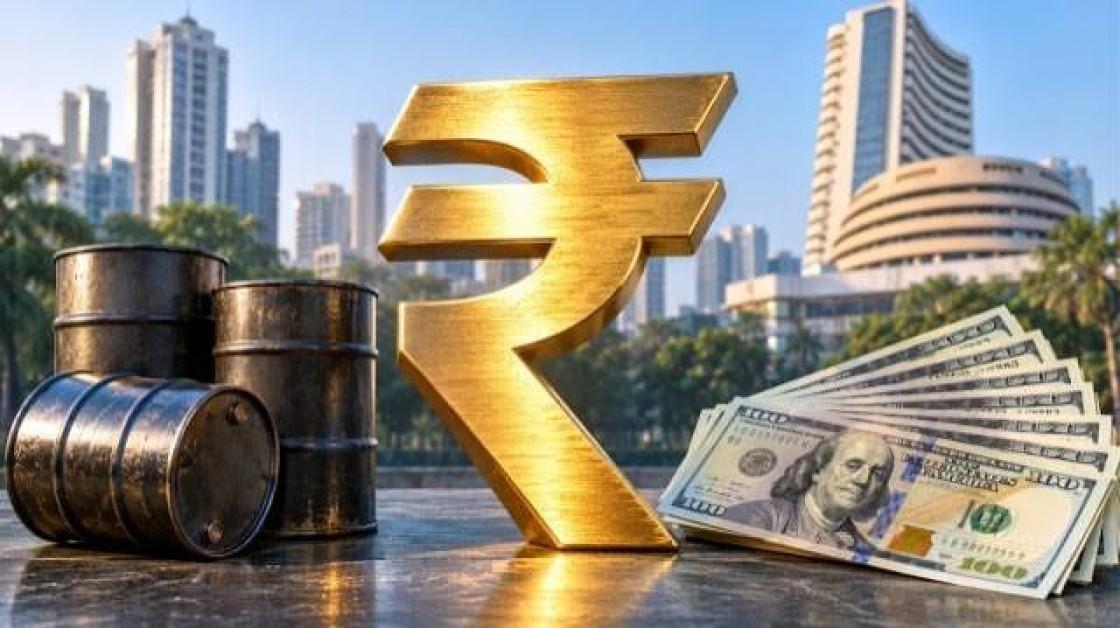
Indian Rupee Finds Support From Foreign Investment Inflows as Strong US Dollar Restrains Gains
Mumbai, November 12, 2026: The Indian rupee is finding support from renewed foreign portfolio investment in domestic equities, although a resilient US dollar and continued demand for foreign currency are limiting the scope for sustained appreciation.
The improvement in foreign investment sentiment follows a period of overseas selling in Indian financial markets. Renewed purchases of Indian equities have strengthened the potential supply of foreign currency in the domestic market, helping counterbalance demand from importers and other market participants.
However, the rupee continues to face competing influences from global interest-rate expectations, crude oil prices, currency movements and the international strength of the dollar.
The developments highlight the interaction between domestic investment flows and global financial conditions in determining the value of India's currency.
For businesses, investors and policymakers, the rupee's performance remains important because exchange-rate movements influence import costs, export competitiveness, inflation and foreign investment returns.
Foreign Investment Inflows Provide Support to the Rupee

Foreign portfolio investment is an important source of capital flows into India's financial markets.
When overseas investors purchase Indian equities or debt securities, they generally need to obtain rupees to complete transactions.
The associated conversion of foreign currency into rupees can increase demand for the domestic currency.
This may support the rupee against the US dollar, particularly when investment inflows are substantial.
Renewed foreign interest in Indian equities has therefore become an important factor influencing currency market sentiment.
However, the relationship between foreign investment and exchange rates is not automatic.
The timing of currency conversions, hedging arrangements and other financial transactions can affect the immediate impact of portfolio flows.
Foreign investors may also adjust positions rapidly in response to changes in global market conditions.
Consequently, sustained currency support depends on the durability of capital inflows rather than a single period of strong investment activity.
Strong US Dollar Limits Further Appreciation
The US dollar remains one of the principal external influences on the Indian rupee.
The dollar is widely used in international trade, financial transactions and global investment markets.
When the dollar strengthens against major currencies, emerging-market currencies can face depreciation pressure.
A stronger dollar may reflect expectations for US interest rates, demand for dollar-denominated assets or increased global risk aversion.
These developments can affect investment decisions across international markets.
For India, dollar strength can offset some of the support generated by foreign portfolio investment inflows.
Even when overseas investors increase their purchases of Indian assets, the rupee may experience limited appreciation if broader demand for dollars remains strong.
The currency's performance therefore depends on the balance between domestic capital flows and international foreign-exchange conditions.
Rupee Performance Reflects Competing Market Forces
The rupee's exchange rate is influenced by several sources of demand and supply.
Foreign investors, exporters and overseas remittances can contribute to foreign-currency inflows.
Importers, companies repaying foreign-currency debt and investors moving funds overseas create demand for foreign exchange.
Changes in these flows influence market liquidity and exchange-rate movements.
The impact can vary throughout the trading day.
Large institutional transactions may temporarily influence currency prices, while global developments can change market expectations.
The rupee's performance in November reflects this interaction between renewed foreign investment and continuing dollar demand.
A stable or modestly stronger currency does not necessarily indicate that all underlying pressures have disappeared.
Equity Market Recovery Improves Foreign Investment Sentiment
The recovery in Indian equities has helped improve sentiment toward domestic financial assets.
Foreign portfolio investors assess India's corporate earnings, economic growth, valuations and currency conditions when making investment decisions.
A stronger equity market can encourage additional capital allocations, particularly when international investors see opportunities in large, liquid companies.
However, equity market performance and currency movements influence each other.
Foreign inflows may support both stock prices and the rupee.
At the same time, expectations of currency stability can improve the attractiveness of Indian investments to overseas funds.
This relationship can reinforce positive market sentiment.
Nevertheless, a reversal in equity prices or global risk appetite could weaken foreign investment flows and reduce currency support.
Importer Dollar Demand Creates Resistance
Demand for dollars from Indian importers remains an important factor affecting the rupee.
India purchases substantial quantities of energy, machinery, electronics and other products from international markets.
Many of these transactions are denominated in US dollars.
Importers therefore need foreign currency to settle overseas payments.
When dollar demand increases, it can offset foreign investment inflows and place pressure on the rupee.
The impact depends on the timing and scale of import payments.
Companies may also purchase dollars in advance to manage exchange-rate risks.
Such activity can affect short-term currency movements.
For the rupee, sustained appreciation generally requires foreign-currency supply to exceed demand after accounting for other market transactions.
Crude Oil Prices Remain a Major Currency Indicator
Crude oil prices are particularly important for India's external financial position.
India imports a substantial proportion of its crude oil requirements.
International oil purchases create demand for foreign currency, particularly US dollars.
When crude oil prices rise, the value of imports may increase even if the volume of oil purchased remains relatively stable.
This can increase demand for dollars and place pressure on the rupee.
Conversely, lower oil prices can reduce import costs and ease pressure on the country's trade balance.
The benefits depend on exchange rates, domestic energy demand and the duration of price movements.
Crude oil markets remain sensitive to geopolitical developments, global economic conditions and production decisions.
For currency market participants, changes in oil prices remain an important indicator of potential movements in India's import bill.
Reserve Bank of India Plays a Role in Currency Stability
The Reserve Bank of India monitors foreign-exchange market conditions as part of its responsibility for monetary and financial stability.
India operates a market-determined exchange-rate system.
The RBI may intervene in the foreign-exchange market to address excessive volatility or disorderly conditions.
Such intervention can involve buying or selling foreign currency.
However, the central bank does not maintain a publicly declared fixed exchange-rate target for the rupee.
Its actions are influenced by market conditions and broader financial stability considerations.
Foreign-exchange reserves provide an important buffer against external shocks.
They can help the economy manage periods of capital-flow volatility and changes in global financial conditions.
However, movements in reserves should not automatically be interpreted as evidence of a particular intervention without supporting information.
Foreign Exchange Reserves Strengthen External Resilience
India's foreign-exchange reserves are an important component of its external financial position.
Reserves include foreign-currency assets, gold and other reserve components.
They provide resources that can help meet external obligations and support confidence in the economy's ability to manage financial shocks.
A substantial reserve position can reduce vulnerability to sudden changes in capital flows.
However, reserve adequacy must be evaluated alongside import requirements, external debt and other financial obligations.
Changes in reserve values can also result from movements in exchange rates and asset prices.
For the rupee, reserves provide a measure of resilience but do not eliminate market-driven currency fluctuations.
Investors will continue monitoring RBI disclosures for information about India's external liquidity position.
US Interest-Rate Expectations Influence Dollar Demand
US monetary policy is a major influence on global currency markets.
Interest rates affect the relative returns available on financial assets denominated in different currencies.
When US interest rates remain elevated, dollar-denominated investments may become more attractive to international investors.
This can support the dollar and reduce demand for some emerging-market assets.
Expectations of lower US interest rates may have the opposite effect, although actual market responses depend on economic conditions and investor risk appetite.
For India, changes in US interest-rate expectations can influence foreign portfolio investment and the rupee.
Investors monitor inflation, employment and economic activity in the United States for signals about monetary policy.
Unexpected changes in these indicators can create volatility across global currencies.
Currency Movements Affect Foreign Investor Returns
Foreign investors evaluate Indian investments in both rupee and foreign-currency terms.
An overseas investor may earn a positive return on Indian shares but experience a lower return in dollars if the rupee depreciates.
Conversely, rupee appreciation can improve foreign-currency returns.
This relationship makes exchange-rate expectations an important part of international portfolio decisions.
Foreign investors may use hedging arrangements to manage currency exposure.
However, hedging involves costs and may not eliminate every source of risk.
The recent improvement in foreign investment sentiment therefore depends partly on confidence in India's currency and economic outlook.
Sustained exchange-rate volatility could influence future capital allocations.
Exporters Face Different Currency Effects
A stronger rupee can have mixed implications for Indian exporters.
Companies earning revenue in foreign currencies may receive fewer rupees when converting overseas earnings if the domestic currency appreciates.
This can affect reported revenue and profitability.
However, exporters that import raw materials or equipment may benefit from lower input costs.
The overall impact depends on each company's revenue mix, cost structure and hedging arrangements.
Information technology services, pharmaceuticals, engineering goods and other export-oriented industries can be sensitive to currency movements.
The degree of sensitivity varies across companies.
For exporters, exchange-rate stability can be valuable because it improves the predictability of cash flows and pricing decisions.
Import-Dependent Businesses May Benefit From Rupee Strength
Businesses that purchase materials or equipment from overseas can benefit from rupee appreciation.
A stronger domestic currency reduces the rupee cost of foreign-currency purchases, assuming international prices remain unchanged.
This can help manufacturers manage imported input costs.
Industries with exposure to imported machinery, electronic components, energy and specialised materials may experience financial benefits.
However, lower currency-related costs do not necessarily translate into higher profitability.
Demand conditions, competition and changes in global commodity prices also affect margins.
Companies may also have existing contracts or hedging arrangements that delay the impact of exchange-rate movements.
The overall benefit therefore depends on the structure of individual business operations.
Rupee Stability Can Influence Inflation
Exchange-rate movements can affect domestic inflation through the prices of imported goods and commodities.
A weaker rupee increases the domestic currency cost of imports priced in dollars.
This can raise costs for energy, industrial materials and other products.
Some of these increases may eventually be passed on to consumers.
A stronger rupee can help moderate imported inflation.
However, the effect depends on international commodity prices, domestic taxes, pricing arrangements and demand conditions.
Currency stability is therefore relevant to inflation expectations and business planning.
The RBI considers a range of domestic and international factors when assessing monetary conditions.
India's Trade Balance Remains Important
India's trade balance influences the demand and supply of foreign currency.
When the value of merchandise imports exceeds exports, the resulting trade deficit can create a need for external financing.
Services exports, remittances and investment inflows can help offset merchandise trade deficits.
The broader current account measures trade in goods and services along with income and transfer flows.
Foreign portfolio investment can support the financial account, but it is not a substitute for sustainable external-sector fundamentals.
A country may experience strong capital inflows while continuing to record a merchandise trade deficit.
For India, the balance between trade flows and capital movements remains an important determinant of currency market conditions.
Emerging-Market Currency Trends Provide Global Context
The rupee is also influenced by broader movements across emerging-market currencies.
International investors often adjust exposure to emerging markets in response to changes in global interest rates, commodity prices and risk sentiment.
During periods of dollar strength, several emerging-market currencies may face pressure simultaneously.
However, individual currencies can perform differently depending on domestic economic conditions and capital flows.
India's large domestic economy, services exports and financial markets influence its currency profile.
Foreign-exchange reserves and external financing conditions also affect resilience.
The rupee's performance should therefore be assessed against both domestic factors and wider emerging-market currency trends.
Corporate Treasury Teams Monitor Exchange-Rate Risks
Currency movements are important for businesses engaged in international trade and finance.
Companies importing goods may face higher costs when the rupee depreciates.
Exporters may experience changes in the rupee value of overseas revenue.
Businesses with foreign-currency borrowings can also be affected by exchange-rate movements.
Corporate treasury teams often use financial instruments and contractual arrangements to manage these risks.
Forward contracts and other hedging instruments can help establish greater certainty about future currency conversion costs.
However, hedging strategies involve financial costs and require appropriate risk management.
For companies, the objective is generally to reduce uncertainty rather than speculate on short-term currency movements.
Market Participants Monitor Sustainability of Foreign Inflows
The recent improvement in foreign portfolio investment has strengthened attention on the durability of overseas demand for Indian assets.
Foreign inflows can support the rupee, but their effect depends on broader market conditions.
A change in global interest-rate expectations could influence investment allocations.
A sharp increase in crude oil prices could raise importer dollar demand.
Weakness in corporate earnings or equity valuations could also affect foreign investment sentiment.
Market participants will therefore monitor institutional flows alongside economic indicators and currency movements.
Sustained support for the rupee would depend on a favourable balance between foreign-currency inflows and outflows.
Outlook for the Indian Rupee
The rupee's near-term outlook remains dependent on competing domestic and global influences.
Renewed foreign portfolio investment provides a supportive factor.
Lower import costs, where applicable, could also reduce pressure on the currency.
However, a strong US dollar and continued importer demand may restrict appreciation.
Changes in US monetary policy expectations could influence international capital flows.
Crude oil prices, trade developments and geopolitical conditions will remain important sources of uncertainty.
The RBI's approach to managing excessive exchange-rate volatility will also be closely monitored.
For businesses and investors, currency risk management remains important because the direction and magnitude of future movements cannot be predicted reliably.
Conclusion
The Indian rupee's recovery has gained momentum as foreign investors return to domestic equities and lower crude oil prices ease pressure on India's import bill.
On November 11, the currency closed at approximately ₹93.69 per US dollar, its strongest closing level since April, after reaching ₹93.6350 during trading. It was expected to open around ₹93.68–₹93.74 on November 12 as foreign inflows counterbalanced dollar strength. <Cite refs={["turn364655news0","turn364655news1"]}/>
The dollar's rise to a one-month high, supported by expectations of tighter US monetary policy, remains a significant obstacle to further rupee appreciation.
For businesses, investors and policymakers, the key issue is whether foreign capital inflows and easing oil prices can provide sustained support despite global currency-market pressures.
 Indian Rupee Supported by Foreign Inflows as Strong US Dollar Limits Gains FAQs

POST A COMMENT (0)
All Comments (0)
Replies (0)