




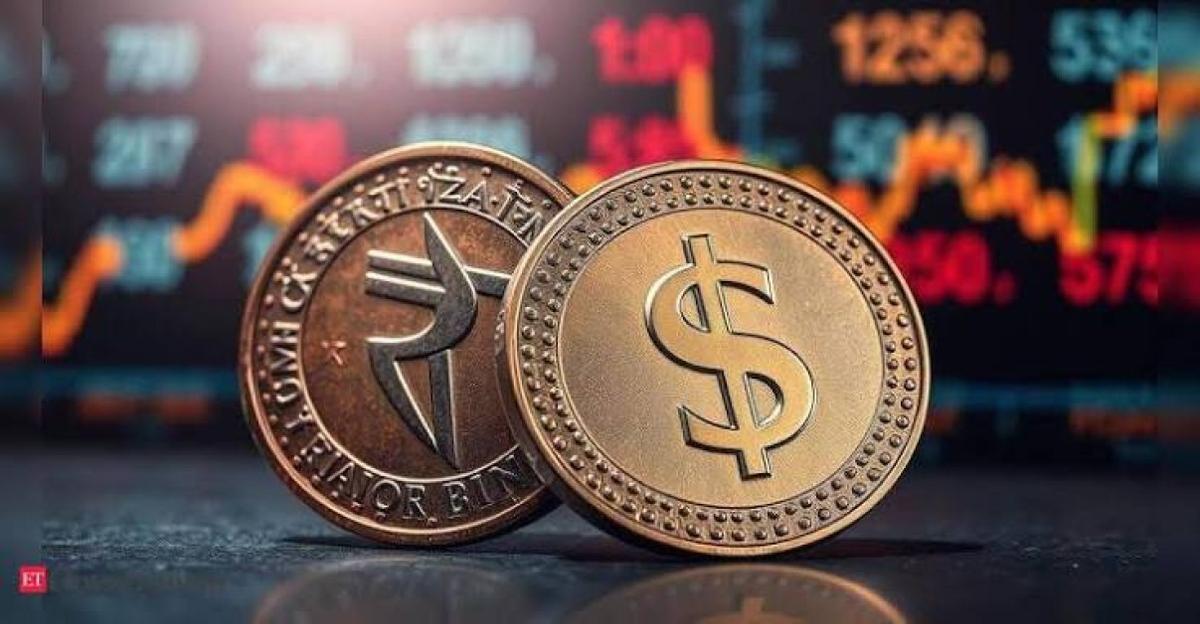
Indian Rupee Ends Winning Streak at 94.24 Against US Dollar as Oil Prices and Hawkish Fed Expectations Weigh
Mumbai, November 14, 2026: The Indian rupee ended its recent recovery against the US dollar on Friday, November 13, closing at 94.24 as rising crude oil prices and expectations of further monetary tightening by the US Federal Reserve outweighed support from strong foreign investment inflows.
The domestic currency weakened approximately 0.2% during Friday's session and finished the week 0.3% lower.
The decline interrupted a recovery that had lifted the rupee to its strongest level in more than six months earlier in the week.
Foreign portfolio investors have purchased more than $8 billion worth of Indian equities so far in November, alongside approximately $800 million in domestic debt securities.
However, the positive capital flows were insufficient to offset renewed pressure from higher US Treasury yields, stronger dollar demand and rising energy prices.
India's widening merchandise trade deficit added to the currency's challenges, reinforcing concerns about the country's external financing requirements.
The latest developments highlight the competing forces influencing the rupee: improving foreign investment flows on one side and global interest-rate expectations, energy costs and trade imbalances on the other.
Indian Rupee Performance: Key Highlights

| Indicator | Latest Reported Figure |
|---|---|
| USD/INR closing rate | ₹94.24 per US dollar |
| Previous closing rate | ₹94.0425 |
| Daily movement | Rupee down approximately 0.2% |
| Weekly movement | Rupee down approximately 0.3% |
| Recent six-month high | Approximately ₹93.62 per dollar |
| November foreign equity inflows | More than $8 billion |
| November foreign debt inflows | Approximately $800 million |
| Indian 10-year government bond yield | 7.31% |
| October merchandise trade deficit | $39.88 billion |
| Major currency pressures | Oil prices, US Treasury yields and Fed expectations |
Rupee Weakens After Reaching Six-Month High
The rupee had strengthened earlier in the week as foreign investors increased their purchases of Indian financial assets.
On November 11, the currency closed at 93.69 against the dollar after touching approximately 93.64 during trading.
It subsequently reached around 93.62 on November 12, its strongest level since April.
However, the recovery proved difficult to sustain.
The rupee weakened to 94.0425 on Thursday before closing at 94.24 on Friday.
The reversal reflected renewed global pressures, particularly rising oil prices and higher US bond yields.
The currency's movement demonstrates that strong portfolio inflows do not always guarantee sustained appreciation.
Foreign exchange markets respond simultaneously to international capital flows, import-related dollar demand, interest-rate expectations and central bank activity.
Rising Crude Oil Prices Increase Pressure on the Rupee
Higher crude oil prices were among the principal factors behind the rupee's decline.
India depends heavily on imported crude oil to meet domestic energy requirements.
When international oil prices increase, Indian refiners and oil marketing companies generally require more dollars to finance imports.
This can increase demand for the US currency in domestic foreign exchange markets.
The effect becomes particularly important during periods of geopolitical uncertainty or supply disruption.
Renewed concerns surrounding energy supplies in West Asia have contributed to volatility in international crude prices.
For India, sustained higher oil prices can increase the import bill and place additional pressure on the merchandise trade balance.
The effect on the rupee depends on the magnitude and duration of the price increase, alongside other capital flows.
Brent Crude Rebounds Amid West Asia Supply Concerns
Brent crude prices recovered to approximately $96 per barrel after falling below $90 earlier in the week.
The increase followed renewed concerns about energy supplies and shipping conditions in West Asia.
Disruptions affecting energy infrastructure and shipping routes can increase uncertainty in global oil markets.
India is particularly exposed because crude oil represents a substantial component of its import expenditure.
Higher prices can affect domestic refining costs, transportation expenses and inflation expectations.
However, the effect on Indian consumers depends on domestic fuel pricing and government policy.
For currency traders, the immediate concern is the additional dollar demand associated with a larger oil import bill.
That demand can weaken the rupee even when foreign investors are buying Indian assets.
Hawkish Federal Reserve Expectations Strengthen the Dollar
Changing expectations for US monetary policy also weighed on the Indian currency.
Investors have increasingly considered the possibility that the Federal Reserve could maintain a restrictive policy stance or raise interest rates further.
US Treasury yields climbed as markets evaluated the prospect of a larger interest-rate increase at the Federal Reserve's December meeting.
The interest-rate-sensitive two-year Treasury yield reached a one-month high.
Higher US yields can make dollar-denominated financial assets more attractive to international investors.
This can strengthen the dollar and create pressure on emerging-market currencies.
However, market expectations are not the same as confirmed Federal Reserve policy decisions.
The actual direction of interest rates will depend on US inflation, employment and broader economic conditions.
Markets Consider Possibility of 50-Basis-Point Fed Rate Increase
Investors were assessing the possibility of a 50-basis-point interest-rate increase at the Federal Reserve's next policy meeting.
Such an increase would represent a relatively large adjustment in monetary policy.
The speculation reflects concerns about persistent inflationary pressure in the United States.
If US interest rates rise, the return available on dollar-denominated assets may become more attractive.
This can influence international investment decisions and currency markets.
For India, higher US interest rates may reduce the relative attractiveness of certain rupee-denominated investments.
However, foreign portfolio flows also depend on domestic growth, company earnings and market valuations.
The impact of Federal Reserve policy is therefore significant but not the only determinant of the rupee's performance.
Foreign Investors Buy More Than $8 Billion in Indian Equities
Foreign portfolio investment provided an important source of support for the rupee during November.
Overseas investors purchased more than $8 billion worth of Indian equities during the month through November 13.
They also invested approximately $800 million in domestic debt securities.
These inflows helped the rupee recover from weaker levels recorded in October.
When foreign investors purchase Indian securities, their transactions can increase the supply of dollars in the domestic foreign exchange market.
This can support the rupee.
The inflows also indicate renewed international interest in Indian financial assets.
However, the currency's decline on Friday demonstrates that portfolio investment can be outweighed by other sources of dollar demand.
Why Strong Foreign Inflows Failed to Sustain Rupee Gains
The rupee's recent movement reflects the interaction of several market forces.
Foreign investment inflows generally provide support by increasing dollar supply.
At the same time, oil importers and other businesses may need dollars to meet overseas payment obligations.
Rising US Treasury yields can also influence international currency positioning.
In addition, expectations surrounding Reserve Bank of India intervention may affect trading behaviour.
These factors can operate simultaneously.
As a result, substantial foreign equity purchases do not necessarily translate into equivalent currency appreciation.
The November 13 session illustrated this relationship.
Despite continued positive investment flows, adverse global conditions contributed to a weaker closing rate.
Reserve Bank of India Intervention Remains in Focus
Currency traders are monitoring the Reserve Bank of India's activity in the foreign exchange market.
The central bank can buy or sell dollars to manage excessive volatility and maintain orderly market conditions.
When the RBI sells dollars, it can provide foreign currency liquidity and reduce pressure on the rupee.
When it purchases dollars, it can increase foreign exchange reserves.
Market participants have been assessing whether the central bank may use periods of rupee strength to rebuild its reserves.
However, individual market transactions do not establish confirmed intervention unless supported by official information.
The RBI's approach generally focuses on managing volatility rather than defending a permanently fixed exchange rate.
Its actions will remain an important consideration for currency markets.
ING Expects Limited Scope for Sustained Rupee Appreciation
ING indicated that the Reserve Bank of India could use periods of currency strength to replenish foreign exchange reserves.
The bank also suggested that downside risks to the rupee had diminished.
However, it considered the potential for sustained appreciation limited.
The assessment points toward a relatively stable currency rather than a prolonged period of substantial strengthening.
This outlook reflects the competing influences of foreign investment, energy prices and global interest rates.
A stronger rupee can reduce the cost of imports.
However, central bank dollar purchases may moderate the pace of appreciation.
The eventual direction will depend on market conditions and policy developments.
India's October Trade Deficit Adds Pressure
India's merchandise trade deficit widened to $39.88 billion in October 2026.
The figure represented a one-year high and added to concerns about external-sector pressures.
A merchandise trade deficit occurs when the value of imported goods exceeds the value of exported goods.
A wider deficit can increase the economy's foreign currency financing requirements.
However, merchandise trade represents only one part of India's external balance.
Services exports, remittances and investment flows also influence the overall balance of payments.
India's substantial services surplus provides an important offset to the merchandise deficit.
Nevertheless, higher import expenditure can contribute to additional dollar demand in foreign exchange markets.
Gold and Petroleum Imports Influence Currency Demand
India's merchandise import bill is sensitive to purchases of crude oil, gold and industrial materials.
Petroleum imports are particularly important because India relies on overseas energy supplies.
Gold imports can also fluctuate significantly during festival and wedding seasons.
These purchases generally require foreign currency payments.
When import demand rises sharply, the resulting increase in dollar requirements can affect the rupee.
However, the timing of payments, hedging arrangements and available foreign currency liquidity also matter.
The October trade deficit therefore provides context for the currency's recent weakness.
It does not establish that every increase in imports immediately causes an equivalent depreciation.
Indian Government Bond Yields Rise to 7.31%
Pressure from global interest-rate expectations also affected India's domestic bond market.
The yield on the benchmark 10-year government bond increased by more than six basis points to approximately 7.31%.
Bond yields generally rise when prices decline.
Higher yields can reflect changes in inflation expectations, interest-rate outlooks and investor demand.
The increase coincided with rising US Treasury yields and renewed concerns about oil prices.
Higher borrowing costs can influence government financing conditions and corporate debt markets.
However, domestic bond yields also respond to liquidity, fiscal expectations and Reserve Bank of India policy.
The movement illustrates how global financial conditions can affect both Indian currency and fixed-income markets.
Nifty 50 Faces Pressure From Global Market Conditions
Indian equities also came under pressure as global financial conditions became less favourable.
The Nifty 50 declined during Friday's session.
Higher US bond yields can influence valuations across equity markets by increasing the attractiveness of fixed-income investments.
Rising crude oil prices may also affect corporate earnings expectations.
Industries with substantial energy requirements can face higher operating costs.
Meanwhile, companies with foreign currency liabilities may experience additional pressure when the rupee weakens.
However, the effect varies across sectors.
Export-oriented companies may benefit from higher rupee realisations on dollar-denominated revenue.
The market impact therefore depends on each company's business model and exposure to foreign exchange movements.
What a Weaker Rupee Means for Indian Importers
A weaker rupee increases the domestic currency cost of purchases priced in US dollars.
For example, an importer purchasing goods worth $1 million would require approximately ₹9.424 crore at an exchange rate of ₹94.24 per dollar.
At ₹93.69 per dollar, the same purchase would cost approximately ₹9.369 crore.
The difference is about ₹5.5 lakh before transaction costs and hedging arrangements.
For businesses importing substantial quantities of goods, exchange-rate movements can therefore influence profitability.
Sectors exposed to imported raw materials, machinery and energy may face higher expenses.
However, companies that hedge their foreign currency exposure can reduce the immediate impact.
The overall effect depends on contract terms and the ability to pass costs on to customers.
Exporters May Benefit From Higher Rupee Realisations
A weaker rupee can increase the domestic currency value of export earnings denominated in dollars.
For example, a company receiving $1 million would obtain more rupees at ₹94.24 per dollar than at ₹93.69.
This can support revenue and margins for exporters with substantial foreign currency earnings.
Information technology services, pharmaceuticals and other export-oriented sectors may benefit under certain conditions.
However, the impact is not uniformly positive.
Exporters that depend on imported inputs may also face higher costs.
Hedging arrangements can further influence the timing and scale of currency-related gains.
Consequently, the net benefit depends on each company's revenue structure, cost base and foreign exchange management.
Higher Oil Prices Could Affect Inflation
Rising crude oil prices can influence India's inflation outlook.
Energy costs affect transportation, manufacturing and the distribution of goods.
If higher costs are passed through to consumers, they may contribute to inflationary pressure.
However, domestic fuel pricing arrangements and government policies can moderate the immediate impact.
The exchange rate also matters.
When crude oil becomes more expensive and the rupee weakens simultaneously, the domestic currency cost of imported energy can rise more sharply.
This combination can create challenges for businesses and policymakers.
The Reserve Bank of India will monitor these developments alongside domestic demand and broader price trends.
India's Foreign Exchange Reserves Provide an Important Buffer
Foreign exchange reserves help the Reserve Bank of India manage external liquidity and currency market volatility.
They include foreign currency assets, gold and other reserve components.
Reserves can provide confidence during periods of global financial uncertainty.
However, they are not intended to eliminate every movement in the exchange rate.
The RBI may use its reserves to smooth disorderly market conditions while allowing the currency to respond to underlying economic forces.
The scale and composition of reserves therefore remain important indicators of external financial resilience.
Market participants are also watching whether the central bank uses periods of rupee appreciation to increase reserve holdings.
Global Dollar Strength Remains a Key Risk
The US dollar's performance will remain important for emerging-market currencies.
Higher US interest rates can support the dollar by improving returns on dollar-denominated assets.
Changes in global risk appetite can also increase demand for the currency.
During periods of uncertainty, international investors may reduce exposure to riskier assets.
Such movements can affect currencies even when domestic economic fundamentals remain relatively stable.
For India, foreign portfolio flows and strong services exports can provide support.
However, global dollar movements may continue influencing the rupee's near-term direction.
The balance between these forces will shape currency trading in the coming weeks.
Rupee Outlook for the Coming Weeks
The rupee's near-term outlook will depend on several developments.
Crude oil prices remain a major consideration because of India's substantial energy import requirements.
Federal Reserve policy expectations will influence US Treasury yields and the dollar.
Foreign portfolio investment flows will also remain important.
Continued overseas purchases of Indian equities and bonds could provide support.
However, the Reserve Bank of India's foreign exchange operations and India's trade balance may influence the currency's movement.
Analysts expect the rupee to remain broadly stable, although the potential for sustained appreciation appears limited.
The outlook remains conditional on global market developments.
What Investors and Businesses Should Monitor
The next Federal Reserve policy meeting will be an important event for currency markets.
Investors will examine whether US policymakers signal additional tightening.
International crude oil prices will also remain a major indicator.
For Indian businesses, currency hedging and imported input costs will be important operational considerations.
Foreign portfolio flows may provide clues about international investor confidence.
Meanwhile, RBI activity and subsequent trade data will help assess the domestic external-sector position.
The rupee's ability to regain and sustain levels stronger than ₹94 per dollar will depend on how these factors develop.
Conclusion
The Indian rupee closed at 94.24 against the US dollar on November 13, 2026, ending its recent recovery as higher crude oil prices and hawkish Federal Reserve expectations weighed on the currency.
The rupee declined approximately 0.2% during Friday's session and finished the week 0.3% lower.
The weakness came despite foreign portfolio investors purchasing more than $8 billion worth of Indian equities and approximately $800 million in debt securities during November.
Higher US Treasury yields, renewed energy market concerns and India's widening merchandise trade deficit contributed to the reversal.
The benchmark Indian 10-year government bond yield also increased to approximately 7.31%, reflecting pressure across domestic financial markets.
The rupee's performance demonstrates the influence of global financial conditions on India's currency, even during periods of strong foreign investment.
Looking ahead, crude oil prices, Federal Reserve policy, RBI activity and portfolio flows will remain central to the currency's direction.
While improved investment inflows have reduced some downside risks, sustained rupee appreciation may remain difficult unless external pressures ease.
 Indian Rupee Falls to 94.24 Against US Dollar as Oil Prices and Fed Rate Expectations Rise FAQs

POST A COMMENT (0)
All Comments (0)
Replies (0)