




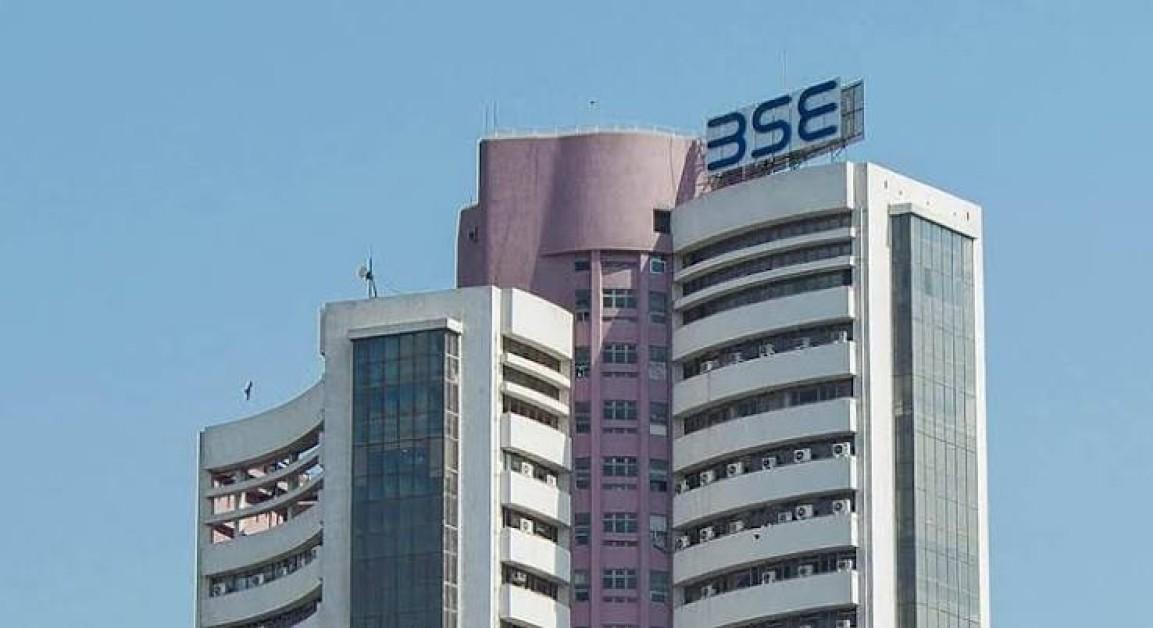
BSE BANKEX Futures Receive Historic US Regulatory Approval
BSE Limited has secured approval from the United States Commodity Futures Trading Commission (CFTC) to offer and sell its BANKEX Index Futures contract to investors in the United States, marking a significant development in the international accessibility of India's derivatives market.
The approval, announced on November 16, 2026, makes BANKEX the first Indian sectoral index futures contract to receive such clearance from the US derivatives regulator.
The regulatory decision follows the successful completion of a 45-day expedited review process, during which the BANKEX futures contract was assessed against applicable requirements under the US Commodity Exchange Act.
The approval allows eligible US-based investors, including asset managers, hedge funds and proprietary trading firms, to access India's banking sector through a regulated futures instrument.
The contract will continue to trade on BSE and remain subject to Indian securities market laws and regulations, alongside applicable US requirements.
BSE expects the development to attract greater international participation, potentially improving liquidity, trading depth and the global visibility of its derivatives platform.
The approval also represents an important step in the exchange's efforts to expand its product offerings beyond domestic investors and strengthen connections with international financial markets.
BSE BANKEX CFTC Approval: Key Details

|
Particulars |
Details |
|---|---|
|
Exchange |
BSE Limited |
|
Approved product |
BSE BANKEX Index Futures |
|
US regulator |
Commodity Futures Trading Commission |
|
Announcement date |
November 16, 2026 |
|
Regulatory review |
45-day expedited process |
|
Regulatory framework |
US Commodity Exchange Act |
|
Historic distinction |
First Indian sectoral index futures contract approved for offer and sale in the US |
|
Underlying index |
BSE BANKEX |
|
Sector represented |
Indian banking |
|
Target participants |
US institutional and other eligible investors |
|
Trading venue |
BSE, India |
|
Expected benefit |
Broader participation and potentially improved liquidity |
|
Indian regulatory framework |
Applicable Indian securities market laws and regulations |
The approval permits the contract to be offered and sold to investors located in the United States. It does not constitute a new listing of BANKEX futures on an American exchange.
What Is the BSE BANKEX Index?
BANKEX is a sectoral equity index maintained by BSE that tracks the performance of leading banking companies listed on the exchange.
The index provides a benchmark for measuring movements in the Indian banking sector.
Banking stocks are influenced by several economic and financial factors, including credit growth, interest rates, deposit mobilisation, asset quality and regulatory developments.
By tracking a group of banking companies, BANKEX provides a broader measure of sector performance than any single banking stock.
Why BANKEX Matters
The banking industry plays a central role in India's economy.
Banks provide credit to households, businesses and infrastructure projects.
Their financial performance is closely linked to economic activity, borrowing demand and monetary policy.
BANKEX allows investors to monitor the sector through a single benchmark.
The corresponding futures contract enables eligible market participants to take positions based on expectations for the index's future value.
How BANKEX Futures Work
A futures contract is a standardised financial agreement whose value is linked to an underlying asset or index.
In the case of BANKEX futures, the underlying reference is the BSE BANKEX index.
The contract allows traders to obtain exposure to movements in the banking index without purchasing every constituent stock individually.
Taking a Long Position
An investor expecting the banking index to rise may take a long position in BANKEX futures.
If the index increases and the futures price moves favourably, the position may generate a profit.
However, a decline can result in losses.
Taking a Short Position
An investor expecting the banking index to fall may take a short position.
Such positions can be used for directional trading or hedging.
Hedging Banking Stock Exposure
An institutional investor holding a portfolio of Indian banking shares may use index futures to reduce exposure to adverse sector movements.
However, the hedge may not perfectly match the underlying portfolio.
Differences between the index composition and the investor's holdings can create basis risk.
Leverage and Margin Requirements
Futures contracts typically require traders to maintain margin rather than pay the full notional value upfront.
This creates leverage.
Leverage can amplify both gains and losses, making derivatives riskier than an equivalent fully funded investment in many circumstances.
Why US CFTC Approval Is Significant
The CFTC is the principal US federal regulator overseeing futures and certain other derivatives markets.
Its regulatory framework governs various aspects of derivatives trading and market conduct.
For foreign futures products, applicable US rules determine whether contracts may be offered or sold to investors located in the United States.
The BANKEX approval addresses an important regulatory requirement for accessing American investors.
First Indian Sectoral Index Futures Contract
The distinction is particularly important because BANKEX provides exposure to a specific sector rather than the broader equity market.
BSE previously obtained CFTC clearance for Sensex futures in 2006.
The latest approval therefore expands international access from a broad-market benchmark to a banking-sector derivative.
Regulatory Recognition
The CFTC completed its expedited review and determined that the BANKEX contract met the applicable requirements under the Commodity Exchange Act.
This provides the regulatory basis for offering the contract to US investors, subject to relevant conditions.
However, the approval should not be interpreted as a guarantee of investment returns, liquidity or suitability for every investor.
CFTC Completes 45-Day Expedited Review
The approval followed a 45-day expedited regulatory review.
During this process, the contract was assessed against applicable US legal requirements.
The review's successful completion allowed BSE to proceed with offering and selling BANKEX futures to US-based investors.
Why the Review Process Matters
Cross-border derivatives trading involves regulatory requirements in more than one jurisdiction.
These requirements are designed to support market integrity and appropriate oversight.
For BSE, completing the process creates a route for expanding the contract's international investor base.
Compliance Requirements Remain Applicable
The contract continues to operate under Indian market regulations.
US investors and intermediaries must also comply with applicable American laws and rules.
The approval does not remove requirements involving trading access, margin, clearing, risk management or regulatory reporting.
US Institutional Investors Gain Access to Indian Banking Futures
The approval is expected to be particularly relevant to institutional market participants.
These include asset managers, hedge funds and proprietary trading firms.
Different institutions may use the contract for different purposes.
Asset Managers
Asset managers may use BANKEX futures to adjust exposure to India's banking sector.
The contract can provide a way to manage sector allocation without immediately buying or selling a portfolio of individual banking shares.
Hedge Funds
Hedge funds may use the contract in directional, relative-value or hedging strategies.
Such strategies depend on investment mandates and risk management requirements.
Proprietary Trading Firms
Proprietary trading firms may participate in futures markets using their own capital.
Their activity can contribute to trading volume and price discovery.
However, the extent of participation will depend on commercial considerations and market conditions.
International Portfolio Managers
Portfolio managers with existing Indian equity exposure may consider BANKEX futures as a tool for managing banking-sector risk.
The contract may be particularly relevant when the portfolio has substantial exposure to financial institutions.
BANKEX Approval Could Improve Market Liquidity
BSE expects increased participation from US investors to improve the depth and liquidity of BANKEX futures.
Liquidity refers to the ability to buy or sell an instrument without causing a substantial change in its market price.
Greater market participation can sometimes support more efficient trading.
Potential Benefits of Higher Liquidity
Narrower bid-ask spreads
A more active market may reduce the difference between buying and selling prices.
Improved order execution
Greater market depth can make it easier to execute larger transactions.
Stronger price discovery
More participants may contribute information and trading activity that help establish market prices.
Greater institutional participation
International access may encourage additional institutional interest.
However, these benefits are potential outcomes rather than guaranteed consequences of regulatory approval.
Actual improvements will depend on trading activity, open interest and the number of active market participants.
Why Liquidity Matters for Derivatives Markets
Liquidity is particularly important in futures trading because participants may need to enter or exit positions quickly.
An illiquid market can expose traders to larger transaction costs and execution difficulties.
For institutional investors, market depth can influence whether a contract is practical for portfolio management.
Trading Volume
Trading volume measures the number of contracts traded over a particular period.
An increase can indicate greater market activity.
Open Interest
Open interest measures the number of outstanding futures contracts that have not been closed or settled.
It provides another indication of market participation.
Bid-Ask Spread
The bid-ask spread represents the difference between the best available buying and selling prices.
Narrower spreads can reduce trading costs.
Investors will need to monitor these indicators over time to determine whether US access materially improves BANKEX futures liquidity.
BSE Expands Its International Derivatives Strategy
The approval forms part of BSE's broader efforts to strengthen its derivatives business and expand international access.
BSE operates markets across equities, derivatives, debt instruments and other financial products.
Its benchmark Sensex index is widely followed by domestic and international investors.
BANKEX adds a sector-specific dimension to the exchange's international product offering.
From Broad-Market Exposure to Sectoral Exposure
Broad-market index futures provide exposure to movements across a diversified equity benchmark.
Sectoral futures focus on a particular part of the economy.
BANKEX therefore offers a different investment and risk-management instrument from Sensex futures.
Potential for Additional Products
BSE Managing Director and CEO Sundararaman Ramamurthy indicated that the exchange intends to continue expanding the range of products available to global investors.
However, any additional products would need to satisfy relevant regulatory and commercial requirements.
No further US product approvals were announced as part of the BANKEX decision.
BSE CEO Highlights International Market Access
BSE Managing Director and Chief Executive Officer Sundararaman Ramamurthy welcomed the CFTC confirmation.
He said the approval would enable US investors to access India's banking sector through a regulated and transparent trading venue.
He also indicated that BSE would continue efforts to broaden its product offerings for international investors.
Strategic Importance for BSE
The approval strengthens the exchange's ability to serve investors outside India.
It may also support its competitive positioning in index derivatives.
However, the financial contribution to BSE will depend on actual trading volumes, transaction fees and related market activity.
Regulatory clearance alone does not establish how much additional revenue the exchange will generate.
How the Approval Could Affect BSE's Business
BSE earns revenue from several business activities, including transaction-related services and market data.
Derivatives trading activity can contribute to exchange revenue.
If BANKEX futures attract additional participation, BSE may benefit from higher transaction volumes.
Potential Revenue Opportunities
Greater trading activity may support transaction-related income.
Additional institutional participation could also increase demand for market data and related services.
However, these outcomes depend on the exchange's fee structure and actual investor activity.
Competitive Positioning
The approval could strengthen BSE's international profile.
A broader investor base may help distinguish its derivatives offerings.
However, competition among exchanges depends on liquidity, technology, pricing, product design and regulatory conditions.
Impact on India's Banking Sector
The approval provides international investors with an additional way to obtain exposure to the Indian banking industry.
However, trading BANKEX futures does not automatically result in direct purchases of bank shares.
Direct Investment Versus Derivatives Exposure
Purchasing shares in a bank provides ownership in that company.
A futures contract provides exposure to movements in an index under the terms of the derivative.
The two instruments have different financial and legal characteristics.
Potential Market Effects
Greater futures activity may influence hedging demand and price discovery.
It could also increase international attention toward Indian banking stocks.
However, any impact on underlying share prices will depend on market activity and broader investment conditions.
The approval should not be interpreted as evidence that foreign investors have already increased their holdings of Indian banking equities.
Why India's Banking Sector Attracts International Interest
India's banking industry is closely connected to the country's economic growth.
Banks provide financing for businesses, households and infrastructure.
Their performance is influenced by several major indicators.
Credit Growth
Growth in lending can support interest income.
However, rapid lending expansion can also increase credit risk if underwriting standards weaken.
Deposit Growth
Deposits are an important funding source for banks.
Competition for deposits can influence funding costs.
Net Interest Margins
Net interest margin measures the difference between interest income and interest expenses relative to earning assets.
It is an important profitability indicator.
Asset Quality
Non-performing loans and credit losses can affect earnings and capital strength.
Monetary Policy
Changes in Reserve Bank of India policy rates can influence lending rates, deposit costs and borrowing demand.
BANKEX futures provide a way to take positions based on expectations for the combined performance of major banking stocks.
Implications for India-US Financial Market Relations
The approval represents a development in cross-border financial market access between India and the United States.
American institutional investors already participate in Indian capital markets through various permitted channels.
BANKEX futures add another instrument to the available range.
Broader Financial Integration
International access to exchange-traded derivatives can support connections between financial markets.
It may also provide additional risk-management opportunities for global institutions.
Regulatory Coordination
Cross-border trading requires compliance with relevant laws and regulatory requirements.
The BANKEX approval demonstrates that a sector-specific Indian futures contract has satisfied the applicable US review requirements.
Limits of the Approval
The decision does not create unrestricted access to all Indian derivatives.
It applies to the specified BANKEX futures contract.
Other products remain subject to their own regulatory requirements.
BANKEX Futures Versus Direct Banking Stock Investment
Investors considering banking-sector exposure should distinguish between futures and shares.
|
Feature |
BANKEX futures |
Individual banking shares |
|---|---|---|
|
Underlying exposure |
Banking sector index |
Specific banking company |
|
Ownership |
No direct ownership of constituent banks |
Ownership interest in company |
|
Leverage |
Typically available through margin |
Depends on financing arrangement |
|
Expiry |
Contract-specific expiry |
Shares generally have no expiry |
|
Hedging use |
Can hedge sector exposure |
May hedge company-specific exposure |
|
Dividend entitlement |
No direct dividend entitlement |
Eligible shareholders may receive dividends |
|
Main risks |
Market, leverage, margin and liquidity risks |
Market and company-specific risks |
Futures are not necessarily suitable for every investor.
Their leverage and margin requirements can create substantial financial risk.
BANKEX Futures Versus Broad-Market Index Futures
BANKEX futures provide sector-specific exposure.
Broad-market index futures provide exposure to a wider group of companies.
Sector Concentration
BANKEX is concentrated in banking.
Its performance can therefore be particularly sensitive to developments affecting financial institutions.
Diversification
Broad-market indices typically include companies from several industries.
This can reduce dependence on a single sector, although it does not eliminate market risk.
Hedging Applications
An investor with concentrated banking exposure may find a banking-sector futures contract more closely aligned with the portfolio than a broad-market contract.
However, the effectiveness of the hedge depends on the composition of the portfolio and the futures contract.
Regulatory Approval Does Not Eliminate Trading Risks
The CFTC's approval is a regulatory milestone, but it does not remove the risks associated with derivatives.
Futures markets can experience substantial volatility.
Market Risk
BANKEX futures prices can change rapidly in response to banking-sector developments.
Leverage Risk
Margin-based trading can magnify losses.
Liquidity Risk
Even an approved contract may experience periods of limited trading activity.
Currency Exposure
US investors may face currency-related considerations when managing Indian market exposure.
Basis Risk
Futures prices may not move exactly in line with the value of a particular investor's banking portfolio.
Regulatory Risk
Trading remains subject to applicable legal and regulatory requirements.
Institutions must assess these risks within their investment mandates and compliance frameworks.
What Investors Should Monitor After the Approval
The commercial impact of the CFTC decision will become clearer through market data.
|
Indicator |
Significance |
|---|---|
|
BANKEX futures trading volume |
Measures trading activity |
|
Open interest |
Indicates outstanding contract positions |
|
Bid-ask spreads |
Helps assess transaction costs |
|
Market depth |
Indicates available liquidity |
|
Institutional participation |
Shows whether access is attracting investors |
|
BSE derivatives revenue |
Reflects potential financial contribution |
|
Trading and clearing arrangements |
Determines practical access for participants |
|
Regulatory compliance |
Ensures activity remains within applicable requirements |
The most important distinction is between regulatory permission and actual market adoption.
The approval enables access, but the scale of future participation remains uncertain.
Outlook for BSE BANKEX Futures
The CFTC approval provides BANKEX futures with a new opportunity to attract international market participants.
US asset managers, hedge funds and proprietary trading firms can now consider the contract within the applicable regulatory framework.
This could support additional trading activity and liquidity.
However, the outcome will depend on investor demand, market-making activity, trading costs and operational access.
For BSE, the approval strengthens its international derivatives strategy.
For investors, it expands the available instruments for managing exposure to India's banking sector.
The longer-term significance will depend on whether the regulatory milestone leads to sustained participation and commercially meaningful trading volumes.
Conclusion
BSE Limited's BANKEX Index Futures contract has become the first Indian sectoral index futures product to receive approval from the US Commodity Futures Trading Commission for offer and sale to investors in the United States.
Announced on November 16, 2026, the approval followed a successful 45-day expedited review under the applicable US regulatory framework.
The decision allows eligible American investors, including asset managers, hedge funds and proprietary trading firms, to access India's banking sector through BANKEX futures traded on BSE.
The contract remains subject to Indian securities market laws and applicable US regulations.
BSE expects broader international participation to support market depth and liquidity, potentially strengthening its derivatives business.
The development also extends the exchange's international product access beyond broad-market index futures to a sector-specific contract.
However, the financial and market impact will depend on actual investor participation.
Higher trading volumes, stronger open interest and improved liquidity will be important measures of success.
For India's capital markets, the approval represents another step toward expanding international access to domestically traded financial instruments.
For BSE, it creates an opportunity to strengthen its global investor reach while building on its existing derivatives platform.
 BSE BANKEX Futures Win US CFTC Approval, Attracting American Investors FAQs

POST A COMMENT (0)
All Comments (0)
Replies (0)