





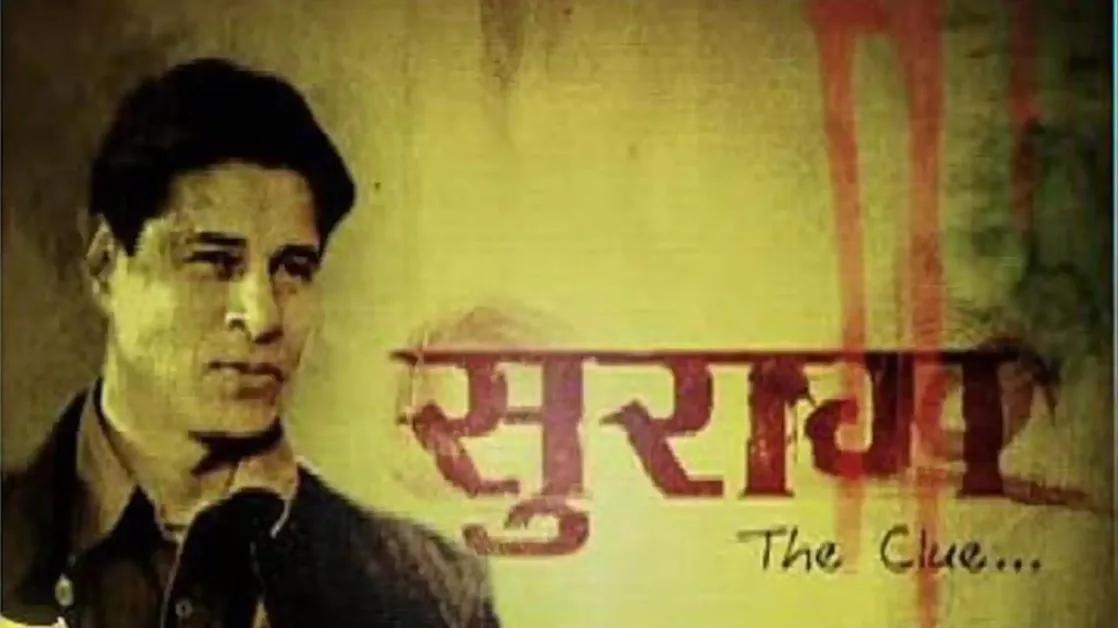
Sri Adhikari Brothers and Prasar Bharati Revive Crime Franchise With New ‘Suraag 2.0’ Television Series
Sri Adhikari Brothers and Prasar Bharati are bringing back the Indian crime thriller Suraag with a new series titled Suraag 2.0, reviving the investigative franchise for contemporary audiences while reuniting the production house with Doordarshan.
Doordarshan has unveiled the first look of the new series, which is scheduled to:
air soon on DD National.
The reboot will bring back Sudesh Berry, who played Inspector Bharat in the original programme, while adding Sai Ketan Rao and Jigyasa Singh to the principal cast.
The creative team intends to retain the investigative identity that made the original Suraag recognisable while updating its:
storytelling,
presentation,
characters,
and overall treatment
for a new generation of television viewers.
The revival is also commercially significant for Sri Adhikari Brothers because it returns the company to an established intellectual property at a time when Indian broadcasters and entertainment companies are increasingly examining their content libraries for franchises capable of being reintroduced to modern audiences.
Suraag 2.0 Is Coming to DD National

The new Suraag will return to the same television network closely associated with the original programme:
DD National.
A specific premiere date has not yet been announced.
The first look confirms that the revival has moved beyond an early development concept and is being actively positioned for release.
The project brings together:
Sri Adhikari Brothers
and:
Prasar Bharati
around a property with an established history on Doordarshan.
For both organisations, the revival provides an opportunity to combine familiarity with a refreshed crime-drama format.
Sudesh Berry Returns as Inspector Bharat
One of the most important elements of the revival is the return of:
Sudesh Berry.
Berry will reprise his association with:
Inspector Bharat,
the character at the centre of the original Suraag.
His return gives the reboot direct continuity with the earlier series.
That continuity is strategically useful because legacy viewers immediately have a recognisable connection with the new programme.
At the same time, the addition of younger cast members gives Suraag 2.0 an opportunity to build relationships with viewers who may never have watched the original television run.
Sai Ketan Rao Joins Suraag 2.0
Sai Ketan Rao joins the new series as one of its principal cast members.
His inclusion represents the generational expansion of the franchise.
Rather than simply recreating the original programme with the same characters and storytelling approach, Suraag 2.0 is being designed to combine:
legacy recognition
with:
new talent.
This model has become increasingly important for entertainment reboots.
A revival relying entirely on nostalgia can struggle to build a new audience.
A completely transformed reboot, however, can lose the characteristics that made the original property valuable.
The challenge is to balance both.
Jigyasa Singh Joins Principal Cast
Jigyasa Singh also joins Sudesh Berry and Sai Ketan Rao in the reboot.
The three actors headline a refreshed cast built around the investigative world of Suraag.
Further details about individual characters, episode plots and the wider supporting cast have not yet been fully disclosed.
That leaves the precise narrative structure of the reboot to be revealed closer to its premiere.
What has been confirmed is that the makers intend to preserve the central investigative character of the franchise.
Original Suraag Was Built Around Inspector Bharat
The original Suraag became associated with Sudesh Berry's portrayal of Inspector Bharat.
The programme followed investigations into different crimes, with the central character working through evidence and clues to resolve cases.
The format was particularly suited to episodic television.
Viewers could follow an investigation from its beginning to its resolution without necessarily needing to watch every preceding episode.
This accessibility helped define the programme's identity.
One-Case-Per-Episode Format Defined Original Series
A major characteristic of the original Suraag was its:
one-case-per-episode structure.
Each episode generally introduced a new investigation.
That approach differs from crime dramas built around a single mystery extending across an entire season.
An episodic structure can offer several advantages.
New viewers can enter the programme without extensive knowledge of earlier episodes.
Writers can also explore a wider variety of:
crimes,
motives,
characters,
and investigative situations.
The format gave Suraag a clear and repeatable storytelling engine.
Suraag 2.0 Will Retain Spirit of Original
Director and creator Ravi Adhikari has positioned Suraag 2.0 as more than a simple recreation.
The objective is to preserve the:
spirit of the original
while giving the programme a:
contemporary storytelling language and treatment.
That distinction will be central to whether the revival succeeds.
Television production and audience expectations have changed substantially since the original Suraag aired.
Modern crime audiences are accustomed to:
faster pacing,
more cinematic production,
complex characters,
digital investigation,
and sophisticated visual storytelling.
The new series therefore needs to retain familiarity without appearing dated.
Ravi Adhikari Leads Creative Revival
Ravi Adhikari is serving as:
director and creator
of Suraag 2.0.
His creative role places him at the centre of the franchise's transition from its earlier television identity to the new version.
A reboot of an established property requires decisions about which elements are:
essential
and which can be:
changed.
Characters, investigative structure and thematic identity may provide continuity.
Production style, pacing and narrative techniques can then be modernised.
This allows a franchise to evolve without abandoning the foundation that created its original audience.
Revival Reunites Sri Adhikari Brothers and Doordarshan
Suraag 2.0 also represents a renewed association between:
Sri Adhikari Brothers
and:
Doordarshan.
The relationship is historically important to the production house.
Doordarshan played a significant role during Sri Adhikari Brothers' earlier development in Indian television.
Returning with Suraag therefore carries significance beyond the individual programme.
It reconnects the production company with a broadcaster closely linked to its television legacy.
Kailasnath Adhikari Sees Opportunity in Television Nostalgia
Sri Adhikari Brothers Managing Director Kailasnath Adhikari has linked the revival to growing audience interest in established Indian television properties.
Older television programmes increasingly have a second life through:
digital clips,
streaming libraries,
social media,
and nostalgia-driven discussion.
This allows entertainment companies to reconnect with viewers who remember a property while simultaneously introducing it to younger audiences.
Suraag 2.0 is designed around that intersection.
The familiarity of the title provides immediate recognition.
The contemporary treatment is intended to give audiences a reason to watch something new rather than simply revisit the original.
Legacy Television IP Is Becoming Valuable Again
The revival illustrates a broader opportunity across India's entertainment industry:
legacy intellectual property.
Television networks and production houses accumulated large libraries of:
characters,
formats,
titles,
stories,
and franchises
during the expansion of Indian television.
For years, much of that material had limited commercial value beyond reruns.
Digital distribution has changed the equation.
Old programmes can now be rediscovered through online video and streaming.
This can create renewed awareness around properties that have been absent from active production for years.
Reboots Can Reduce Audience-Discovery Risk
Launching an entirely new television programme requires building awareness from zero.
A recognised franchise begins with an existing level of:
brand recall.
That can reduce part of the marketing challenge.
Viewers familiar with Suraag already understand that the title represents:
crime,
investigation,
and mystery.
This gives the reboot an immediate positioning advantage.
However, recognition alone does not guarantee success.
A revival still needs to deliver storytelling strong enough to retain viewers after the initial nostalgia-driven curiosity.
Crime Is a Durable Television Genre
Crime remains one of television's most adaptable genres.
Its core storytelling structure is simple:
a crime occurs,
questions emerge,
evidence is discovered,
suspects are examined,
and investigators seek a resolution.
Within that framework, writers can explore a wide range of:
settings,
characters,
social themes,
and motives.
This makes crime particularly suitable for long-running episodic programming.
A recognisable investigator can become the stable centre while individual cases continuously change.
Procedural Storytelling Supports Repeat Viewing
The procedural nature of Suraag also provides practical advantages for television scheduling.
A viewer does not necessarily need to remember an entire season-long narrative.
Individual episodes can deliver a largely self-contained experience.
This can support:
casual viewing,
repeat telecasts,
and audience entry at different points in a season.
At the same time, modern reboots can introduce continuing character arcs across episodes to encourage regular viewing.
Combining both approaches could allow Suraag 2.0 to preserve procedural accessibility while adding greater character depth.
Contemporary Crime Has Changed Dramatically
The world of criminal investigation is very different from when the original Suraag was produced.
Modern investigations can involve:
mobile phones,
CCTV,
digital payments,
social media,
location data,
cybercrime,
and electronic forensic evidence.
These technologies create new storytelling possibilities.
A contemporary crime programme therefore cannot simply reproduce investigative methods from an earlier television era.
Updating the world around Inspector Bharat and the new characters gives the writers an opportunity to explore how crime and detection have evolved.
New Generation Creates Opportunity for Fresh Investigative Dynamics
Adding Sai Ketan Rao and Jigyasa Singh also allows the franchise to introduce new character relationships.
The return of Inspector Bharat provides:
experience
and:
continuity.
Newer characters can bring different:
methods,
perspectives,
and generational attitudes.
That contrast can itself become part of the storytelling.
A veteran investigator working alongside a younger generation creates opportunities to examine how investigative practices change while certain fundamentals remain constant.
DD National Gains Recognisable Entertainment Property
For DD National, Suraag 2.0 provides a recognised entertainment franchise with an existing connection to the channel.
Public broadcasting operates within an increasingly fragmented media environment.
Audiences can now choose between:
broadcast television,
streaming platforms,
YouTube,
social video,
and numerous digital entertainment services.
Recognisable programming can therefore help a broadcaster attract attention in a market where viewers have far more choices than during the original Suraag era.
Prasar Bharati Is Operating Across Television and Digital Platforms
Prasar Bharati's entertainment ecosystem is also broader than linear television alone.
The broadcaster now operates in an environment where content can potentially move across:
broadcast,
digital video,
and streaming.
This changes the long-term possibilities for television properties.
A programme airing on DD National can potentially reach additional audiences through digital distribution and promotional content.
That broader ecosystem makes established IP more strategically useful than it was when a television programme's life depended largely on its broadcast schedule.
Doordarshan Nostalgia Has Cross-Generational Potential
Doordarshan occupies a distinctive position within Indian media history.
For earlier generations, it was once the central television destination in the country.
Many programmes from that era retain strong cultural recall.
Younger audiences may encounter those programmes differently:
through parents,
online clips,
memes,
archival footage,
or digital rediscovery.
This gives Doordarshan-linked franchises an unusual cross-generational opportunity.
A reboot can appeal simultaneously to people who remember the original and people discovering the property for the first time.
Suraag 2.0 Is Not Simply a Remake
The makers' positioning is important.
Suraag 2.0 is not being presented merely as a shot-for-shot recreation of the original.
Instead, it seeks to preserve:
the investigative core,
the franchise identity,
and the connection to Inspector Bharat
while updating:
storytelling,
treatment,
and cast.
That approach is closer to franchise continuation than straightforward remake.
It allows the new programme to acknowledge the original without being completely constrained by it.
Returning Actors Can Strengthen Franchise Continuity
Bringing back Sudesh Berry is particularly valuable in this context.
Reboots frequently face a problem:
the title returns,
but the emotional connection does not.
A returning lead actor provides a tangible bridge.
Viewers do not simply recognise the name Suraag.
They recognise a character and performer associated with the original programme.
This continuity can make the transition feel more authentic.
Younger Cast Can Broaden Audience Reach
Sai Ketan Rao and Jigyasa Singh provide the other side of the strategy.
Their presence gives the programme an opportunity to connect with viewers whose television reference points are considerably more recent.
This creates a dual-audience model.
Legacy viewers may initially arrive because of:
Suraag
and:
Sudesh Berry.
Younger viewers may be attracted by:
new actors,
new stories,
and contemporary production.
The programme's success will depend on whether these audiences can ultimately converge.
Indian Television Is Rediscovering Familiar Franchises
The revival also comes amid continued interest in established entertainment properties.
The logic is similar to what has happened across:
film,
streaming,
gaming,
and international television.
Successful intellectual property can remain commercially useful for decades if it is periodically reinvented.
The challenge is avoiding excessive dependence on nostalgia.
Audiences generally expect a reboot to justify its existence through:
better production,
fresh storytelling,
new characters,
or a different perspective.
Suraag 2.0 will therefore be judged both against contemporary crime entertainment and the memory of the original.
Digital Discovery Could Help the Reboot
Modern television launches are no longer dependent entirely on on-air promotion.
A show's first look can circulate through:
Instagram,
YouTube,
entertainment websites,
fan communities,
and social platforms.
This gives older franchises an important advantage.
Archive material and memories of the original can circulate alongside promotional material for the reboot.
That can create a conversation extending beyond conventional television audiences.
The first-look release is therefore part of a broader discovery strategy rather than simply a programme announcement.
Crime Franchises Can Travel Across Platforms
Crime properties are particularly suitable for multi-platform development.
An investigative franchise can potentially support:
television episodes,
streaming extensions,
digital shorts,
character-focused stories,
and additional seasons.
The underlying storytelling engine remains highly flexible.
For Sri Adhikari Brothers, successfully rebuilding Suraag could therefore create value beyond one television season.
The most important asset may ultimately be the renewed relevance of the franchise itself.
Content Libraries Are Becoming Strategic Assets
The Suraag revival also demonstrates why entertainment companies increasingly treat their archives as:
strategic assets.
A decades-old television property may contain:
recognisable characters,
audience memories,
format ideas,
and brand equity.
If those elements can be successfully updated, a company does not need to create every entertainment property from scratch.
Library exploitation can therefore complement new-IP development.
This is particularly useful in an industry where audience acquisition has become increasingly expensive and fragmented.
Revival Could Open Door for More Legacy Properties
A successful Suraag 2.0 could strengthen the case for reviving additional Indian television franchises.
Sri Adhikari Brothers has a long history of television production and therefore possesses a substantial catalogue of older properties.
The wider Indian television industry also has decades of programming that could potentially be:
remastered,
re-released,
continued,
or rebooted.
Not every old programme will justify revival.
Properties with strong characters, simple concepts and lasting audience recall are likely to have the greatest potential.
Crime procedurals naturally fit many of those requirements.
Premiere Date Remains to Be Announced
One important detail remains pending:
the exact premiere date.
Doordarshan has confirmed that Suraag 2.0 is:
coming soon to DD National.
However, a specific broadcast date and complete scheduling details had not been formally announced at the time of the first-look unveiling.
Further information regarding:
episode count,
broadcast slot,
supporting cast,
and story details
is also expected as the premiere approaches.
Conclusion
Sri Adhikari Brothers and Prasar Bharati are reviving the Suraag crime franchise with Suraag 2.0, bringing one of Doordarshan's recognisable investigative properties back to DD National with a combination of legacy characters and contemporary storytelling.
The reboot sees Sudesh Berry return as Inspector Bharat, joined by Sai Ketan Rao and Jigyasa Singh in the principal cast.
Director and creator Ravi Adhikari intends to preserve the spirit of the original series while updating its storytelling language and treatment for modern audiences.
The project also reunites Sri Adhikari Brothers with Doordarshan, reconnecting the production house with a broadcaster that played an important role in its early television journey.
Beyond the programme itself, Suraag 2.0 reflects a broader opportunity within Indian entertainment.
Established television libraries are increasingly being viewed not merely as archives but as collections of intellectual property capable of being rediscovered and redeveloped.
For Suraag, the central test will be whether the franchise can convert nostalgia into sustained contemporary relevance.
The exact premiere date has not yet been announced, with Suraag 2.0 currently slated to air soon on DD National.
 Sri Adhikari Brothers, Prasar Bharati Revive Suraag With New Suraag 2.0 Series FAQs
POST A COMMENT (0)
All Comments (0)
Replies (0)