




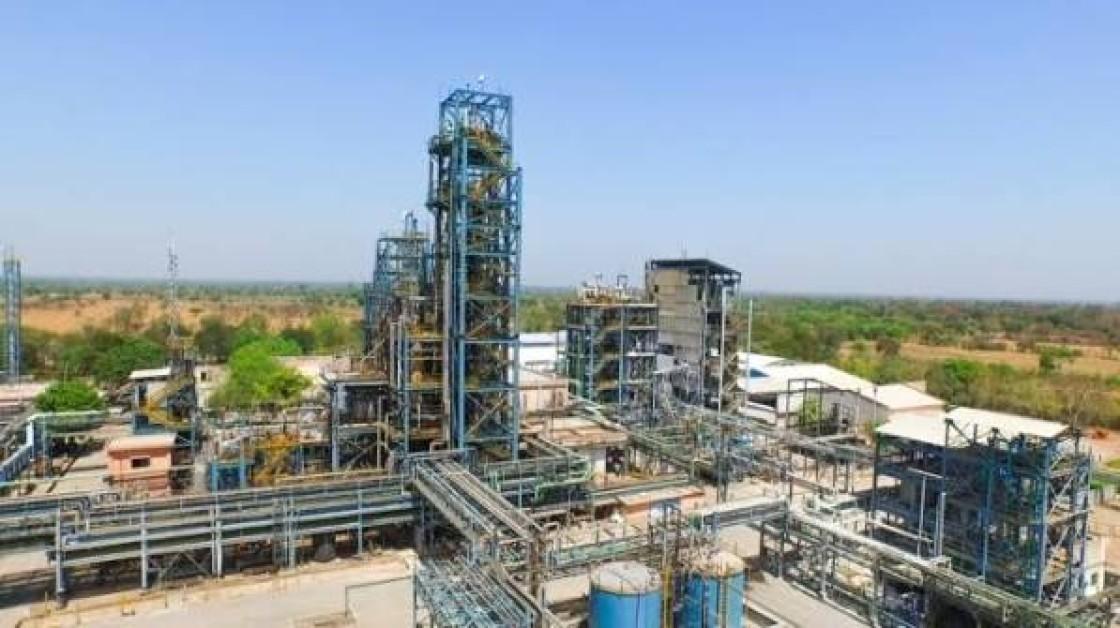
Gujarat Fluorochemicals Expands Its Electric Vehicle and Battery Materials Business
Gujarat Fluorochemicals Limited (GFL) has announced the incorporation of GFCL EV Advanced Battery Materials Limited through its material subsidiary, GFCL EV Products Limited, strengthening its corporate presence in the rapidly evolving battery chemicals industry.
The newly incorporated company was established in India on November 24, 2026, as a wholly owned subsidiary of GFCL EV Products Limited, with an initial capital of ₹1 lakh.
Gujarat Fluorochemicals disclosed the development to the National Stock Exchange (NSE) and BSE under Regulation 30 of SEBI's Listing Obligations and Disclosure Requirements Regulations, 2015.
The new entity will undertake manufacturing and commercial activities across battery materials, components and products used in electric vehicles and energy storage applications.
Gujarat Fluorochemicals New Subsidiary: Key Details

|
Particulars |
Details |
|---|---|
|
Listed Parent Company |
Gujarat Fluorochemicals Limited |
|
Immediate Holding Company |
GFCL EV Products Limited |
|
New Subsidiary |
GFCL EV Advanced Battery Materials Limited |
|
Incorporation Date |
November 24, 2026 |
|
Country of Incorporation |
India |
|
Initial Capital |
₹1 lakh |
|
Direct Ownership by GFCL EV Products |
100% |
|
Industry |
Battery Chemicals |
|
Nature of Consideration |
Cash |
|
NSE Symbol |
FLUOROCHEM |
|
BSE Scrip Code |
542812 |
The ₹1 lakh initial capital represents the incorporation capital of the new company rather than the estimated investment required for establishing commercial manufacturing operations.
New Subsidiary to Address the Integrated Battery Materials Value Chain
GFCL EV Advanced Battery Materials Limited has been established with a broad commercial mandate covering different stages of the battery materials industry.
Its proposed activities include:
-
Manufacturing battery chemicals and components.
-
Trading battery materials and related products.
-
Importing and exporting specialised battery components.
-
Processing raw materials used in battery manufacturing.
-
Developing integrated battery industry solutions.
-
Supplying materials for lithium-ion battery applications.
-
Supporting electric vehicle battery component requirements.
-
Participating in the broader battery manufacturing supply chain.
The scope of the new entity extends beyond a single battery chemistry or individual manufacturing component.
However, Gujarat Fluorochemicals has not disclosed a specific manufacturing facility, production capacity, commercial launch schedule or capital expenditure programme for the subsidiary.
Gujarat Fluorochemicals Establishes Dedicated Battery Materials Corporate Structure
The incorporation creates an additional operating entity within Gujarat Fluorochemicals' expanding electric mobility business.
The separate corporate entity could provide greater operational flexibility in managing battery materials manufacturing, commercial agreements, financing arrangements and future business expansion.
The company has not announced any external equity participation in the newly incorporated subsidiary.
GFCL EV Products Builds an Integrated Battery Materials Portfolio
Gujarat Fluorochemicals has been developing an integrated battery materials platform through GFCL EV Products, combining its established chemical manufacturing expertise with emerging energy storage technologies.
Its broader battery materials portfolio encompasses several critical components of lithium-ion battery manufacturing.
|
Battery Material |
Primary Function |
|---|---|
|
Lithium Hexafluorophosphate (LiPF6) |
Electrolyte salt supporting lithium-ion movement |
|
Electrolyte Formulations |
Facilitates ionic conductivity within battery cells |
|
Lithium Iron Phosphate (LFP) |
Cathode active material |
|
PVDF Binders |
Supports electrode structural integrity |
|
PTFE Materials |
Supports specialised battery manufacturing applications |
|
Natural Graphite Anode Materials |
Enables lithium-ion storage within the anode |
These capabilities form part of the existing group's battery materials strategy and should not be interpreted as confirmed production lines for the newly established subsidiary.
Gujarat Fluorochemicals' ₹6,000 Crore Battery Materials Expansion Strategy
Gujarat Fluorochemicals previously announced a ₹6,000 crore investment programme to expand its battery materials manufacturing capabilities through GFCL EV Products.
The investment strategy seeks to capitalise on expanding demand for electric vehicle batteries and stationary energy storage systems.
The company's established expertise in fluorochemistry, chemical processing and raw material supply chains provides a foundation for developing specialised battery components.
Its expansion plans have also targeted domestic and international customers, reflecting the global nature of the battery manufacturing supply chain.
The previously announced ₹6,000 crore programme relates to the broader battery materials business. No separate investment of this magnitude has been announced for GFCL EV Advanced Battery Materials Limited.
Recent Corporate Expansion Includes Critical Minerals Subsidiary
The latest incorporation follows another corporate restructuring initiative within Gujarat Fluorochemicals' electric vehicle materials business.
GFCL EV Products incorporated GFCL EV Critical Minerals Limited as a wholly owned subsidiary on November 12, 2026.
Recent Battery Materials Subsidiary Incorporations
|
Subsidiary |
Incorporation Date |
Country |
|---|---|---|
|
GFCL EV Critical Minerals Limited |
November 12, 2026 |
India |
|
GFCL EV Advanced Battery Materials Limited |
November 24, 2026 |
India |
The establishment of separate entities within a short period indicates a broader expansion of the group's corporate structure across critical minerals and advanced battery materials.
These businesses could support complementary activities across raw material sourcing, chemical processing and downstream battery component manufacturing.
Understanding the Battery Materials Manufacturing Value Chain
Electric vehicle batteries require multiple specialised materials to deliver energy storage capacity, safety, durability and operational efficiency.
Manufacturing battery materials requires stringent chemical purity, consistency and quality standards.
Even relatively small variations in material composition can influence battery performance, charging characteristics and operational reliability.
This creates opportunities for chemical manufacturers capable of producing specialised materials that meet international battery industry specifications.
Lithium Iron Phosphate Batteries Create New Manufacturing Opportunities
Lithium iron phosphate batteries have gained commercial importance across electric mobility and stationary energy storage applications.
LFP battery chemistry offers several advantages, including relatively strong thermal stability, extended cycle life and reduced dependence on nickel and cobalt.
These characteristics have encouraged adoption across affordable electric vehicles, commercial transportation and grid-scale energy storage systems.
Gujarat Fluorochemicals' broader investment in LFP cathode materials provides exposure to this evolving technology segment.
Demand will depend on battery chemistry preferences, electric vehicle adoption, manufacturing costs and customer qualification requirements.
Gujarat Fluorochemicals Targets Greater Battery Cell Value Addition
The company's FY26 annual report outlined its strategy to expand across several high-value battery material categories.
Management indicated that adding natural graphite anode active materials to its existing portfolio could position the group to address nearly 70% of the material value of an LFP battery cell.
This represents potential addressable value-chain coverage rather than a confirmed market share or proportion of revenue.
An integrated manufacturing approach could provide several commercial advantages:
-
Greater participation across battery component categories.
-
Reduced dependence on individual product markets.
-
Improved coordination between chemical manufacturing operations.
-
Opportunities for integrated customer supply agreements.
-
Potential manufacturing and procurement efficiencies.
-
Expanded participation in domestic and international battery supply chains.
Actual commercial benefits will depend on manufacturing scale, customer acquisition and competitive pricing.
India's Electric Vehicle Industry Creates Demand for Domestic Battery Materials
India's electric mobility industry is gradually expanding across passenger vehicles, two-wheelers, three-wheelers, buses and commercial transportation.
Battery manufacturing represents one of the most important industrial components of this transition.
However, domestic battery manufacturers continue to depend on international supply chains for several advanced materials and specialised chemical components.
Developing domestic manufacturing capabilities could reduce certain import dependencies, improve supply chain resilience and support local value addition.
For Gujarat Fluorochemicals, the expansion creates opportunities to supply materials to domestic battery manufacturers and international customers seeking diversified procurement arrangements.
Energy Storage Systems Expand the Addressable Market Beyond Electric Vehicles
Battery materials demand is not limited to the automobile industry.
Stationary energy storage systems are increasingly important for integrating renewable electricity into power networks and improving grid flexibility.
Potential battery materials applications include residential and commercial energy storage, renewable power integration, industrial backup systems, data centre power infrastructure and utility-scale battery installations.
This broader application base could help battery materials manufacturers diversify beyond electric vehicle demand.
However, different energy storage applications may require distinct chemical compositions, technical specifications and performance characteristics.
Gujarat Fluorochemicals Builds an International Battery Materials Network
The group's battery materials business has established corporate entities across several international markets to support manufacturing, trading, distribution and investment activities.
|
International Market |
Business Focus |
|---|---|
|
India |
Battery materials manufacturing and business development |
|
United States |
Trading and warehousing |
|
Germany |
Distribution and chemical products trading |
|
Singapore |
Investment and commercial activities |
|
Oman |
Advanced materials and battery chemicals manufacturing initiatives |
The international corporate structure provides access to geographically diversified business opportunities, although individual entities are at different stages of commercial development.
The newly established Indian subsidiary is distinct from the group's similarly named advanced materials entities in Oman.
Customer Qualification Remains Critical to Battery Materials Commercialisation
Unlike conventional industrial chemicals, advanced battery materials often require extensive customer qualification before commercial adoption.
Battery cell manufacturers typically assess chemical purity, electrochemical performance, manufacturing consistency, product stability and long-term reliability.
Qualification processes can involve laboratory testing, pilot manufacturing and performance validation before large-volume procurement agreements are established.
These requirements can create barriers to entry for new suppliers but may also support longer-term commercial relationships once materials are approved.
Gujarat Fluorochemicals' ability to secure customer qualifications and commercial supply agreements will remain important to the financial performance of its battery materials business.
Financial Impact of the New Subsidiary Remains Undetermined
The incorporation of GFCL EV Advanced Battery Materials Limited creates a dedicated corporate platform for potential business expansion.
However, incorporation alone does not establish immediate commercial revenue or profitability.
The company has not disclosed the subsidiary's expected annual revenue, operating margins, manufacturing capacity, customer contracts or future capital expenditure requirements.
The financial contribution will depend on subsequent project development, commercial operations and customer demand.
Any larger manufacturing investment would need to be assessed separately from the initial ₹1 lakh incorporation capital.
Key Risks Facing Advanced Battery Materials Manufacturers
The battery materials industry presents substantial long-term growth opportunities alongside significant commercial and technological challenges.
|
Risk Factor |
Potential Business Impact |
|---|---|
|
Raw Material Price Volatility |
Pressure on manufacturing costs |
|
Global Manufacturing Competition |
Product pricing and margin pressure |
|
Technology Evolution |
Changing demand for specific battery materials |
|
Customer Qualification Delays |
Delayed commercial revenue |
|
Capital Expenditure Requirements |
Higher financing and depreciation costs |
|
Supply Chain Disruptions |
Production and delivery challenges |
|
Environmental Compliance |
Additional operational expenditure |
|
Battery Demand Fluctuations |
Lower manufacturing capacity utilisation |
The ability to manage these risks while maintaining product quality and cost competitiveness will influence the group's long-term battery materials strategy.
Implications for India's Specialty Chemicals Industry
Gujarat Fluorochemicals' expansion reflects a broader transformation within India's specialty chemicals industry.
Chemical manufacturers are increasingly exploring opportunities in advanced materials, semiconductor chemicals, electric mobility components and clean energy technologies.
Battery materials represent a specialised industrial segment requiring expertise in chemical engineering, high-purity manufacturing, raw material processing and international quality standards.
Successful domestic manufacturing development could strengthen India's participation in global clean technology supply chains while creating opportunities for industrial investment and specialised employment.
The industry's growth will depend on technological capabilities, manufacturing economics, policy support and international competitiveness.
What Industry Participants Will Monitor Next
The immediate focus will remain on Gujarat Fluorochemicals' plans for operationalising the newly incorporated subsidiary.
Future developments involving manufacturing locations, capital expenditure approvals, production capacity, technology partnerships and customer supply agreements will provide greater clarity regarding its commercial objectives.
The progress of the group's existing battery materials projects, critical minerals initiatives and international operations will also remain important indicators of its broader expansion strategy.
Conclusion
Gujarat Fluorochemicals' incorporation of GFCL EV Advanced Battery Materials Limited represents another strategic step in expanding its presence across the electric vehicle and energy storage supply chain.
Established through GFCL EV Products Limited with an initial capital of ₹1 lakh, the new entity provides a dedicated corporate structure for battery chemicals, advanced materials, component manufacturing and associated commercial activities.
The development complements the group's broader battery materials investment programme and recent expansion into critical minerals.
Successful technology development, manufacturing execution, customer qualification and disciplined capital allocation will determine the subsidiary's eventual contribution to Gujarat Fluorochemicals' financial performance and long-term industrial growth.
 Gujarat Fluorochemicals Expands Battery Materials Business Through New Subsidiary FAQs

POST A COMMENT (0)
All Comments (0)
Replies (0)