




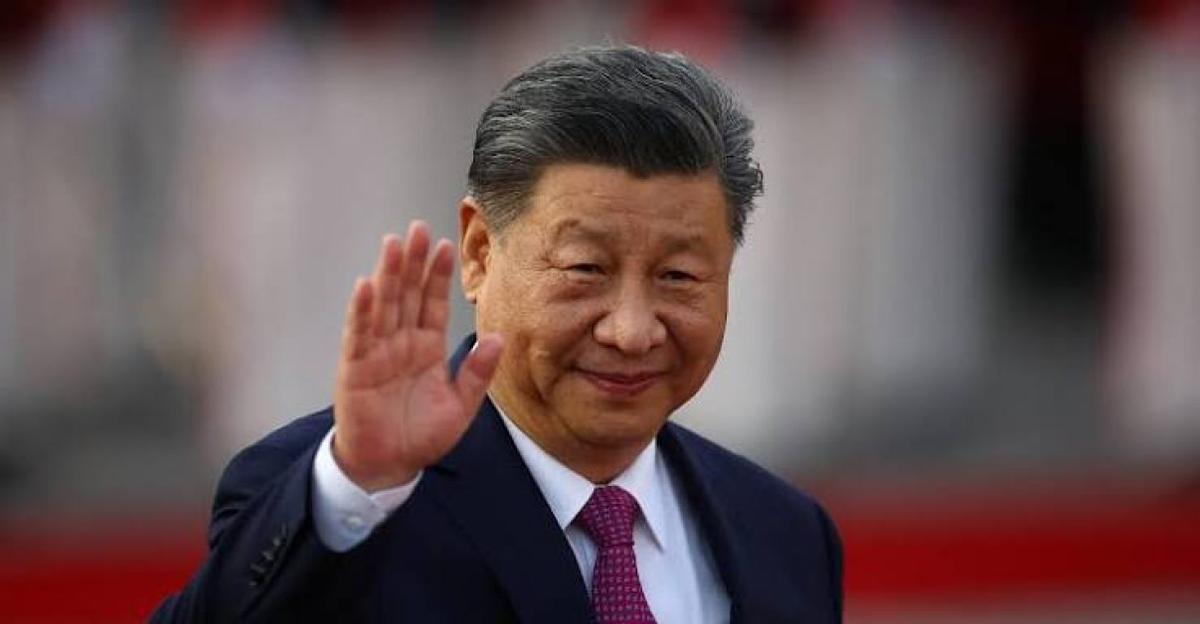
Xi Jinping Defends Open Trade at APEC Summit in Shenzhen
Chinese President Xi Jinping called for free and open international trade, stronger multilateral cooperation and stable global supply chains on November 18, 2026, as Asia-Pacific leaders gathered in Shenzhen amid growing protectionist pressures and renewed tensions between China and the United States.
Addressing business executives at the Asia-Pacific Economic Cooperation (APEC) CEO Summit, Xi urged regional economies to preserve the rules-based trading system centred on the World Trade Organization (WTO), remove barriers to trade and investment, and deepen economic cooperation.
His remarks came as governments worldwide reassess trade relationships, impose restrictions on strategic technologies and seek greater control over critical manufacturing supply chains.
The speech followed Washington's announcement of additional restrictions on China's access to advanced artificial intelligence chips, including technologies supplied by companies such as Nvidia.
Beijing has indicated that it will respond to the latest American measures, raising concerns about the durability of the fragile trade understanding between the world's two largest economies.
Xi positioned economic openness, technological innovation and regional cooperation as essential to sustaining growth across the Asia-Pacific.
He also outlined China's intention to lower tariffs, expand market access and create additional opportunities for foreign businesses.
However, the Chinese leader's message comes amid continuing criticism from the United States and European governments over China's industrial subsidies, manufacturing dominance and large trade surplus.
The contrasting positions highlight the central challenge facing APEC economies: maintaining the benefits of international trade while addressing national security concerns, industrial competition and economic imbalances.
APEC Summit 2026: Key Highlights

|
Particulars |
Details |
|---|---|
|
Event |
APEC CEO Summit 2026 |
|
Location |
Shenzhen, Guangdong, China |
|
Xi Jinping's address |
November 18, 2026 |
|
Host economy |
China |
|
APEC membership |
21 economies |
|
Central message |
Support free and open trade and investment |
|
Trade framework |
WTO-centred multilateral trading system |
|
Regional initiative |
Free Trade Area of the Asia-Pacific |
|
Major economic concerns |
Protectionism, tariffs, supply-chain disruption |
|
Technology issue |
US restrictions on advanced AI chips |
|
China's stated priorities |
Openness, innovation and cooperation |
|
Upcoming diplomatic discussions |
Meetings involving China, the US and Russia |
|
APEC Economic Leaders' Meeting |
November 18–19, 2026 |
The speech set out China's preferred direction for regional economic cooperation, but the proposals do not themselves establish new binding trade agreements.
Xi Jinping Warns Against Protectionism and Unilateral Trade Policies
Xi's remarks focused on the risks associated with increasing trade barriers and unilateral economic restrictions.
He argued that the Asia-Pacific's long-term prosperity depends on maintaining an open and cooperative economic environment.
Support for Multilateral Trade
The Chinese president called on participating economies to uphold the international trading system with the WTO at its centre.
The organisation provides a framework for trade rules, negotiations and dispute settlement among member countries.
Opposition to Trade Barriers
Xi urged governments to reduce restrictions that impede international trade and investment.
He presented economic openness as a means of supporting regional growth and business activity.
Importance of Cooperation
The speech emphasised that countries face common economic challenges requiring coordinated responses.
These include slowing growth, technological transformation and the stability of international supply chains.
Why the Message Matters
The comments came during a period when major economies are increasingly using tariffs, export controls and industrial policies to protect strategic interests.
Such measures can support particular domestic policy objectives but may also raise costs and complicate international trade.
China Calls for a Stronger World Trade Organization
Xi identified the WTO as a central institution for maintaining international economic cooperation.
The organisation's rules are intended to provide a predictable framework for trade among participating countries.
Why the WTO Matters
Businesses operating internationally depend on rules governing tariffs, market access and commercial treatment.
Predictable trade arrangements can support investment decisions and long-term supply contracts.
Challenges Facing the Trading System
The WTO faces difficulties related to dispute settlement, competing industrial policies and disagreements over trade practices.
Major economies have also increasingly relied on unilateral restrictions to address security and economic concerns.
China's Position
Xi called for strengthening the multilateral system rather than allowing trade relationships to become increasingly fragmented.
However, international disagreements over industrial subsidies, market access and competitive conditions remain unresolved.
Xi Promotes Free Trade Area of the Asia-Pacific
A major element of the speech was renewed support for the proposed Free Trade Area of the Asia-Pacific, or FTAAP.
The initiative seeks to advance regional economic integration across APEC economies.
What Is the FTAAP?
The FTAAP is a long-term proposal for a comprehensive free trade arrangement across the Asia-Pacific.
It is intended to reduce trade barriers and improve economic connectivity.
Potential Economic Benefits
A broad regional agreement could simplify market access and improve trading conditions for participating businesses.
It could also support investment and regional supply chains.
Why Implementation Is Difficult
APEC economies have different tariff structures, economic priorities and regulatory systems.
Political disagreements and competing trade arrangements add complexity.
Current Status
The FTAAP remains a proposed regional integration objective rather than a completed free trade agreement covering all 21 APEC economies.
Xi's support signals China's policy preference but does not establish a timetable for implementation.
APEC Represents 21 Economies Across the Pacific
APEC is a regional economic cooperation forum established in 1989.
Its membership includes major developed and emerging economies across the Pacific region.
APEC's 21 member economies
Australia
Brunei
Canada
Chile
China
Hong Kong, China
Indonesia
Japan
South Korea
Malaysia
Mexico
New Zealand
Papua New Guinea
Peru
Philippines
Russia
Singapore
Chinese Taipei
Thailand
United States
Vietnam
APEC differs from a conventional trade agreement because its cooperation framework generally operates through consensus and voluntary commitments.
Why APEC Is Economically Important
Its members include some of the world's largest manufacturing centres, consumer markets and technology economies.
Trade and investment relationships across the region are central to international production networks.
China's Role
China is hosting the 2026 meetings in Shenzhen, a major manufacturing and technology centre.
The location reinforces the summit's emphasis on innovation, industrial development and economic connectivity.
Shenzhen Hosts Major Business and Political Leaders
The APEC CEO Summit opened on November 17 and continued on November 18.
It brought together representatives of governments, multinational companies and business organisations.
Participation at the Summit
More than 2,000 representatives from APEC and non-APEC economies participated in the event.
The gathering included representatives from 115 Fortune Global 500 companies.
Main Discussion Areas
The programme focused on trade integration, digital technologies, artificial intelligence, connectivity and sustainable development.
Business Significance
The summit provides an opportunity for companies and policymakers to discuss economic challenges and potential areas of cooperation.
However, business summit discussions are not equivalent to binding commitments by governments.
US Restrictions on Advanced AI Chips Intensify Trade Tensions
Xi's remarks came after Washington announced further restrictions on China's access to advanced artificial intelligence chips.
The measures affect technologies that are important for developing and operating sophisticated AI systems.
Why Advanced Chips Matter
High-performance semiconductors are used in AI training, data centres and other computing-intensive applications.
Access to advanced computing hardware has become a strategic issue for governments and technology companies.
US Policy Objectives
Washington has framed advanced semiconductor restrictions around national security and technological competition.
China's Response
Beijing has criticised restrictions that limit access to advanced technologies and has indicated that it will respond.
Impact on Businesses
Technology restrictions can affect semiconductor manufacturers, cloud infrastructure providers and companies developing AI applications.
They may also encourage businesses to diversify suppliers or invest in alternative technologies.
US-China Trade Relations Remain Fragile
The United States and China maintain extensive trade and investment relationships.
However, their economic relationship is increasingly shaped by strategic competition.
Tariff Disputes
Tariffs remain a major source of disagreement between the two countries.
Technology Controls
Restrictions on semiconductors and other advanced technologies have become an important element of bilateral relations.
Manufacturing Competition
Both governments seek to strengthen domestic industrial capabilities.
Supply-Chain Security
Companies face pressure to manage geopolitical risks and reduce dependence on concentrated production networks.
Why APEC Matters
The summit provides a diplomatic setting in which leaders can discuss these disputes.
Nevertheless, broad statements supporting cooperation do not automatically resolve specific trade restrictions.
Xi Jinping and Donald Trump Prepare for High-Level Talks
The APEC meetings also provide a setting for discussions between Xi Jinping and US President Donald Trump.
The two leaders are expected to meet on November 19.
Their talks come amid disagreements over tariffs, technology restrictions and broader geopolitical issues.
Trade Negotiations
Investors and businesses will monitor whether the leaders discuss measures to stabilise bilateral trade.
Semiconductor Restrictions
Advanced chip export controls remain a major point of contention.
Economic Stability
Both countries have an interest in managing disruptions that could affect their domestic economies and international markets.
No Agreement Announced in Xi's Speech
Xi's November 18 address did not announce a new bilateral trade agreement with the United States.
Any changes to tariffs or technology restrictions would require separate policy decisions.
Russia's Participation Adds a Geopolitical Dimension
Russian President Vladimir Putin is also participating in the diplomatic programme surrounding the APEC meetings.
Discussions involving China, the United States and Russia are expected to address major international security issues alongside economic concerns.
Broader Diplomatic Agenda
The agenda includes the conflicts involving Ukraine and Iran, as well as questions concerning strategic security.
Economic Implications
Geopolitical tensions can influence energy markets, shipping costs, trade routes and investor sentiment.
Concerns Among Smaller Economies
Some governments are concerned that agreements negotiated among major powers could affect their interests without sufficient participation.
These concerns underline the importance of broader regional consultation.
China Pledges to Lower Tariffs and Expand Market Access
Xi also outlined plans to make China's domestic market more accessible to foreign businesses.
He said Beijing would continue pursuing economic opening while investing in industrial development and technology.
Tariff Reductions
China intends to lower tariffs as part of its broader opening strategy.
However, Xi did not announce a detailed list of products, specific tariff rates or implementation dates in the speech.
Manufacturing Investment
Beijing plans to improve conditions for foreign businesses operating in manufacturing.
Services Sector
China also intends to expand access to selected services activities.
Regulatory Environment
Xi highlighted the importance of creating more predictable conditions for foreign investment.
The practical impact will depend on subsequent regulatory measures and their implementation.
China Faces Criticism Over Its Large Trade Surplus
Xi's support for free trade comes amid international concern over China's export-oriented manufacturing model.
Western governments have criticised the country's large trade surplus and industrial support policies.
Trade Surplus Above $1 Trillion
China's annual trade surplus has exceeded $1 trillion, intensifying debate about global trade imbalances.
Western Concerns
The United States and European governments argue that industrial subsidies and excess production capacity can create unfair competition for domestic manufacturers.
They also raise concerns about dependence on Chinese supply chains.
China's Position
Beijing maintains that its manufacturing strength reflects economic development, investment and competitiveness.
China argues that international trade should remain open and that restrictions can damage global growth.
Unresolved Differences
The competing perspectives demonstrate that support for free trade does not eliminate disputes over industrial policy and market access.
Global Supply Chains Become a Central APEC Issue
International supply chains connect manufacturers, logistics providers and customers across multiple countries.
Trade restrictions can affect these networks even when the measures target only particular products or technologies.
Manufacturing
Companies depend on imported components, machinery and raw materials.
Logistics
Cross-border restrictions can increase documentation requirements and delivery times.
Technology
Semiconductor controls can influence electronics production and digital infrastructure.
Investment
Businesses may delay or redirect capital expenditure when trade policies are uncertain.
Xi's Proposal
The Chinese president called for maintaining stable and efficient international production networks.
Whether governments can achieve this objective will depend on their willingness to reconcile economic and security priorities.
Digital Trade and Cross-Border E-Commerce Receive Attention
Xi also promoted closer cooperation in digital trade.
The agenda included cross-border e-commerce, customs modernisation and technology-enabled trade procedures.
Digital Customs
Electronic documentation and automated customs processes can reduce administrative burdens.
E-Commerce
Online marketplaces allow businesses to reach customers across national borders.
Trade Facilitation
Improved digital systems may help reduce delays and transaction costs.
Regulatory Challenges
Countries maintain different requirements concerning data protection, consumer rights, taxation and digital services.
Greater cooperation would require progress in addressing these differences.
Artificial Intelligence Emerges as a Major Economic Priority
Artificial intelligence is a prominent theme of the 2026 APEC meetings.
The technology is increasingly relevant to manufacturing, logistics, financial services and business operations.
Productivity Potential
AI systems may help companies automate tasks and analyse information.
Investment Requirements
Advanced computing infrastructure requires substantial capital expenditure.
Uneven Adoption
Businesses differ in their ability to deploy AI effectively.
International Cooperation
APEC discussions include the development of more open and inclusive innovation ecosystems.
However, technological competition between major economies could complicate cooperation.
Xi Highlights China's Industrial and Technology Strategy
Xi outlined plans to accelerate the development of China's industrial system.
The strategy includes upgrading traditional manufacturing and supporting emerging technologies.
Advanced Manufacturing
China continues investing in manufacturing capabilities across a range of industries.
Emerging Technologies
Artificial intelligence, automation and other technologies are expected to play a larger role in industrial development.
Green Transition
China is also expanding technologies associated with energy efficiency and lower-carbon economic activity.
Foreign Business Opportunities
Xi presented China's domestic market and innovation ecosystem as potential opportunities for international companies.
Actual investment decisions will depend on commercial conditions and regulatory certainty.
What Rising Protectionism Means for Global Businesses
Protectionism can take several forms, including tariffs, import restrictions, export controls and domestic-content requirements.
Governments may use these measures to pursue industrial development, employment or security objectives.
However, they can also create additional costs for businesses.
|
Area |
Potential effect of protectionist policies |
|---|---|
|
Manufacturing |
Higher input costs and supplier changes |
|
Technology |
Restrictions on access to advanced components |
|
International trade |
Additional tariffs and compliance requirements |
|
Logistics |
Supply-chain restructuring |
|
Consumer markets |
Higher prices for some imported goods |
|
Investment |
Greater uncertainty over market access |
|
Export industries |
Reduced competitiveness in restricted markets |
|
Small businesses |
Higher costs of cross-border expansion |
The impact varies by country, industry and policy design.
Implications for India and Other Asian Economies
India is not an APEC member, but developments involving China, the United States and regional trade policy can still affect Indian businesses.
Export Opportunities
Changes in global supply chains may create opportunities for Indian manufacturers.
Import Costs
Tariffs and supply disruptions can affect the cost of imported components and industrial inputs.
Electronics Manufacturing
Semiconductor restrictions and technology competition may influence electronics supply chains.
Pharmaceuticals and Chemicals
International trade conditions affect market access and the availability of inputs.
Investment Flows
Companies diversifying production networks may consider alternative manufacturing locations.
However, India would need to compete on infrastructure, costs, regulatory conditions and workforce capabilities to capture additional investment.
Can APEC Reduce Trade Tensions?
APEC provides a platform for economic dialogue, but its ability to resolve major disputes is limited.
Consensus-Based Cooperation
The forum encourages voluntary cooperation among members.
No Binding Trade Settlement Mechanism
APEC itself does not function as a court or enforceable trade agreement.
Diplomatic Value
Regular meetings can improve communication and create opportunities for bilateral negotiations.
Practical Limitations
National security disputes and strategic competition may continue even when leaders endorse regional cooperation.
The success of the 2026 meetings will therefore depend partly on whether policy statements lead to concrete measures.
What Global Markets Will Watch Next
|
Development |
Potential significance |
|---|---|
|
Xi-Trump meeting |
Direction of US-China trade relations |
|
New US semiconductor restrictions |
Impact on technology supply chains |
|
China's response |
Potential for further trade measures |
|
Chinese tariff announcements |
Changes in market access |
|
APEC leaders' discussions |
Regional cooperation priorities |
|
FTAAP progress |
Long-term trade integration |
|
WTO reform discussions |
Future of multilateral trade rules |
|
Cross-border investment policies |
Business expansion opportunities |
|
AI cooperation initiatives |
Technology development and regulation |
|
Supply-chain developments |
Manufacturing and logistics costs |
Investors will assess whether the summit produces concrete policy changes or primarily reinforces existing positions.
Outlook for Global Trade After APEC 2026
Xi Jinping's speech reflects China's effort to present economic openness as a central principle of regional growth.
The emphasis on WTO rules, investment access and supply-chain stability may appeal to economies that depend heavily on international trade.
However, the prospects for broader liberalisation remain uncertain.
The United States continues to pursue restrictions on selected advanced technologies.
China faces criticism over industrial policies and trade imbalances.
Other economies are balancing the benefits of global integration against concerns about economic security and domestic manufacturing.
The APEC summit provides an opportunity for dialogue, but the underlying disputes require detailed negotiations.
For businesses, the immediate priority is to monitor changes in tariffs, technology restrictions and market access.
For governments, the challenge is to preserve the benefits of international commerce while addressing legitimate economic and security concerns.
Conclusion
Chinese President Xi Jinping used his November 18, 2026, address at the APEC CEO Summit in Shenzhen to call for free and open trade, stronger multilateral cooperation and stable global supply chains.
His remarks came amid rising protectionism, new US restrictions on advanced AI chips and continuing tensions between Washington and Beijing.
Xi urged economies to uphold the WTO-centred trading system and advance the proposed Free Trade Area of the Asia-Pacific.
He also outlined China's intention to lower tariffs, expand market access and strengthen industrial and technological development.
However, the speech did not establish a new trade agreement or resolve existing disputes.
Western governments continue to raise concerns about China's manufacturing policies, trade surplus and economic influence.
The upcoming discussions involving Xi, Donald Trump and Vladimir Putin will draw attention to trade, technology and geopolitical stability.
For global businesses, the key question is whether commitments to economic openness will translate into practical policy measures.
The outcome will have implications for manufacturing, investment, technology supply chains and the broader direction of international trade.
 Xi Jinping Calls for Free Trade at APEC Summit Amid US-China Tensions FAQs

POST A COMMENT (0)
All Comments (0)
Replies (0)