




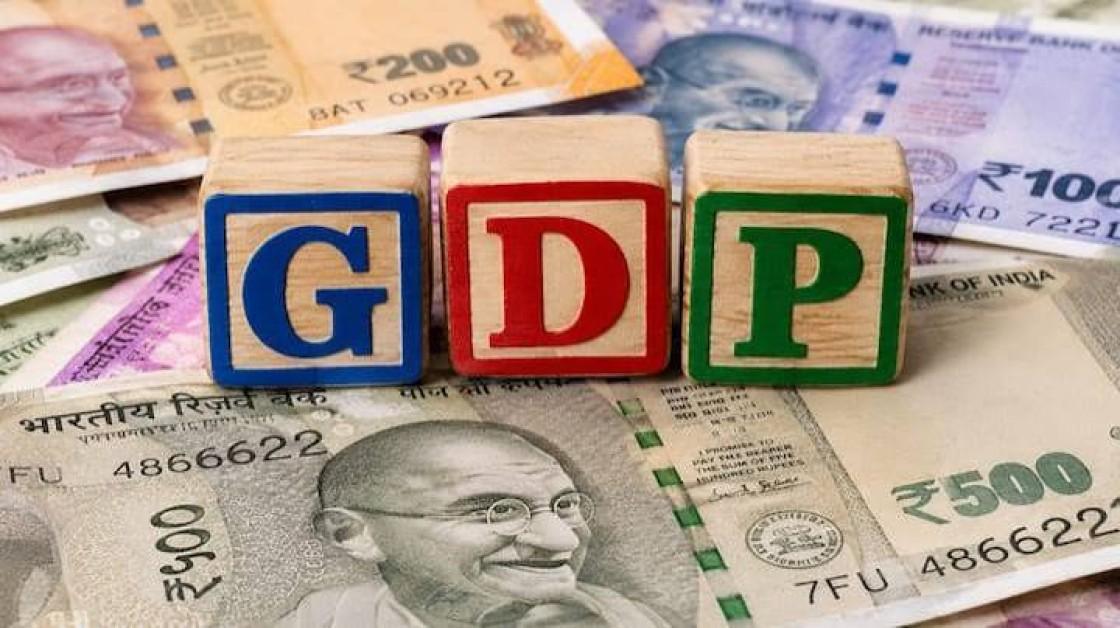
India's GDP Growth Projected at 7.6% in September Quarter
India's economy is expected to expand by approximately 7.6% in the July–September quarter of financial year 2026–27, supported by resilient consumer spending, government capital expenditure and continued domestic economic activity.
The projected growth rate reflects expectations that household consumption and public infrastructure investment will remain important contributors to India's economic expansion despite uncertainty surrounding global trade, international interest rates and commodity prices.
Consumer demand has been supported by household spending across essential goods, discretionary products and services, while government investment in infrastructure continues to stimulate construction and related industries.
The September quarter represents the second quarter of India's financial year, which runs from April to March.
The 7.6% figure is a forecast rather than an official GDP outcome. The final growth rate will depend on the government's forthcoming national accounts estimates and may differ from economists' projections.
India Q2 FY27 GDP Growth: Key Economic Indicators

|
Economic Indicator |
Outlook |
|---|---|
|
Reporting period |
July–September 2026 |
|
Financial year |
FY 2026–27 |
|
Quarter |
Q2 |
|
Projected real GDP growth |
7.6% |
|
Major growth driver |
Household consumption |
|
Additional support |
Government capital expenditure |
|
Important sectors |
Services, construction, manufacturing |
|
Principal external risks |
Global trade and monetary policy uncertainty |
|
GDP data authority |
National Statistics Office (NSO) |
The projected expansion suggests that domestic economic activity continues to provide support to India even as international conditions remain uncertain.
However, GDP forecasts are subject to revision as more comprehensive data on production, expenditure and sectoral performance become available.
Consumer Spending Emerges as a Major Driver of Economic Growth
Household consumption is expected to play a central role in India's September-quarter economic performance.
Private final consumption expenditure represents spending by households on goods and services, making it one of the largest components of India's economy.
Growth in household demand can influence a wide range of industries, including retail, automobiles, consumer goods, hospitality, telecommunications and financial services.
During the September quarter, spending associated with seasonal demand, improving household purchasing power and services consumption is expected to have supported economic activity.
Urban consumption remains important because of demand for discretionary products, organised retail, travel and professional services.
Rural consumption also contributes to overall demand through spending on agricultural inputs, consumer goods, two-wheelers and household products.
The extent of rural demand growth depends on agricultural income, employment conditions, food inflation and the distribution of monsoon rainfall.
A broad-based improvement in household consumption would strengthen the outlook for businesses that depend on domestic customers.
Nevertheless, consumption growth must be assessed alongside household income trends, borrowing costs and inflation to determine its sustainability.
Government Capital Expenditure Supports Infrastructure and Construction
Public capital expenditure is another major factor behind expectations of strong GDP growth.
Government capital expenditure generally includes investment in long-term assets such as roads, railways, power infrastructure, public buildings and other development projects.
Unlike routine government operating expenditure, capital spending creates or improves productive assets that can support economic activity over several years.
Infrastructure projects generate demand for construction materials, engineering services, machinery, transportation and labour.
This creates economic activity across multiple industries.
For example, railway investment can support demand for steel, electrical equipment, signalling technology and construction services.
Road development can stimulate activity in cement, aggregates, logistics and heavy machinery.
Energy infrastructure investment can create opportunities for power equipment manufacturers, engineering contractors and transmission companies.
Public investment can also encourage private businesses to expand operations when improved infrastructure reduces transportation costs and increases market access.
However, the economic impact of capital expenditure depends on the pace of project execution, efficiency of investment and the productive value of completed assets.
Infrastructure Investment Creates Wider Economic Benefits
Government infrastructure spending can contribute to GDP through both immediate and longer-term channels.
During construction, infrastructure projects generate employment and demand for goods and services.
Once completed, productive infrastructure can improve the efficiency of economic activity.
Better highways may reduce freight costs and delivery times.
Modern railway networks can improve passenger and cargo movement.
Expanded electricity transmission infrastructure can support industrial development and improve power reliability.
Digital infrastructure can help businesses reach customers, process transactions and deliver services more efficiently.
These improvements can strengthen productivity and encourage investment.
India's continuing emphasis on public infrastructure therefore remains an important component of its broader economic development strategy.
The September-quarter GDP forecast reflects expectations that government investment will continue to contribute to domestic demand.
Economists Expect Growth to Moderate Slightly From the June Quarter
The latest GDP forecast points to a modest slowdown from the 7.8% expansion recorded in the April–June quarter of FY27.
A Reuters survey conducted between November 13 and 18 among 43 economists produced a median forecast of 7.6% for the September quarter. Individual estimates ranged from 6.6% to 8.2%.
The forecast indicates that India's economy may have maintained strong momentum despite higher inflation and external economic pressures.
Economists also expect gross value added (GVA), which measures output across sectors before accounting for net product taxes, to grow by approximately 7.7%, compared with 8.2% in the preceding quarter.
The difference between GDP and GVA growth reflects the role of net indirect taxes in the calculation of national output.
A moderation in growth would not necessarily indicate a significant deterioration in economic conditions. Instead, it could reflect the normalisation of activity following a particularly strong preceding quarter.
GDP Growth Forecast Comparison for FY27
Year-on-year growth rates; Q2 estimates are not official outcomes.

The Reserve Bank of India's October policy assessment projected GDP growth of 7.2% for the September quarter and 7.1% for the full financial year.
The difference between the RBI's projection and the more recent economists' survey highlights the uncertainty surrounding quarterly economic estimates.
Services and Manufacturing Expected to Support Economic Activity
India's services sector is expected to remain an important contributor to economic expansion.
Financial services, telecommunications, information technology, transportation, hospitality and professional services account for a substantial proportion of national output.
Growth in these activities can support employment, household incomes and demand across related industries.
Manufacturing activity is also expected to contribute to the September-quarter expansion, supported by domestic consumption and investment-related demand.
Passenger vehicle sales and bank credit growth have provided indications of continued economic resilience.
However, industrial performance remains exposed to international trade conditions, energy costs and changes in financing expenses.
Private investment has shown signs of improvement, although the extent to which businesses expand production capacity will depend on demand visibility and financial conditions.
Agriculture Faces Pressure From Deficient Monsoon Conditions
Agriculture remains one of the more vulnerable components of India's economic outlook.
A deficient monsoon has created challenges for agricultural production and rural household incomes.
Changes in rainfall patterns can affect crop yields, irrigation requirements and food supplies.
Agricultural weakness can also influence rural consumption because farm incomes support demand for consumer goods, vehicles and services.
Higher food prices can further reduce household purchasing power, particularly among lower-income consumers.
Rating agency ICRA projected agricultural growth of approximately 0.2% for the September quarter, compared with 3.6% in the preceding quarter.
The agency forecast overall GDP growth of 7.5%, slightly below the 7.6% median estimate in the economists' survey.
The agricultural outlook therefore represents an important counterweight to stronger activity in services and infrastructure.
Inflation and Elevated Oil Prices Create Economic Challenges
Despite expectations of robust GDP growth, inflation remains a significant concern.
Higher crude oil prices associated with geopolitical tensions involving Iran have increased pressure on energy costs.
India's dependence on imported crude oil means sustained international price increases can affect transportation, manufacturing and household expenses.
Food inflation has also been influenced by deficient rainfall and supply conditions.
These developments can weaken purchasing power even when overall economic output continues expanding.
Inflation creates an additional challenge for monetary policymakers because stronger economic growth may coexist with rising household costs.
The Reserve Bank of India must therefore balance the need to maintain price stability with the objective of supporting sustainable economic activity.
RBI Interest-Rate Outlook Comes Into Focus
Expectations of strong GDP growth and persistent inflation have increased attention on the Reserve Bank of India's next monetary policy decision.
A majority of economists surveyed expect the RBI to increase its benchmark policy rate by at least 25 basis points to 5.75% in December 2026.
A rate increase would make borrowing more expensive for some households and businesses.
Higher interest rates can reduce demand for loans, moderate consumption and influence corporate investment decisions.
However, tighter monetary policy can also help contain inflation and support financial stability.
The RBI's decision will depend on updated assessments of inflation, economic activity, financial conditions and external developments.
Strong GDP growth provides some room for policymakers to prioritise inflation control, but the potential impact on consumption and investment remains an important consideration.
India's Full-Year GDP Growth Forecast at 7.2%
Economists expect India's real GDP to expand by approximately 7.2% during FY27, the financial year ending March 2027.
The forecast suggests that the country could maintain relatively strong growth compared with other major economies.
However, economists anticipate some moderation during the second half of the financial year.
Several factors could contribute to slower growth, including the fading impact of earlier tax measures, tighter monetary conditions and reduced fiscal support.
The effects of El Niño and weak agricultural conditions could also influence rural demand and food inflation.
Growth is projected at approximately 7% in each of the following two financial years, indicating expectations of continued expansion at a somewhat more moderate pace.
These forecasts remain subject to changes in domestic policy, international trade, commodity markets and global financial conditions.
What the GDP Forecast Means for Businesses and Investors
The projected September-quarter expansion carries implications for companies, financial institutions and investors.
For consumer-facing businesses, resilient household spending could support revenue growth across retail, automobiles and services.
Infrastructure and construction companies may benefit from sustained government investment and project execution.
Banks and other financial institutions could experience continued credit demand, although higher interest rates may influence borrowing behaviour.
Manufacturing companies may benefit from domestic demand but remain exposed to input costs and international market conditions.
For equity investors, stronger GDP growth can support expectations for corporate earnings.
However, economic expansion does not automatically translate into higher stock prices. Market performance also depends on valuations, interest rates, company profitability and global investment flows.
The official GDP release will provide a more detailed picture of which sectors contributed most to economic activity.
November 30 GDP Data Release Will Be Closely Watched
India's official GDP estimates for the July–September quarter are scheduled for release on November 30, 2026.
The figures will provide a clearer assessment of economic performance during the second quarter of FY27.
Investors and policymakers will examine the headline GDP growth rate alongside sectoral gross value added, household consumption, fixed investment and government expenditure.
The composition of growth will be particularly important.
An expansion supported by broad-based consumption and productive investment may indicate stronger economic resilience than growth concentrated in a limited number of sectors.
The data will also help clarify whether inflation and weaker agricultural conditions have materially affected domestic demand.
Conclusion
India's economy is expected to grow by approximately 7.6% in the September quarter of FY27, supported by resilient consumer spending, government capital expenditure and continued activity across major service and industrial sectors.
The forecast represents a modest moderation from the 7.8% growth recorded in the preceding quarter but indicates that domestic economic momentum remains relatively strong.
However, elevated inflation, higher energy costs, deficient monsoon conditions and the possibility of tighter monetary policy present challenges to the growth outlook.
The November 30 GDP release will determine whether economic activity matched expectations and provide important insights into the sustainability of India's expansion.
For policymakers, businesses and investors, the central question is whether domestic demand and investment can continue supporting growth while inflationary and external pressures persist.
 India Q2 FY27 GDP Growth Seen at 7.6% on Consumption and Government Capital Spending FAQs

POST A COMMENT (0)
All Comments (0)
Replies (0)