




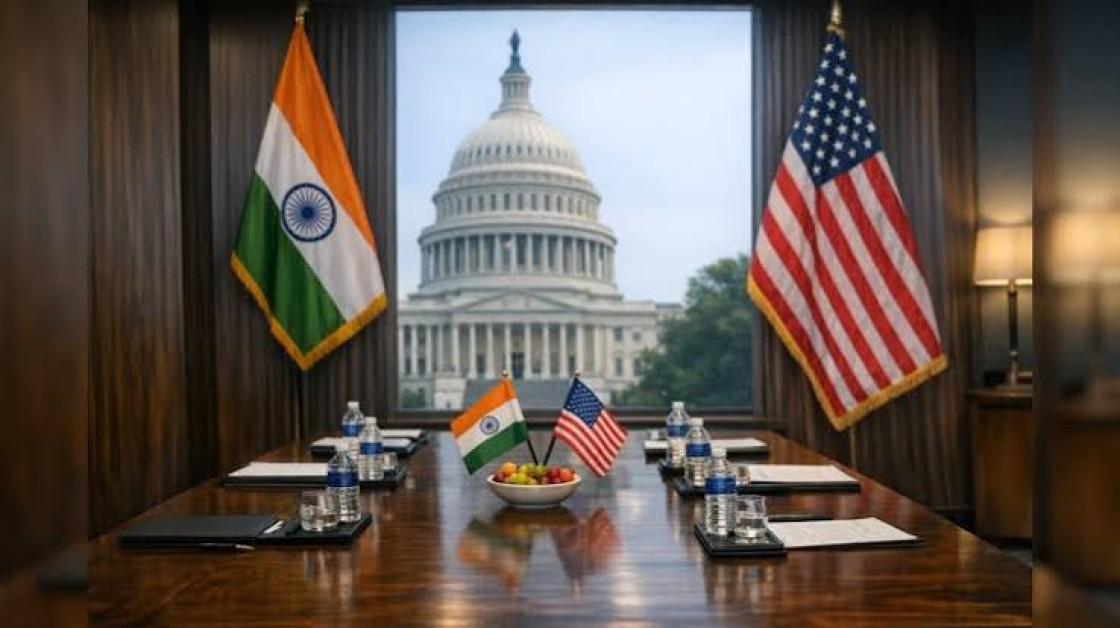
US–India Trade Agreement Returns to Focus as Rubio Signals Progress
Expectations of a breakthrough in the proposed United States–India trade agreement have strengthened after US Secretary of State Marco Rubio indicated that the two countries are approaching the final stage of negotiations, with a possible agreement emerging within weeks.
Speaking during his visit to India on October 20, 2026, Rubio expressed confidence that Washington and New Delhi were close to resolving the remaining differences in the long-running negotiations.
His remarks followed discussions with India's External Affairs Minister S. Jaishankar in Mumbai, where the two sides reviewed trade, energy security, defence cooperation and broader strategic relations.
Rubio indicated that only a limited number of outstanding matters remained before the agreement could be finalised.
In a separate interview published on October 21, he described the negotiations as being approximately 99% complete and suggested that the remaining work involved agreeing on the precise language of the proposed arrangement.
The comments have renewed attention on a trade agreement that has experienced repeated delays because of tariff disputes, market-access negotiations and broader geopolitical differences.
Indian Commerce and Industry Minister Piyush Goyal had previously indicated that the first phase of the proposed agreement was undergoing final legal drafting.
However, the agreement has not yet been formally signed or implemented.
The latest developments suggest that negotiations have advanced, but important legal and commercial details must still be resolved before businesses can assess the final benefits.
US–India Trade Agreement: Key Developments

|
Particular |
Details |
|---|---|
|
Countries involved |
India and the United States |
|
Latest development |
Renewed optimism over a bilateral trade agreement |
|
US official |
Secretary of State Marco Rubio |
|
Indian counterpart |
External Affairs Minister S. Jaishankar |
|
Location of latest discussions |
Mumbai, India |
|
Date of discussions |
October 20, 2026 |
|
Expected timeline |
Potential finalisation within weeks |
|
Negotiation status |
Advanced stage, with outstanding issues |
|
Indian trade minister |
Piyush Goyal |
|
Agreement structure |
Initial or interim phase of broader bilateral trade negotiations |
|
Principal commercial issues |
Tariffs, market access and trade certainty |
|
Related strategic issues |
Energy, defence and technology cooperation |
|
Agreement signed |
Not yet |
|
Final tariff schedule |
Not fully confirmed |
Marco Rubio Says Agreement Could Be Finalised Within Weeks
Rubio's latest remarks have strengthened expectations that the two countries may soon conclude an agreement.
During his India visit, the US Secretary of State described negotiations as being at an advanced stage.
He indicated that the remaining issues were limited in number and expressed optimism that an announcement could follow.
In an interview published on October 21, Rubio suggested that the two countries were weeks rather than months away from finalising the arrangement.
He also indicated that approximately 99% of the negotiating work had been completed.
However, Rubio acknowledged that the remaining provisions were important.
The final wording of a trade agreement determines how commitments are interpreted and implemented.
Consequently, even a small number of unresolved provisions can delay the completion of a broader agreement.
His remarks represent a positive diplomatic signal rather than confirmation that the deal has been concluded.
Rubio and Jaishankar Hold High-Level Talks in Mumbai
The latest optimism followed discussions between Rubio and Jaishankar in Mumbai on October 20.
The meeting formed part of Rubio's visit to India.
The discussions covered bilateral trade alongside energy security, defence cooperation, technology and regional developments.
The meeting demonstrated the importance both governments attach to their wider strategic relationship.
India and the United States maintain significant economic and security ties.
However, their trade relationship has faced difficulties because of differences over tariffs and market access.
The latest discussions provided an opportunity to review the remaining issues and maintain political momentum.
Rubio also emphasised the importance of India as a strategic and commercial partner of the United States.
Nevertheless, the State Department does not directly negotiate trade agreements.
The formal commercial negotiations involve the relevant trade authorities of both countries.
Why the US–India Trade Deal Has Faced Delays
The proposed agreement has been under negotiation since early 2025.
Both governments initially sought to expand trade cooperation and reduce barriers affecting bilateral commerce.
However, negotiations became more complicated following changes in US tariff policy.
In 2025, Washington imposed substantial tariffs on Indian goods.
Trade tensions also increased over India's purchases of Russian crude oil.
Although a framework announced in February 2026 reduced certain tariff pressures, the final agreement remained unresolved.
Additional uncertainty emerged from changes in US trade law and ongoing investigations affecting tariff policy.
The result was a prolonged negotiating process.
Officials from both countries continued discussions, but disagreements over the final commercial terms delayed completion.
Rubio's October remarks indicate renewed momentum after this period of uncertainty.
February 2026 Framework Provided a Basis for Negotiations
India and the United States announced a framework in February 2026 intended to support progress toward a bilateral trade agreement.
The arrangement followed earlier tariff tensions.
It included measures that reduced the tariff burden previously imposed on many Indian exports.
However, the framework was not equivalent to a fully implemented comprehensive trade agreement.
Further negotiations were necessary to establish the final commitments and legal provisions.
Changes in US tariff policy subsequently complicated the process.
The two countries therefore continued discussions over market access and the treatment of different product categories.
The October developments suggest that negotiators have made progress in translating the earlier framework into an agreement.
However, the final legal text remains essential for determining the actual obligations.
India Says First Phase Has Reached Legal Drafting Stage
On October 15, Commerce and Industry Minister Piyush Goyal indicated that the first phase of the proposed trade agreement had reached the final drafting stage.
The announcement suggested that negotiators had made substantial progress.
However, Goyal also emphasised India's objective of securing competitive advantages for its exporters.
India wants its businesses to receive commercially favourable access to the US market.
This includes ensuring that tariff treatment does not place Indian exporters at a disadvantage relative to competitors in other countries.
The legal drafting process is therefore significant.
It must translate the negotiated commercial understanding into enforceable commitments.
The final wording will influence how tariffs, market access and other obligations operate.
The agreement will become commercially meaningful only after the relevant procedures for signing and implementation are completed.
India Seeks Competitive Tariff Treatment for Exporters
A central objective of India's negotiating position is improved access to the American market.
The United States is an important destination for Indian exports.
Indian companies compete with suppliers from several Asian economies, including Vietnam, Bangladesh and Indonesia.
Differences in import tariffs can affect the relative cost of goods entering the US market.
Even modest tariff differences may influence purchasing decisions in price-sensitive industries.
India has therefore sought tariff arrangements that protect the competitiveness of its exporters.
However, the precise tariff treatment under the proposed agreement has not been fully confirmed.
Businesses must wait for the final text before assuming that specific products will receive preferential treatment.
US Tariff Policy Remains an Important Uncertainty
The negotiations have taken place against a changing US tariff environment.
American trade policy has undergone significant adjustments since 2025.
Legal challenges and subsequent policy measures have affected the application of certain import tariffs.
These developments have created uncertainty for businesses attempting to plan long-term trade relationships.
Indian exporters require clarity about the duties applicable to their products.
Importers also need predictable costs when negotiating supply contracts.
A bilateral agreement could improve certainty if it establishes clear and durable commitments.
However, the commercial benefits will depend on the final legal provisions and their interaction with broader US trade laws.
The proposed agreement should not be interpreted as automatically eliminating every tariff affecting Indian goods.
Russian Oil Purchases Have Complicated Trade Discussions
India's imports of Russian crude oil have been an important source of disagreement in bilateral relations.
Washington has raised concerns about Russian energy revenues in the context of the war in Ukraine.
India has emphasised its energy requirements and the importance of securing affordable supplies.
These differing priorities have influenced the wider diplomatic environment.
The issue has also intersected with US tariff and sanctions policy.
However, energy policy and bilateral trade negotiations are not identical processes.
Progress on the trade agreement does not necessarily resolve every disagreement concerning Russian oil.
Rubio's India visit included discussions on energy cooperation and diversification.
The relationship between energy security and trade policy will remain important.
Energy Cooperation Becomes Part of Wider Discussions
Energy security featured prominently in Rubio's discussions in India.
The United States has expressed interest in expanding energy-related commercial cooperation.
India is a major energy-consuming economy with substantial import requirements.
Greater diversification of energy supplies can influence economic resilience and commercial relationships.
However, the terms of individual energy purchases depend on market prices, logistics and contractual arrangements.
Diplomatic discussions about energy cooperation do not automatically establish new purchase commitments.
The latest meetings demonstrate that both governments are considering trade within a broader economic and strategic framework.
Energy cooperation could support bilateral relations, but the specific outcomes remain dependent on subsequent agreements.
Defence and Technology Ties Support Strategic Relationship
India and the United States maintain cooperation across defence, technology and regional security.
Both countries participate in the Quad framework alongside Japan and Australia.
They also engage on critical technologies and supply-chain resilience.
These relationships provide a strategic foundation for bilateral engagement.
However, cooperation in defence and technology does not eliminate disagreements over trade.
Commercial negotiations involve detailed questions about tariffs, regulations and domestic market access.
Rubio's remarks suggest that the broader strategic relationship remains important to Washington.
A trade agreement could strengthen the economic dimension of that relationship.
Nevertheless, the final commercial terms must be assessed independently.
Indian Exporters Could Benefit From Greater Certainty
A successfully implemented trade agreement could improve planning conditions for Indian exporters.
Businesses often negotiate contracts months before goods are shipped.
Tariff uncertainty can affect pricing, margins and customer commitments.
A predictable trade framework may help companies make longer-term decisions.
However, the benefits will vary by industry.
Some product categories may receive more favourable treatment than others.
Rules of origin and other compliance requirements may also influence eligibility.
Until the final agreement is published, exporters cannot determine the exact financial effect.
The principal near-term benefit of progress in negotiations is the prospect of greater policy clarity.
Textile and Apparel Exporters Monitor Tariff Developments
India's textile and apparel industry is sensitive to tariff differences in overseas markets.
Exporters compete with manufacturers in several Asian countries.
Price competitiveness is particularly important in large-volume apparel categories.
Changes in US import duties can influence sourcing decisions by international retailers.
A favourable agreement could improve the relative position of eligible Indian products.
However, the final impact would depend on product-specific tariffs and other conditions.
The proposed agreement has not yet established a publicly confirmed schedule covering all textile and apparel categories.
Businesses should therefore avoid assuming uniform tariff reductions across the sector.
Engineering Goods Manufacturers Could Gain Opportunities
Engineering goods are another important component of India's export economy.
Manufacturers supply machinery, components and industrial products to international customers.
Tariff certainty can influence procurement decisions and investment planning.
A bilateral trade agreement may create opportunities if it improves access for relevant product categories.
However, engineering goods cover a wide range of industries.
Different products face different regulatory and commercial requirements.
The final agreement may therefore have uneven effects across manufacturers.
Businesses will need to evaluate the applicable tariff schedules and compliance obligations.
Pharmaceuticals and Chemicals Remain Important Trade Sectors
India is an established supplier of pharmaceutical products and chemicals to international markets.
The United States is a significant market for several Indian manufacturers.
However, trade access in these sectors depends on more than import duties.
Product approvals, safety standards and regulatory compliance are important.
A trade agreement could improve commercial certainty, but it would not automatically replace existing regulatory requirements.
The final provisions will determine whether specific tariff or market-access changes apply.
Until those details are confirmed, the sector's potential benefits remain conditional.
Electronics and Technology Supply Chains Draw Attention
India has been expanding its electronics manufacturing capabilities.
The United States is an important market for technology products and related supply chains.
Improved trade conditions could influence manufacturing investment and export planning.
However, the effect would depend on product coverage, rules of origin and the final tariff arrangements.
Electronics supply chains often involve components sourced from multiple countries.
Eligibility for preferential treatment may therefore require detailed compliance.
The proposed agreement could provide additional clarity, but its final provisions have not yet been published.
Agriculture Remains a Sensitive Negotiating Area
Agricultural market access has historically been a sensitive subject in international trade negotiations.
Countries seek opportunities for agricultural exports while protecting domestic producers and food-security priorities.
India's agricultural economy includes a large number of small producers.
Changes in import conditions can therefore have implications beyond commercial trade.
The United States also seeks market access for agricultural products.
However, the latest statements do not provide a complete account of the final agricultural provisions.
It would be premature to claim that specific sensitive products have been included or excluded without official confirmation.
The treatment of agriculture will be an important aspect of the final agreement.
Bilateral Trade Has Continued Despite Negotiating Difficulties
India and the United States have maintained substantial trade flows despite disagreements.
India's goods exports to the United States increased to approximately $42.79 billion during April–August 2026.
This compared with approximately $40.39 billion in the corresponding period of the previous year.
The increase indicates that bilateral trade activity continued during the negotiations.
India also recorded a goods trade surplus of nearly $34 billion with the United States during FY26.
However, trade flows are influenced by demand, exchange rates, prices and other factors.
The increase in exports should not be attributed solely to the proposed trade agreement, which has not yet been implemented.
India–US Trade: Selected Indicators
|
Indicator |
Reported Position |
|---|---|
|
India's goods exports to the US, April–August 2026 |
Approximately $42.79 billion |
|
Corresponding period in 2025 |
Approximately $40.39 billion |
|
Increase in exports |
Approximately $2.40 billion |
|
India's goods trade surplus with the US in FY26 |
Nearly $34 billion |
|
Current negotiation stage |
Final legal and commercial discussions |
|
Expected completion |
Possible within weeks |
|
Final agreement signed |
No |
The figures provide context for the importance of the bilateral trade relationship.
They do not represent a forecast of the agreement's future economic impact.
Why Legal Drafting Matters
Trade agreements contain detailed provisions defining the rights and obligations of participating countries.
These may address tariffs, market access, implementation procedures and dispute-related matters.
The precise language matters because businesses and governments must interpret the commitments consistently.
Rubio's comments indicate that some of the remaining issues concern the meaning of particular provisions.
Such disagreements may appear narrow but can have significant commercial consequences.
For example, the scope of a tariff commitment may depend on the definition of eligible goods.
Implementation dates and exceptions can also affect the practical value of an agreement.
Consequently, the completion of legal drafting is an important stage rather than a purely administrative formality.
A Political Announcement May Precede Formal Signing
Rubio indicated that a positive announcement could come before the agreement is formally signed.
This suggests that the two governments may first confirm that negotiations have concluded.
Formal signing could follow after the required procedures are completed.
However, the precise sequence has not been officially finalised.
An announcement of agreement in principle would not necessarily mean that all provisions become effective immediately.
Implementation may require additional administrative or legal steps.
Businesses should therefore distinguish between a political announcement, formal signing and operational commencement.
Each stage can have different commercial implications.
Markets May React to Progress in Trade Negotiations
Trade agreements can influence investor expectations because they affect export competitiveness and economic relationships.
Positive developments may attract attention to export-oriented sectors.
However, market reactions depend on whether the news exceeds existing expectations.
Investors may already have incorporated some probability of a deal into valuations.
The final terms will also matter more than general statements of optimism.
A trade agreement that delivers meaningful tariff advantages could have different implications from one that mainly formalises existing arrangements.
Consequently, Rubio's remarks should be viewed as a positive diplomatic development rather than a guarantee of market gains.
Businesses Need Clarity on Rules of Origin
Rules of origin determine whether goods qualify for preferential treatment under a trade agreement.
They are particularly important for industries using imported components.
A product manufactured in India may not automatically qualify for preferential tariffs if it does not meet the agreement's origin requirements.
The final rules could influence sourcing decisions and supply-chain structures.
Businesses may need to maintain documentation demonstrating compliance.
However, the proposed agreement's detailed origin rules have not been publicly confirmed.
Their commercial significance will become clearer once the final text is available.
Implementation Timelines Will Influence Business Planning
Even after an agreement is signed, companies need to know when specific commitments become effective.
Tariff changes may take effect immediately or according to a phased schedule.
Different product categories may have different implementation dates.
Businesses must also consider existing contracts and inventory arrangements.
A clear timetable can support planning for future shipments and procurement.
However, no comprehensive implementation schedule has been confirmed for the proposed US–India agreement.
The expectation of completion within weeks should not be confused with a guaranteed date for tariff changes.
What Remains Unresolved?
The latest public statements indicate that only a limited number of issues remain.
However, neither government has published a complete list of outstanding provisions.
Rubio has suggested that the remaining work includes precise legal language.
India has emphasised the importance of competitive market access.
Tariff stability and the relationship between bilateral commitments and wider US trade measures remain relevant.
However, it would be speculative to identify specific unresolved product categories without confirmation.
The final text will provide the clearest indication of the concessions and obligations accepted by each side.
What Businesses Should Monitor Next
Exporters and importers will focus on the formal announcement of any agreement.
The publication of tariff schedules will be particularly important.
Businesses will also assess rules of origin, implementation dates and product exclusions.
Investors may monitor official statements from India's Ministry of Commerce and Industry and the relevant US trade authorities.
The outcome of the remaining legal drafting process will determine whether the current optimism results in a signed agreement.
Until then, existing trade rules continue to govern commercial transactions.
Outlook for US–India Trade Relations
The latest remarks from Rubio indicate a more positive negotiating environment.
Both countries appear to have made substantial progress toward resolving the outstanding issues.
India has confirmed that the first phase is undergoing legal drafting.
Washington has expressed confidence that completion may be possible within weeks.
However, the agreement remains unsigned.
The final outcome will depend on the remaining negotiations and approval procedures.
The broader relationship also includes energy, defence and technology cooperation.
Progress on trade could strengthen these areas of engagement.
Nevertheless, businesses should assess the agreement based on its final commercial terms rather than expectations alone.
Conclusion
Expectations of a US–India trade agreement have strengthened following remarks by US Secretary of State Marco Rubio during his October 20, 2026 visit to Mumbai.
Rubio indicated that the two countries were close to concluding negotiations and suggested that the agreement could be finalised within weeks.
He subsequently described the process as approximately 99% complete, while acknowledging that important legal wording remained unresolved.
The comments follow India's confirmation that the first phase of the proposed agreement has reached the legal drafting stage.
The negotiations have faced repeated delays because of tariff disagreements, market-access questions and broader geopolitical tensions.
A successful agreement could improve trade certainty and create opportunities for exporters and businesses in both countries.
However, the final tariff schedules, product coverage and implementation arrangements remain unconfirmed.
The agreement has not yet been signed.
The coming weeks will therefore be important for determining whether the latest diplomatic optimism produces a legally concluded and commercially meaningful trade arrangement.
For businesses, the decisive development will be the publication and implementation of the final terms rather than the expectation of an agreement alone.
 US–India Trade Deal 2026: Marco Rubio Signals Agreement Within Weeks as Negotiations Advance FAQs

POST A COMMENT (0)
All Comments (0)
Replies (0)